Fort Worth ISD closed S.S. Dillow Elementary. What to know about the man behind the name
READ MORE
Fort Worth ISD school closures
Officials in the Fort Worth Independent School District say that closing and consolidating more than a dozen campuses will save the district millions of dollars over the next four years, allowing them to redirect more money toward academic priorities.
Here’s what to know.
Expand All
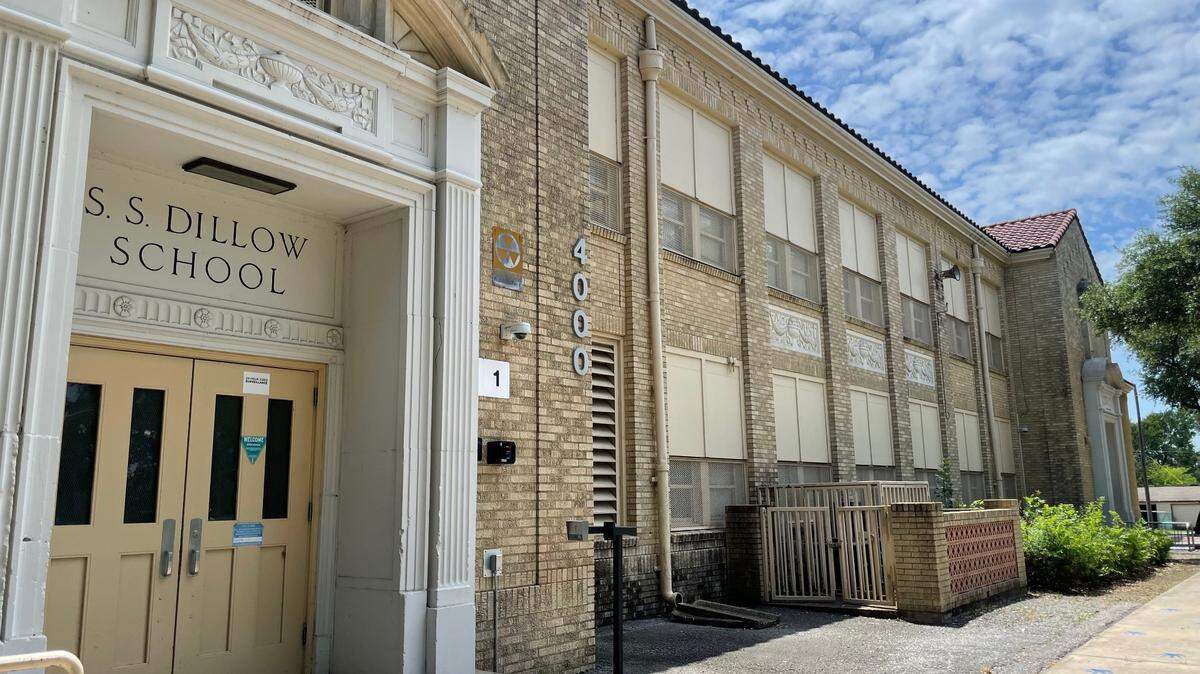
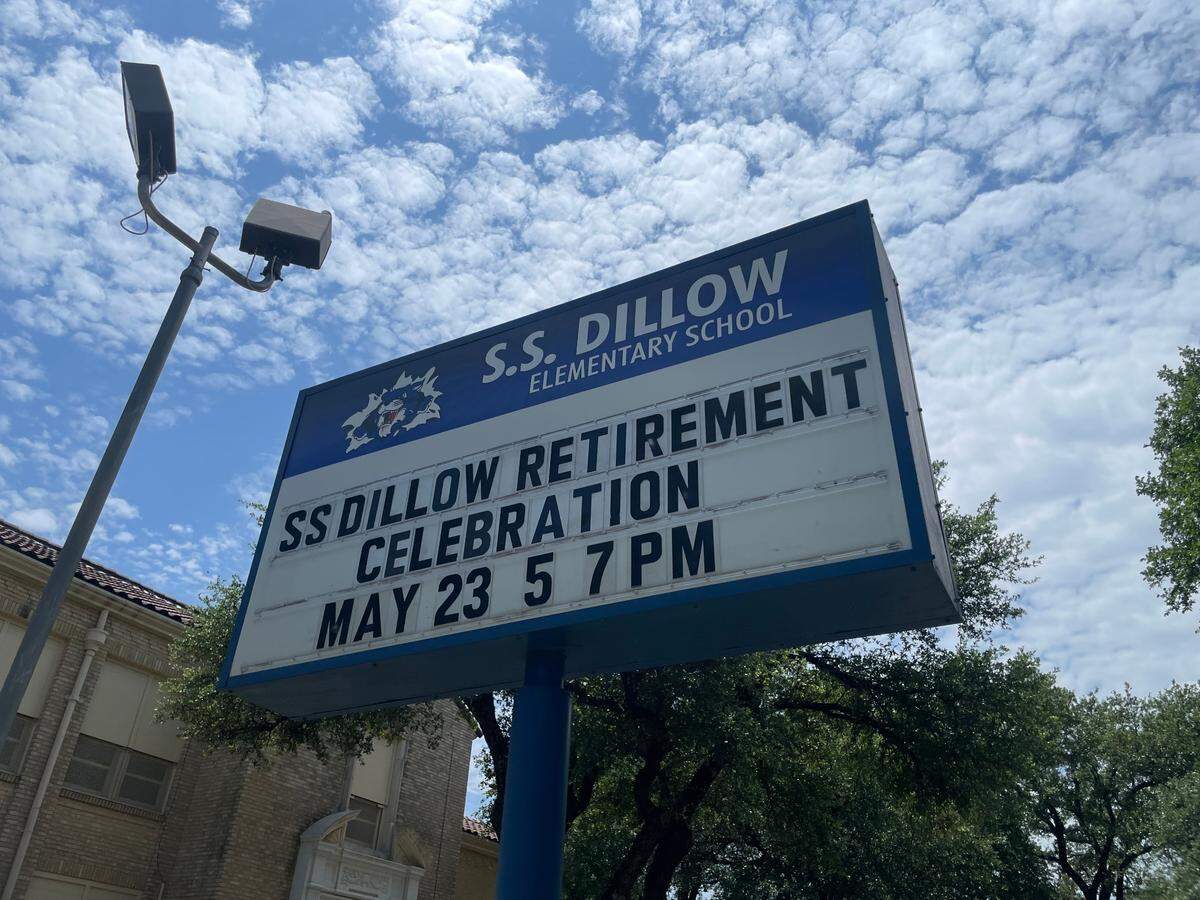
S.S. Dillow Elementary School is one of the 18 schools Fort Worth ISD will close over the next four years.
The Fort Worth school board voted 8-0 on May 20 to approve a plan to shutter 16 schools between 2026 and 2029. Previously, the district voted to close two schools in June 2025.
These closures are part of the district’s facilities master plan, which is intended to help Fort Worth ISD manage revenue loss from declining enrollment. Officials decided this spring to close S.S. Dillow after the building’s cosmetic defects had been found to be declining rapidly due to “a water leak somewhere within a 2,000 square foot area in the vicinity of the main office and nurse station.”
S.S. Dillow, which is named after a historic Fort Worth civic leader, is among one of the two schools closing in June 2025. Here’s what to know about the man behind the name.
A Fort Worth leader
Samuel Selkirk Dillow (1864-1931) was a civic leader in Fort Worth’s Polytechnic Heights neighborhood.
Dillow was born in Illinois and moved to Texas as a young man, settling near Irving, according to previous Star-Telegram coverage. In the 1890s, Dillow came to Fort Worth to open Poly’s first grocery store, which he operated at 3202 Avenue F until his death.
When Polytechnic Heights was incorporated into Fort Worth in 1910, Dillow was offered the role of mayor, but declined and instead served as commissioner.
He also served as Polytechnic school board president, when the school was operated independently from Fort Worth ISD. During his time on the board, Dillow had the school named after him.
Dillow served as president of the First State Bank of Polytechnic and was chairman of the board of trustees for the Polytechnic Methodist Church. He was also a member of the Polytechnic Business Men’s Luncheon Club and a lifelong member of the Polytechnic Masonic lodge.
.JPG "AHi_j0237(5).JPG")
Dillow House and unsolved fire
In 1912, construction completed on Dillow’s 3,500 square-foot prairie-style house at 3216 E. Rosedale.
Dillow lived in the house until his death in 1931. His daughter Audrey, a Texas Wesleyan University graduate, donated the house to the school in 1979, according to previous Star-Telegram coverage. Audrey lived in the house until her death in 1982.
In the following years, the university used the house as its alumni headquarters until 2007. From then to 2013, the house sat vacant.
In 2012, Texas Wesleyan went to the city’s historic and cultural landmarks commission seeking permission to demolish the home for further campus expansion, but were denied. Commissioners told the school that it did not show the property had lost its historic significance or that the school would suffer an economic hardship by renovating the house.
Texas Wesleyan then asked the zoning commission to remove the house’s historic designation, which had been in place since 1990, according to previous Star-Telegram coverage. In January 2013, the commission gave its approval and thereafter the city council approved the historic designation removal.
Historic Fort Worth quickly sued the City of Fort Worth, saying the city violated its own historic preservation ordinance when staff allowed Texas Wesleyan to go through the zoning commission and not the appeals board.
Several months later in September 2013, the Dillow House caught fire and was severely burned.
Fort Worth fire investigators could not determine the cause of the blaze, but said they couldn’t rule out if it was an accident or set intentionally. About a month after the fire, Historic Fort Worth dropped its lawsuit.
Today, the Horizon Texas Conference of the United Methodist Church sits where the Dillow House was.
Dillow’s death and son’s tragic accident
Dillow died on June 24, 1931 at 66 years old.
His death was caused by indigestion that affected his heart, according to the June 24, 1931 edition of the Star-Telegram. A couple of days before his death, Dillow was injured when he attempted to lift a bushel basket of potatoes at his grocery store.
While that was the stated cause of death, many believe Dillow died from a broken heart after his son Sam died years prior. Sam Dillow was one of Baylor University’s “Immortal Ten,” who died in a train collision in January 1927.
A bus of 22 Baylor students were en route to a basketball game against the University of Texas. On the way to Austin, the bus encountered heavy rain and the driver had a hard time navigating due to poor visibility and slick roads, according to Waco History.
As the bus reached a railroad crossing in Round Rock, a fast moving train approached from the west. The bus driver attempted to drive past the tracks, but due to the slick roads, he was only able to swerve at the last minute.
One half of the bus cleared the tracks before the train collided with the other half. Sam Dillow and nine others were killed.
S.S. Dillow Elementary School’s last day of school was May 22, 2025. Its students will be transferring to three other campuses for the 2025-2026 school year.
This story was originally published June 6, 2025 at 12:23 PM.

.JPG)