How Supreme Court’s Roe v. Wade ruling affects use of abortion pills in Texas
READ MORE
What Supreme Court’s overturning of Roe v. Wade means for abortion in Texas
The US Supreme Court has ruled on 1973 Roe v. Wade abortion case. Here is how the justices’ decision affects Texas.
Expand All
Abortion is now mostly unavailable in Texas. Here’s what we know after Roe overturned
What Supreme Court’s overturning of Roe v. Wade means for abortion in Texas
How Supreme Court’s Roe v. Wade ruling affects use of abortion pills in Texas
Here’s how Texas’ abortion trigger law works, now that Roe v. Wade has been overturned

What’s next after Roe? For Republicans, joy but also uncertainty over changing debate
First approved by the Food and Drug Administration in 2000, medication abortions have become a more common over time.
What is an abortion pill?
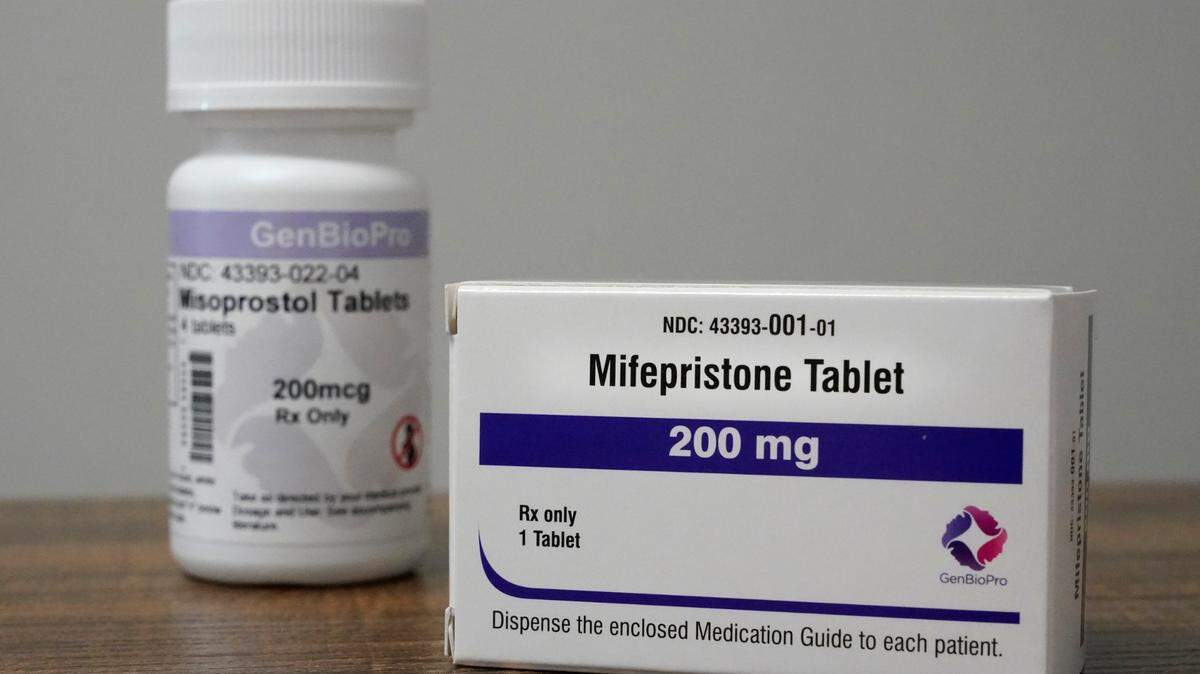
Medication abortions, often referred to as abortion pills, are drugs that can be taken to induce an abortion in a pregnant person.
In the U.S., most medication abortions involve the use of two drugs, mifepristone and misoprostol. The first drug, mifepristone, blocks hormones needed to continue a pregnancy. Misoprostol is taken 24 to 48 hours later and works by emptying the uterus.
Mifepristone was approved by the FDA in 2000. Since then, the frequency of medication abortions has increased dramatically in the U.S., even as the total number and rate of abortions has mostly declined in the last 40 years. (Abortions did increase between 2017 and 2020, although the number and rates of abortion are still not as high as they were in the 1980s.) In 2020, abortion pills were used in 54% of all legal U.S. abortions, according to research from the Guttmacher Institute.
Abortion pills are different than products like “morning after” pills, which are forms of emergency contraception that are taken after unprotected sex. Morning after pills can be purchased at drugstores and pharmacies without a prescription. The pills can’t end a pregnancy, but instead work by preventing fertilization from happening in the first place. Most morning after pills are not 100% effective, according to research from the Kaiser Family Foundation, so someone can still become pregnant after taking a pill. And some research suggests that morning after pills are less effective for people who weigh 175 pounds or more. But essentially, emergency contraception pills work by preventing someone from becoming pregnant, while abortion pills end a pregnancy after someone is already pregnant.
Are abortion pills legal?
Texas’ trigger law bans almost all abortions, with the only exception being if the mother’s life is in danger. That means that abortion pills, as well as other forms of abortion like aspiration and dilation and evacuation, are outlawed.
However, experts expect that people who want to end their pregnancies will find other ways to access abortion pills. Abortion pills can be shipped directly to people’s homes from online pharmacies or international groups like Aid Access. Researchers have also found that some Texas women who live close to the U.S.-Mexico border will travel out of the country to access medication abortions.
Under Texas law, it is illegal for anyone to mail abortion pills or any other medication that could be used to end a pregnancy. But legal experts have said it would be extremely difficult for Texas prosecutors to enforce state law on groups that operate outside of Texas, meaning that the mailing of abortion pills to Texans will likely continue.
What happened after the six-week abortion ban went into effect in Texas?
An abortion law banning most abortions that happen when fetal cardiac activity can be detected went into effect last year in Texas. Fetal cardiac activity can usually be detected at about six weeks of pregnancy, which is why the law is often referred to as a six-week abortion ban.
The law caused a significant reduction in the number of legal abortions performed in Texas clinics. In the first 30 days after Senate Bill 8 went into effect in September, legal abortions in the state dropped by half, according to a group of researchers at the University of Texas at Austin.
But the law also led to an increase in requests for abortion pills from Aid Access, an international nonprofit that will mail abortion pills to people who request them online. Researchers who studied requests to Aid Access found that the requests for pills from Texans nearly tripled from October through December, after the state’s six-week abortion ban went into effect.
Will people continue to use abortion pills now that Roe v. Wade is overturned and abortion will be banned in Texas?
Most experts expect that abortion pills will still be used even now that abortion is mostly unavailable in Texas, mostly because there is already a network of online pharmacies and nonprofits that will mail abortion pills directly to your home.
“I think what I would anticipate is that people will continue to access (abortion pills) in the same ways that they have been already,” said Farah Diaz-Tello, the senior counsel and legal director at If/When/How, a group that supports abortion access.
No existing law in Texas would criminalize someone who takes an abortion pill. Instead, whoever mails abortion pills could be subject to administrative penalties under existing law. Texas’ trigger law would punish anyone who provides or attempts to provide an abortion with prison time or up to $100,000 in civil penalties.
But legal experts have said it would be difficult for Texas to prosecute nonprofits or online pharmacies that exist out of the state or out of the country.
This story was originally published June 24, 2022 at 9:48 AM.