
Stay weather aware: Protect your home from another frigid weekend in Fort Worth
The National Weather Service Fort Worth has issued a Cold Weather Advisory beginning Friday evening, Jan. 30, until Saturday Jan. 31 at 11 a.m. The cold front will roll with a low of 20 and wind chills that make the air feel as cold as 12 degrees.
And don’t be deceived by Saturday’s sunny skies as the high will be 32 with wind chills as low as 9 degrees.
Though conditions in Fort Worth will heat up again on Sunday, it will be more than 24 hours of freezing or below freezing temperatures.
If the temperature is below 32 degrees, it’s important to prepare your home to avoid disasters like a burst water pipe.
Here’s how to stay weather-aware and prepare yourself and your home accordingly.
.JPG "AHi_j0108(7).JPG")
Prepare your pipes
The top four things that should be on your to-do list to protect your home’s pipes is: wrap the outdoor and indoor pipes in areas without heat, leave your faucets dripping, keep under sink cabinets open and set your thermostat to stay above 60 at all times.
The Texas Department of Insurance recommends these other precautionary tips as well:
- If you think a pipe is frozen, turn off your water valve. Learn where your water shut off valve is now, not later. This will help with leaks and flooding for when the water eventually thaws.
- Wrap up and remove hoses and wrap outdoor pipes.
- Drain and turn off your sprinkler system.
- Turn off the water to your washing machine if it’s in an unheated area.
- Cover or remove AC window units.
- Seal any cracks and holes in pipes or outside walls and windows.
To see our story on what to do if you think your pipes have frozen, see here.
.jpg "unnamed (7).jpg")
Prepare your cars
AAA suggests to fill your car at least halfway up with gas to avoid gas line freezes.
Also, as the temperature drops, so does your tire’s pressure. A tire will generally lose 1 pound per square inch with every 10 degree drop in temperature, AAA said. It’s smartest to check your tire pressure while it’s cold to get an accurate read.
Pro-tip: Discount Tire offers complimentary tire pressure checks. Find your local Discount Tire here.
Finally, one of the main service calls AAA responds to in Texas during a freeze is for dead batteries because a car can lose a third of its power in freezing temperatures.
To keep your car battery healthy:
- Have your battery and charging system checked for optimum performance, specifically if the battery is more than three years old.
- Clear any corrosion from battery points and cable connections.
- Wipe away dirt or oil deposits on the battery case and make sure everything is secure.
.JPG "PHi_j0232(15).JPG")
Prepare your pets and plants
If it’s too cold for you, it’s probably too cold for your pet.
American Society for the Prevention of Cruelty to Animals suggests the following:
- Make sure to dry off pets as they come inside.
- Apply petroleum jelly or veterinarian-approved paw protectants to paw pads before pets go outside.
- Feed pets extra during the winter months.
- Make sure pets have a warm and dry space to sleep.
- Never let pets off the leash on snow or ice.
As for plants, Neil Sperry has these tips for how to cover your plants and protect your garden.
Beware of wind chill dangers
Wind chill can cause frostbite or hypothermia as it is the temperature that humans and animals feel when they are outside.
Frostbite occurs when frigid air makes contact to exposed skin, which leads nerves and blood vessels just below the top layer of skin to freeze. The injury can lead to loss of feeling and color to the areas it affects such as ears, nose, chin, fingers and toes, according to the Centers for Disease Control and Prevention.
Hypothermia can happen when the body is losing heat faster than it can retain it and body temperature drops below 95 degrees. Symptoms are fatigue, confusion, disorientation, excessive shivering and loss of coordination.
The National Weather Service’s wind chill chart explains how quickly frostbite can occur according to air temperature and wind speeds.
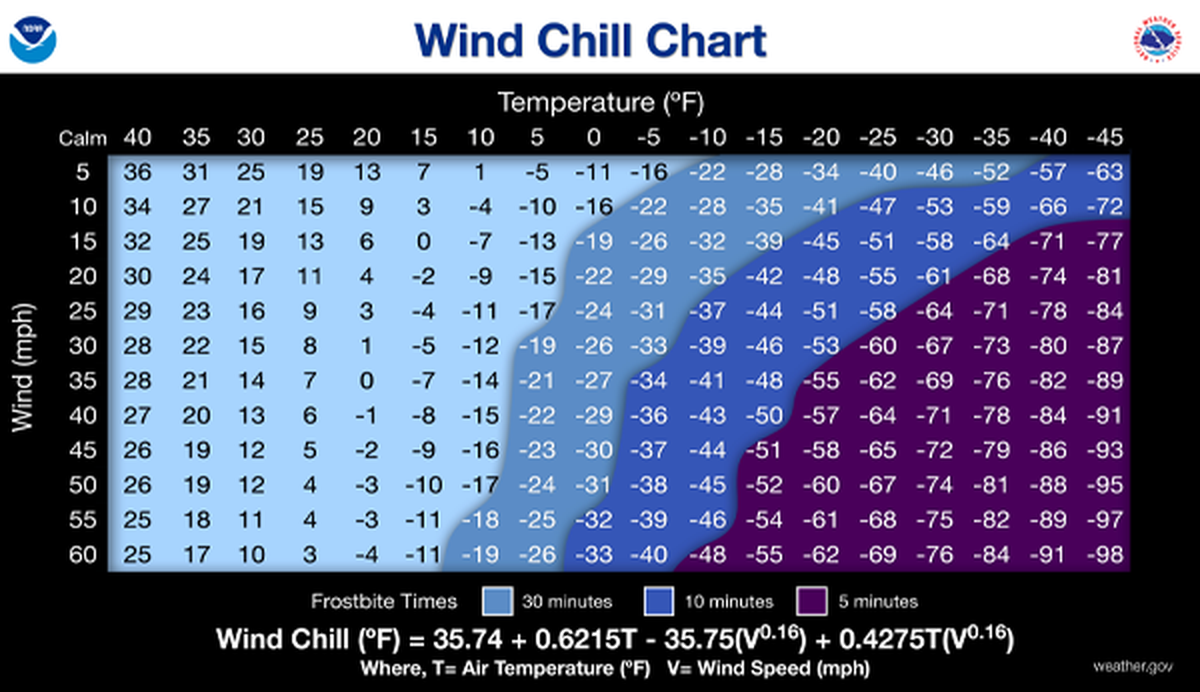
See Star-Telegram’s full explainer on wind chill dangers here.
When to turn on emergency heat
For those who have heat pumps to keep their house warm, you also have an emergency heat option.
Emergency heat turns off the normal heat pump and warms your home through heating coils, according to Precision Comfort Systems. These have to work three times harder than the normal heat pump to heat your home as they are a back-up method and not as efficient. Because of this, using emergency heat can skyrocket your electricity bill.
The only reason to ever switch on emergency heat is if you suspect your heat pump is broken and not properly warming your home. Use emergency heat in the meantime while you wait for a professional to come fix your heat pump.
.png "7 (1).png")
Stay away from frozen bodies of water
The Fort Worth National Weather Service warned residents during last week’s winter storm to avoid walking on frozen ponds or pools.
Freezing temperatures make it likely that small bodies of water may freeze over, but that doesn’t mean the ice is safe to walk on. Falling into a frozen pond or pool can result in life-endangering hypothermia.
A general rule of thumb for frozen bodies of water is the color test– if the ice is white, it’s not thick enough to hold the weight of an animal or human. If the ice is black (or really, clear looking) it’s thick enough to walk on.
In Texas, it is common to get black ice on roads and highways, but usually not cold enough for black ice to form on top of bodies of water. While ponds, lakes or pools in Texas will still be frozen, it’s with a thin, fragile layer of white ice.
Ice has to be at least four inches thick to hold a human’s weight. As this is unlikely to happen in Texas, it’s generally smart to avoid frozen bodies of water all together.
Fort Worth Star-Telegram reporters Brayden Garcia and Service Journalism editor Jake Harris contributed to this report.