Do ICE agents really have federal immunity? A Texas law expert breaks it down
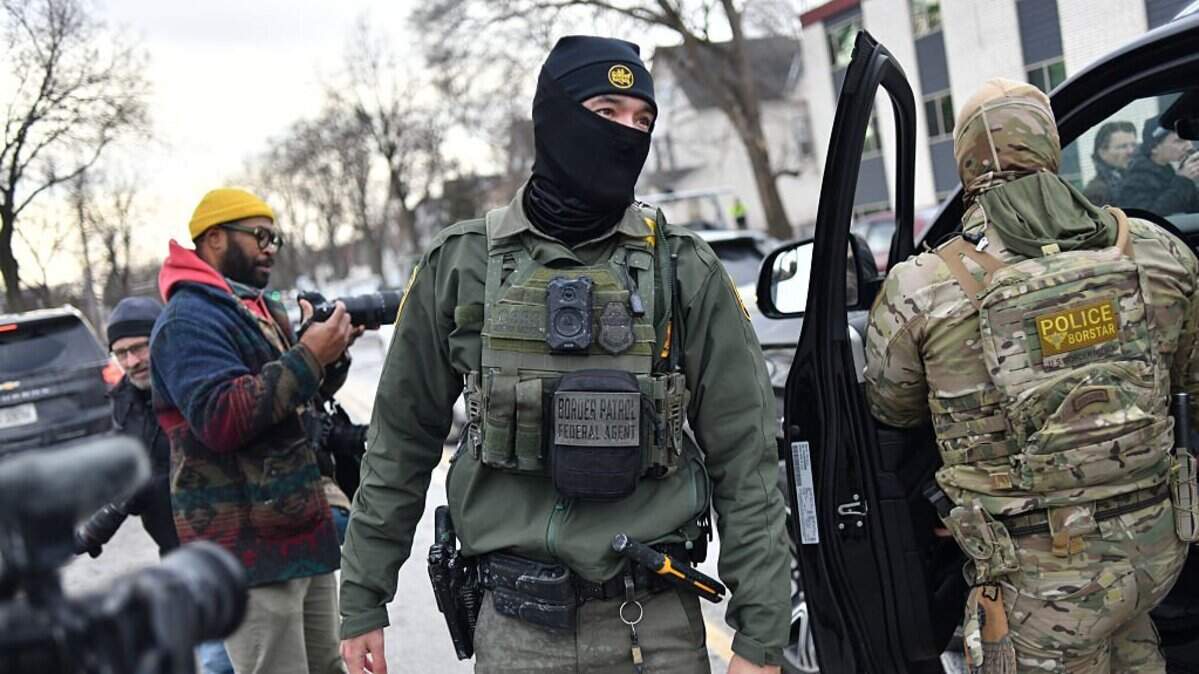
As national attention grows around ICE enforcement, a recent post by the Department of Homeland Security has sparked a wave of questions.
The department reshared a clip and transcription on its official X account on Jan. 13 of White House Homeland Security Advisor Stephen Miller speaking about ICE’s authority.
“To all ICE officers: You have federal immunity in the conduct of your duties. Anybody who lays a hand on you or tries to stop you or tries to obstruct you is committing a felony. You have immunity to perform your duties, and no one — no city official, no state official, no illegal alien, no leftist agitator or domestic insurrectionist — can prevent you from fulfilling your legal obligations and duties.”
The message spread quickly online, prompting debate about whether federal agents can truly be shielded from lawsuits or state criminal charges and what the limits to federal immunity actually are.
The Star-Telegram spoke with Jenny Carroll, a professor of law and criminal law expert at Texas A&M University, to explain the legal boundaries.
Here’s what to know.
Do ICE officers really have federal immunity?
Carroll said the idea of federal immunity gets misunderstood because only a very small group of high-level federal officials qualify for what’s known as absolute immunity.
“Absolute immunity shields federal officials from state action against them, but that absolute immunity is very limited in who it applies to,” she said. “It usually applies to lawmakers, presidents, judges. It usually does not apply to law enforcement officers.”
Carroll said that distinction matters because courts look closely at whether an officer was acting within the scope of their official duties at the time something happened. If the answer is no, immunity doesn’t apply.
To show how that works in practice, she offered a straightforward example.
“Let’s say I’m a federal law enforcement officer, and I am on my day off from work. I go to a shooting range and get into a fight with someone and use my federally issued gun to shoot that person. That’s outside the scope of my federal duties. The state can prosecute me for the charge, and I cannot assert, ‘Hey, I’m a federal officer. I have absolute immunity.’”
She said the same principle applies to ICE agents.
“If the law enforcement officer’s actions violated state law and they were unauthorized, or they were unlawful, or they were outside the scope of their official duties, you certainly could have a state prosecution. I don’t think there’s anything in U.S. law that would grant these particular federal law enforcement officials absolute immunity.”
Are ICE officers protected from civil lawsuits?
Civil lawsuits against federal officers are possible, but the pathways are narrow.
Carroll said most civil claims fall under two legal rules, the Federal Tort Claims Act and a type of lawsuit known as a Bivens action.
The FTCA lets people sue the federal government for negligence when federal employees cause harm while acting within the scope of their job.
Carroll said the law creates only a few openings for these kinds of cases, like illegal searches or violations of detained people’s rights. And even then, they’re tough to win against agencies like ICE or DHS.
“DHS in the past has invoked immunity against Federal Tort Claims Act cases successfully, so I don’t think the FTCA has been a great space for these lawsuits,” she said.
In recent years, a few FTCA claims tied to ICE encounters have drawn national attention.
One came from an elected official in Chicago who said ICE officers handcuffed her at a hospital and used excessive force. Another came from a Columbia University activist who said he was wrongfully taken into custody by ICE during a protest.
Both of these cases are still moving through the courts.
A second pathway is a Bivens lawsuit, named after a 1971 Supreme Court case that allowed a Brooklyn man to sue federal narcotics agents for an unconstitutional search of his home.
Carroll said courts have narrowed that remedy over time, so it now applies in only very limited situations, like clear violations of constitutional rights during searches or detention.
Federal officers, including ICE agents, also generally have qualified immunity in civil cases. That doctrine shields officers from liability unless a court finds they violated a “clearly established” constitutional right.
Combined with the limits placed on Bivens claims, this has made most lawsuits against federal officers difficult to pursue.
“Bivens says look, we don’t want people suing federal officials all the time because if that’s the case, individual citizens can basically block the government from moving forward because it’ll be tied up in civil cases, so we’re going to put these limitations on them,” Carroll said. “And that creates a de facto immunity which means I’m immune from suit for all things that fall outside this category of cases.”
When can ICE officers actually face consequences?
Federal officers can be prosecuted if they violate federal law, especially in cases involving excessive force, falsifying records, corruption, or civil rights violations.
Federal law allows prosecution in situations such as:
• 18 U.S.C. 242, which makes it a crime for any officer to willfully deprive a person of constitutional rights, including through excessive force or unlawful detention
• 18 U.S.C. 1519, which covers falsifying or destroying official documents, such as incident reports or use of force records.
These prosecutions are rare, but they’re possible when there’s evidence an officer crossed legal boundaries.
ICE officers can also face consequences within the agency. That can include administrative investigations, reassignment, suspension, loss of field duties, or termination.
This story was originally published January 21, 2026 at 5:00 AM.