
Fort Worth homeowners must do this now to save yards, gardens from winter storm
Editor’s note: We asked Neil Sperry, the North Texas horticulturalist and longtime garden columnist for the Star-Telegram, about how to prepare for the coming ice, snow and cold.
—
Here are some quick things a gardener can do to lessen the impact of this weekend’s cold on landscape and garden plants.
• Water deeply before Friday morning when temperatures start to drop toward freezing. Dry plants suffer more damage than those that are properly hydrated.
• Frost cloth: Get to a garden center as soon as possible to buy lightweight frost cloth to cover tender flowers and vegetation. Supplies are already running low. DO NOT COVER PLANTS WITH POLYETHYLENE PLASTIC – it causes leaf burn wherever leaves touch it.
Since significant precipitation is a possibility, put blocks, stakes or other supports to lift the frost cloth cover off the plants. Frost cloth gains you 8-10 degrees of cold protection. It can be left in place for as long as necessary (even weeks), but it must be brought down completely to the ground and weighted with bricks, stones, or concrete blocks to keep wind from blowing it off the plants.
• Protect warm-weather plants: With temperatures nearing single digits, remember to cover any Zone 8 or 9 plants in your landscape. We in the Metroplex should consider ourselves to be in USDA Hardiness Zone 7. The most recent Zone maps push us farther north than that, but repeatedly winters have proven that Zone 8 plants will suffer freeze damage here. Top of that list: gardenias, oleanders, cast iron plants, pittosporums, loquats, and especially sago palms, Gold Star Esperanzas, bougainvilleas, and Mexican birds-of-paradise. Those last four plants rarely make it through even average winters here.
• Potted patio plants lose 15 to 20 degrees worth of cold hardiness because their roots are above grade. Move them into an unheated garage for the duration of the extreme cold. If they are too heavy to move, wrap the pots with batts of insulation.
• Mulching with compost, shredded tree leaves, bark, etc. moderates the rate of freezing and thawing. That cuts down on cold damage, so if you haven’t put out a layer of mulch yet, consider doing so. However, this cold spell is going to cause the soil to freeze. Mulch keeps it from happening too rapidly.
• Disconnect all hoses from faucets. Pull hoses out of the way and drain them. Do not attempt to move them while they are frozen.
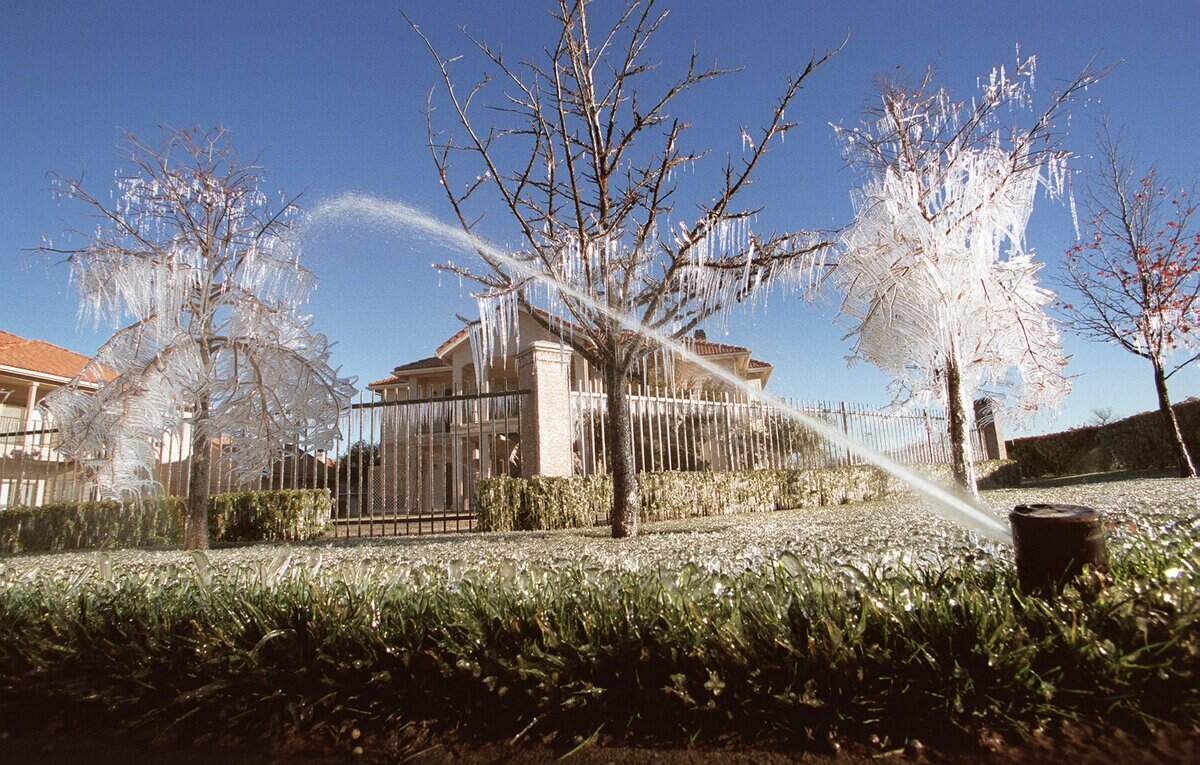
• Disconnect hose-end sprinklers, drain them, and store them in the garage to prevent ice from forming inside them and bursting their lightweight parts.
• Automatic sprinkling system: If yours does not have a freeze sensor, turn the system off. Make sure it cannot run during the cold spell. Many cities have mandated fines for homeowners who cause ice to form on streets and sidewalks.
• Protect all exposed faucets.
• Trees: If you have branches you can easily reach from the ground, and if those branches are dead or compromised to a point that they could snap and cause injury or damage, trim them before the ice and snow arrive. If you only take some of the outer branches off to lessen the load, that will help. Of course, you’ll want to finish the job as soon as better weather returns.
• Indoor faucets: Plumbers also tell us to open cabinet doors on outside walls and leave faucets dripping – not running. (We still need to conserve water.)
• Water shut-off valve: Plumbers also tell us to become familiar with how to turn off our house’s water entirely. There will be a main valve somewhere between your house and the city’s water main. Know how to turn that off should pipes freeze during a power outage. Have the right wrench quickly available.
• Some garden art is not intended to be exposed to extreme freezing weather. That may include gazing balls, ceramic globes, some pottery, even some decorative tiles. If in doubt, put it in the garage.
• Bring your pets indoors. Even if it’s the garage, don’t leave them outside. They’re not equipped for it.
• Keep the bird feeders filled, and as you are able, keep water out for the birds, too.
• Watch your step: Be especially careful while walking on slick surfaces. Cat litter, expanded shale, sand, or other abrasive material will give you traction. Better yet just stay indoors until things thaw out.
This story was originally published January 22, 2026 at 9:43 AM.