
We went alligator tagging in Fort Worth. Here’s what they’re like up close
There’s a spot in northwest Fort Worth that contains 3,700 acres of untouched and protected prairies, forests, wetlands and swamps. This landscape contains a diverse set of life ranging from bison and prairie dogs to ducks, catfish and alligators. This land is the Fort Worth Nature Center and Refuge.
“Here we have a unique area of biodiversity where the east truly meets the west,” said Dr. Jared Wood, alligator researcher and director at the FWNC&R. “Pretty much every soil type in this county is found here in this refuge.”
There are around 40 tagged alligators at the Nature Center. They are keystone species, which means they are the glue that holds the ecosystem together. If alligators were no longer a part of Fort Worth, other species would lose habitats and overpopulate.
Though some residents are not keen on seeing alligators in the wild, the animals are just as terrified of humans as humans are of them. Wood focuses on educating the public about how gators do not pose a danger, but rather, benefit Fort Worth’s ecosystem.
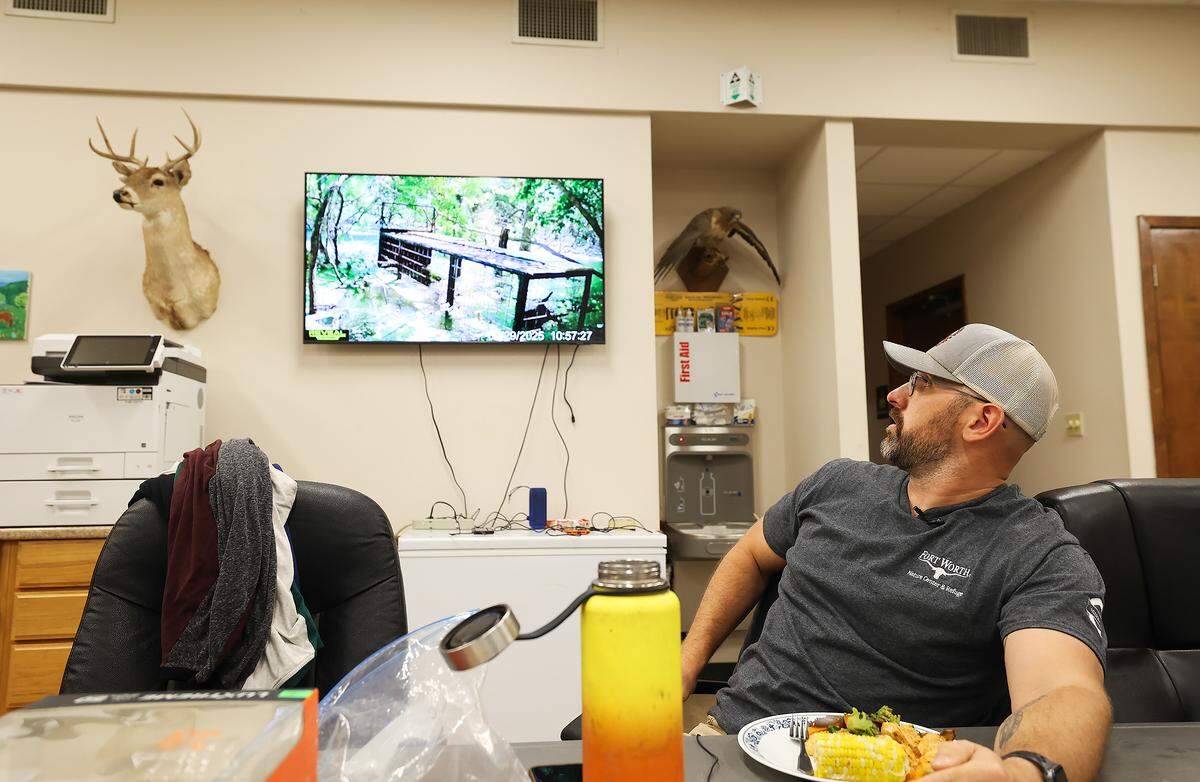
“In my entire career — I’ve been working with alligators since 2008 — I’ve never seen anyone or an alligator be injured,” Wood said. In fact, Texas Parks and Wildlife confirms that there have been no alligator-related fatalities since they started keeping records in 1963.
To better educate the public, the FWNC&R has been conducting research on these reptiles for the past three years. It is a privately funded mission that includes capturing and tagging the animals for research and protection purposes. There is no manipulation or removal of the gator population, but just monitoring of this native Fort Worth species.
The Star-Telegram had the opportunity to join Wood and natural resource technicians Julio Corralego and David Reasoner on a nighttime capture session. We saw around eight gators and even caught one for tagging purposes. The FWNC&R tags alligators because it is both helpful to research and scientific purposes, but primarily helps estimate population size.
Here’s what we saw.
What a nighttime alligator capture looks like
“What you see on TV — we try to do the opposite. If it seems boring, we’re really doing our jobs well, because what’s on TV is not necessarily what researchers would do,” Wood said when talking about alligator capture missions. “Safety is paramount to us.”
The Star Telegram participated in what is called an active alligator capture, which is essentially where researchers actively go and seek out the animal.
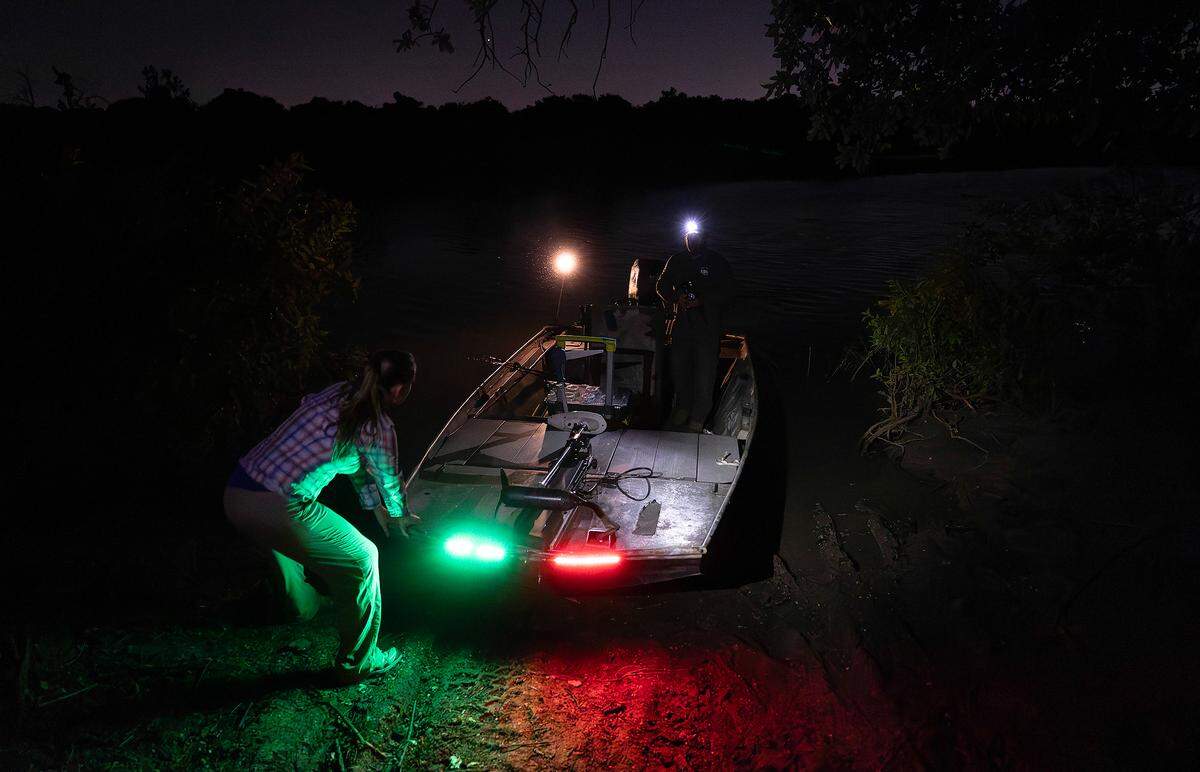
These are normally conducted at night because alligators are easier to spot. We set out on a boat for a spotlight survey at 9:30 p.m., which is where Wood and his team use flashlights to scan Lake Worth. If there is a gator, you can immediately spot their two eyes reflecting off the spotlight.
During our hunt, we saw at least eight gators. All (but one) outsmarted us and ducked deep into the water to avoid being caught– a good example of the animals not wanting to interact with humans.
The one we did catch was a five-year-old male. He was around 5 feet long and weighed 30 pounds.
“For hatchlings, you can just go up and grab them with something very similar to snake tongs. For medium sized adults, we can use a noose and just pick them up right out of the water. And then for the larger adults, we do what’s called a snagging technique with a fishing rod,” he said.
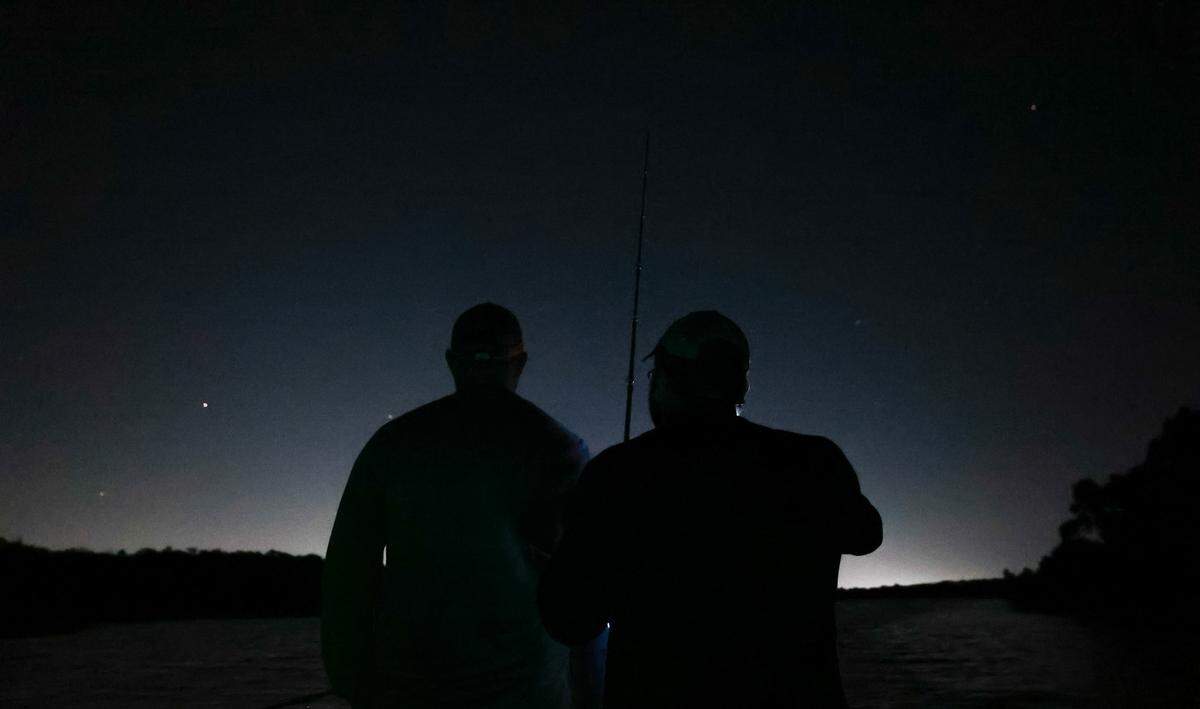
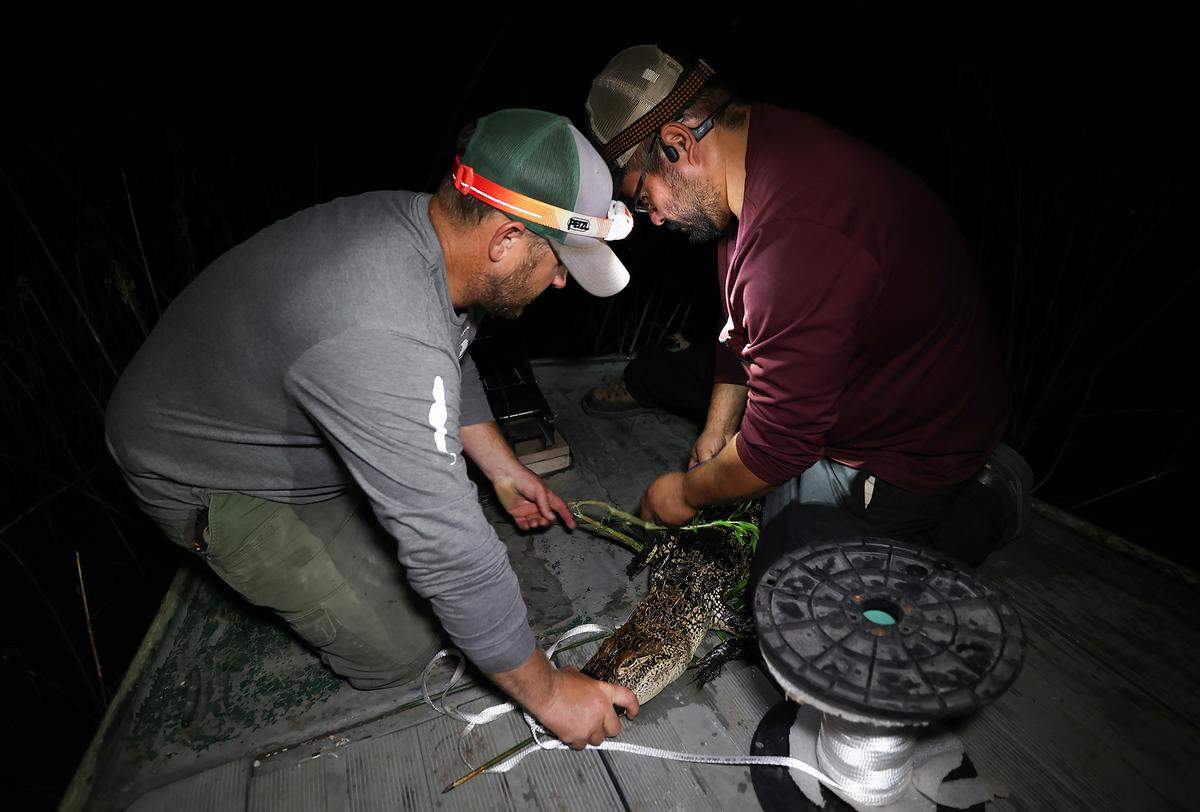
For our catch, we used both a fishing rod and a noose. Once the alligator was on board, Reasoner used the palm of his hands to clamp down the mouth and tape it shut.
“The first thing you always do is secure the mouth. Once the mouth is secure, taped up, everything’s pretty safe,” Wood said.
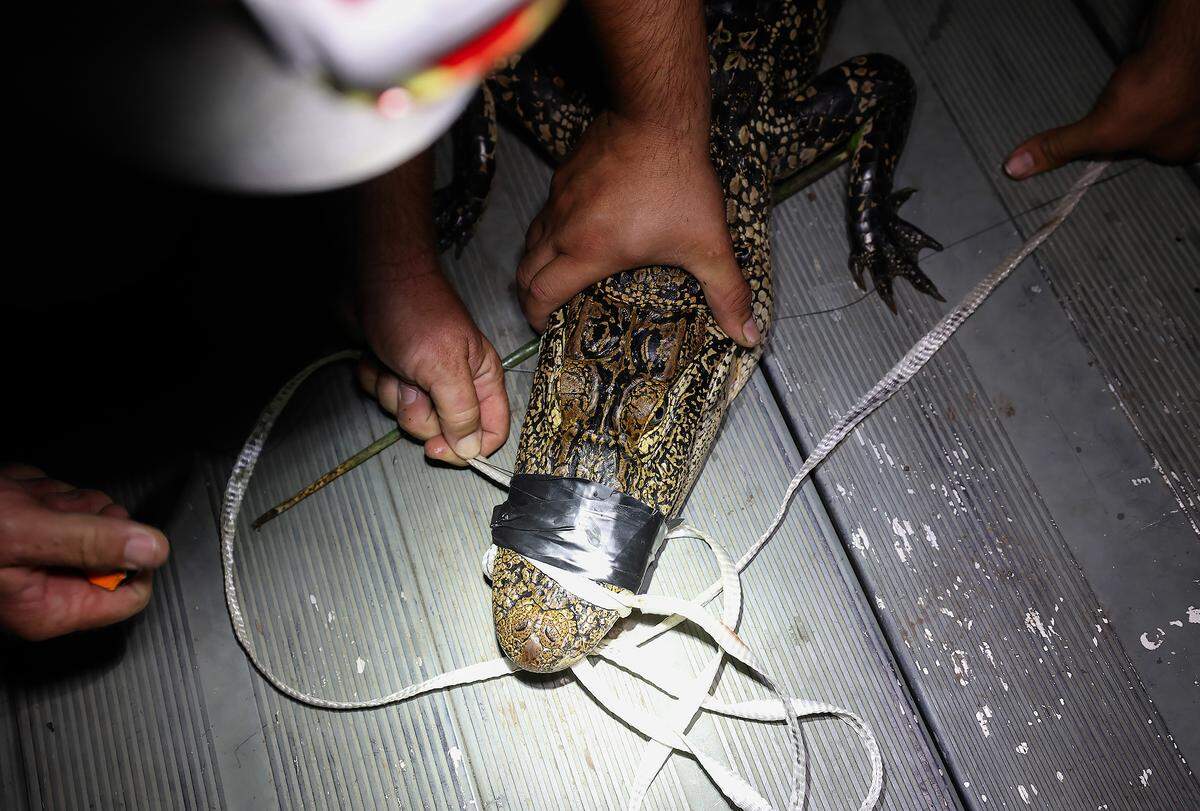
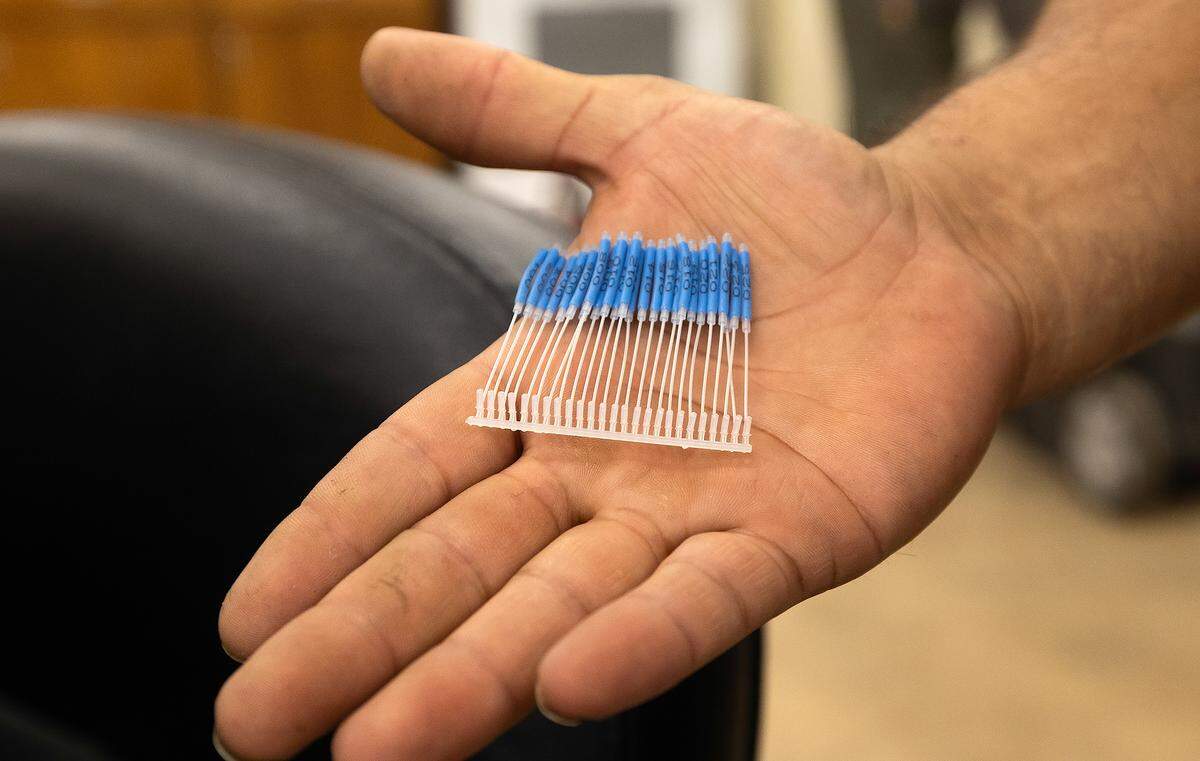
Only one man, Corralego, held the gator down. From there, the team weighed, measured, tagged and placed a microchip in the gator. The team used a luggage scale and dog harness to weigh the animal.
Wood said normally the younger gators are harder to tag because they are more energetic, but this juvenile was calm while research was being conducted. Every gator receives unique identification.
For the larger-sized adults, the FWNC&R blindfold them after securing the mouth to help them remain calm. Then, they use a ladder to both weigh and measure the alligator. Around one to two people can hold down a small gator, while larger gators need three to four people.
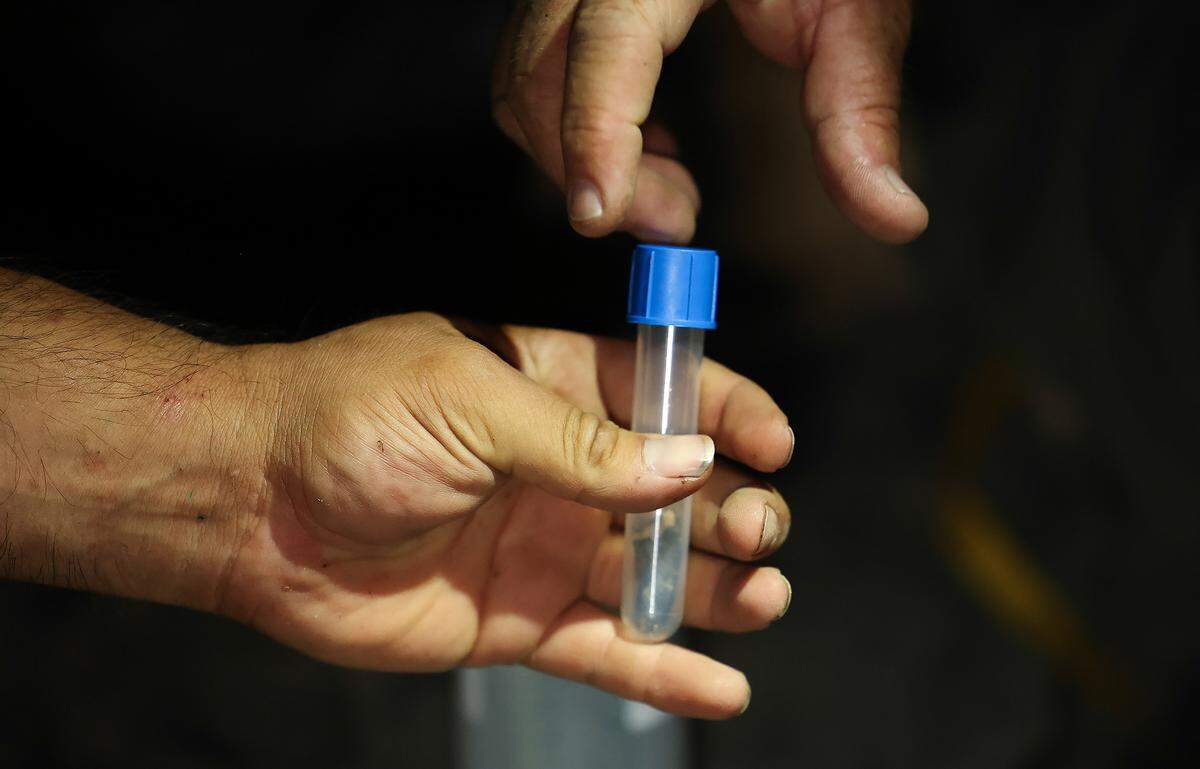
Other tagging methods FWNC&R conducts
The other method used to tag alligators is the passive capture technique.
“So a passive capture method would be using traps that are baited,” Wood said. “And then we just wait for the animals to come to the traps and trip the doors. Then we will conduct our research.”
These traps are about 10 feet by 3 feet and are baited traps. There is 24/7 surveillance on these traps so the FWNC&R team can see if one is set off.
What research has Fort Worth nature center found on alligators?
“Getting long term data on a population of any type of keystone species is very difficult,” Wood said.
However, through the past few years of research, the FWNC&R team found that the alligators native to Fort Worth rarely leave.
There are two gators that they recently recaptured that were previously researched in 2010 by a Texas A&M PhD candidate named Joe Lewis.
“For one of them, we were able to go back and say that it’s grown four feet in 15 years, and it really hasn’t moved,” according to Wood. “It’s kept the same location for 15 years.”
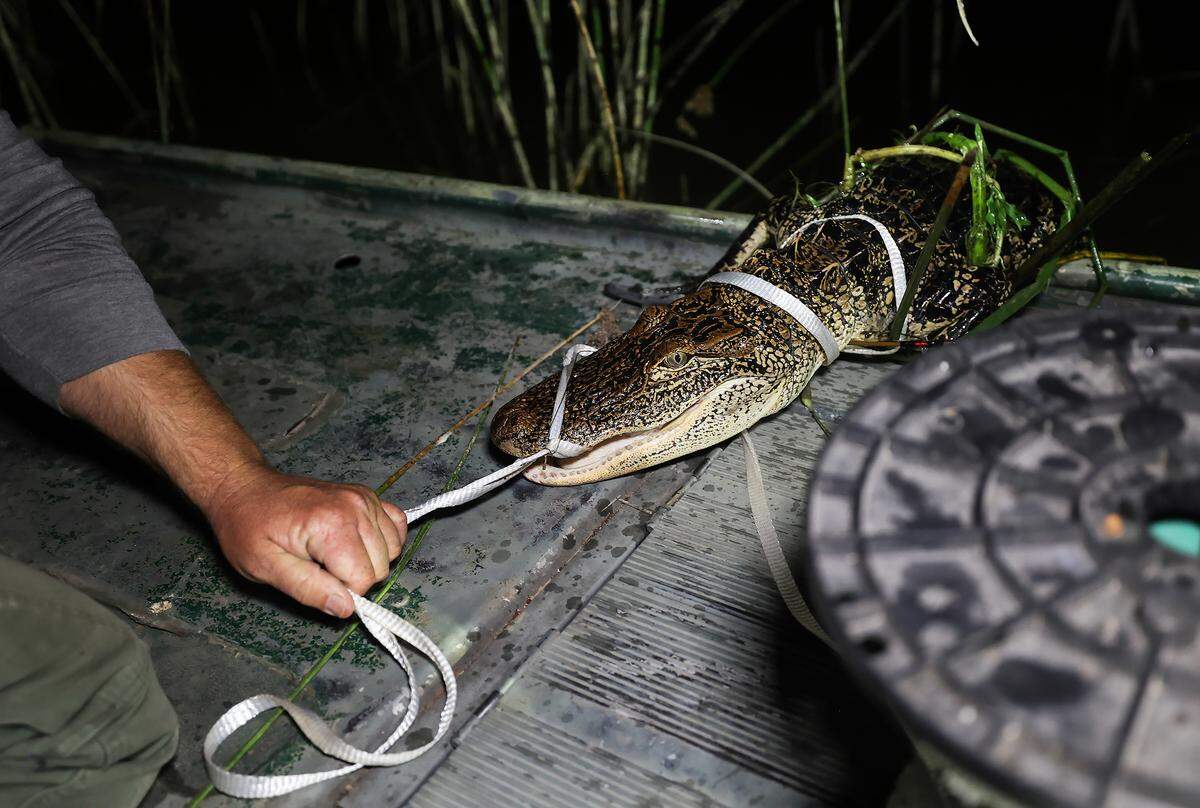
These apex predators are not going anywhere in Fort Worth. Wood wants to help residents understand that humans are not alligator’s prey; and the alligator is irreplaceable and valuable to our ecosystem.
To learn more about what to do if you encounter an alligator, visit our article here. It is a crime to illegally hunt alligators. Charges include a misdemeanor, up to $10,000 fine and even jail time.
This story was originally published August 2, 2025 at 12:00 PM.