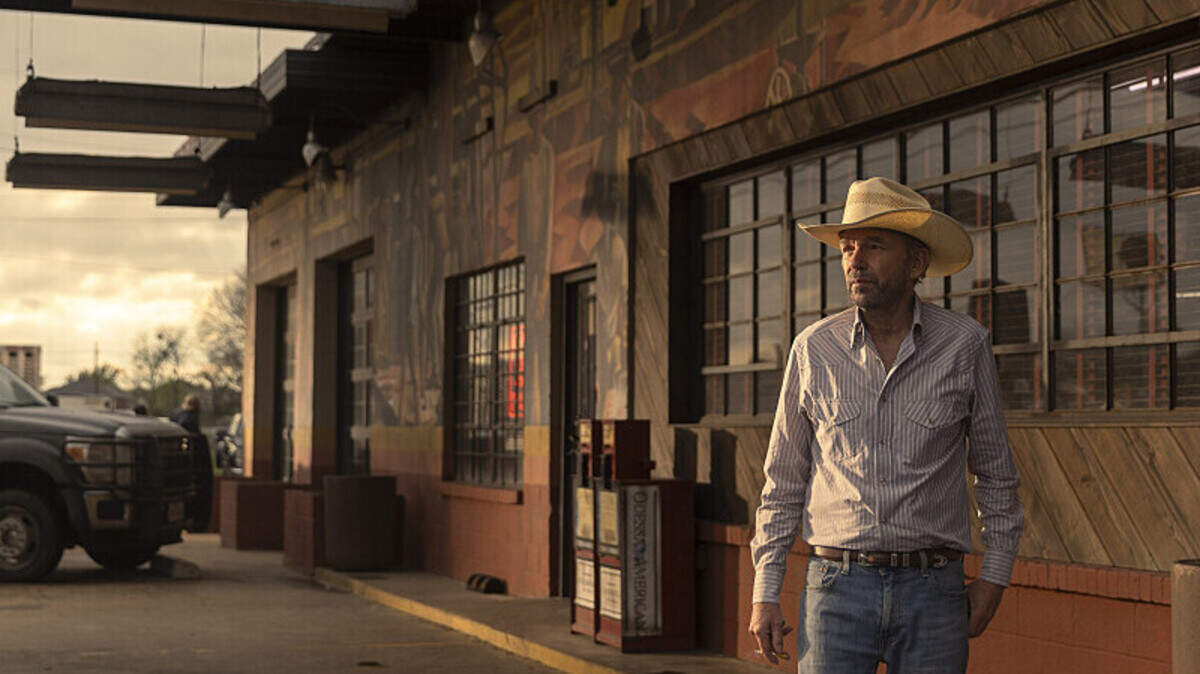
Billy Bob Thornton as Tommy Norris in season 1, episode 7 of “Landman” streaming on Paramount+.
Emerson Miller
Paramount+
Fort Worth
A bill injecting $1.5 billion into the state’s film incentive program over the next decade is now law.
Senate Bill 22, filed by Sen. Joan Huffman (R- Houston), was one of several bills that passed without Gov. Greg Abbott’s signature over the weekend. Under the Texas Constitution, the governor can sign or veto a bill, or if neither action is taken, the bill becomes law without signature.
The bill authorizes the Texas Comptroller to deposit $300 million into the Texas Moving Image Industry Incentive Fund every two years until 2035. This greatly increases the $200 million biennium that Texas lawmakers passed in 2023.
In mid-April, the Texas Senate passed the bill in 23-8 vote. More than a month later in late May, the Texas House passed the same bill, 114-26. Now, the bill is law and goes into effect on Sept. 1.
Both local and statewide advocates of the bill have celebrated the passing, including Fort Worth Film Commissioner Taylor Hardy.
“We are thrilled to see continued support for the film industry with the passage of Senate Bill 22. Film production has created a major economic boost, generating over $700 million in local impact, while supporting businesses and creating jobs in our community,” Hardy said in a statement. “Productions also shine a spotlight on our city, sharing Fort Worth’s unique charm with audiences around the world. We look forward to welcoming more filmmakers to Fort Worth soon.”
Nonprofit Media for Texas has been at the forefront of film incentive conversation and was ecstatic about the bill becoming law.
“The future of Texas film just officially got a whole lot brighter,” the nonprofit said on Instagram. “Thank you to Gov. Abbott, Lt. Gov. Dan Patrick, Senator Joan Huffman, & Representative Todd Hunter for making the dreams of so many Texans a reality. And most importantly, thank you to our film community for always believing in Texas film and showing up this session to git-r-done.”
Several Texas actors and filmmakers have also campaigned for SB 22 and the House equivalent — HB 4568 — which was left in committee.
Parker shared the following statement with the Star-Telegram on SB 22 becoming law.
“The film industry has created a major, direct economic impact - more than $700 million and 30,000 jobs - in Fort Worth since 2015, and we’re just getting started,” Parker wrote. “That impact and success is in large part due to the state’s commitment to build upon this burgeoning industry and ensure that Texans reap the benefits. The film industry is truly the next great opportunity in Fort Worth’s dynamic story.”
(L to R): Co-creator Taylor Sheridan and Billy Bob Thornton as Tommy Norris in season 1, episode 3 of “Landman” streaming on Paramount+. Emerson Miller Paramount+
What does SB 22 include for film incentives?
Projects can score additional grants under certain requirements:
Texas heritage grant- A 2.5 percent add-on for projects that promote family values and portray Texas/Texans in a positive light.
Rural filming grant- A 2.5 percent add-on if a production company spends at least 35 percent of the project’s filming days or working hours in a county with a population of 300,000 or less.
Post-production grant- A 1 percent add-on if at least 25 percent of total in-state spending for the project is spent by the production company during post-production on eligible expenditures, such as labor, vendors and music.
Texas veterans grant- A 2.5 percent add-on if at least 5 percent of the production crew, actors and extras are Texas residents who were honorably discharged from the military.
Faith-based grant- A 2.5 percent add-on if the project is designated as a faith-based project.
Texas historic grant- A 2.5 percent add-on if the production company utilizes historic sites in the state as filming locations.
Workforce development grant- A 2.5 percent add-on if the production company partners with a Texas institution of higher education on providing industry workforce development opportunities during production.
A project can qualify for more than one grant. However, the total amount of grants can not exceed 31 percent of the total in-state spending for the project.
The bill also outlines a residency requirement for Texas-based cast and crew:
A 35 percent requirement for projects that begin filming on or after Sept. 1, 2025, and before Sept. 1, 2027.
A 40 percent requirement for projects that begin filming on or after Sept. 1, 2027, and before Sept. 1, 2029.
A 45 percent requirement for projects that begin filming on or after Sept. 1, 2029, and before Sept. 1, 2031.
A 50 percent requirement for projects that begin filming on or after Sept. 1, 2031.
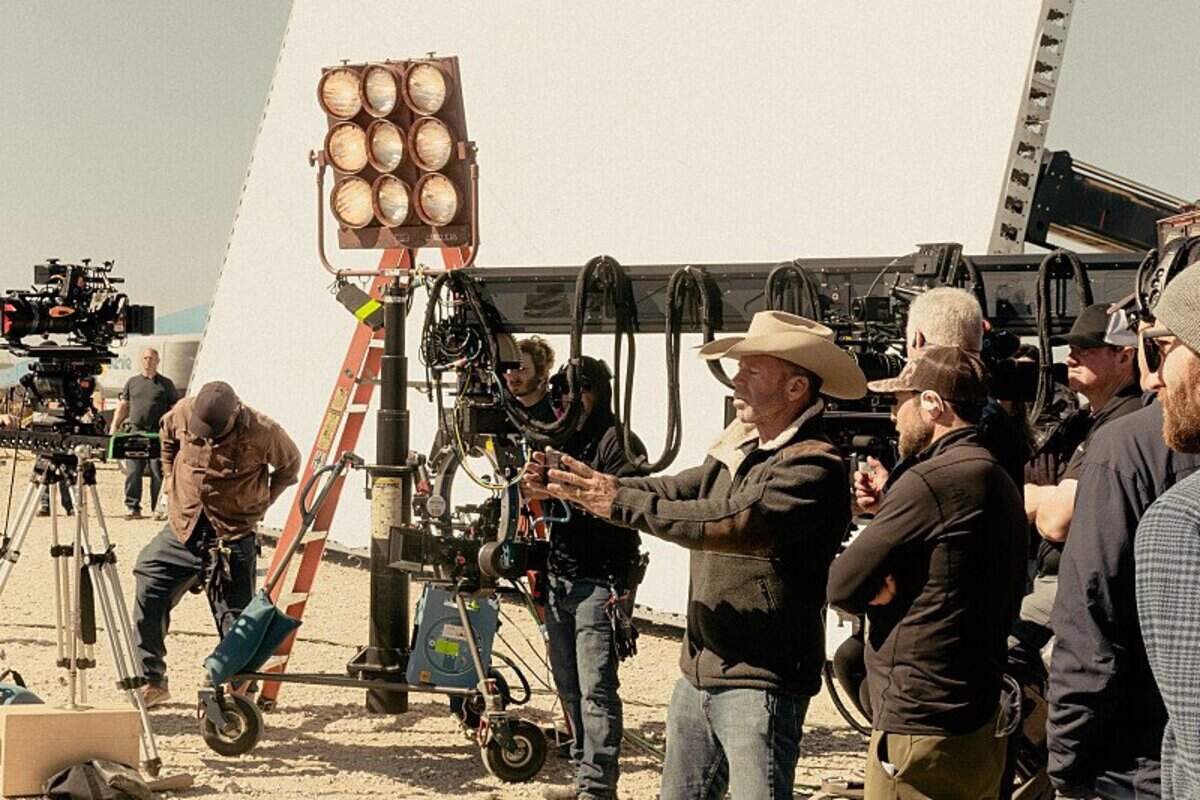
Creator Taylor Sheridan in season 1, episode 2 of “Landman” streaming on Paramount+. Emerson Miller Emerson Miller/Paramount+
More on film incentives
Film incentives are essentially tax credits that motivate film and television productions to work in certain states.
In addition to Texas, more than 30 states have film incentive programs, according to the National Conference of State Legislatures. Texas has slowly added more to the incentive fund over the last decade, with SB 22 being the largest allocation thus far.
$500 million was the initial figure associated with SB 22, but the House amended the bill to only allow for $300 million in film incentives.
The new film incentive program begins on Sept. 1, 2025, and ends on Sept. 1, 2031.
Follow More of Our Reporting on Uniquely Fort Worth
Brayden Garcia is a service journalism reporter at the Fort Worth Star-Telegram. He is part of a team of local journalists who answer reader questions and write about life in North Texas. Brayden mainly writes about weather and all things Taylor Sheridan-related.