Why a call to 911 doesn’t always trigger a police response in these U.S. cities
READ MORE
‘Mental illness is not a crime’
At least one in three people killed by Dallas-Fort Worth police since 2014 were experiencing a mental health crisis. Other cities send trained civilians instead of police to mental health calls.
Expand All
A woman in a pink sleeveless shirt removed a 12-inch drainage grate and stuck her left leg in the hole. As she swung her leg back and forth, the damp wind whipped her blond hair around and sprayed her face with a cold mist.
It was 52 degrees in downtown Olympia, Washington, and a worried business owner called 911 to have someone check on the woman.
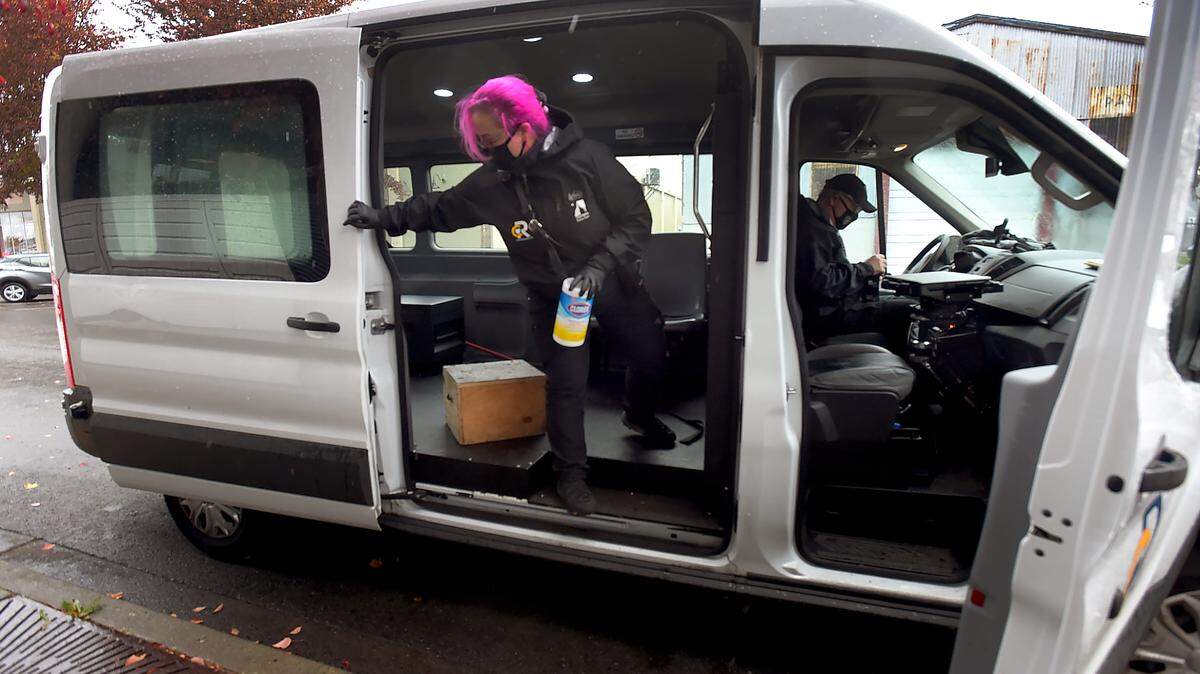
A dispatcher sent Teal Russell, a member of Olympia’s Crisis Response Unit.
“How are you doing today?” Russell asked the woman, using her first name. She knew her from previous calls.
The woman slowly lifted her leg out of the hole and stood up. Russell quickly slid the grate back into place.
“Do you need a jacket?” Russell asked her.
The woman didn’t answer.
“Are you hungry?”
The woman didn’t answer. She walked in a circle on the sidewalk while she looked down at her shoes.
Russell opened the back of her SUV and grabbed a snack, $5 gift card, a Camel cigarette, new socks and a black zip-up hoodie.
“Here, take these, put on the jacket,” Russell said. “Look, it’s brand-new. You’re the first person to wear it.”
Russell tried again to talk to the woman before the woman walked away several minutes later.
Russell didn’t follow her.
The woman wasn’t doing anything wrong. She didn’t say what, if anything, she needed. She had not been accused of a crime.
Russell is a member of the Olympia Police Department’s Critical Response Unit. She used to be the city’s homeless response coordinator. Skills learned from that position have helped her on the crisis team, as many 911 calls regarding mental health concerns also involve the city’s unhoused population.
The unit is composed of eight people who respond to mental health or other non-criminal 911 calls such as homelessness, disturbances, welfare checks and public intoxication. The team is adding three more members.
They are unarmed, civilian employees who have backgrounds in social services and mental health work. They specialize in de-escalation, and their presence helps diminish the stigmatization of mental illness.
While Russell talked with the woman, two police officers walked by and asked if she needed help, Russell shook her head no. They kept walking.
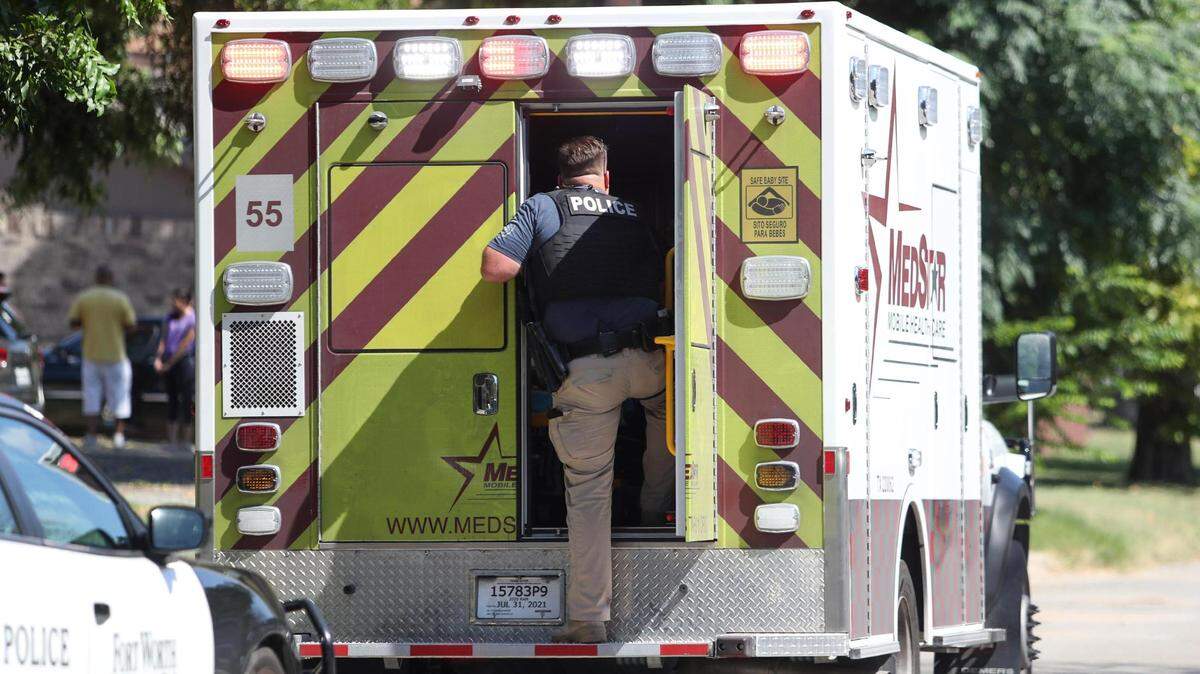
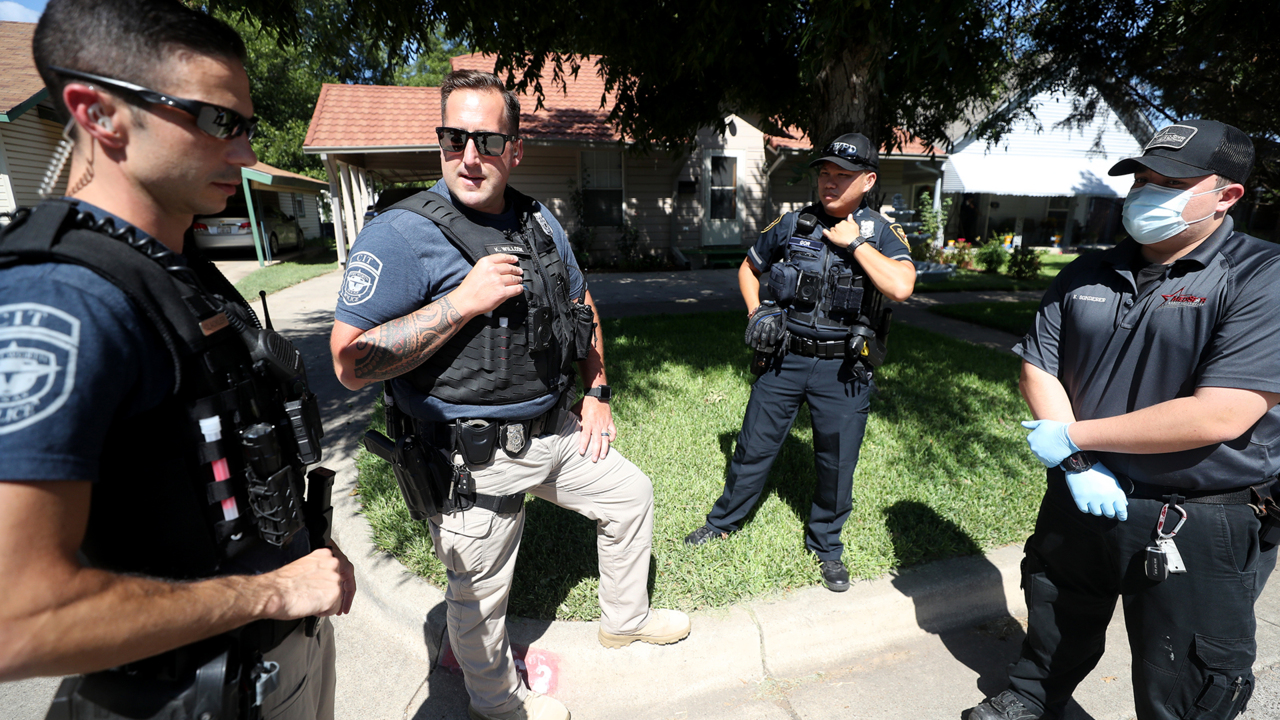
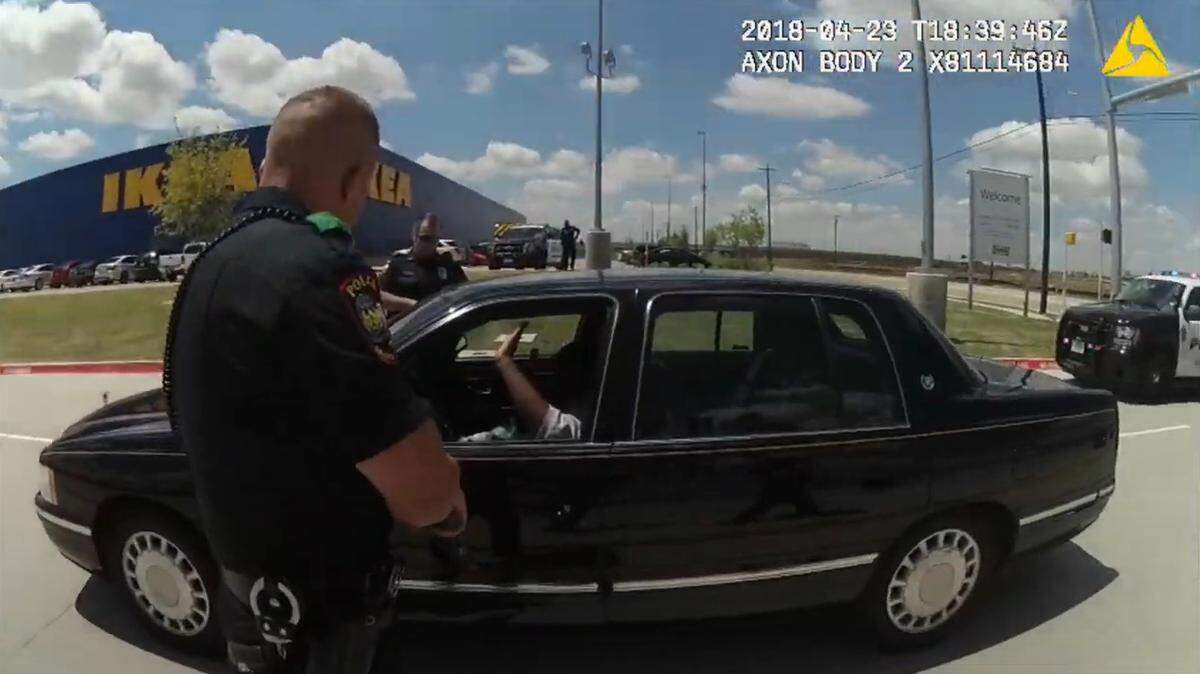
In North Texas, a similar 911 call would have triggered a response from a police officer. They’re the first to respond to mental health calls, which experts said can aggravate already stressful situations. The result? A call that could have been handled by a trained mental health professional can quickly escalate to the point that police resort to deadly force, a Star-Telegram investigation found.
At least 54 of the 150 people killed by Dallas-Fort Worth police since 2014 were in mental distress — or were known to have struggled with their mental health, a Star-Telegram investigation found. The newspaper found numerous instances when police fired their guns moments after arriving on the scene.
At least five cities in the U.S. have found success using mental health professionals or paramedics to respond to calls, including Olympia. And since protests against police brutality erupted across the country in June 2020, a dozen other cities announced they’re developing first-responder programs that won’t involve police.
A representative of the Fort Worth Police Department told the City Council on Tuesday that My Health My Resources of Tarrant County (MHMR) has received a federal grant that will allow mental health experts to take some nonviolent mental health calls beginning in January.
In one of the cities with an established program, Eugene, Oregon, (population 156,185) police have killed six people since 2015. One of those involved mental illness and, according to the family, the crisis team wasn’t on the scene.
Olympia’s response
As the woman in the pink shirt walked away from Russell, a man in a navy hoodie walked toward her with a limp. He carried two folded blankets and asked where he could find food.
“Do you need a bag for your blankets?” Russell asked after a short conversation.
She grabbed a trash bag and helped him stuff the blankets inside so they would stay dry.
Russell talked with the man for about 15 minutes. He asked about food and then talked in circles about his problems with women. When Russell said she could help him get fed, he told her the city towed his van and he didn’t have the money to get it back.
“Am I supposed to steal another van?”
“No,” Russell assured him. “I can’t help you with that right now. I want to do something that can help you this second.”
The man continued to change the topic and stopped focusing on food. He repeatedly brought up his issues with women, so Russell called her partner, a man, and asked that he meet her and take over. The man never became aggressive, Russell just wasn’t able to break through to him.
“He clearly has some kind of issues with women,” Russell said later, explaining why she called her male partner for help. “I wanted to keep him talking so he wouldn’t walk him away and we could get him food.”
Russell spent nearly an hour talking with the man and woman before she left.
Russell has been on the team since it began in 2019.
Former police chief Ronnie Roberts had worked in Eugene, Oregon, where a citizen-led crisis team has been operating for more than 30 years.
“He had known as an officer that certain calls for service that were related to behavioral health or poverty could be taken care of through an alternative response,” said Anne Larsen, outreach services coordinator for the Olympia Police Department.
While creating the program, Larsen rode with officers during their shifts and held forums with residents, business owners, and employees from the police department and 911 call center.
“I wanted to find out what kind of model would work best for them,” Larsen said.
Social services groups told her they didn’t want to call 911 when they had issues with people at their businesses (such as the woman with her leg in the drain pipe) because they didn’t think police should be involved. Officers shared their ideas on what calls they thought should be answered by the team. Dispatchers were included because they would determine where to send a call.
Sam Costello, deputy chief of Olympia police, said adapting the program made sense. It was easy for the department to get behind its creation, he said.
“You got to get comfortable with being uncomfortable at first,” he said. “For most of us in law enforcement, the badge and uniform is the primary response, and there’s this omnipresent belief that everyone is a threat, and we need to be prepared for that. While that’s true in many respects, what we found is that crisis responders can sometimes make headway that we can’t make.”
Larsen and a police lieutenant traveled to Eugene to learn about its program. Unlike the team in Eugene — which pairs behavioral health specialists with medical professionals — the Olympia Crisis Response Team uses only behavioral health experts. Its medics work under the fire department and are called when needed. Olympia is home to 55,605 people.
From July 1 to Sept. 30, the team was dispatched to 250 calls that came through 911. Other times, the team encountered someone on patrol or were called by police. About one-third of the cases handled by the team were related to mental or behavioral health.
How to form a response team
In 2016, employees of the Mental Health Center of Denver were given police radios and started to ride with Denver officers.
“We thought, ‘Why are we sending officers to some of these calls?’” said Chris Richardson, of the Mental Health Center of Denver. “What would it look like to have an alternative response?”
Like leaders in Olympia, Denver’s top officials traveled to Eugene.
Denver’s STAR pilot program was funded by a quarter-cent sales tax approved by 85% of voters in 2018 called Caring 4 Denver. The population of Denver is 705,576 people.
Two years later, the Support Team Assisted Response program was launched with outside funding and money from the tax increase. The police department’s budget was not affected.
The program started with a few vans and a couple of providers who patrolled and answered calls in downtown Denver five days a week. But in July, the Denver City Council approved $1 million to expand the program, which handled 1,400 calls in its first year.
None of those calls led to arrests, injuries or the need for police backup, Richardson said.
The program, like the ones in Eugene and Olympia, still uses the 911 call center to divert calls, but it also has its own phone number, and residents can get help from the team by calling that non-emergency number.
Denver police fully supported the program.
“I think in the last five years Denver police learned a lot just from being in a car with us,” Richardson said. “We can do a lot of things that police are told not to do and it helped them understand different approaches. We want to do what we can to help someone feel like they’re part of the solution.”
Larsen, the outreach outreach services coordinator in Olympia, said it is possible for larger cities to form similar teams. She suggests starting small and covering one part of town.
“Getting input from the community and police really helped get that support to back up this idea,” she said.
The 2020 budget for the Olympia team was $554,823, which came from a public safety levy that voters passed in 2017. The budget in 2021 increased to about $1 million, $805,000 of which came from the levy and another $250,000 from the city’s general fund.
Until 2020, the services from the crisis response unit were contracted. Last year, the city made the contractors city employees and shifted the budget from the standard police budget into the crisis response unit. No full-time employees at the police department have been affected, and the crisis responders are Olympia Police Department employees.
As Olympia and Denver were putting together the final details of forming their teams, Phoenix Vice Mayor Carlos Garcia was advocating for his city to form its own program after he noticed a theme in police shootings.
Since 2015, officers in Phoenix (population 1.6 million) have killed at least 14 people (15% of people killed by police) who were in mental distress. Some of the people who called 911 for help were family members of those who ended up dead.
“These family members feel like they played a big role in their loved one’s deaths,” he said.
Garcia said leaders recognized the need for an alternative non-police response to mental health 911 calls when no crime is suspected. So when the city announced its 2021-22 budget, it included a $15 million expansion to the Community Assistance Program, a civilian-only response team that goes to some behavioral health calls. The money came from a surplus in the budget.
The program operates through the city’s fire department (and will continue to be run there), but because of the size, members were taking only about 1,000 calls a year.
“That isn’t enough,” Garcia said. “I hope this team creates trust. I think it’s come around where people who may need support aren’t calling 911 because they’re afraid of the response. Hopefully when this expands, people will know and recognize that we’re trying to do what we can to address different scenarios that don’t need to involve police.”
Creating teams in North Texas
Darius Tarver was killed by Denton police in 2020 while he was in the midst of a mental health crisis. Police Chief Frank Dixon said the officers didn’t recognize Tarver’s behavior as mental health-related and instead thought he was on drugs.
After mourning his son’s death, Kevin Tarver funneled his anger and pain into action. He created the DJT Justice Network (named after his son) and began to work with other families whose loved ones were killed by police.
“It’s a horrible club to be in,” Tarver said. “But we have to support each other.”
He routinely lobbies for Denton to adapt the Eugene model.
Darius Tarver was killed after several people called 911 to report that a man was breaking out lights in an apartment complex breezeway. Tarver’s roommate also called 911 and told dispatchers that while he was behaving oddly, he wasn’t dangerous.
Four officers were sent to the complex. It took about five minutes for another officer to coax Tarver down the stairs.
Officers immediately yelled at him to drop the frying pan and cleaver. Tarver didn’t listen and called out for God. He only moved toward the officers after he was hit with a Taser’s prong. He was shot once and then fell to the ground and lay there for 30 seconds as he continued to yell out for God.
When he eventually stood up, he was shot a second time and killed.
Darius Tarver wanted to join a police department when he graduated from college and was a member of the National Organization of Black Law Enforcement.
“That didn’t save him,” Kevin Tarver said.
But if unarmed, trained professionals were called to the apartment that night, he might have had a better chance, Kevin Tarver says.
“The Denton City Council has the power to create such a response,” Kevin Tarver wrote in an op-ed on Sept. 18 in the Denton Record-Chronicle. “They must use it.”
The Denton Police Department eventually formed a crisis team, about a year and a half after Tarver was killed. The department uses a mental health expert who sometimes rides with officers, but police are still the first to respond to mental health calls.
This story was originally published November 21, 2021 at 5:15 AM.