When police video captures officers’ fatal shots, Texas law allows them to keep it secret
READ MORE
‘Mental illness is not a crime’
At least one in three people killed by Dallas-Fort Worth police since 2014 were experiencing a mental health crisis. Other cities send trained civilians instead of police to mental health calls.
Expand All
When Carlos High was killed by Grand Prairie police, the department refused to release video of his death for two years.
His family wanted to see for themselves what happened, not rely on what police told them or a four-sentence police report, according to his family’s attorney, Kim T. Cole of Frisco. The wait was agonizing, she said.
Texas law allows police departments to choose whether to release videos when a suspect ends up dead or in instances when the footage will not be used as evidence. The result can be a lack of transparency and accountability when police take someone’s life.
“When police chiefs pick and choose what videos to release, body cameras go from being a tool of transparency to a propaganda tool,” said Nick Hudson, a policy and advocacy strategist for the American Civil Liberties Union of Texas.
In an investigation into how North Texas police departments respond to mental health 911 calls, the Star-Telegram made 17 requests for body-camera footage.
Seven have been received and seven were denied. One other request is still being processed, and two more were referred to the Attorney General’s Office, which has not ruled whether they should be released.
When cities withhold body cam video
In most denials, city attorneys cited what’s referred to as the “dead suspect loophole.” Departments can choose to withhold videos and other police documents (such as reports and 911 logs) in cases in which someone isn’t charged or convicted. This effectively allows police the option to withhold video or documents when someone is killed.
“It creates an odd situation where you have a person who died and can’t be convicted or given deferred adjudication but their family members and the public don’t have a right to access body camera information that would tell them the circumstances of that person’s death,” said JT Morris, a First Amendment attorney in Austin.
A portion of the law states that someone who requests body camera footage must name at least one person who is the subject of the recording. In a case out of Fort Worth, city officials said the victim was not shown on camera. Because the newspaper didn’t know the name of anyone who was filmed, the request was denied.
Families of those killed are also given the discretion to weigh in on whether they want the footage released. In another Fort Worth case, the wife of a man who was killed wrote to Attorney General Ken Paxton, the police department and the newspaper to request that the video be withheld.
One of the newspaper’s requests was denied because the department used an exemption regarding potential litigation. The department has not been sued, but families have two years to file a civil rights lawsuit.
Morris called that a “pretty flimsy justification” for denying release since the video would come out during a lawsuit anyway. And there’s no guarantee a family will file a lawsuit.
A family’s fight for police video
Cole, the attorney who represents High’s family, said they did not get copies of the video until they filed a lawsuit against the police department.
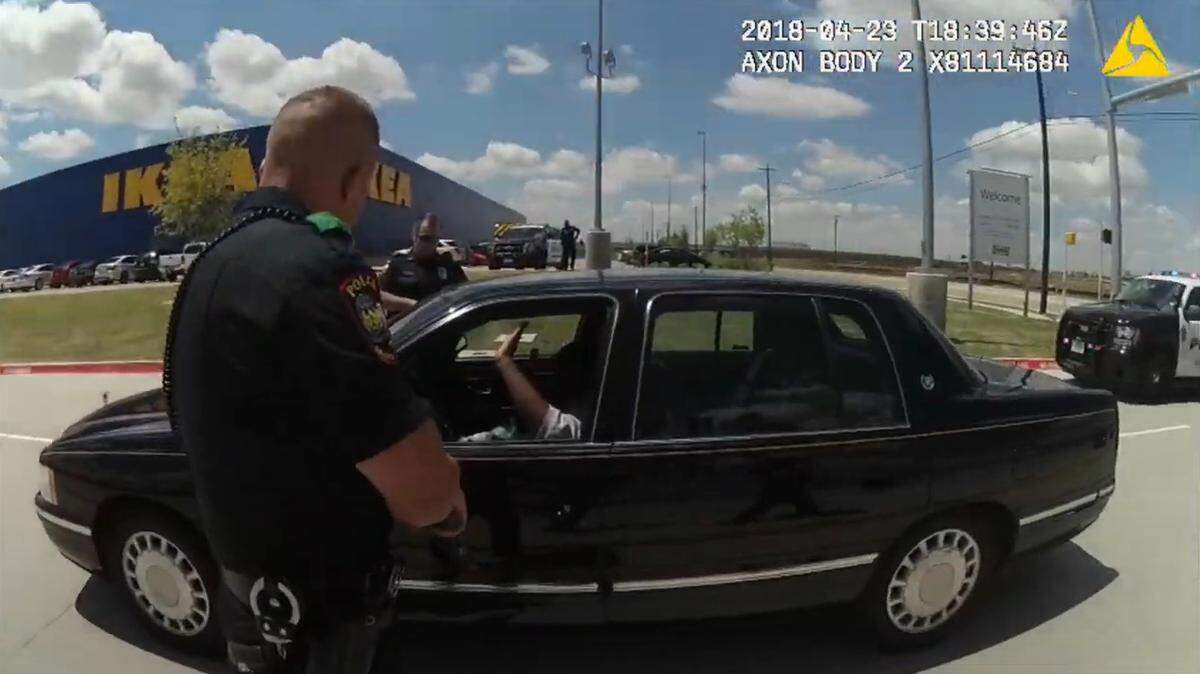
High was killed in 2018 after someone called 911 to report a man was slumped over his steering wheel in the parking lot outside an Ikea store in Grand Prairie.
When the first officer arrived, High immediately told him he had a gun in his lap. The officer demanded High put his hands up, and he did.
High was scheduled for a psychiatry appointment about an hour later that afternoon. He referred to snipers on the roof who were watching them.
After several minutes, the officer called for backup. One of the officers quickly walked up to High’s driver’s side window, got within inches of him and looked down at the gun. High appeared spooked by the sudden arrival of the officer. He dropped one of his hands.
The officers stepped back, drew their weapons and shouted at High to raise his hands. In an instant, High grabbed the gun and was fatally shot.
A four-sentence police report said: “Officers responded to a check welfare at 1000 Ikea Way. During the officer’s encounter with the subject, he displayed a firearm. Officers fired on the suspect, retreated to cover, and began negotiations. SWAT was called to approach the vehicle; when they did the subject was found to be deceased.”
That day, then-Grand Prairie Police Chief Steve Dye told reporters that High fired his gun at officers, who fired back in fear of their lives.
Two days later, he retracted his statement and said there was no evidence High fired his rifle.
His family wanted to see body camera footage so they could determine what exactly happened, not rely on misinformation.
“I requested that video numerous times and they kept blocking it,” Cole said. “They strung his family along for two years.”
Cole eventually dropped the lawsuit after she received the video.
“In dropping the lawsuit we requested a change of their policy with regards to transparency,” she said.
Grand Prairie police declined to meet with the family and, according to Cole, have not changed their policies. The police department did not return a request for comment.
Changing department policies
Some Texas departments have created policies that dictate when and how to release videos in the event of in-custody deaths.
Fort Worth’s policy says videos should be released no later than five days after a death, but the language leaves the possibility for some videos to be withheld based on state law.
Those instances include videos that might compromise an investigation, show the use of tactics that could have a negative effect on future operations, or footage that would violate someone’s privacy. Other instances include videos that show juveniles, deceased people, and ones that identify the names of officers.
The city’s new police monitor, Kim Neal, did not return a call and emails that asked if she’s reviewed the department’s body camera disclosure policy.
Arlington body-worn camera policy does not set specific timelines for release after a police shooting, spokesperson Tim Ciesco said.
“Department leaders determine that on a case-by-case basis, again, to ensure that the appropriate individuals have time to review it before it’s released publicly,” Ciesco wrote in an email, clarifying that despite there not being a set deadline, police leaders have always chosen to release body camera footage.
Typically, Ciesco said, the department has released at least some portion of videos within 72 hours.
Morris, the attorney in Austin, said there needs to be a uniform law statewide that takes the decision-making away from police chiefs and requires them to release certain videos.
Texas law says only body camera footage that could be used as evidence in a criminal proceeding is subject to the law, which means departments can choose to withhold or release anything else.
The law strictly prohibits the release of footage that shows the inside of a residence or contains an interaction that didn’t result in an arrest or would only be a misdemeanor.
So video of a police shooting inside someone’s home would be withheld. And because someone who is dead can’t be involved in a criminal proceeding, chiefs can choose to withhold those videos.
Hudson, of the ACLU, argued that giving police exclusive control over the release of videos defeats the purpose of having body cameras and “does significant harm to the trust and confidence in police departments.”
“Videos, particularly of critical incidents that involve death, should be automatically released to the public,” he said.
An attempt to strengthen the state’s transparency law recently failed.
State Rep. Joe Moody of El Paso introduced a bill during the 2021 legislative session that would have required departments to release videos related to critical police incidents within 60 days. The bill would have also closed the loophole that allows police to withhold videos of dead suspects.
The bill would have provided flexibility for redacting portions of videos in certain circumstances, such as the images of juveniles or victims of certain crimes to protect their privacy. The bill would have prohibited an agency from redacting or editing a video that compromised the depiction of what happened during the critical incident, including images of the officers involved.
It died in committee.
This story was originally published November 21, 2021 at 5:15 AM.