Why are you writing about vaccines? Answers from the Star-Telegram’s health reporter
READ MORE
Measles in Texas
Tarrant County has confirmed its first measles cases. Follow our reporting on the Texas outbreak.
Expand All
I’ve spent a lot of time over the last year reporting on childhood vaccinations in Tarrant County. In reporting and researching vaccines, and how families feel about them, it’s clear that the topic can be an emotional and scary one for some parents to discuss. I’ve written this FAQ to explain how I’m approaching the topic. I hope this offers greater clarity on my goals as a reporter.
Why are you writing about vaccines?
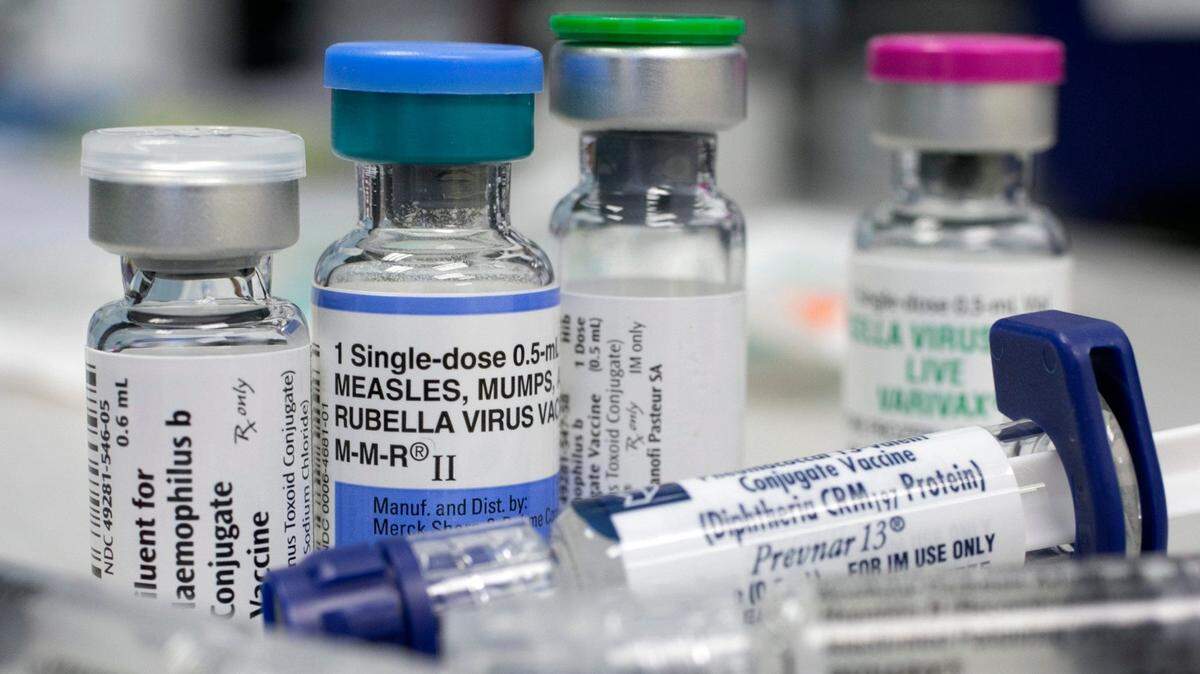
Although most Texas children receive routine childhood vaccinations, there has been a notable shift since the COVID-19 pandemic began in 2020. In the Fort Worth school district, for example, the measles vaccination rate for kindergartners has dropped from 96% of children at the beginning of the 2019-20 school year to 84% last school year.
I am writing about vaccines to understand why exactly Tarrant County and other communities are seeing this decline, and to understand what risks lower vaccination rates could mean for our community.
I also decided to write about vaccines to fill an information gap in our community. In many states, like our neighbors Oklahoma and New Mexico, parents can easily look up campus-specific vaccination rates online. But in Texas, the only rate that’s publicly available is the rate for an entire school district, which can include dozens of campuses and mask significant variation by campus. If you want to know the vaccination rate for a specific campus, you have to file a public records request.
The vaccination rate for an entire district isn’t always the most useful metric, particularly for infectious diseases like measles, which are highly contagious and typically spread among local networks.
I wanted to make information about each campus’ vaccination rate accessible and easy to understand for parents, school staff, and local residents interested in public health.
Are you pro-vaccine?
My primary goal as a reporter is to provide my community with useful, accurate information that can help them understand complex topics with appropriate context. Vaccines are a topic that have been mired in incorrect information for decades. In fact, some of the same falsehoods that are repeated about the COVID-19 vaccine — like that it causes infertility, which is untrue — were repeated about the smallpox vaccine, the world’s very first vaccine that was created in 1796, said Charlotte Moser, the co-director of the Vaccine Education Center at the Children’s Hospital of Philadelphia.
I am not a doctor or a nurse, and my job is not to tell you whether you or your child should get any particular vaccine. It is my job to accurately explain the benefits and risks of vaccines, and to make it clear when certain narratives about vaccines aren’t correct or lack adequate context. Success for me as a reporter is when families have the information they need and feel equipped to navigate their children’s health and school environments.
Who is funding your work?
My position at the Star-Telegram is funded through donations made to the newsroom’s Crossroads Lab, an arm of the Star-Telegram’s newsroom that is dedicated to reporting on under-covered topics. Donations to the Crossroads Lab cover my salary and allow me to report on vaccines and other health topics, like the Texas Medicaid program and health care for people who are homeless.
I am also receiving additional funding from the Association of Health Care Journalists’ Health Performance Fellowship. This money allowed me to pay for public records from school districts. So far, we have paid $597.60 for public records about Texas school districts’ vaccination rates.
This funding allows me to spend time on this reporting, but it doesn’t have any influence over what I cover. My editors and I make those decisions the same as we would without direct funding.
I don’t see my experience reflected in your work. Can I talk to you?
I am going to continue reporting on this topic, and I would love to hear from you.
Although vaccines are a charged topic for some people, my goal for this reporting is that we can respectfully engage in a conversation that starts from the same place: We want what’s best for our kids and our community. I approach each interview with curiosity, and I don’t want anyone to feel judged or shamed by my coverage. If you think I’m missing the mark, please get in touch. You can email me at cmccarthy@star-telegram.com or call or text me at 817-203-4391, or you can complete our vaccine survey.
How did you get all this data?
We started by looking at what information was already public. Every year, the Texas state health department publishes a report with vaccination rates for Texas public and private schools. This survey helps us see major trends, but for large school districts like Fort Worth, which educates 4,700 kindergarten students across 80 campuses, a district-wide vaccination rate can hide variations in rates between campuses.
So we decided to get campus-level data for every school district in Tarrant County. We filed public information act requests to every school district in Tarrant County to ask for vaccination data for Kindergarten classes.
None of the data that we requested includes any information that could be used to identify individual students. The Department of State Health services does not release data on schools that have fewer than five students in a Kindergarten class.
We focused our analysis on kindergarten students, because younger children have seen a bigger dip in vaccination rates than their older peers, according to state data.
Four districts charged the Star-Telegram to compile the information we requested. In total, we paid $347.40 for these records.
Four districts — Arlington, Godley, Hurst-Euless-Bedford, and Carroll — said they either didn’t collect vaccination data at the campus level or that they would not provide it to us under the public information act.
Once I received all the data, I built a spreadsheet with the vaccination information for each campus. Using this spreadsheet, I could identify campuses with lower vaccination rates, and see that Fort Worth’s school district has an unusually high number of unvaccinated students compared to other districts in Tarrant County.
In addition to requesting data from school districts in Tarrant County, I also requested data from the 10 largest school districts in the state and the 11 school districts the state classifies as “major urban” districts, to see how Fort Worth’s school district compares with its peers across the state. For these records, we paid another $250.20.
Finally, I used data from the Department of State Health Services to report the MMR vaccination rates for private and charter schools in Tarrant County. I followed up with each school to verify that the state’s information was correct, and updated the database if schools provided additional information.
So far, I have filed 53 public records requests to report this story.
This reporting was done as part of a fellowship with the Association of Health Care Journalists supported by The Commonwealth Fund.
This story was originally published November 25, 2024 at 6:00 AM.



.png)