
It’s your turn to vote on state, county leaders. Here are our primary recommendations
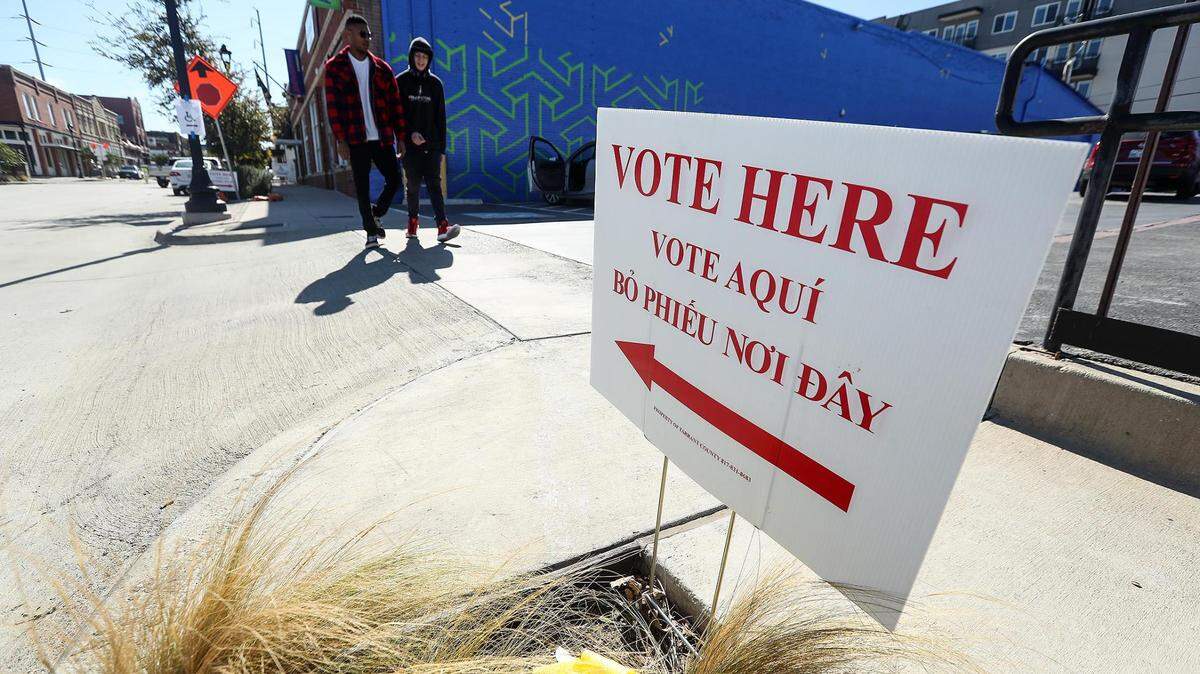
After two long pandemic years, voters can weigh in on the performance of their county and state officials.
Federal leaders are up again, too, but many were on the ballot in 2020. This is the first crack at a judgment of leaders such as the governor, lieutenant governor, county judge and many other officials.
The ballots are long, but it’s worth the effort. Go vote early in either the Republican or Democrat primary through Feb. 25, or on Election Day, March 1. We interviewed dozens of candidates in several key races. Here are our recommendations:
REPUBLICANS
Governor: Incumbent Greg Abbott is taking heat from all sides. But he’s the only viable option for the party. Abbott’s challengers, chief among them Don Huffines and Allen West, are touting unrealistic policies and/or aren’t fit for the job.
Attorney general: Eva Guzman is an experienced jurist who would dig into the meat of the job. Incumbent Ken Paxton has shown contempt for the rule of law and must be fired.
State Board of Education, District 11: Veteran Patricia “Pat” Hardy has a good feel for balancing interests on politically fraught issues. She’s earned a shot at another term.
Senate District 10: Rep. Phil King, a House veteran, is best prepared to step up to the Senate and lead on issues such as utility reform, law enforcement and crime, and education.
House District 91: Incumbent Stephanie Klick, who joined the House a decade ago as a staunch conservative, is now the target of the far-right. Klick is a good legislator and has done nothing to merit a firing.
House District 93: For this open seat, we recommend former Southlake Mayor Laura Hill. She’ll promote growth but also help wrangle the resources needed to deal with it.
County judge: The seat is open for the first time in years, and former Fort Worth Mayor Betsy Price is the choice to fill it. She’ll be the hard-working, consensus-crafting leader that the position requires.
District attorney: Judge Mollee Westfall is the right mix of tough on crime and willing to consider innovative rehabilitation policies. And she has the wherewithal to fix staffing issues in the DA’s office.
County commissioner, Precinct 4: Another seat that’s open for the first time in decades, this west/northwest Tarrant County precinct would be best served by Manny Ramirez. He’s a police veteran with a bright political future.
Judge, 371st District Court: Two veteran prosecutors are competing to replace Westfall. Both would make fine judges, but we give the edge to William Knight.
Judge, 372st District Court: This race also features two talented lawyers. Pamela Boggess has judicial, prosecutorial and defense experience and is ready for the bench.
DEMOCRATS
Governor: Beto O’Rourke may not be the phenomenon he was in 2018, but he’s the party’s best option by far to try to upset Abbott.
Lieutenant governor: Former party leader Carla Brailey brings an inclusive leadership style and education experience. And she’ll help the top of the ticket reflect Democratic diversity.
Attorney general: Civil-rights lawyer Rochelle Garza has ideas about how to make the office’s core functions work for many more Texans.
County judge: Business and political veteran Deborah Peoples represents both Democrats’ best chance to win and their most promising potential county leader.
District attorney: Tiffany Burks was a top leader in the DA’s office, and she’s most ready to take the next step.
County commissioner, Precinct 2: Two Arlington friends are duking it out in this race, and we prefer Ruby Faye Woolridge’s experience.
Editor’s note: Updated Feb. 17 to reflect recommendation in Senate District 10.
BEHIND THE STORY
MOREHey, who is behind these endorsements?
Members of the Editorial Board, which serves as the Fort Worth Star-Telegram’s institutional voice, decide candidates and positions to recommend to voters. The members of the board are: Cynthia M. Allen, columnist; Steve Coffman, editor and president; Bud Kennedy, columnist; Ryan J. Rusak, opinion editor; and Nicole Russell, opinion writer.
Members of our Community Advisory Board may also participate in candidate interviews and offer their views, but they do not vote on which candidate to recommend.
Read more by clicking the arrow in the upper right.
How does the process work?
The Editorial Board interviews candidates, asking about positions on issues, experience and qualifications, and how they would approach holding the office for which they are running. Board members do additional research on candidates’ backgrounds and the issues at hand. After that, members discuss the candidates and generally aim to arrive at a consensus, though not necessarily unanimity. All members contribute observations and ideas, so the resulting editorials represent the board’s view, not a particular writer.
How do partisanship and ideology factor in?
We’re not tied to one party or the other, and our positions on issues range across the ideological spectrum. We tend to prefer candidates who align with our previously stated positions, but qualifications, temperament and experience are important, too.
This story was originally published February 14, 2022 at 5:04 AM.