Hypothermia, frostbite are real dangers as freezing temperatures hit North Texas
READ MORE
Freezing weather in North Texas
Stay weather-aware with these tips. Check back on our homepage for updated forecast information.
Expand All
At least 246 Texans died during last February’s winter storm. More than half suffered from hypothermia or frostbite.
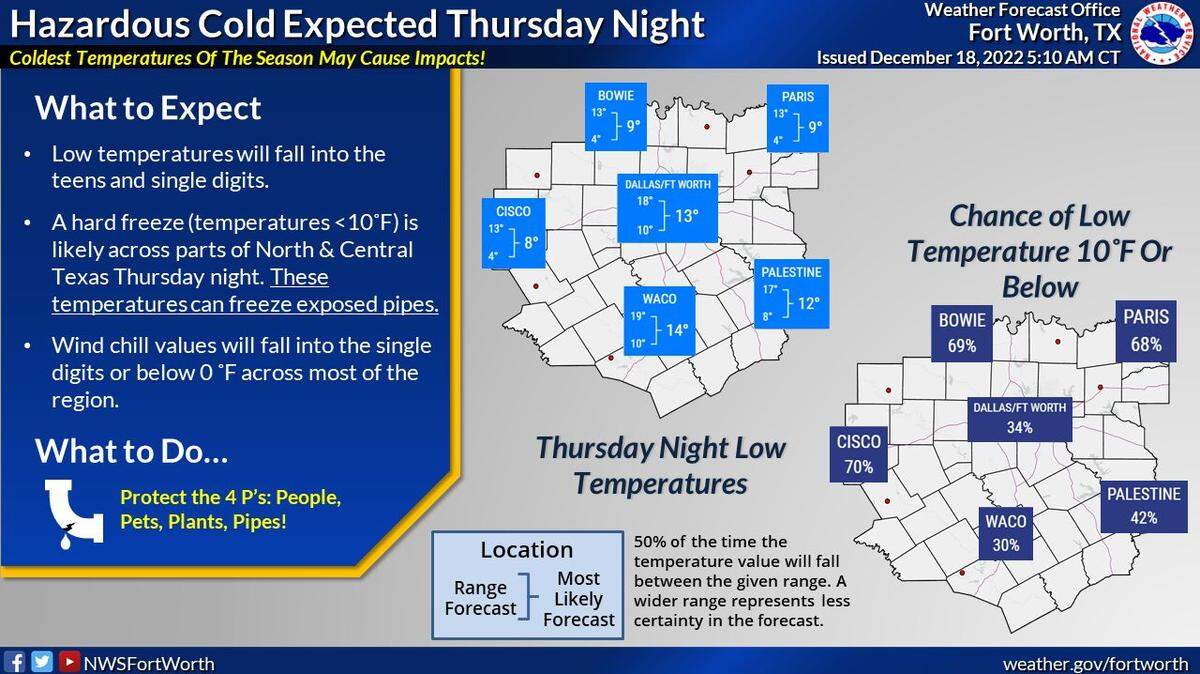
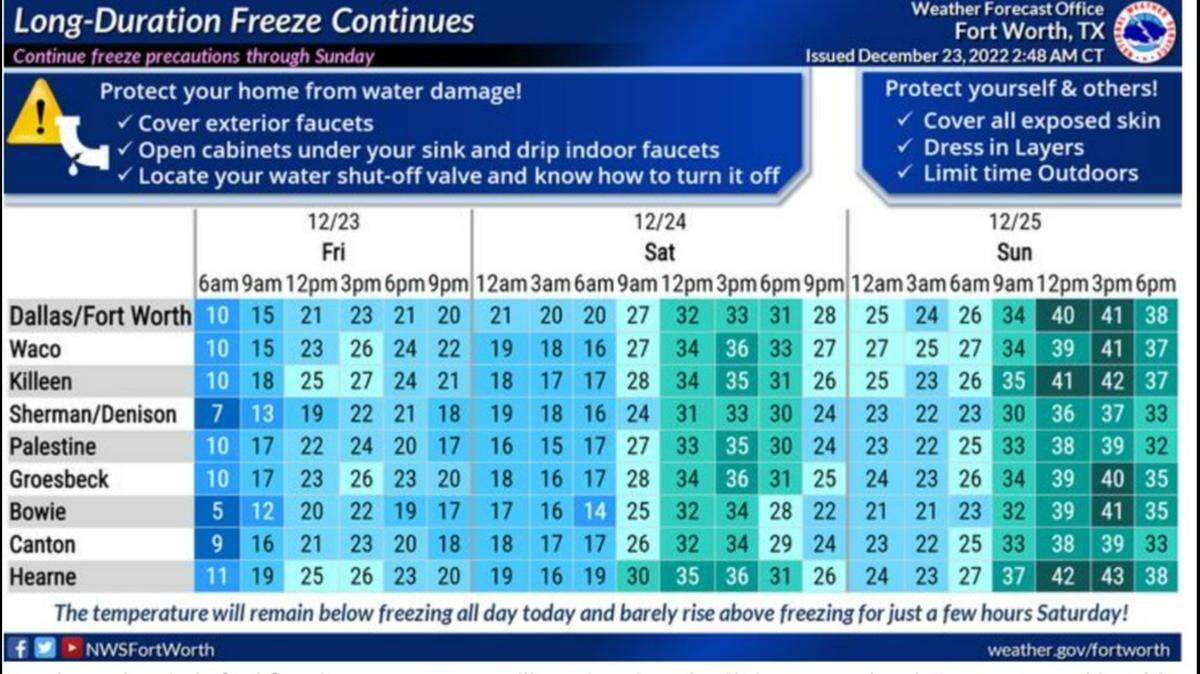
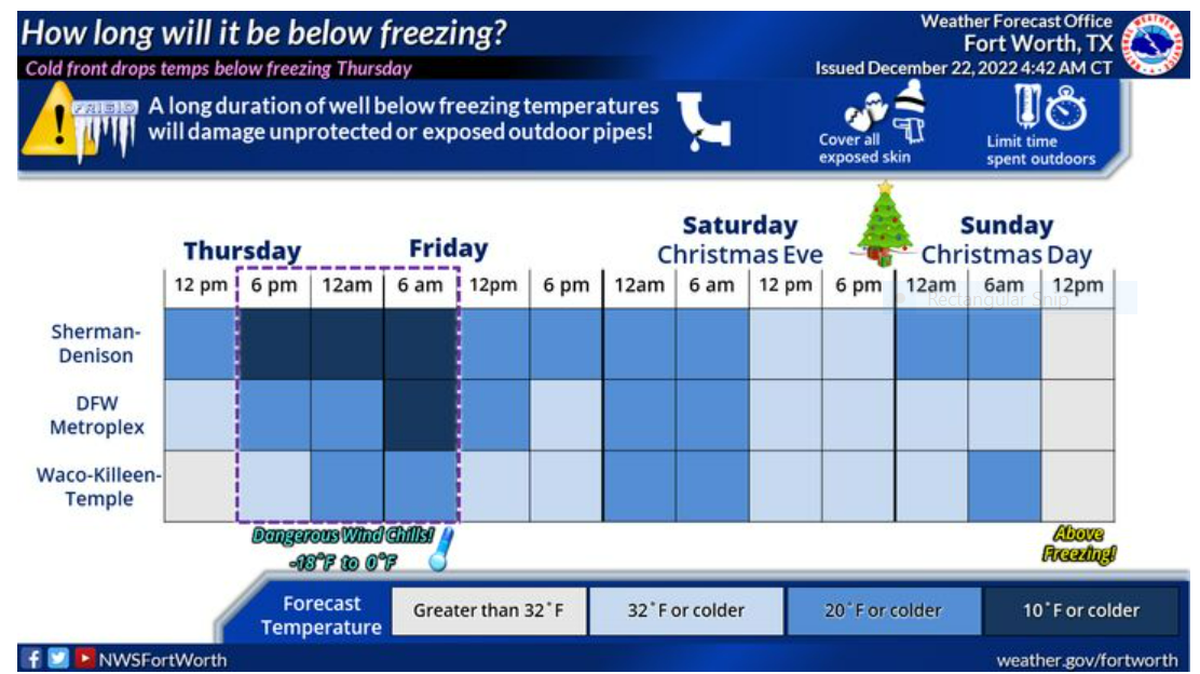
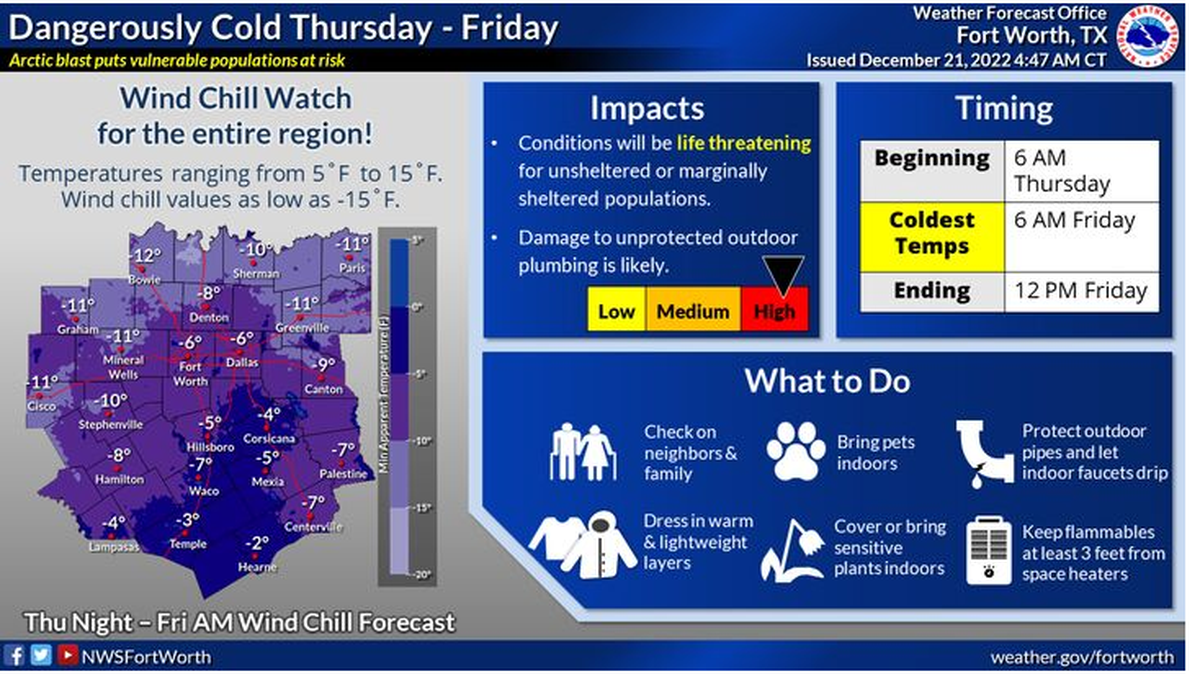
As a cold front pushes into North Texas, temperatures will drop in the teens and 20s.
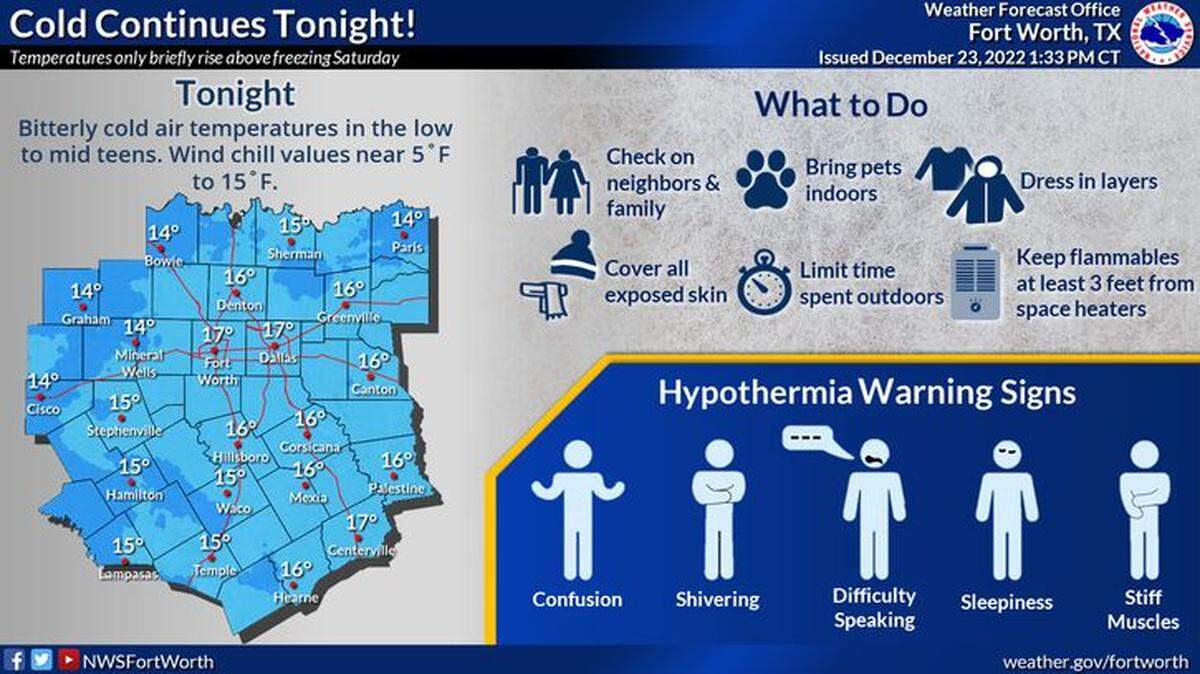
Hypothermia and frostbite
Hypothermia happens when your body temperature drops too low. Symptoms are fatigue, confusion, disorientation, excessive shivering and loss of coordination. In the later stages, your skin will turn blue, your pupils will dilate, and your pulse and breathing slow. Then unconsciousness and coma could follow.
Here’s what to do when someone experiences the initial symptoms, according to the Texas Department of Insurance:
- Call 911 immediately;
- Try to move to a warm, dry place;
- Replace wet clothes with dry clothes;
- Wrap the body, including head and neck, in layers and blankets with a tarp or garbage bag on top;
Drink a warm, sweetened drink (without alcohol or caffeine) to help raise the body temperature;
Place warm bottles or hotpacks in armpits and along the sides of the chest;
Check for signs of breathing or a pulse every 60 seconds.
Frostbite occurs when ice begins to form inside and around your skin cells. Early signs of frostbite are numbness, pins and needles feeling, blue and blotchy skin and aches. Blisters or black scabs may start to form. In the most severe cases, amputation of the damaged tissue is the only solution. If you or someone you know exhibit the early symptoms, follow these steps outlined by the TDI:
Call 911 immediately;
- Move to a warm, dry area;
- Loosely cover the frostbitten area with a dry cloth to protect it until medical help arrives;
Remove any tight or wet clothing that might cut off blood flow, and replace with warm, dry clothing;
Wrap the body in blankets or covers;
Do not rub or put pressure on the affected area;
Do not apply snow or water;
Do not break blisters;
Do not try to re-warm the frostbitten area;
Do not use heating pads or warm water;
Give warm, sweetened drinks (no alcohol) if the person is alert;
Once thawed, wrap frostbitten areas in clean bandages.
This story was originally published December 16, 2022 at 11:18 AM.

%20(1).JPG)