These venomous, poisonous critters thrive in the Texas heat — how to stay safe
Summer temperatures are warming up, which means Texas critters may be looking to avoid the heat by going into homes.
Texas is home to a number of deadly critters, including snakes and alligators. As the weather heats up, these pests could be looking to cool off and get out of the sun by going where humans go.
North Texas has yet to reach 100 degrees, but come June and July, the odds are high on hitting triple digits. Stormy conditions are in store for the region for most of this week, per the National Weather Service Fort Worth.
Here’s a list of deadly critters in Texas to stay clear of this summer.
Snakes
Snake interactions are common in Texas. (There’s even a scene in “Landman” season 1 that shows a close call with a rattlesnake.)
Texas is home to more than 105 different snake species and subspecies. Of that number, only 15 snakes are considered dangerous to humans, according to Texas Parks and Wildlife.
Despite more than a dozen dangerous snakes, the department says lightning strikes cause more deaths in Texas than venomous snake bites. This is due to an increasing awareness of snakes around the state, along with improved first aid and medical practices.
Some of the most venomous snakes found in Texas are copperheads, cottonmouths and rattlesnakes. Venom from these snakes are certainly harmful to humans, but most of the time are rarely fatal.
To avoid snake encounters, Texas Parks and Wildlife recommends the following:
- Keep the lawn trimmed low. Snakes like tall grass.
- Remove brush and debris piles from around the home.
- Always wear shoes while outside.
- Be cautious when stepping over fallen logs and rock outcroppings.
Spiders
More than 900 species of spiders call Texas home, including two poisonous types — the black widow and brown recluse.
A black widow spider has a mostly black body with a reddish hourglass shape on its underside, while the brown recluse has more of a golden brown tint. Both of these spiders can be found indoors and outdoors.
Both spiders’ bites are quite painful and those who are bit should seek immediate medical attention. But their attacks are rarely fatal, according to Texas Parks and Wildlife. Here’s a few ways to avoid them:
- These spiders like to hide in dark, undisturbed places in houses.
- Shake out your shoes before putting them on.
- Wear gloves while dusting or reaching into places where visibility is not good.
Scorpions
Centruroides vittatus, better known as the striped bark scorpion, is the most common species in Texas.
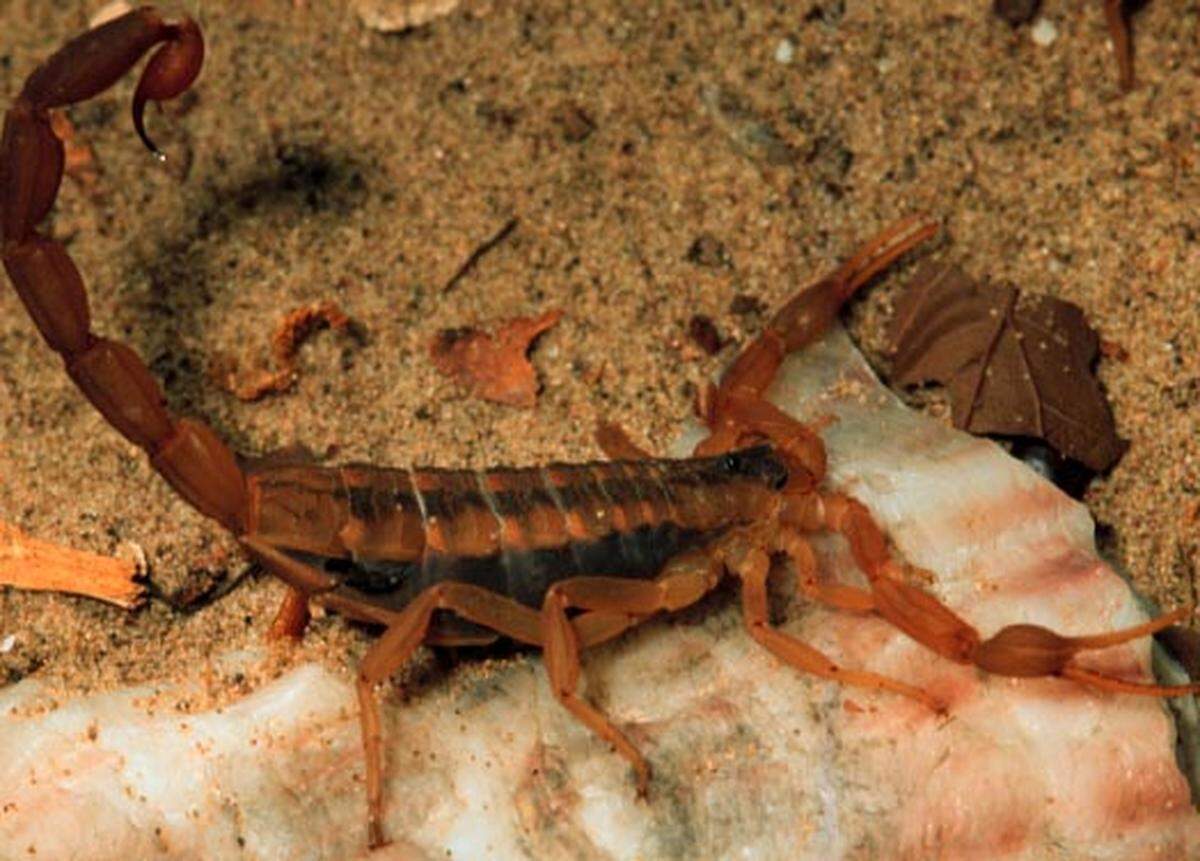
These scorpions have a yellowish tan color with broad dark stripes running along its body, which can grow up to 2-and-a-half inches long as an adult.
Striped bark scorpions are found throughout the state and often under rocks or other debris, according to Texas Parks and Wildlife. They are mostly active at night.
A similar feeling to that of a scorpion sting is a bee sting. Typically, a scorpion sting causes pain and swelling, but is not serious except when the person is allergic.
Alligators
The American alligator has been found in East and South Texas and, occasionally, in North Texas.

Alligators in Texas live virtually anywhere there is freshwater, whether that be lakes or rivers.
Almost black in color, the American alligator’s body ranges from 6 to 14 feet long, according to Texas Parks and Wildlife. The animal has a large, long head with visible upper teeth along the edge of its jaws.
Normally, alligators will avoid humans. However, they can be seen as a nuisance when they establish territories around areas with people. Here are a few ways to avoid them:
- If you hear an alligator hissing, that means you are too close.
- Do not corner alligators as they are quick and agile on both land and water.
- If an alligator is near your home, call Texas Parks and Wildlife.
Fire ants
Texas is home to more than 210 ant species, but only one is considered a nuisance to humans — imported red fire ants.
Imported red fire ants were first introduced in the country in the 1930s. The ant quickly spread to a number of southeastern states, including Texas.
Bites from these ants leave a painful sting that produces a red pustule that itches and burns, according to Texas Parks and Wildlife. Usually, these stings are not serious except for if the person is allergic.
This story was originally published June 3, 2025 at 9:01 AM.