
How much sunscreen do you need under the Texas sun? This is the best indicator
The Texas summer is predicted to be “hotter than normal” in Fort Worth.
With a week of seven 90 degree days in a row, residents are bound to need some sun protection. However, the temperature doesn’t always indicate the need for sun protection– rather, the UV Index does.
According to the U.S. Environmental Protection Agency (EPA), “The UV Index provides a daily forecast of the expected intensity of ultraviolet (UV) radiation from the sun.”
UV overexposure can cause both short-term and long-term risks like sunburns, or in the most extreme cases, cancer or cataracts. UVB rays cause cancer while UVA rays relate to aging.
But how do you know what the UV Index is, and how can you protect your skin against harmful rays?
How to find the UV Index
You can check any of the following weather sources to find the UV Index:
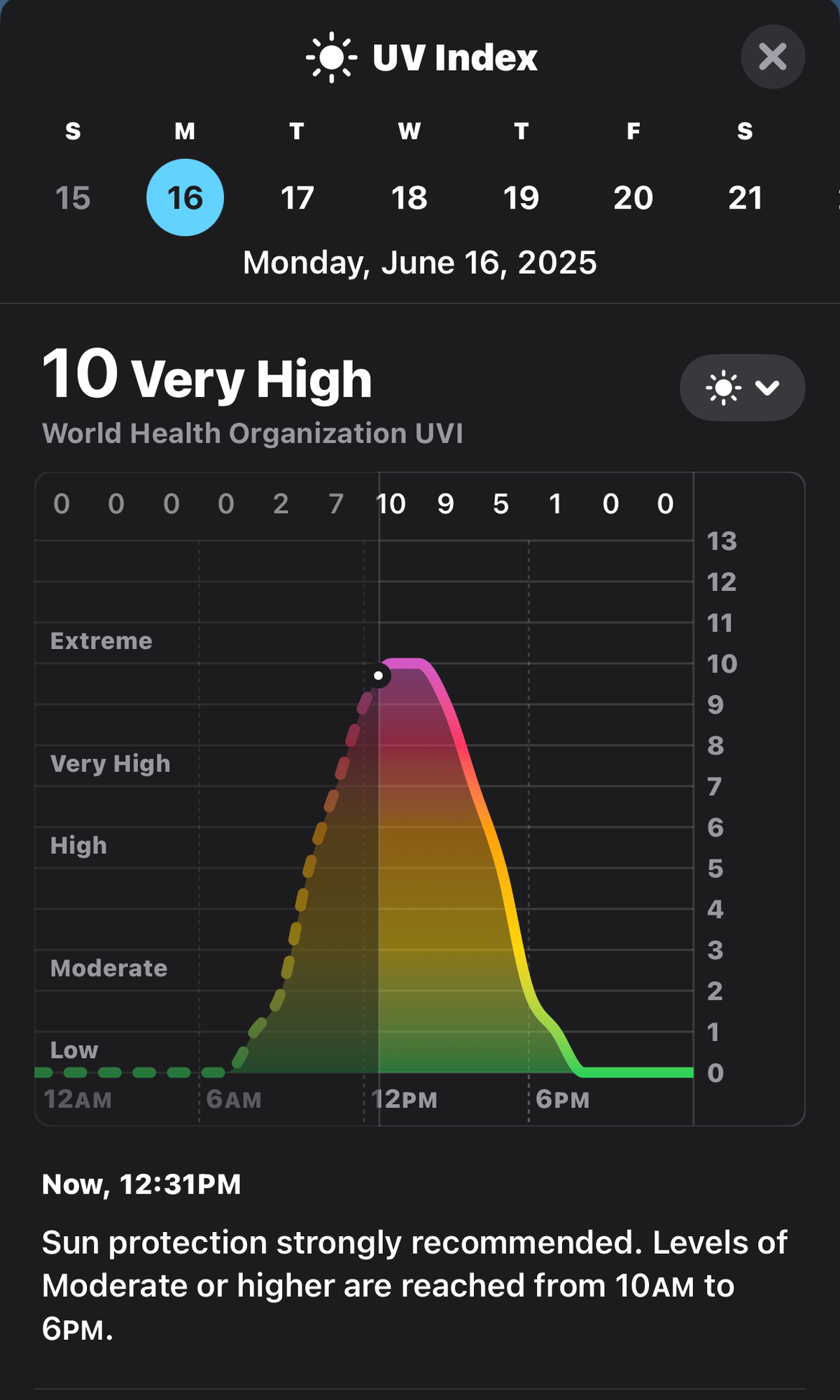
The iPhone’s Weather App tells you the UV Index by the hour, below the 10-day forecast.
For Androids, use Google Weather to find the UV Index. Users can also ask Google Assistant about the UV Index.
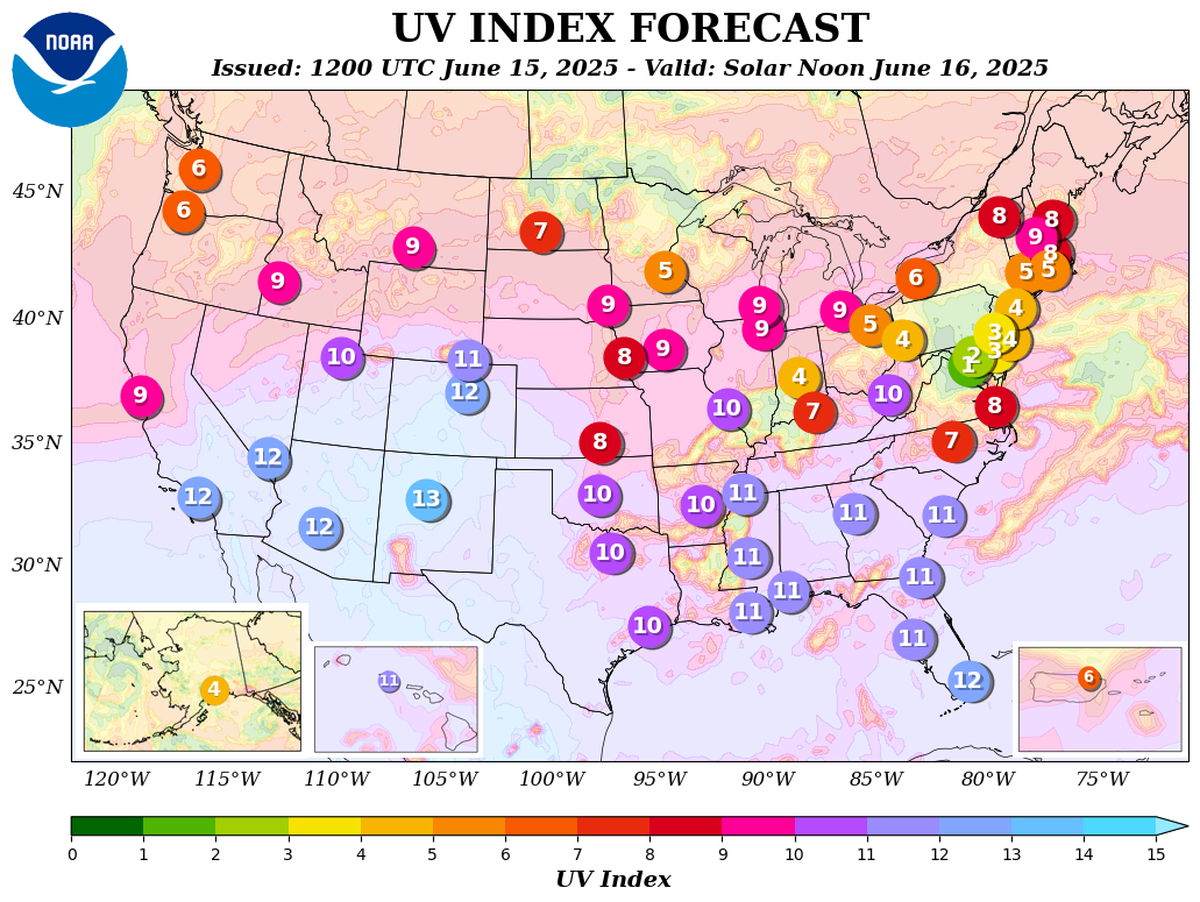
The National Weather Service updates its national UV Index predictions daily. Check their forecast here.
Third-party apps dedicated to the UV Index include: The EPA’s SunWise UV Index mobile app, the SunSmart Global UV app and UV Index Now.
How to read the UV Index
The UV Index is measured numerically beginning from 1 (low) until 11 (high).
The time of day also affects the UV Index. The most intense rays are usually during midday,from 10 a.m. until 4 p.m., according to the Apple Weather app.
You shouldn’t need to worry about wearing sunscreen until the UV Index hits a 3. However, it’s important to know how to read the UV Index to properly protect your skin.
According to the EPA:
2 or lower (low): It’s safe to be outside. If you wear sunscreen it can be as low as SPF 15.
3 to 5 (moderate): Precautions should be taken if spending time outdoors. The EPA recommends SPF 30+.
6 to 7 (high): Sun protection is needed. SPF 30+, covering your skin and relaxing in the shade is recommended.
8-10 (very high): Sun protection is absolutely necessary and decreased exposure to the sun is highly recommended during mid-day hours when the sun is the strongest.
11 or higher (extreme): Sun protection is mandatory and decreased exposure to the sun is highly recommended during mid-day hours when the sun is the strongest.
It is also important to note that bright, white surfaces like snow or sand can reflect sun rays and ultimately double the UV exposure.
How the UV Index is calculated
According to EPA, the UV Index is calculated considering factors like strength of solar ultraviolet (UV) radiation to forecast stratospheric ozone concentration, forecasted cloud amounts and ground elevation.
Satellites gather a forecast of stratospheric ozone levels. Based on the ozone forecast and sunlight angle, a computer calculates the strength of UV radiation at ground level. Sunlight angle depends on latitude, day of year and time of day.
Shorter UV wavelengths cause more damage to human skin than longer UV wavelengths. The ozone tends to absorb those shorter wavelengths more than the longer wavelengths. Each wavelength is measured through the McKinlay-Diffey erythema action spectrum.
Elevation and clouds are also accounted for in the calculation. UV rays intensify 6 percent per every kilometer above sea level. And clouds absorb UV radiation, decreasing ground-level radiation.
“Clear skies allow virtually 100 percent of UV to pass through, scattered clouds transmit 89 percent, broken clouds transmit 73 percent, and overcast skies transmit 31 percent,” according to the EPA.
What are the best sunscreen brands?
Sun Protection Factor, otherwise known as SPF, is a measure of the effectiveness of sunscreen. Its main job is to protect from UVB rays, rather than UVA rays. All sunscreens have SPF protection from UVB. However, sunbathers should use a broad spectrum of sunscreen to protect from both cancer and UVA rays that cause aging.
Ten sunscreens that are safe to use include, but are not limited to:
Alba Botanica Hawaiian Face Sunscreen Lotion, Fragrance Free, SPF 30, $10
Alba Botanica Hawaiian Sunscreen Lotion, Aloe Vera, SPF 30, $10
All Good Sport Sunscreen Butter Stick, SPF 50+, $17
ATTITUDE Sunly Mineral Sunscreen Stick, Unscented, SPF 30, $20
Bsbo Botanicals Sheer Mineral Sunscreen Lotion, SPF 50, $20
Badger Sport Mineral Sunscreen Cream, SPF 40, $15
Kabana Organic Skincare Green Screen D Sunscreen Lotion, Original, SPF 35, $10 Stream2Sea Every Day Mineral Sunscreen, Tint, SPF 45, $25
SunBioLogic Naturally Tinted Sunscreen Lotion, Light/Medium, SPF 30+, $25
Thinksport Clear Zinc Sunscreen Lotion, SPF 50, $20
Waxhead Sun Defense Zinc Oxide Vitamin D Enhanced Sunscreen Lotion, SPF 35, $30
Environmental Working Group (EWG), a nonprofit research company, has a comprehensive list of 235 sunscreen products that they trust to protect against UVB, UVA or both. To see if your favorite sunscreen makes the list, you can search on their website here.