A La Niña winter is coming. But what does that weather outlook mean for Fort Worth?
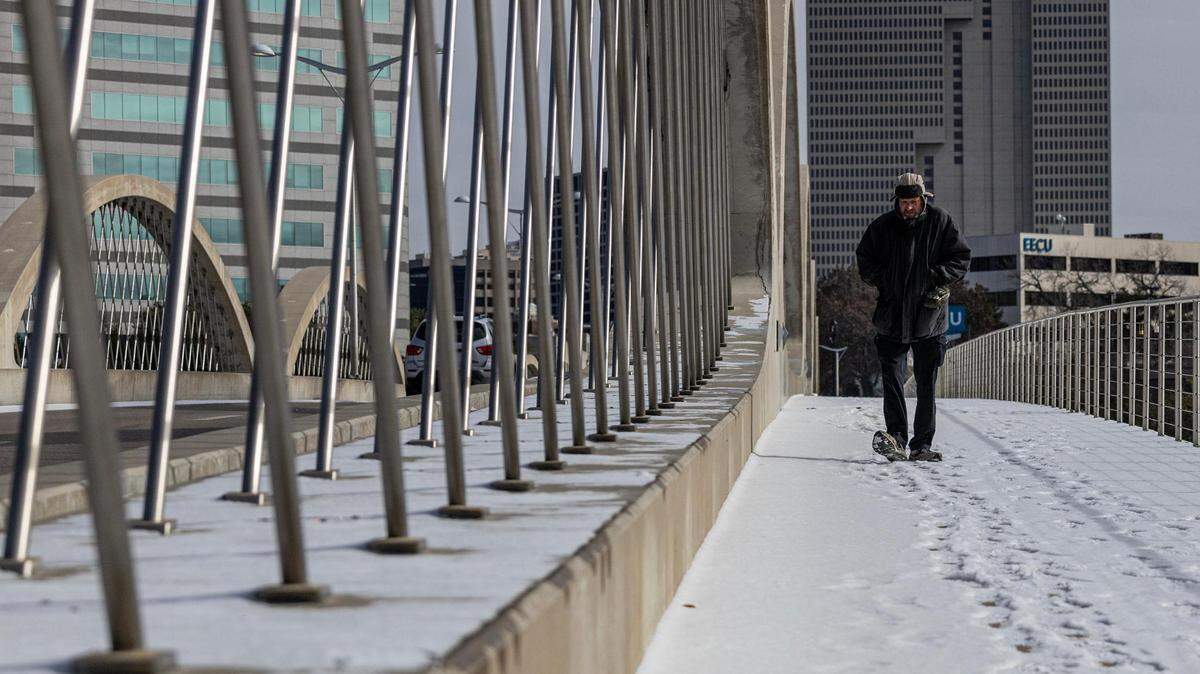
North Texans should expect above average temperatures and below average precipitation this winter, according to the National Weather Service Fort Worth office.
This week the NWS revealed its winter weather outlook for North Texas through the rest of the year and into 2025. The outlook shared insights on what North Texans should expect this winter in regards to temperatures, precipitation, drought risks and La Niña.
What does this all mean for North Texas weather? Here’s what to know:
What is La Niña?
Something felt throughout Texas (and the entire country) this winter will be La Niña.
During normal weather conditions in the Pacific Ocean, trade winds move west along the equator taking warm water from South America towards Asia, according to the National Ocean Service. In replacing that warm water, cold water rises from the ocean in a process called upwelling.
Two opposing climate patterns break these normal conditions: El Niño and La Niña.
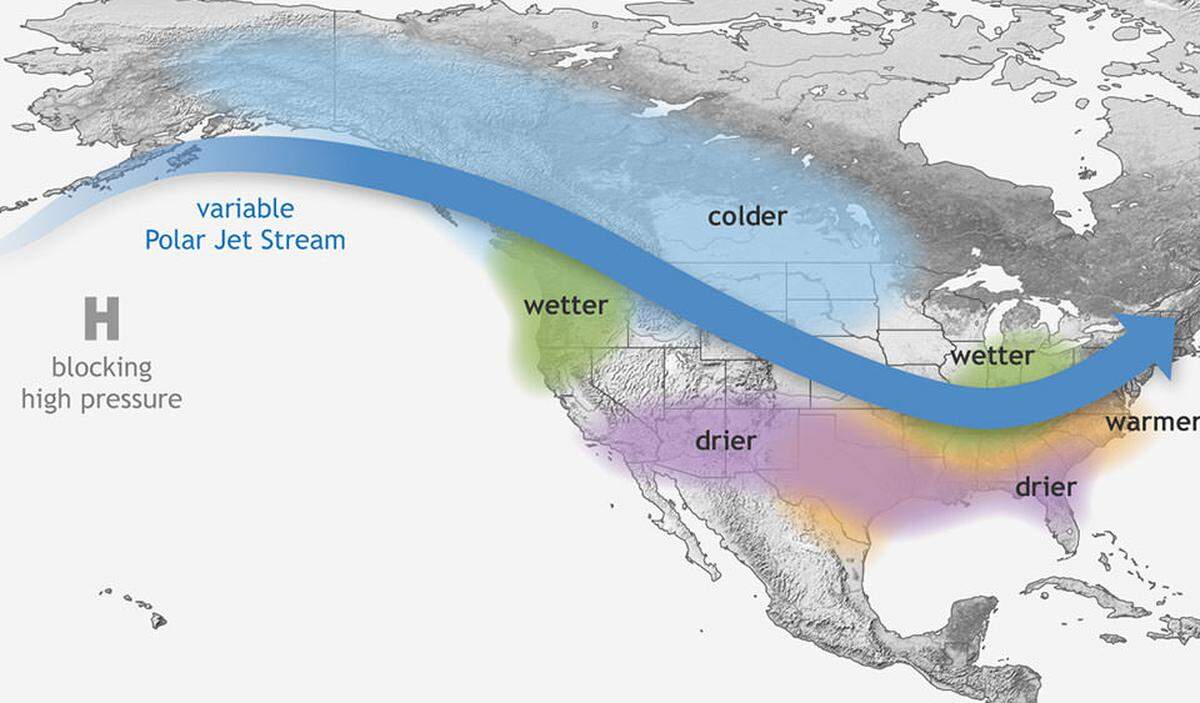
During La Niña, which means “little girl” in Spanish, trade winds are stronger than normal and push more warm water towards Asia, according to the NOS. In return, upwelling increases bringing cold water to the surface off the coast of the Americas.
Cold water in the Pacific Ocean pushes the jet stream northward in La Niña. This leads to drought in the southern parts of the country and heavy rain/flooding in the northern parts, according to the NOS.
Additionally, during La Niña winter temperatures are warmer in the south and cooler than normal in the north.
El Niño and La Niña typically last nine to 12 months, but sometimes last for years. On average, both events occur every two to seven years.
What does the NWS say will happen this winter in Texas?
The NWS Fort Worth office has laid out a few things they have high confidence in this winter season:
- La Niña conditions (see above).
- Warmer than normal temperatures are more likely than below normal temperatures.
- Arctic air will still arrive/occur.
- Rainfall amounts are favored to be below normal.
- Drought conditions are likely to develop and/or continue this winter.
- An enhanced threat of wildfires this winter.
- A reduced risk of heavy rain and flooding events.
- At least one winter weather event will occur.
What is the NWS less certain of this winter?
The NWS Fort Worth office has laid out a few things they are less certain of this winter season:
- How much above normal temperatures will be.
- How much below normal monthly/seasonal precipitation totals will be.
- The frequency and severity of arctic outbreaks this winter.
- The number and intensity of winter weather events.
- Sub-seasonal anomalies may reduce or reverse the warm/dry trend this winter.
What does above normal temperatures mean?
In mid-October, the National Oceanic and Atmospheric Administration’s Climate Prediction Center released its three-month temperature outlook.
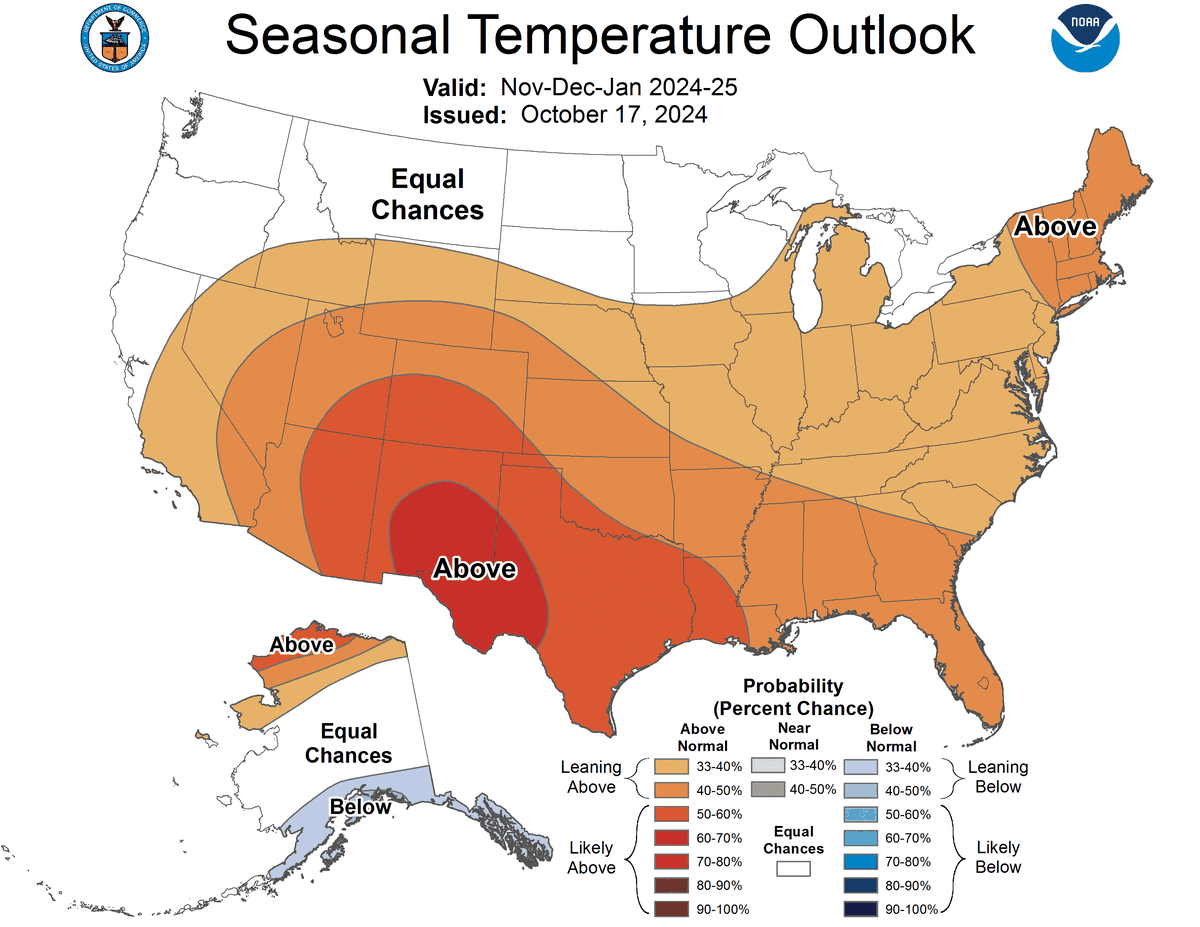
There’s a 50 to 60% chance of “likely above” normal temperatures in North Texas and much of the state, according to the outlook. The El Paso region was slightly higher in the outlook, with a 60 to 70% chance of “likely above” temperatures.
While “above normal” conditions may seem drastic, it doesn’t always equate to extremes, according to the NWS. The designation could simply be a few degrees higher than normal.
The annual normal high temperature for North Texas during December is 57.9 degrees, 56.5 degrees in January and 60.9 degrees in February.
Why will drought conditions stick around during winter?
Since precipitation is predicted to be below normal this winter, the NWS said drought conditions are likely to continue.
Much of Texas is currently under some level of drought, according to U.S. Drought Monitor.
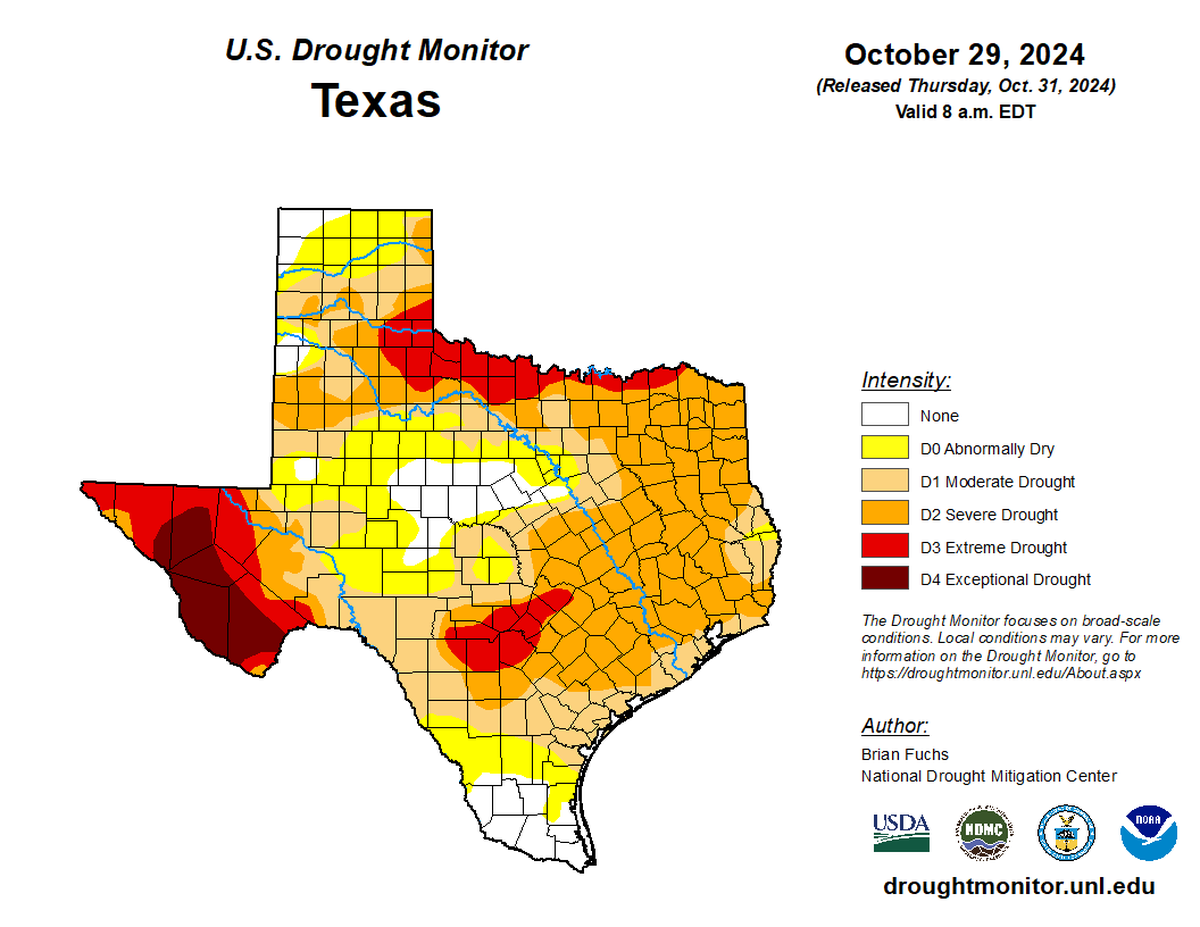
Drought can lead to wildfires, and the NWS has outlined a few historic fires that have recently occurred during La Niña years:
- January 2006: Over 30 homes were destroyed in Ringgold, and thousands were evacuated in Montague County.
- April 2009: Four killed in wildfires from Eastland County to Montague County.
- April 2011: Fire scorches over 100,000 acres near Possum Kingdom.
- March 2022: Fire consumes over 50,000 acres in Eastland and Brown counties.