
The mysterious ‘Sin Killer’: Black preacher rocked Fort Worth’s Hell’s Half Acre
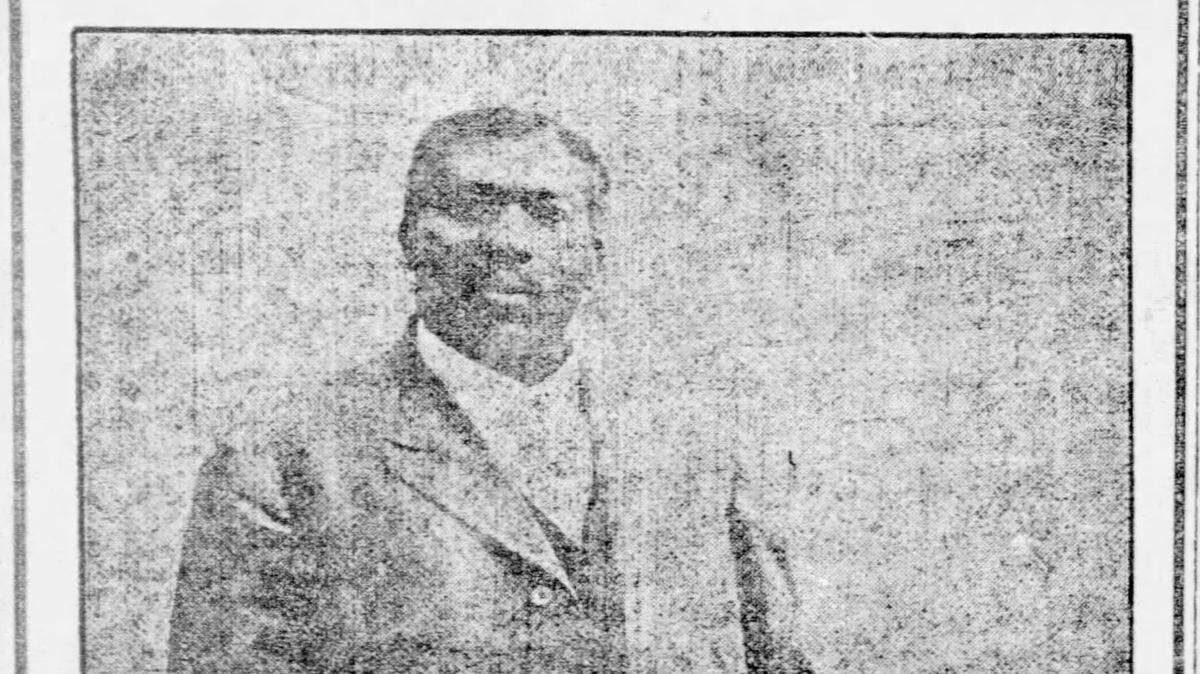
They called him “Sin Killer,” though no one knows how much sin he really washed away.
Perhaps one of the best known Black preachers during his time, he never lived in Fort Worth but is part of our history, because he spent a lot of time here holding religious revivals between 1889 until 1913.
His real name was John Lewis Griffin, reportedly born in Louisiana in 1863. Little is known about the real man because of scant public records and because he changed his story frequently. He showed up in Dallas in 1884 a self-proclaimed gospel preacher who could have his listeners shouting “Hallelujah!” one minute and crying uncontrollably the next. His style shocked traditional white churchgoers.
Because the mainline churches wouldn’t let him in the door, he held his revivals in a big tent set up on empty lots. When traditional Baptists disavowed him, he founded his own “Independent Baptist” church.
Griffin was in the news a lot, but what he actually looked like is mostly guesswork. The Fort Worth Gazette in 1890 said he was of “commanding stature, some six feet or more in height with circumference in good proportion.” He had a voice that could be silky smooth or booming enough to reach the back row of a vast gathering.
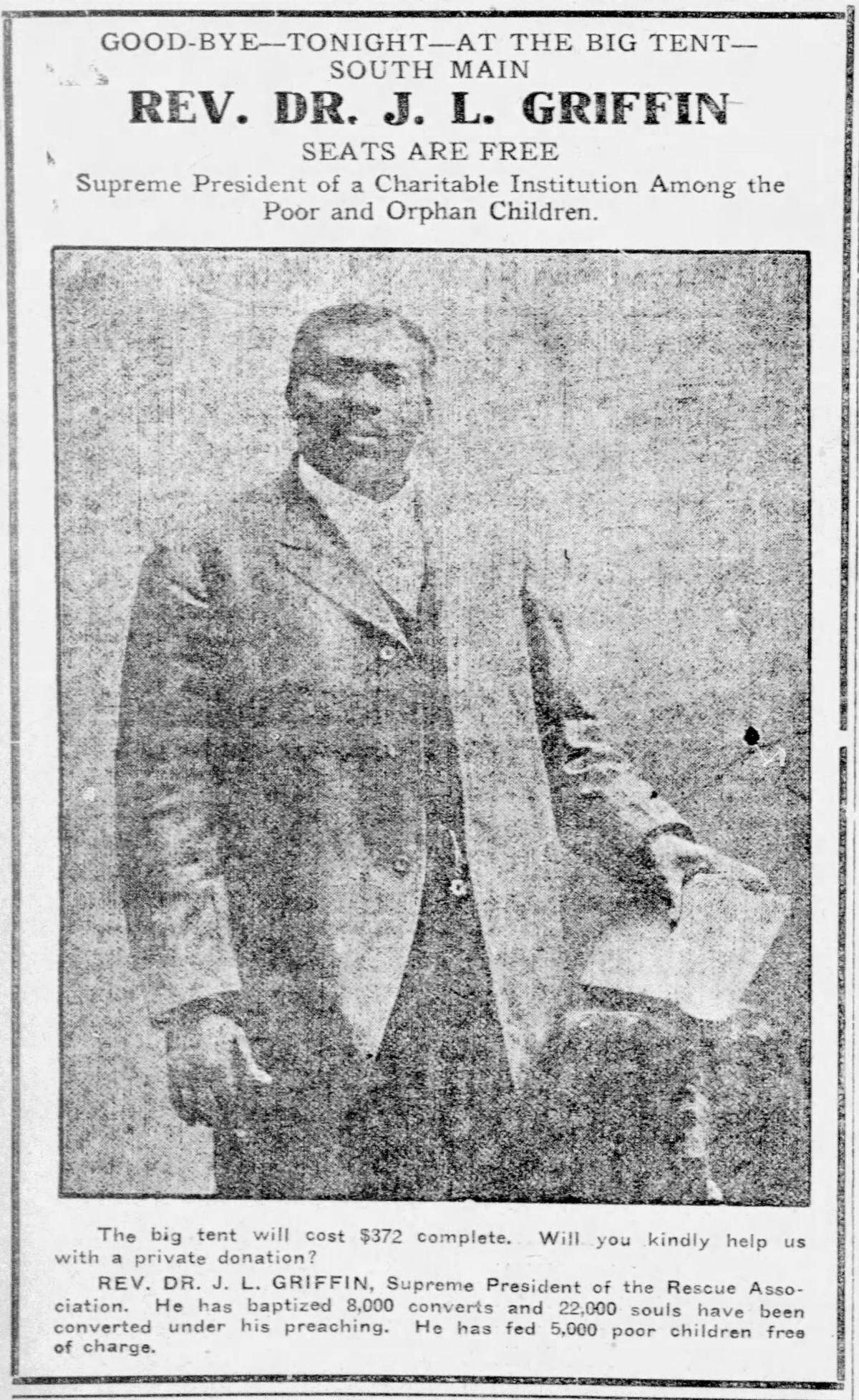
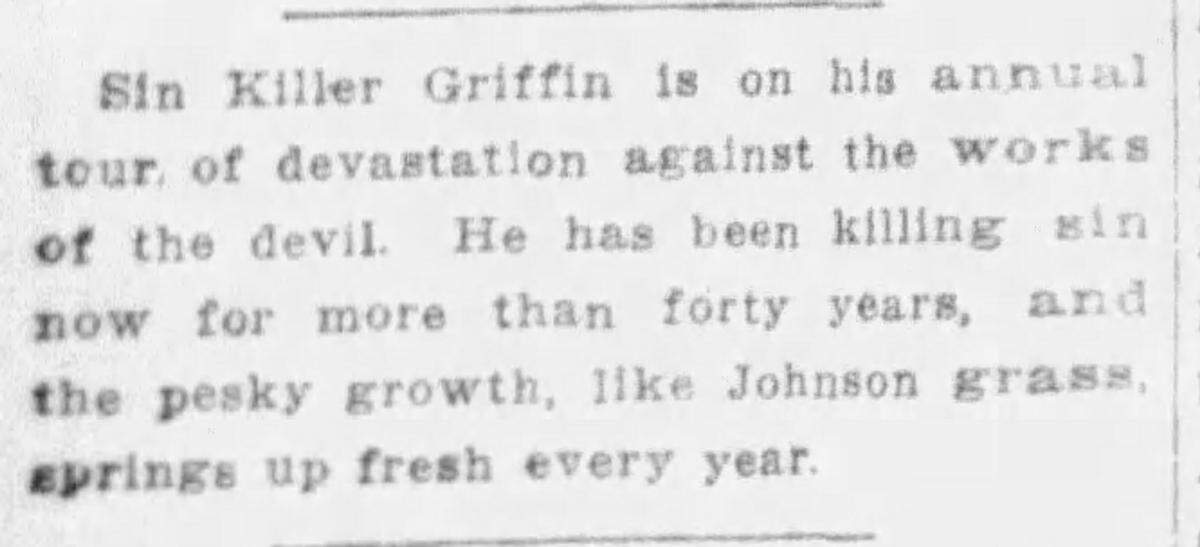
Griffin once said he got his nickname from Dallas Evening Times reporter Bill Adair, who covered one of his revivals. He told other stories about where the name came from, too. The most important thing was that it gave him “$100,000 worth of free publicity.”
The most remarkable thing about his revivals is not the number of people who turned out, but that his audience included both Black and white people — in large numbers. Such racial mixing in the Jim Crow era was practically unheard of.
‘The great and only Sin Killer’
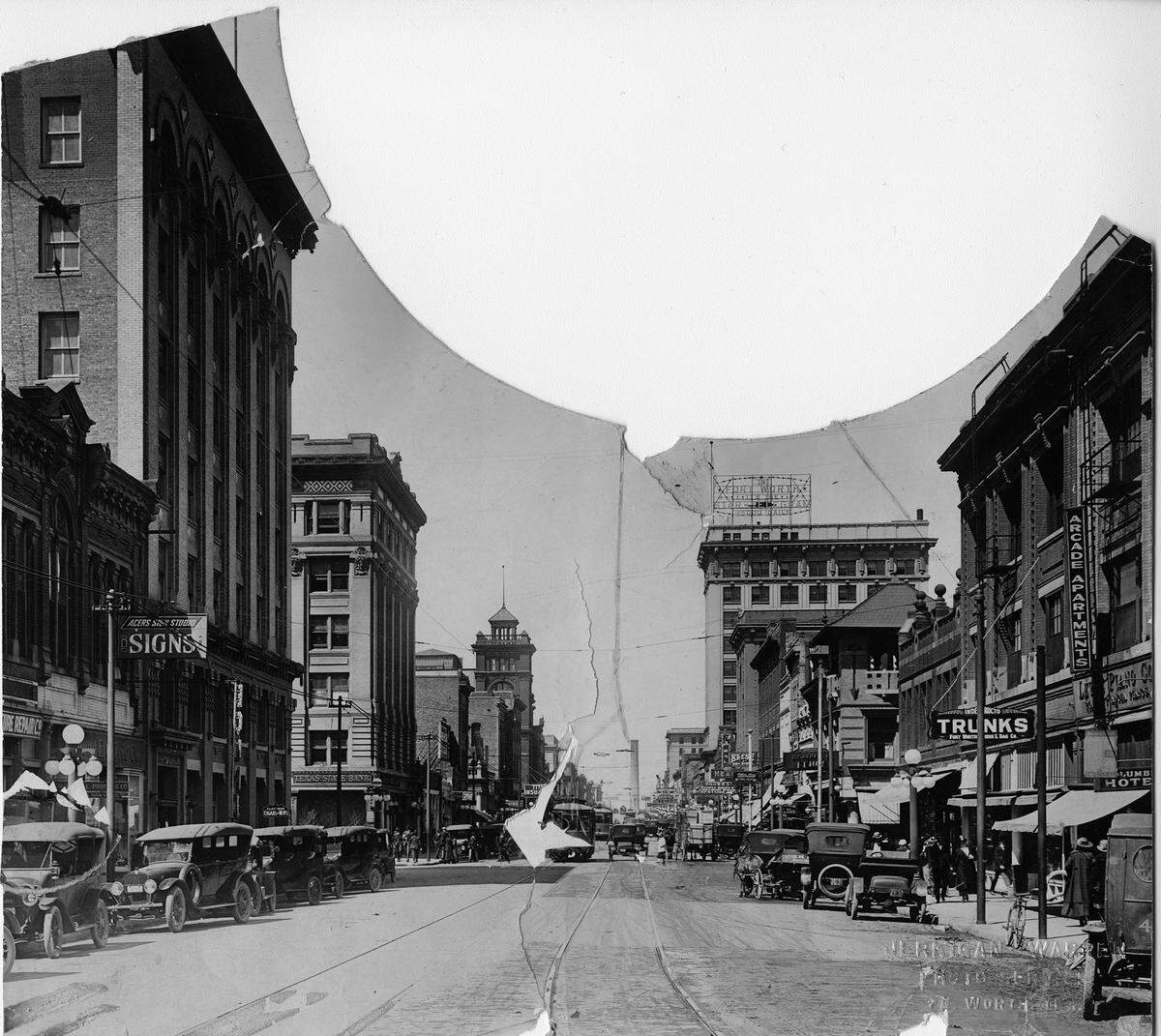
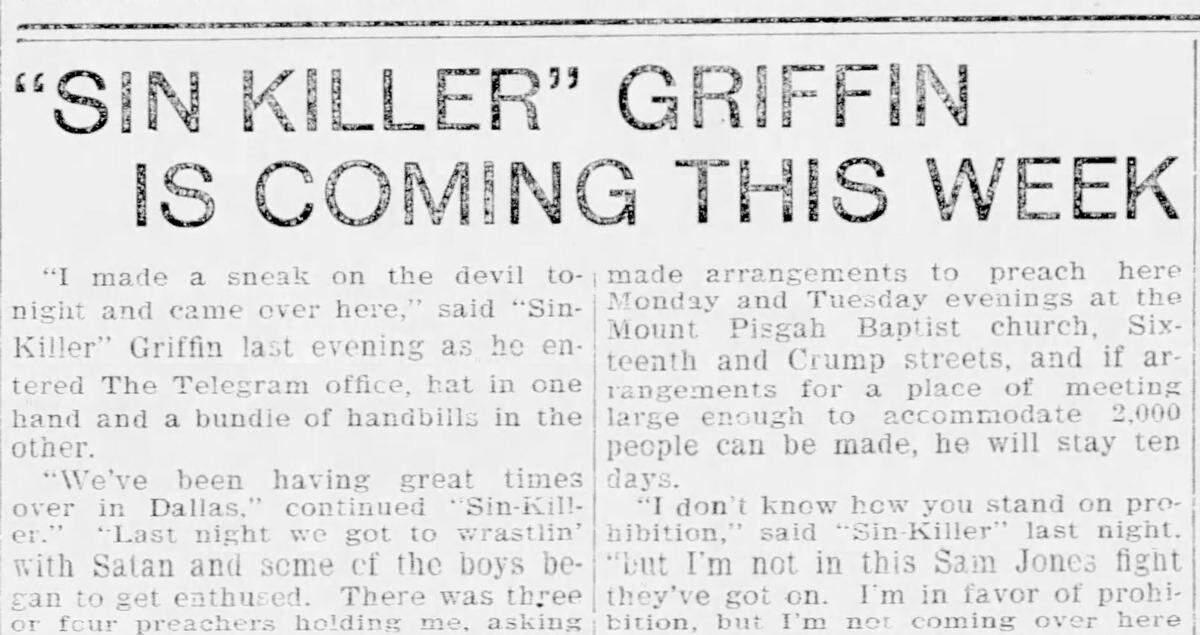
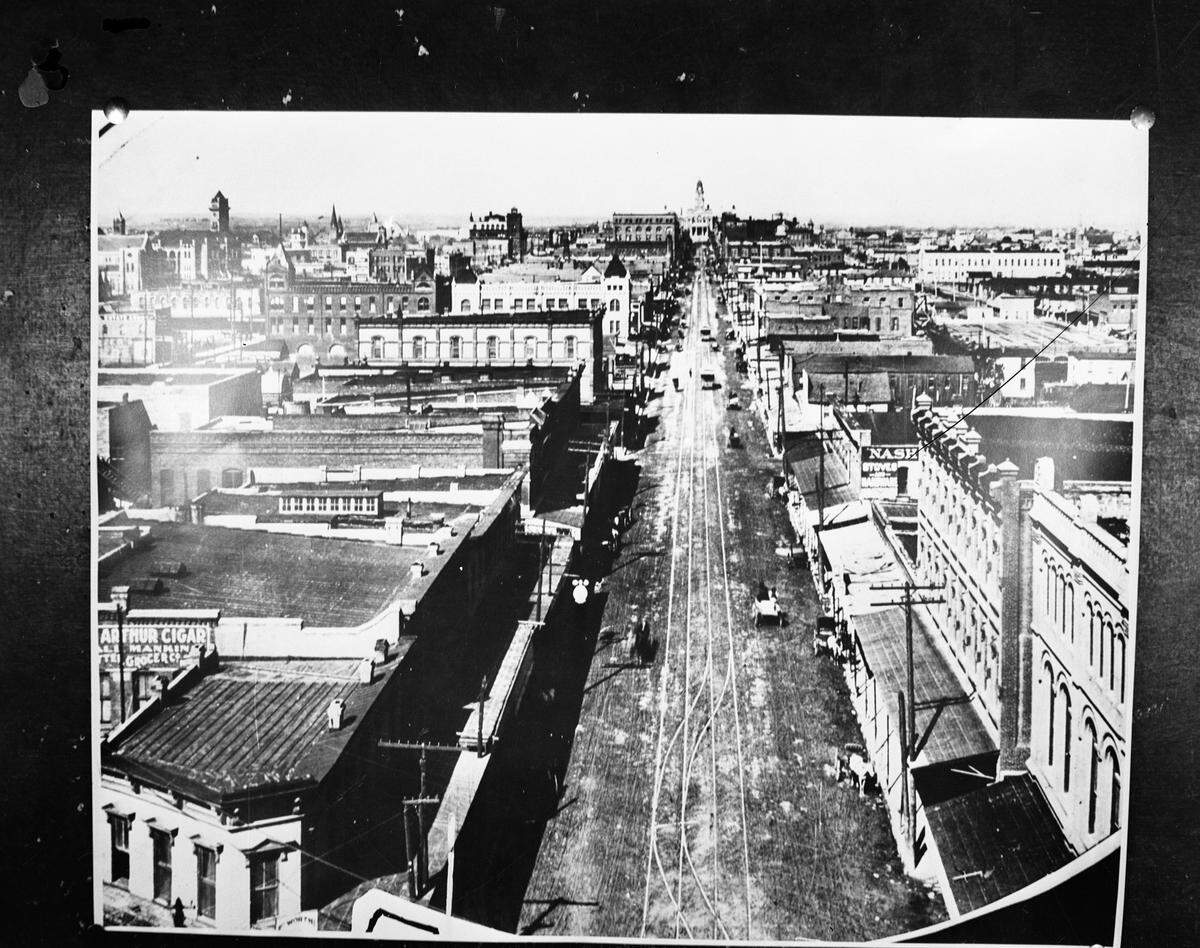
His first revival in Fort Worth was in May of 1889. He pitched his tent at the south end of town on the edge of Hell’s Half Acre and held forth for a couple of nights. This first visit was for the purpose of planting a new mission field. He would return numerous times in the years that followed to cultivate that field.
He next came back in August 1890 for a 12-day meeting that attracted 700 people a night. He baptized 50 converts in the Trinity River. Sin Killer had taken Cowtown by storm. The Gazette sent a reporter to cover that first night who heard the preacher ask his audience if they would “leave me” if the sheriff came to arrest him, recalling Jesus’s question to the 12 disciples. They answered with a resounding “No!” The reporter was able to interview Griffin afterwards.
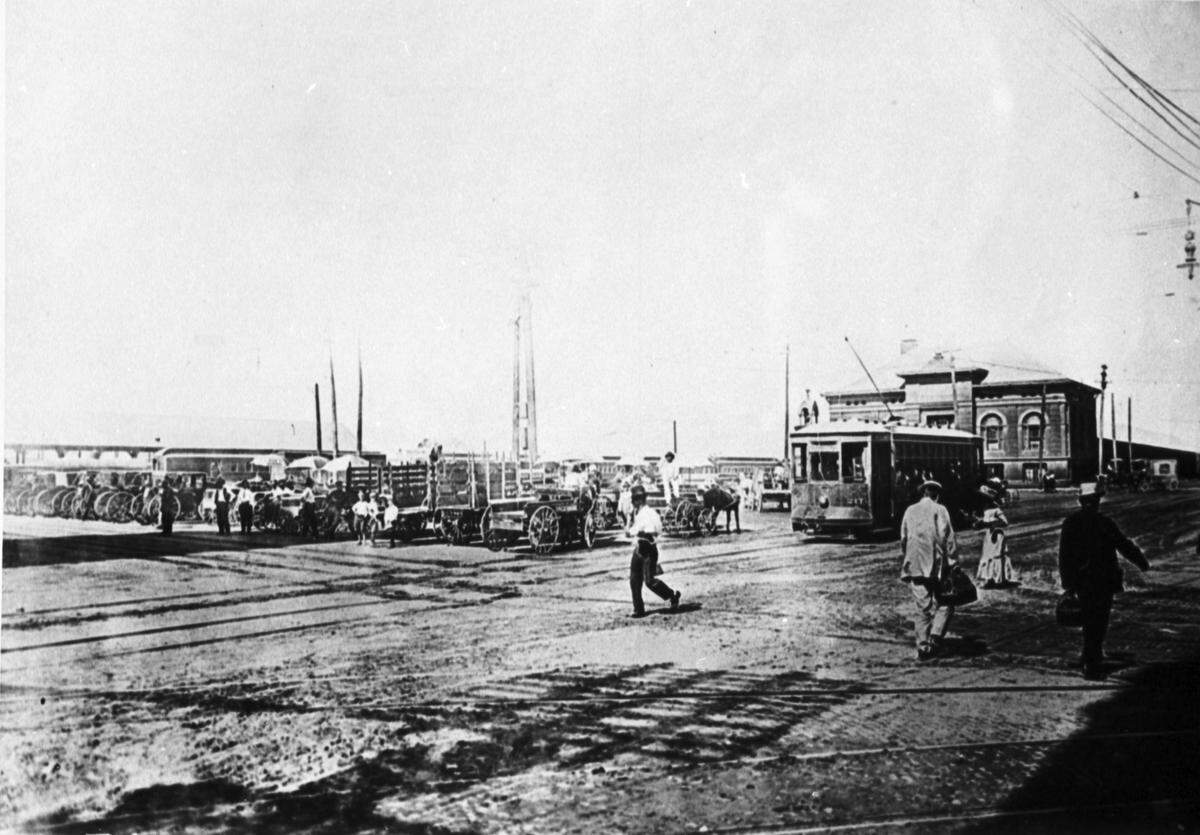
Sin Killer was back for another extended revival in September 1892, setting up his “tabernacle tent” on the south end of town again after the elders of the African Methodist Episcopal church withdrew an invitation to use their building.
A Sin Killer revival was both entertaining and uplifting. A part of the entertainment came from hearing him lead the singing, mixing gospel hymns with “plantation songs.” He always reserved a section of the seats for white people and always took up a collection at the end of the evening. Over the years, the white section had to be expanded.
By the time of his next visit in May 1894, Fort Worth was a regular stop on his revival circuit. As public events, they were like the visits of Buffalo Bill Cody in 1900 or President Teddy Roosevelt in 1905. The Gazette dubbed him, “the great and only Sin Killer.”
His five-day camp meeting in 1896 brought out an estimated at 4,000 folks every night. On some nights, three-quarters of them were white.
With the coming of the 20th century, Griffin’s itinerary took him out of Texas, as far north as Indiana. The newspapers were now calling him the best-known Black preacher in the entire South, but Texas remained his home base. Some faithful were troubled by the fact that his revivals seemed to be more about entertaining than spreading the gospel. In 1906 he was booked into Greenwall’s Opera House in Fort Worth as one-half of a double bill with a minstrel show.
For his Fort Worth visit in June 1912, he promised “a real old-fashioned camp meeting.” Stretching over two Sundays, he was unapologetically competing with the city’s mainline churches. He also brought along a second banana by the name of “Holy Bill” out of Mississippi to share the preaching.
Griffin did not escape the taint of scandal. In 1896, his wife Luvernia sued for divorce charging that he had abandoned her in 1892 to take up with other women. News of Sin Killer’s moral downfall made headlines all over the state. Gospel preachers are not supposed to get divorced.
By 1903 he had dropped the name “Sin Killer” in favor of the more dignified sounding Rev. J.L. Griffin. Still, to white newspaper editors, he would always be Sin Killer, the same way William M. McDonald would always be “Gooseneck Bill.”
After more than 20 years on the revival circuit, Griffin’s act began to wear thin. It may be that his sermons had gotten stale, or his audience may have become unsure of what he stood for exactly. He got into trouble with the law in 1910. When he signed someone else’s name to get delivery of a big circus tent in Waxahachie, he was charged with forgery. He bonded out but skipped town before the trial. The Ellis County sheriff caught up with him in Houston and brought him back to Waxahachie where he sat in jail until the trial. His legal team must have been something because they got him acquitted of all charges.
His legal troubles were just part of his fall from grace. He increasingly castigated Black people and in 1912 asked Fort Worth Mayor W.D. Davis to post a policeman outside his meeting tent to run off “no-good rowdies.” His politics did not win him many friends either. He was an outspoken supporter of Democratic Gov. James Hogg’s reelection in 1892, then switched to the Republican party as a member of the minority “Black and tan faction.”
But the final straw for devout Christians had to be when he took a job with the Texas brewery association and stumped against prohibition. This was in advance of the big statewide prohibition election in 1911. The same man who for years had preached against shiftless drunks and gamblers was now on the side of the saloon owners and liquor dealers.
Whether he had a real change of heart, or the brewers paid him too much money to refuse, is unclear. Whatever the reason, he went about the state urging Black people to pay their poll tax and register to vote so they could vote against prohibition. There is no way to tell if he played a role in prohibition’s narrow defeat, but he was widely denounced for his hypocrisy.
By 1920, he was such a legend that everyone had a story or two about the Sin Killer, some of them no doubt true. The Rev. H.A. Carr told a congregation of the African Methodist Episcopal church in Houston that he saw Griffin baptize “Gooseneck Bill” McDonald in the Trinity River, something McDonald never mentioned.
Around World War I, Griffin opened a group of “rescue homes” in Texas dedicated to saving fallen women. He named himself “Supreme President and Manager.” This latest business venture failed. The 1930s found him serving as the chaplain for Black inmates in the Texas prison system. It was here that renowned musicologist John Lomax found him in 1934 and recorded Griffin singing hymns for an oral history project for the Library of Congress.
Sometime after 1934, Griffin dropped off the face of the earth. Where he was living, when he died and where he is buried are currently unknown.