
From Fort Worth judge to outcast: Historical records tell story of Oliver Kern
Oliver M. Kern blazed a bright trail across the Fort Worth sky for a decade. Then he seemed to disappear. No one knew what happened to him. Until now. He has reappeared thanks to a deep dive into the historical records.
Fort Worth knew him as a city judge, a political appointment, not an elected position. City judges presided over the lowest court in the judicial system. Also known as police court and recorder’s court, it only heard cases arising from violations of city ordinances.
Appointment to the court did not require a law degree or any particular qualification apart from belonging to the political party of the mayor and council. The job was a reward for loyalty.
Kern came to Fort Worth in 1884 from Raymond, Mississippi, a rural community, barely a wide place in the road. He bought a ranch close to the city but instead of stocking it with cattle he brought in “a large and costly” flock of geese. His feathered friends were not a match for a man lacking in social graces with a biting sense of humor and an inflated sense of self-importance.
In 1887, he married Miss Virginia Belle Newman. “Jennie” was described at the time as “a most winning, beautiful, and intelligent” woman. Even better for Kern, she came from one of the First Families of Fort Worth. Her father was a wealthy merchant and was said to have been one of the first men “to drive cattle up the Chisholm Trail.” Unlike the traditional Western antipathy between cattlemen and sheepherders, apparently papa did not mind his daughter marrying a geese rancher.
Kern married into Fort Worth high society
Kern’s marriage was his entrée into Fort Worth society, and he made the most of it. They were members of First Methodist Church. He joined the Fort Worth Bar Association, which shows that he had passed the state bar exam, and he demonstrated that he was one of the boys by getting elected vice president of the volunteer fire department. He also very publicly donated money for the support of indigent Mexican War veterans.
He clearly had a hook in at city hall because he was appointed to the highly lucrative position of city judge (“recorder”) in 1890. He would never have been appointed had Mayor John Peter Smith not approved. On the bench of the city (police) court he could finally put his law degree to good use and make some serious money because, in addition to drawing a salary, the judge also got a cut of all fines he assessed.
In 1890, Oliver and Jennie had a daughter whom they named Mary. Jennie would go on to raise her alone as a single mother, the result of another chapter in Kern’s life.
His tenure on the bench was cut short by his own indiscretions. In September 1892, he got into a very public brawl with Officer Sebe Maddox in a Main Street bar. They were having a good time in a back room at the Board of Trade saloon, but the words were exchanged, and both men drew a gun. Kern fired a wild shot that hit no one. Police came and escorted both men out.
The men told very different stories about who started the trouble. The police committee of the city council investigated and recommended that both men be dismissed. The Fort Worth newspaper was vague on the exact reason, but the Austin paper had no reason to be circumspect about it. They were fired for illegal gambling.
Mayor B.B. Paddock notified the two men of their termination. Kern tried to hold court the next day anyway and was ordered to leave the courtroom.
Things only got worse. Kern seems to have made more enemies than Sebe Maddox. A few months after the Board of Trade dustup, someone tried to set fire to his house while he and Jennie were out for the evening. The house was damaged, but the fire department managed to put the fire out quickly. Two days later a second attempt was made to burn him out, then a third attempt two days after that.
The arsonist was never identified, and there were whispers that Kern might have set the fires himself in a sympathy ploy, which shows how far his reputation had fallen.
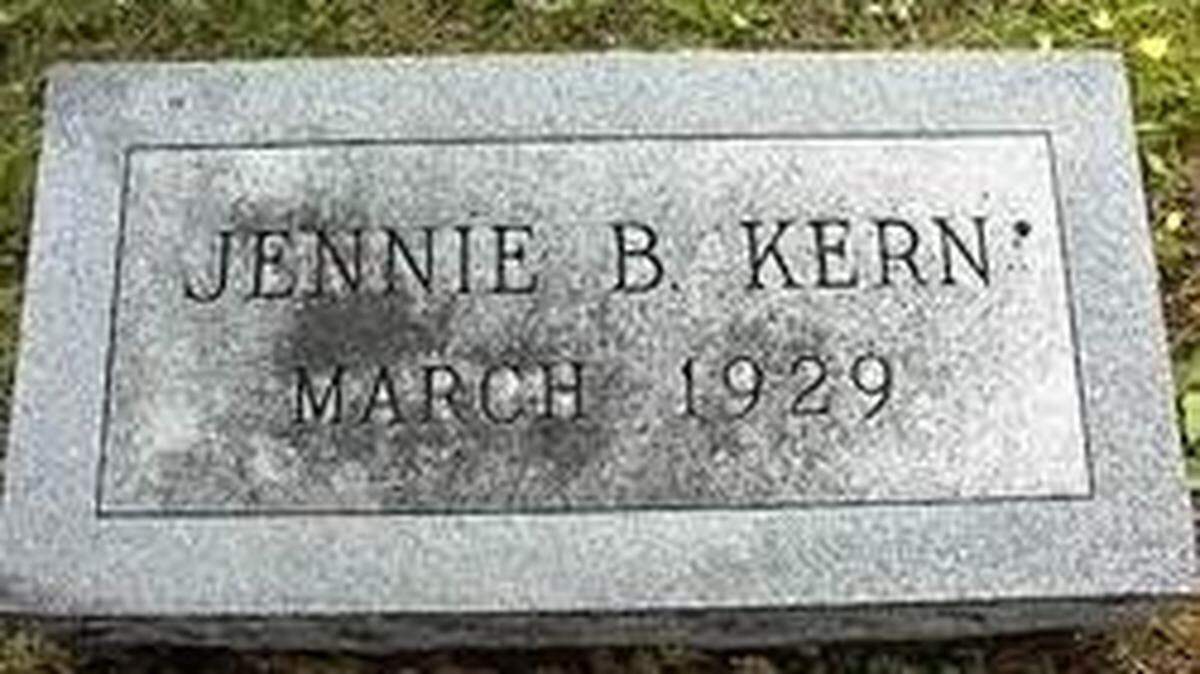
Kern’s life continued to spiral downward. In 1897 Jennie divorced him, keeping custody of Mary. Divorce was a mark against a woman’s reputation, so when she died in 1929 her obituary described her as a “widow” and her husband as a “pioneer attorney in Fort Worth.”
Jennie’s obituary preferred to focus on her family’s distinguished history rather than her disgraced husband and the other tragedy in her life. That occurred in 1906 when her brother Charles was stabbed to death in a saloon in Hell’s Half-acre.
Kern reinvented himself in Portland, Oregon
Within the year of their divorce Kern had left Fort Worth, settling in Portland, Oregon. He was never seen or heard from again in Fort Worth, not just because he never returned but also because he changed his name to Henry Payne. His reasons for doing that are unclear. It may be that he did not want to be found by an angry wife and/or her family. Child support and alimony were both on the table for him. There may also have been more serious charges against him besides disturbing the peace and illegal gambling. The record does not give a clue.
What we do know is that he reinvented himself in the Pacific Northwest. He went to work as a lumberjack, which is what he was doing when the Spanish-American War broke out in 1898. “Henry Payne” enlisted in Company M, Second Oregon Volunteers, and was shipped off to the Philippines. On April 11, 1899, he was one of 13 men of Company M killed in battle fighting Filipino insurrectionists. His obituary in the Dallas paper described him as a “young lawyer of good promise” prior to joining he service.
Apparently, the folks back in Raymond, Mississippi, did not know about the divorce because his obituary there says, “He left a wife and children in Texas.”
Things might have ended there, but Jennie Kern must have gotten word of his death somehow. In 1900, she filed with the War Department for “dependent pension benefits” for their daughter. There is no record whether benefits were granted. (Jennie herself had no claim since they were divorced.) The last mention of the application in archive records shows the application “pending.”
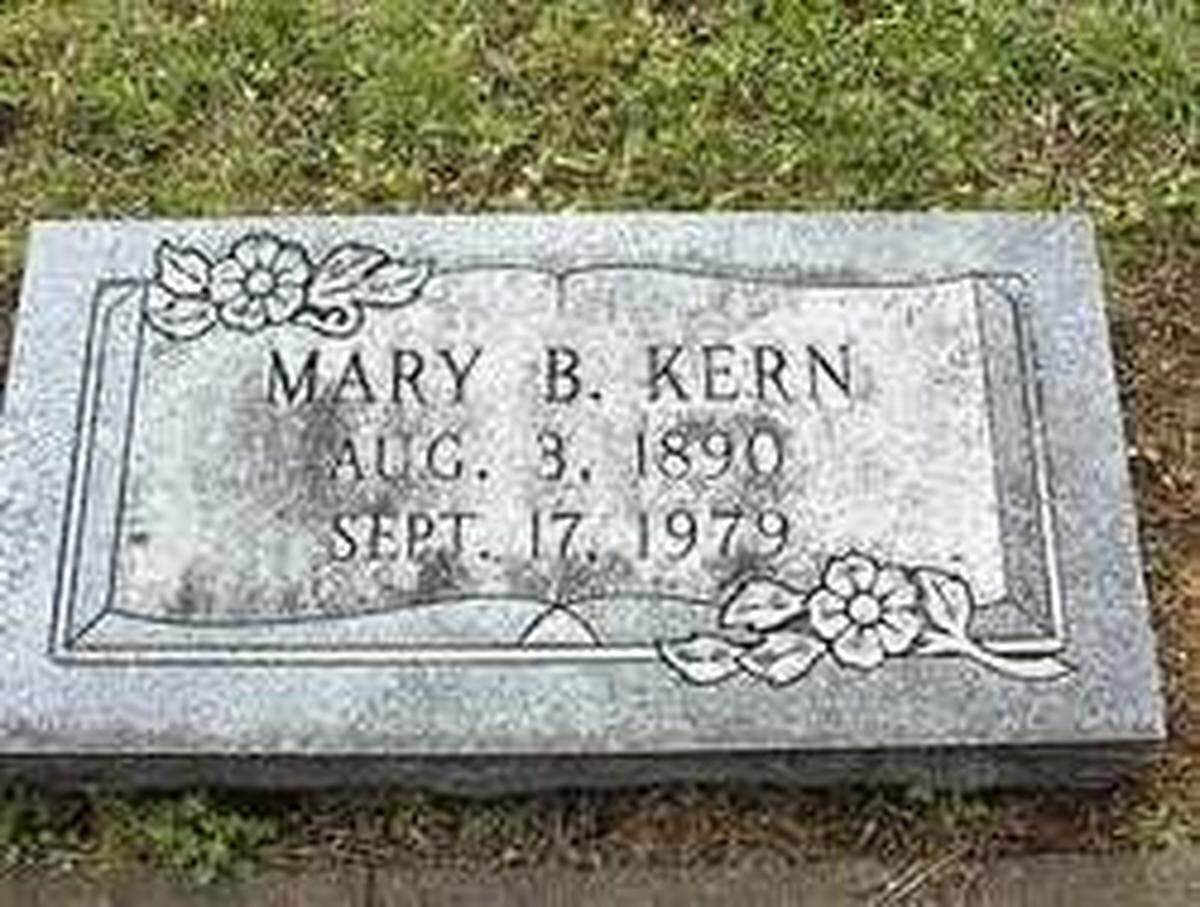
Their daughter Mary Kern lived a long life and never married, dying on Sept. 19, 1979. Mary never left Fort Worth. She was born here, died here, and is buried beside her mother and the other Newman family members in the city’s oldest public cemetery, Pioneers Rest.
Papa’s grave is in Portland. He was buried under the name Henry Payne.
Author-historian Richard Selcer is a Fort Worth native and proud graduate of Paschal High and TCU.