
The ‘newsies’ who once hawked the Fort Worth Star-Telegram weren’t choirboys
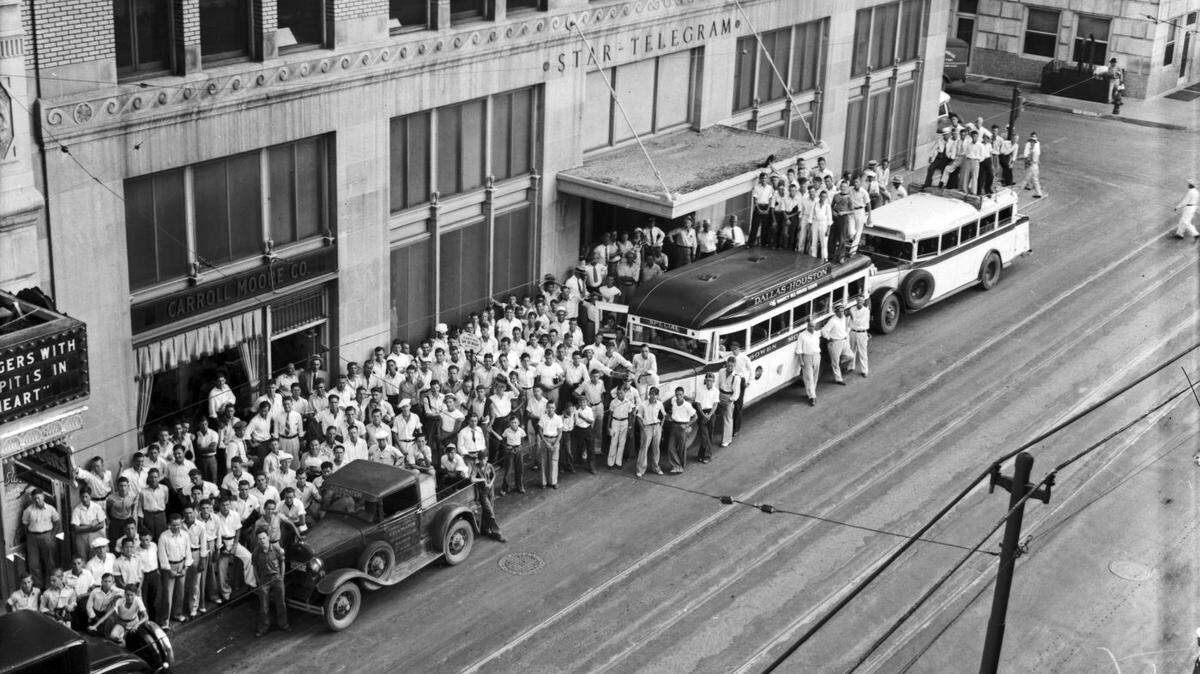
If you’re of a certain age, you might remember when your newspaper was delivered every morning on your front doorstep by a polite paper boy. A high school kid could earn good money delivering papers for the Star-Telegram or Fort Worth Press if he was willing to get up before dawn and hit the street.
They came around at the end of the month to collect on your subscription – maybe $15 for delivery seven days a week. (Maybe if you’re really old, you remember when you got both a morning and evening edition.)
Things were different in the days before widespread home delivery. They called them “newsboys” or “newsies,” and they didn’t deliver in the suburbs, only downtown on street corners and in hotels. Most of them were not yet teenagers, and many were street urchins, not the well-mannered school children who delivered our papers later. Many did not even attend school, and some were one jump ahead of the law. They didn’t allow Black children or girls into their ranks.
In 1913, Fort Worth had roughly 100 newsboys working for the three major dailies, which included the Dallas Morning News. The job was highly competitive, and the boys were not above playing rough to protect their block or street corner. Among the most profitable selling locations were saloons, pool halls, and bawdy houses.
A hard-working newsboy could make as much as $1.50 a day, and some made more. A daily paper sold for 2 cents. Newsboys paid about half that for their supply or about 50 cents for a bundle of 100 newspapers. Most buyers flipped them a nickel for their 2 cent newspaper and let the newsie keep the change. In many cases the earnings helped support the boy’s family.
Newsboy union formed
In the summer of 1908, Fort Worth newsies formed a “Newsboys Association” or union and sent off for a charter to the National Newsboys’ Association, which they got in December. Their decision to organize had the blessing of the town’s principal newspapers, led by the circulation managers, who were working with County Judge John Terrell and County Probation Officer E.B. Travis. The adults appointed Albert C. Williams president of the union, called the Fort Worth Newsboys and Messengers Association. The organization also included Western Union messengers.
Though the adults hoped to exercise some control over the street children who distributed papers, they insisted that “the boys make their own decisions entirely.” Members paid union dues of 15 cents a month and held their meetings in the county courthouse, later moving to First Christian Church.
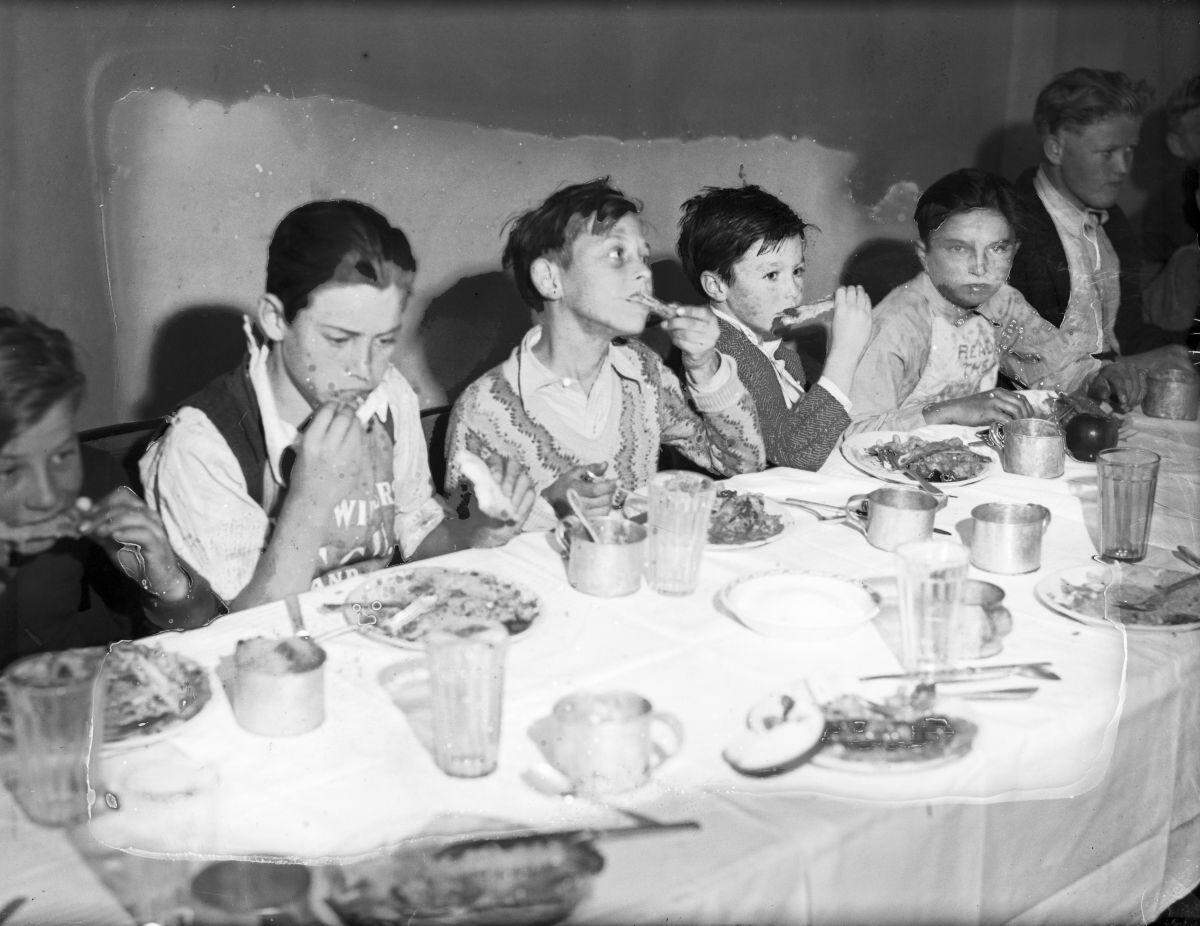
The Star-Telegram and the Elks’ Club hosted occasional banquets for the boys, usually around holiday time, where they feasted on food they could never enjoy any other time. The banquets featured motivational speeches by the likes of Star-Telegram publisher Amon Carter and Rabbi Gresham George Fox. In November 1910, the featured speaker was Charles F. Smith, a middle-aged blind man who had been a newsboy 50 years earlier. He was introduced as “the oldest newsboy in Fort Worth.” As much as they enjoyed the seasonal banquet, the boys also enjoyed the free tickets they got to the city’s movie houses and the Dallas State Fair (train fare paid for by the Star-Telegram).
The newsboys’ union grew and prospered, with members forming their own baseball team and marching band. In time, the organization became so successful that boys came from other communities across the state to join their ranks.
Newsies later became successful businssmen
In 1915, the Star-Telegram ran a public drive titled, “Were You Ever a Newsy? If So, Relate Your Story.” The idea behind it was that many prominent and successful businessmen had formerly been newsboys, including furniture store icons Walter and Dave Poindexter and banker-city commissioner George H. Mulkey. Another was Ralph M. Payne, who went from newsboy to making $194 a month working on construction of the Panama Canal, sending money home to his parents.
In 1913, the Newsboys Union voted to admit girls. The first girl newsies were 14-year-old Ola May Harkins and her 12-year-old sister Virgie. They took to selling newspapers to support their family of seven after their father lost his job. The girls were accepted by their compatriots with reservations, being subject to pranks and called “sweetheart.” Customers loved them, however, because they were polite.
Another newsboys success story was that of Albert C. Williams, first president of the Fort Worth Newsboys and Messengers Association. For the better part of six years, he was a father figure and protector of the newsies. In 1914, he added assistant secretary of the Cattle Raisers’ Association of Texas to his resume, and a year later Mayor Elisha T. Tyra appointed him chairman of the city’s motion picture censor board. Eventually, Williams rose to head up the Federal Farm Credit Administration under Franklin Roosevelt.
In 1930, the Elks Club served 150 newsies their annual Thanksgiving dinner in the club’s lodge room. Eleven-year-old Walter Wood gave a speech thanking their benefactors. He had to stand on a chair to be seen by everyone in the room. He was followed by Carter, the Star-Telegram publisher and Fort Worth’s “first citizen,” who lectured his youthful audience thusly:
“You know the value of money, how to make it and how to spend it. You are boys who in the future will be running the business of the country, and you are getting a good education for it now. Business success requires energy, ambition and hard work. You are learning that to get ahead of your competitors you have to reach the desirable corner first. The man first on the spot and who knows what to do after he gets there is the one who succeeds.”
Then he passed out a $1 bill to each boy.
Eventually, child labor laws and the rise of suburbs as the principal market for newspapers killed the whole idea of organizing newsboys. Throwing newspapers was one thing; unionizing the throwers was something else. The boys moved from downtown streets to middle-class neighborhoods where people got their morning and evening newspaper thrown on the front porch – and occasionally in the bushes.
Disney revived interest in the newsboys’ story with their film “Newsies” in 1992, subsequently turned into a long-running Broadway musical. With the spread of online delivery of news, even that tribute is a victim of changing times and changing technology.
Author-historian Richard Selcer is a Fort Worth native and proud graduate of Paschal High and TCU.