
Fort Worth and the spirit world: We were once a focal point for Spiritualists
AI-generated summary reviewed by our newsroom.
- Fort Worth emerged as Texas's Spiritualist hub by the late 19th century.
- Legal battle over John L. Jackson's will boosted national attention in 1920s.
- Harry Houdini publicly challenged Spiritualism during 1924 Fort Worth visit.
Fort Worth has always been proud of being a deeply religious community going back to the beginning of the 20th century when we styled ourselves “a city of churches.” Catholics, Protestants, and Jewish people all rubbed elbows and with those who held more esoteric beliefs. Perhaps the most esoteric belief to take root in Fort Worth, coming at the end of the 19th century, was the National Spiritualist Church.
It grew out of the Spiritualist movement that began with the Fox sisters in New York in 1848. A pair of sisters gained notoriety by supposedly communicating with the spirit world. General interest in their demonstrations took off with the coming of the Civil War because so many grieving Americans who lost loved ones wanted to reach out to the dearly departed.
After the Civil War the public’s interest in Spiritualism continued to grow despite determined efforts to debunk the movement. It transformed itself into a religious sect whose true believers accepted its principles without question. By 1885, there were an estimated 5 million professed believers in the United States.
Fort Worth was first introduced to the movement in the winter of 1885 when Mrs. S.A. Talbot of Galveston, a “noted spiritualist,” spoke at the Opera House to a “comparatively small” audience of the curious. She spoke for two hours, taking no questions, and closed by saying she hoped the “spirits of the friends of all those present manifested themselves to their dear ones in some way that they might be converted.”
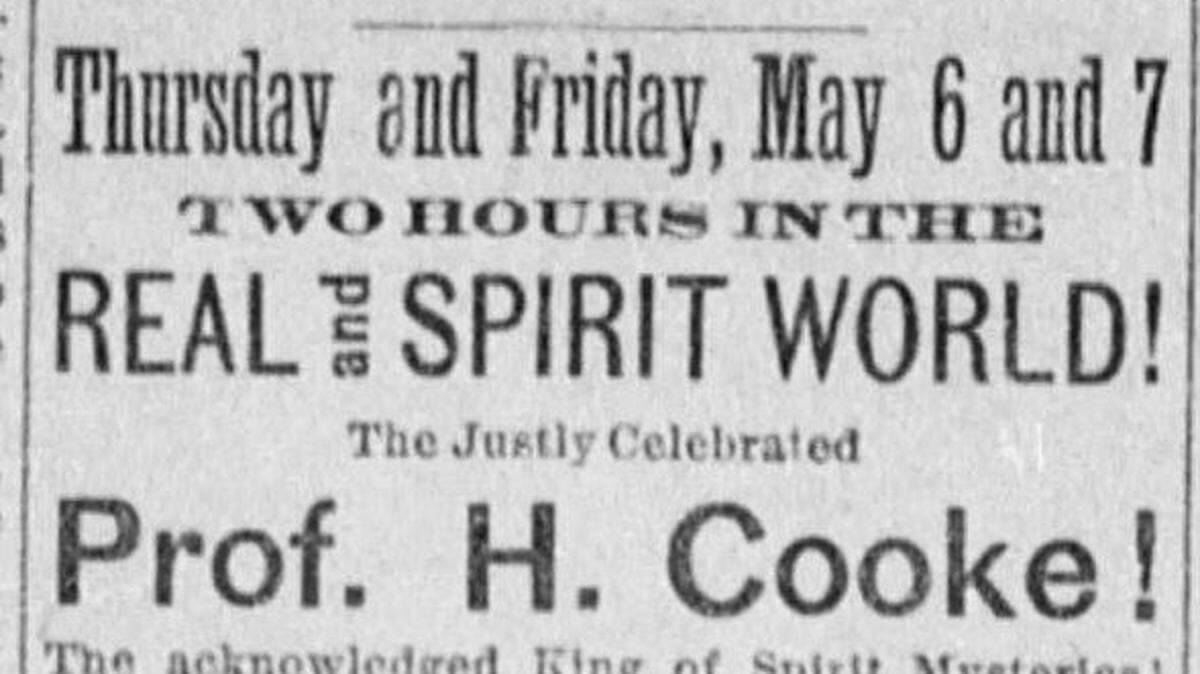
Talbot set the stage for the first full-blown demonstration of the “mystic arts” on a Fort Worth stage. (Those included table rapping, levitation of objects, spirit writing, and ghostly manifestations.) That occurred in May 1886 when Prof. H. Cooke and his assistant, Louise Bremond, brought their act to town for two successive nights at the Opera House for a packed house. Cook placed Bremond in a trance, which allowed her to “channel” spirits from the other side. An impressed Fort Worth Gazette described them in a series of articles as “clairvoyants,” “mind-readers,” “magicians,” and, most importantly, “true spiritualists.” The audience paid from 50 cents (about $17 today) to 75 cents to hear the “spirit mysteries” explained – or perhaps just to be entertained.
Despite the confession of the Fox sisters in 1888 that they were actually frauds, the Spiritualism movement only grew stronger. In 1891, George V. Cordingly, who called himself a “medium,” came to Fort Worth on his second tour through Texas proclaiming the gospel of Spiritualism. His appearance at the Opera House on a Sunday afternoon brought out skeptics and believers alike.
The substance of his program was taking names and phrases called out by his audience and turning them into rhymes. After doing that with “Fort Worth” he began prophesying the city’s future, based on what he said were revelations from the spirit world. He predicted that Fort Worth and Galveston would become the “chief cities” of the Southwest while Dallas would fade. He also predicted Fort Worth would be “visited by a devastating fire” in 1893, which was not much of a stretch considering how often fires struck the city in these years. He also stated that he had come to establish a “spiritualist church” in Fort Worth.
Within a month, the Church of United Spiritualists was up and running, meeting in Greenwall’s Opera House until the congregation could build its own place of worship. Cordingly was the congregation’s first minister. Their worship looked a lot like a traditional Protestant service with hymns, a “scripture reading” from the Bible, a sermon, and a closing invocation.
Fort Worth central in Spiritualism movement
Fort Worth became the epicenter of the Spiritualist movement as it spread across Texas in the years that followed. Several Fort Worthers held high positions in the state organization, including the offices of vice president, treasurer, and secretary. In 1895, the church held its first “state encampment” in Fort Worth at Tyler Park. At least 2,000 were anticipated, though only 120 chose to camp out. The rest attended the daily activities then went home. The days were filled with lectures and seances, but, unlike the more traditional churches, the spirited activities at night included music and dancing.
Members may have called themselves a “religious body,” but the town’s traditional denominations did not welcome the Spiritualist Church. The Rev. Sam Martin of the First Christian Church was the first to denounce them from the pulpit. He preached a series of Sunday sermons on “Spiritualism – the Devil Is in It.” In response, John W. Wray of the Spiritualists challenged him to a public debate to show “the Truths of Spiritualism as taught by the Bible and by Science.” Martin declined the invitation.
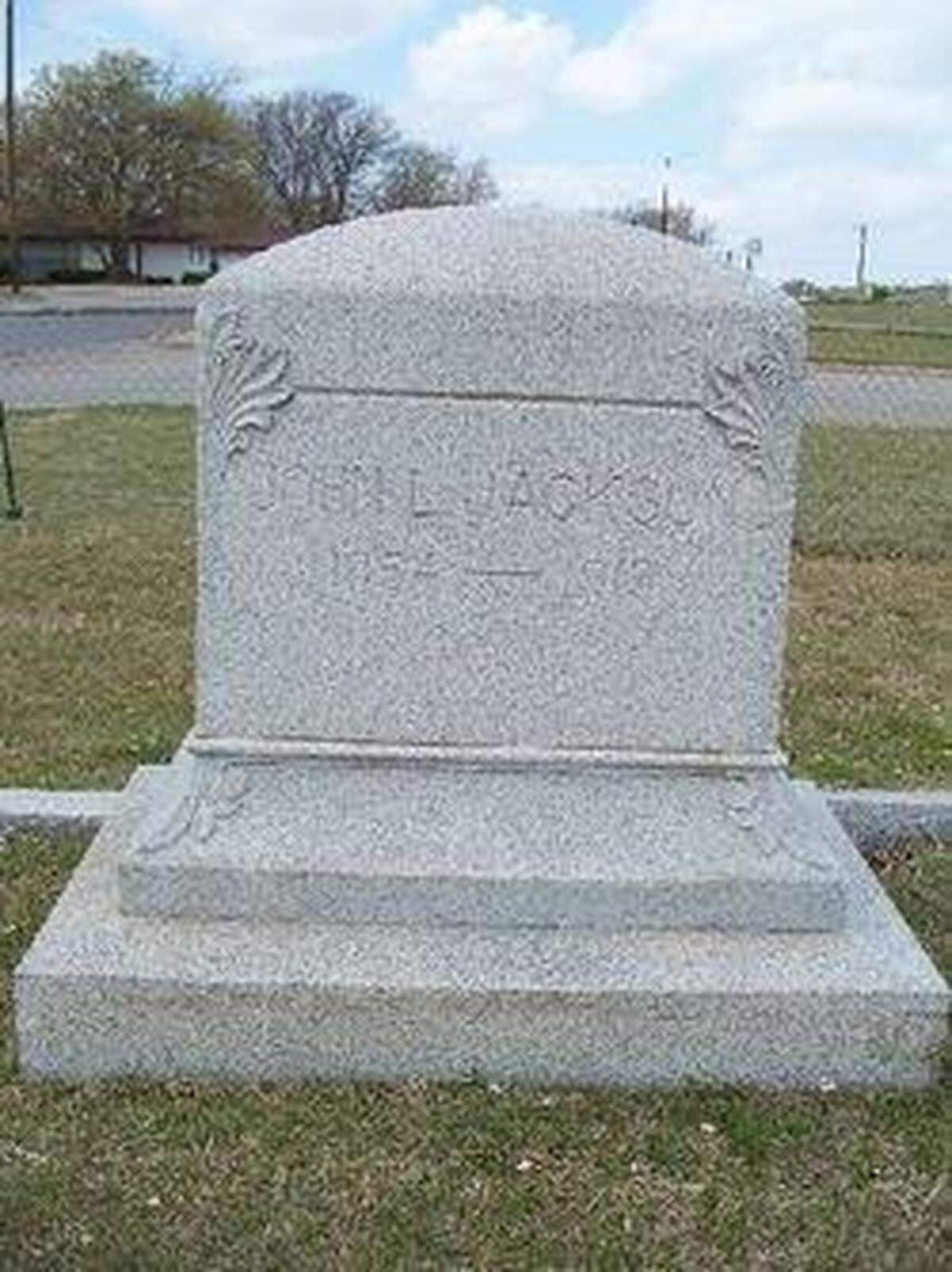
Spiritualism picked up many new adherents during War I when the casualty lists began coming in. But what really put them in the public eye was something totally unrelated: the shocking death of one of their number in April 1919. John L Jackson was found dead in his car just outside of Levant, Texas. It was not his death that made headlines. The 62-year-old avowed bachelor died of apoplexy. It was his last will and testament.
Jackson left the bulk of his fortune, initially estimated at a million dollars, to the church and named Dr. George B. Warne of Chicago, president of the National Spiritualist Association of North America, as “trustee” of the estate. If not the father of Spiritualism, Warne was the architect of the 20th century movement. He got involved because the National Spiritualist Association had seldom seen so much money. Neither had the woman claiming to be Jackson’s widow nor his acknowledged bastard son by another woman.
Sara Vestal of Fort Worth and Robert Ingersol Jackson of Silver Creek filed suits to break the will. Warne arrived in town and announced he “would fight” as long as it took. Both sides hired lawyers, and the battle was on. The case dragged out for the next six years. The initial ruling by Judge Bruce Young in 48th District Court divided the estate proportionally among the claimants. But the National Spiritualist Association wanted it all and accused the plaintiffs of “fraud” and “perjury.” The association hired high-powered Los Angeles trial lawyer John W. Estes to handle its appeal. The Record-Telegram declared that no other probate case in the history of the Southwest had attracted so much attention.
The Fourth Circuit Court of Civil Appeals found in the wife’s and son’s favor again, which everyone except the Spiritualists thought would end it. The National Spiritualist Association mustered a final appeal to the state supreme court in Austin seeking to overturn the verdict, which was rejected in November 1925. One final bizarre twist to the case was that their appeals lawyer, John Estes, was murdered by former Tarrant County Sheriff John Honea in the lobby of the Westbrook Hotel in May 1924.
Harry Houdini vs. Spiritualists
The Spiritualists may have been stung by their association with all the charlatans claiming to be able to communicate with the spirit world because in 1922 they announced plans to “raise the standards” of the Spiritualist Association in Texas. The announcement went out at the organization’s annual state convention, which met in Fort Worth in September 1922. They also showed how thoroughly modern they had become by premiering a specially commissioned motion picture, “The Boundless Deep,” for their membership drive.
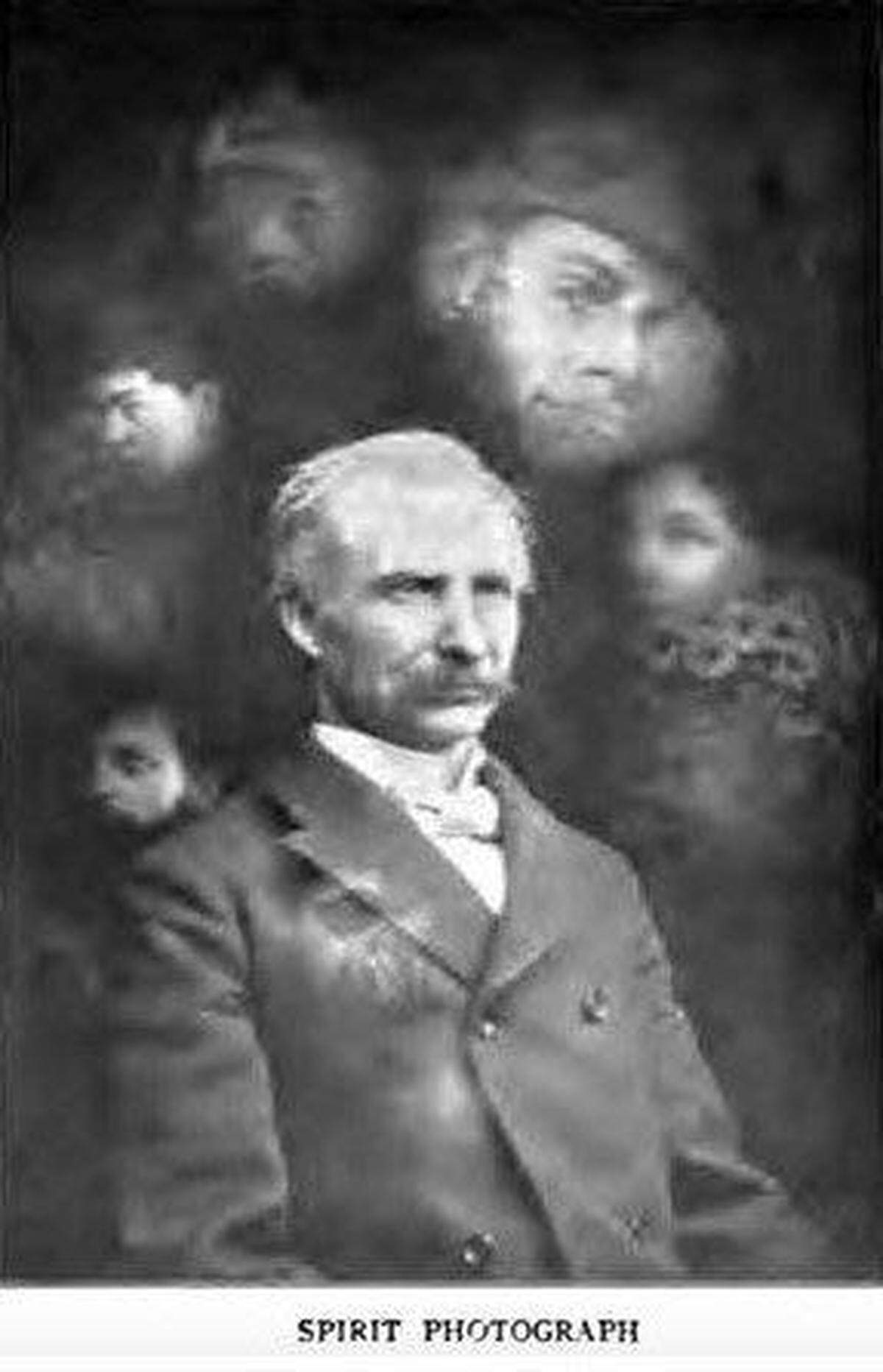
Despite their best efforts to establish themselves as a legitimate church, the movement continued to draw powerful critics. In October 1924, Harry Houdini, king of the escape artists, made his second appearance in Cowtown. At this point in his life, he was on a mission to expose Spiritualism as a fraud. He was booked to speak to a sold-out Klan Hall, but the real interest was in a challenge issued by a Spiritualist who claimed to be able to produce “spirit photographs” showing the dead and living together. Houdini accepted the challenge, and they squared off in Houdini’s suite at the Hotel Texas. A series of photographs were taken, and when the film was developed Houdini had ghosts in his pictures while the Spiritualist did not. That was when Houdini revealed how he had tricked the camera.
Houdini’s public exposure of spirit photography was good for headlines but did not kill the movement. His voice was silenced a few months later in a bizarre demonstration that led to his death. True Spiritualists continued to practice their faith, Fort Worth remained the center of the movement in Texas, and Spiritualism still has many followers today.
Author-historian Richard Selcer is a Fort Worth native and proud graduate of Paschal High and TCU.
This story was originally published July 19, 2025 at 5:00 AM.