This maggot could cause ‘billions’ in ag losses. Here’s what Texas is doing about it
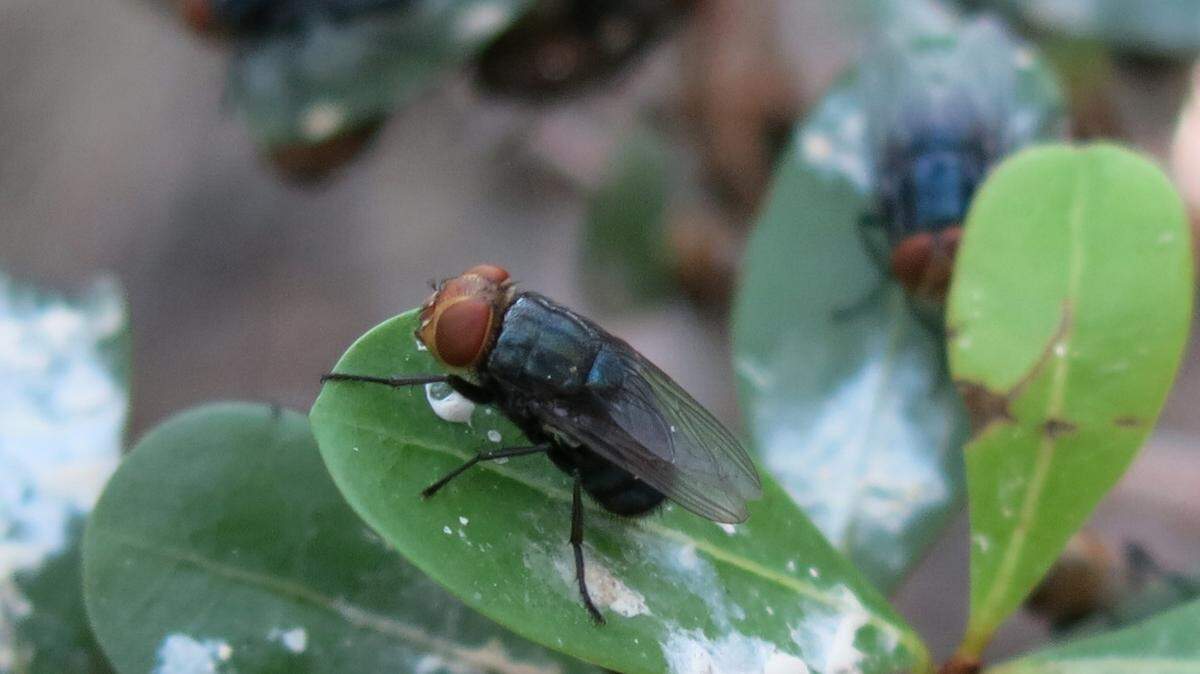
Texas is taking steps to curb the reemergence of a parasitic fly that could have “massive” implications on the state’s agriculture.
The Texas Department of Agriculture is spearheading an effort to prevent the spread of the “new world screwworm,” commissioner Sid Miller said in a press release on July 21. The plan is to introduce a synthetic bait, called Swormlure-5, to attract and kill the pests.
Earlier this month, the new world screwworm was detected in Mexico, sparking efforts by both Texas and the U.S. Department of Agriculture to wipe out the pest.
“The new world screwworm is not just a Texas problem. This is a nationwide crisis with potential massive implications for American agriculture, which could result in billions of dollars in economic losses and place a heavy burden on our agriculture, wildlife industries, and public health systems,” Miller said. “We cannot wait for sterile flies alone to turn the tide. That’s why we’re applying a little cowboy logic and bringing back swormlure, now with an enhanced formula that’s more powerful and effective than ever.”
A native to the Western hemisphere, the new world screwworm is a parasitic fly that lays eggs in the fresh wounds of warm-blooded animals, according to Texas A&M AgriLife Extension.
The larvae or maggots then feed on the animal’s flesh and cause severe wounds and death, if untreated.
Here’s what to know about screwworms and how Texas plans to eradicate the pests.
What is a screwworm?
The screwworm name refers to the pest’s feeding behavior, since the maggots burrow or screw into an animal’s wound.
As the maggots feed with its sharp mouth hooks, it causes extensive damage to the host’s tissue, according to Texas A&M AgriLife Extension. As more eggs hatch and larvae feed, the wound then becomes larger and deeper.
Eventually, this could lead to severe wounds and “deadly damage” to the animal if not discovered or treated. Here’s a few signs of screwworms to watch for in livestock and wildlife:
- Foul-smelling wounds with visible maggots.
- Animals biting or licking at wounds.
- Lesions in navels, ears, dehorning or branding sites.
- Unusual restlessness or lethargy.
Screwworms were eradicated in the U.S. in the 1960s, but have been know to reemerge occasionally.
How is Texas fighting screwworms?
Previously, Texas used a synthetic bait called “swormlure” and a mix of the insecticide dichlorvos to curb the pests.
This time around the state is using a newer version of the bait (swormlure-5), which serves as an attractant and capture tool, according to the TDA. Swormlure-5 will only impact screwworms and blow flies, and “should” pose no threat to honeybees, monarch butterflies or other pollinators.
“In prior research and deployment, this method eliminated approximately 90% of the flies within a two-to-four-week period,” Miller said. “The remaining 10% were eliminated with the release of sterile male flies in the areas where traps were deployed.”
The TDA said their efforts should reinforce existing sterile fly operations and “supercharge” early detection and suppression of screwworms, which will help protect livestock and wildlife.
In addition, the TDA is working the the U.S. Department of Agriculture and Mexican Government to mointor and control potential screwworm hotspots.
“We’ve beaten the NWS before, and we’ll do it again. But it will take all hands on deck,” Miller said. “We need another success story like we had in the ‘70s, and I believe Swormlure-5 bait is the game-changer that will get us there.”
This story was originally published July 23, 2025 at 4:57 PM.