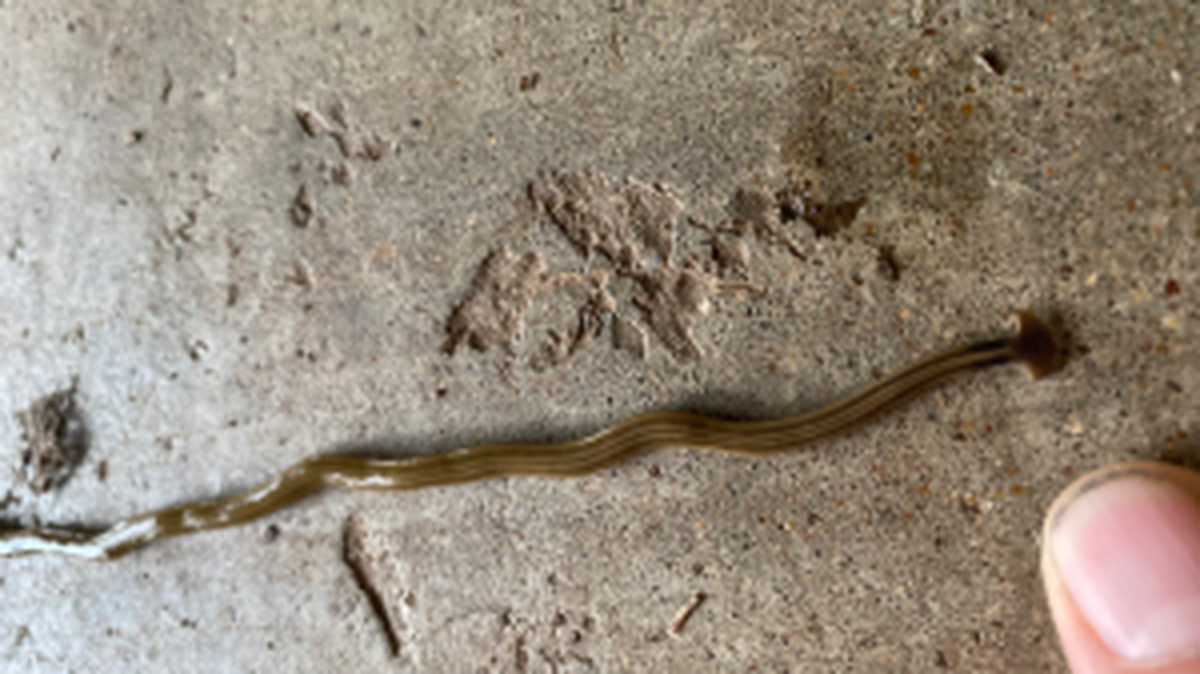
A hammerhead worm in Texas.
C. Neff
Texas Invasive Species Institute Citizen Report
It’s hot now, but following the weeks of heavy rain in North Texas, an invasive species has been on the rise in the D-FW Metroplex.
The hammerhead worm(Bipalium kewense) is a ground-dwelling flatworm originally from Southeast Asia. It has been in the U.S. since the late 1800s. The worm is anywhere from 12 to 15 inches long and has a wide head resembling a hammer. It’s also toxic and is a majorthreat to plants and a minor threat to animals and humans. It preys on earthworms, which are responsible for distributing oxygen, draining water, making space for plant roots and keeping the soil healthy. And you can’t kill it the way you would normally kill an invasive worm.
Here’s what to know.
The hammerhead flatworm is emerging in Texas after heavy rains. The invasive species regenerates into more worms if cut and can be harmful to humans and pets. Photos from Texas Invasive Species Institute
What happens if I come into contact with a hammerhead worm?
Pets who have eaten the hammerhead worm experience symptoms like nausea and vomiting, according to the Austin American-Statesman. While they are not extremely toxic to humans, those who come in contact with the hammerhead worm can experience rashes.
Unfortunately, this invasive species isn’t easy to get rid of. People are advised not to squish or cut the worm in half, because this will only make it multiply — it reproduces asexually.
Place the worm into a sealed plastic bag and freeze it for up to 48 hours. It’s important to remember to wear gloves while handling the worm, and wash your hands to avoid skin irritation.
Place the worm in a salt and vinegar mix or sprinkle salt or citrus oil on the species.
Residents who come in contact with the hammerhead worm are advised to report it to the Texas Invasive Species Institute.
This story was originally published June 20, 2025 at 1:05 PM.