A former North Texas bishop prepared the papal conclave after Pope Francis’ death
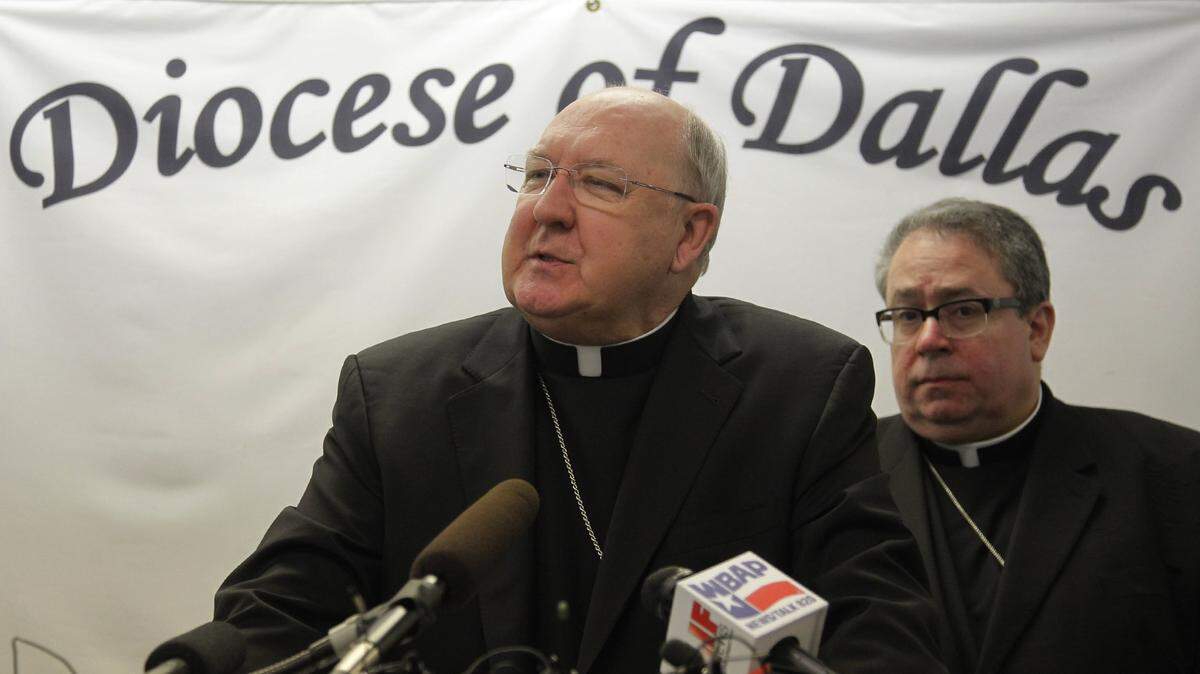
A former North Texas bishop certified Pope Francis’ death April 21 in Vatican City.
In a message from the Holy See at 9:47 a.m Monday, April 21, Cardinal Kevin Joseph Farrell announced the death of the pope. The message came more than two hours after the pope’s death at 7:35 a.m. Monday.
“Dearest brothers and sisters, with deep sorrow I must announce the death of our Holy Father Francis,” Farrell wrote. “His entire life was devoted to service to the Lord and His Church.”
The pope died in his apartment from a stroke, coma and irreversible cardiovascular collapse (heart failure), according to the Holy See. At the time of his death, Pope Francis was also affected by multiple bronchiectasis, arterial hypertension and a previous episode of acute respiratory failure.
The pope’s death comes after the 88-year-old was hospitalized in mid-February with bronchitis that led to pneumonia.
Pope Francis left the hospital in late March and made a few public appearances before his death on April 21. The pope’s final public appearance was on April 20 (Easter Sunday), where he addressed the crowd gathered at St. Peter’s Square.
In the event of a pope’s death, the person who certifies his death is the camerlengo, or chamberlain, who currently is Cardinal Farrell.
The Irish-born Farrell served in Dallas before moving into his current role. Here’s what to know about the camerlengo, the conclave process and what happens in the event of a pope’s death.
What are Cardinal Farrell’s North Texas ties?
In 2007, Farrell was appointed bishop of the Diocese of Dallas.
Farrell served in the role until 2016, when he was asked by Pope Francis to join the Roman Curia in Rome. A handful of years later in 2019, the pope appointed Farrell as camerlengo, according to the Vatican.
Before his Dallas stay, Farrell served in Washington D.C. from the early 1980s to the mid-2000s.
What does a camerlengo do?
One of the main roles of the camerlengo is to certify the pope’s death.
After certifying, the camerlengo will assist other cardinals in the preparation for the papal election, or conclave. The camerlengo also administers the goods and temporal rights of the Holy See until a new pope is chosen.
In the Oscar-winning 2024 film “Conclave,” which is about the fictional selection of a new pope, John Lithgow portrays the camerlengo.
How does the conclave work?
The conclave is led by the College of Cardinals and begins 15 days after the death or resignation of the pope.
There are 252 cardinals in the college and only those under the age of 80 are eligible to vote in the conclave, according to the United States Conference of Catholic Bishops. The eligible participants are known as cardinal electors and are limited to 120.
During the conclave, the Sistine Chapel is sealed to the outside world as the cardinal electors vote for the next pope.
The conclave is voted through a secret ballot. There are four rounds every day until a candidate receives a two-thirds majority, according to United States Conference of Catholic Bishops. After a cardinal receives the necessary votes, the dean of the college asks if they accept the position.
If they accept, the pope-elect chooses a papal name and white smoke is released above the chapel to signal that a new pope has been chosen.
Has a camerlengo ever been elected pope?
Yes, on two occasions.
Gioacchino Pecci served as camerlengo from 1877 to 1878 and was elected pope in 1878, choosing the name of Pope Leo XIII. Eugenio Pacelli served as camerlengo from 1935 to 1939 and was elected pope in 1939, taking the name of Pope Pius XII.
This story was originally published April 21, 2025 at 2:02 PM.