More blackouts? Will your power stay on if another winter storm hits Texas’ electric grid?
READ MORE
Is Texas’ power grid ready for another winter storm?
Nearly a year has passed since February’s winter storm, but the debate over how to prevent another electricity crisis rages on.
Expand All
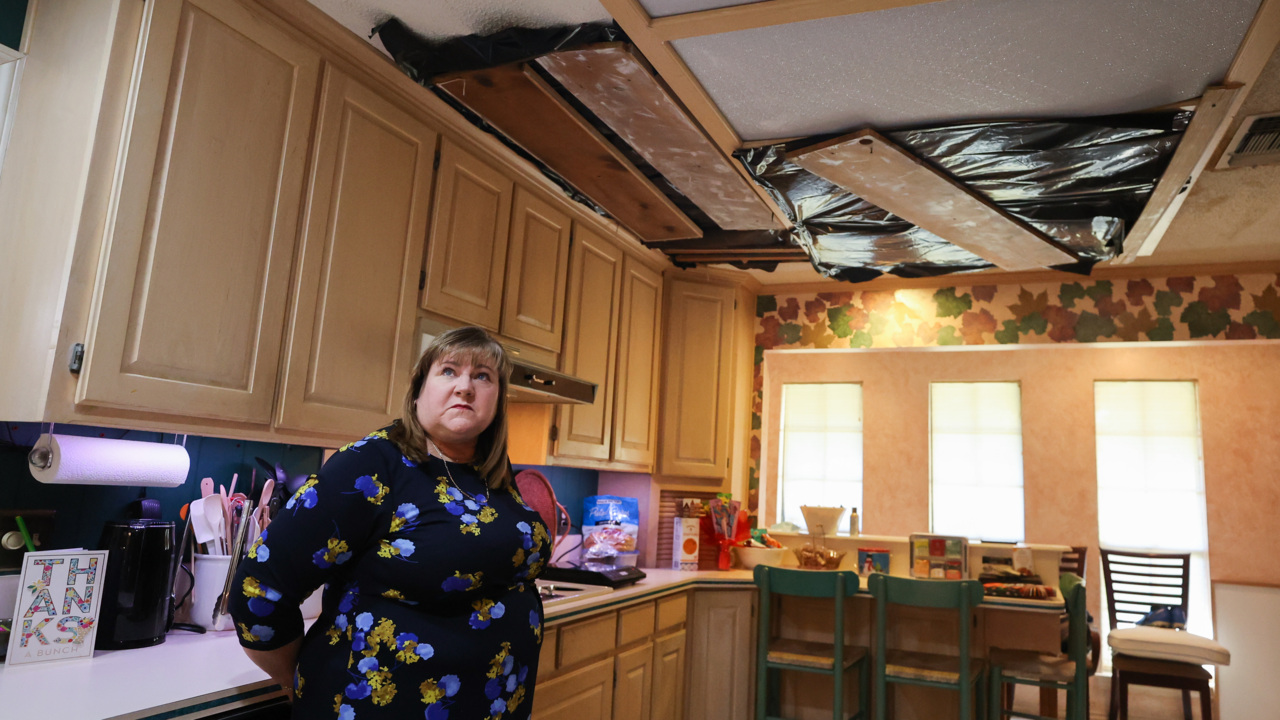
Before last February, Sharon Holmes didn’t know about the massive pipes above her kitchen. That is, until the ceiling caved in, leaving mountains of dirt on her counter tops and months of headaches to come.
Debris and water covered the floor and turned a stove burner on for hours before her husband returned to check on their German shepherd, leaving the Holmes family to wonder how the house was still standing.
Nine months later, reminders of the winter storm dot the northeast Arlington home. Their stove remains unusable. Chunks of interior walls are gone due to flood damage. Boxes of books and video games line the hallways, packed for when a contractor arrives to rebuild their kitchen and living space next year.
Lingering complications have popped up as the family prepares for a temporary stay at a rental home. In October, Holmes’ son discovered pools of water on the floor near his bedroom closet.
The culprit? A cracked pipe behind a bathtub, likely a result of the freezing weather that blanketed Texas and left more than 4 million people without power for hours and days at a time. At least 210 people were included in the state’s official death toll, but some analyses counted hundreds more.
“We feel like we’ve lived this whole year from day to day or week to week,” Holmes said. “Even as the months have gone on since February, the price of lumber has gone up exponentially. Our contractor has already suggested that we will have to go back to State Farm and request more money. We really don’t even know what the cost is going to be.”
As North Texas residents continue to confront the fallout from the power outages and property damage of last winter, they are preparing for another winter season clouded with uncertainty.
Cities are evaluating how staff handled the crisis in February and where they can improve their emergency responses. State regulators are implementing laws requiring power plants to better prepare their equipment for harsh winter weather. Yet one question remains on nearly every Texan’s lips: Will we be ready when the next storm arrives?
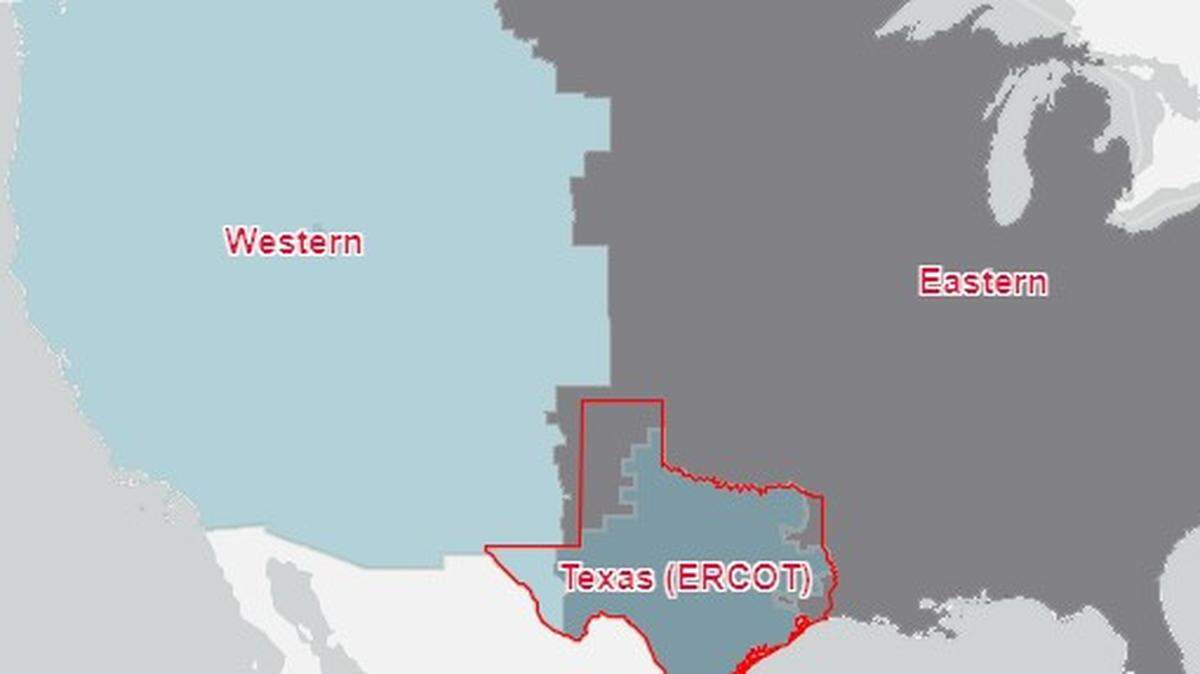
Projections by the Electric Reliability Council of Texas acknowledge the possibility of outages if power plants are forced offline at the same time that demand for electricity is high, even if the situation is less severe than the February crisis. ERCOT officials say that scenario is highly unlikely, and more power should be available to the grid operator in comparison to last winter.
Under rules by the Public Utility Commission, power plants were required to submit a report by Dec. 1 detailing their efforts to winterize facilities, insulate critical equipment from the outdoors and fix anything broken during the February storm.
ERCOT plans to conduct inspections to enforce the new rules, but penalties for violations are still unclear. Violators will have a “reasonable amount of time to cure deficiencies,” according to commission meeting notes published in October.
“We’ve got to make sure this is in place for this winter,” Peter Lake, chair of the Public Utility Commission, said during an October meeting. “This rule-making will be a big step to ensuring that the physical resilience of our grid is vastly improved this winter over last winter.”
As power generators face new regulations, energy experts have been critical of the state Legislature and the Railroad Commission for not issuing more standards regarding winter preparations for natural gas suppliers.
Legislators did not apply the same level of scrutiny to companies responsible for the production, transportation and delivery of natural gas as they did to power generators, said Michael E. Webber, an energy resources professor at UT Austin who leads the Webber Energy Group. Natural gas suppliers have also been reluctant to invest the significant amounts of money required to prepare for occasional winter weather conditions.
“We have a lot of gas power plants that can’t get gas because the gas system isn’t winterized, which is what happened in 2021, in 2011, in 2003, in 1989,” Webber said. “It’s a pattern that leaves us vulnerable.”
Virginia Palacios, executive director of the nonprofit advocacy group Commission Shift, said the Legislature failed by not requiring the Railroad Commission, which regulates the oil and gas industry, to finalize its weatherization standards until early 2023.
The rulemaking process has already attracted controversy. After hundreds of Texans voiced concern that initial proposals would make it too easy for natural gas suppliers to opt out of winter weather preparations, commissioners approved amendments narrowing who would eligible to apply for an exemption. An exemption would result in a $150 fee, an amount officials say is set by state law.
Palacios worries that the Railroad Commission has not been aggressive enough in requiring facilities to prepare for freezing temperatures that could impact the effectiveness of their equipment. Her group recently produced a series of reports criticizing the agency for its industry ties.
“We are not in any way, shape or form going to be prepared for another extreme winter this year, if that happens,” Palacios said. “Having better emergency response plans at the local level, like warming stations and food and water supplies ready to be deployed, is really important because our state is not prepared.”
City, county leaders ‘prepare for the next’ crisis
As state agencies and leaders deliberate how to move forward with energy industry reforms, cities and counties are evaluating how they can better prepare to provide information and emergency assistance to residents.
At a Nov. 16 City Council work session, Fort Worth Fire Chief Jim Davis presented findings from an evaluation of the city’s response to the February storm.
Fort Worth’s water department received more than 13,400 calls as boil notices were issued across the city, according to Davis’ presentation. At least 312,000 water customers were affected by the storm, and the city distributed 625,000 water bottles during the crisis.
Interviews with city staff and a survey sent out last summer determined that the city could provide more “exercise opportunities” for emergency response leaders to practice decision-making skills before an incident takes place.
In addition, Fort Worth plans to develop manuals and “go boxes” of essential resources for community centers and libraries to transition into emergency shelters. The city opened six centers in February and registered 198 visitors, not including the 250-plus people who checked in at the convention center.
Medical and mental health services should be more readily available at shelters to “deal with the complexity of what’s going on when you’re congregating folks together and they’re dealing with their own struggles and stresses,” Davis said.
Other recommendations include making emergency alerts more accessible to people with disabilities, filling staff vacancies in the city’s emergency management department and ensuring that key city facilities can be powered through generators.
Jared Williams, who represents District 6 on the council, was among several city leaders who praised Fort Worth’s response to the winter storm. But he urged staff to investigate better preparations for icy roads and opportunities to educate residents about winter safety tips.
“Maybe we should look at diversifying energy at our water plants to ensure that we’re distributing water and not having to depend solely on one energy source,” Williams said. “All of these (recommendations) are really related to how we prepare for the next one as February is just right around the corner.”
David McCurdy, Tarrant County’s emergency management director, said the county’s 41 cities are responsible for their own preparations. But the county can advocate for city leaders in need of state or federal resources, McCurdy said.
He’s not sure how every city in Tarrant County is developing new and improved plans for handling winter weather or extensive blackouts. But leaders have discussed how they can find water supplies locally in the face of a crisis and think “outside the box a little bit more,” McCurdy said.
“For us old-timers, and for a lot of new folks coming into this business, this was the worst-case scenario that we always used for our exercises that unfortunately came true,” McCurdy said. “A lot of folks are talking about: ‘Well, what do we do now?’ Let’s get after it and see if it works.”
Natural gas industry, experts spar over regulations
In the months following the storm, lawmakers scrambled to craft legislation that would address some of the critical gaps exposed by the grid’s near implosion. Some of the recommendations included in the June laws dated back to 2011, when up to 3.2 million Texans were left without power during a Groundhog Day blizzard.
The details of how to carry out new regulations were largely delegated to the Public Utility Commission, which regulates the state’s electric, water and telecommunications utilities, and the Railroad Commission, which regulates the oil and gas industry.
As the utility commission prepares to conduct power plant inspections and follow up on winterization plans submitted this fall, the Railroad Commission is establishing rules to identify which natural gas producers qualify as “critical” during emergencies and therefore won’t lose power.
Many natural gas providers experienced power outages during the February blackouts, with some even volunteering for an ERCOT program that paid customers if they agreed to use backup generators or reduce electricity during emergencies.
The Railroad Commission has taken steps to ensure facilities in its jurisdiction are prepared to operate and help protect Texans by holding meetings with executives of major gas pipelines, natural gas producers and pipeline facilities, according to agency spokesman Andrew Keese.
In early October, the commission issued a notice to operators that they should take “all necessary measures to prepare to operate” during extreme weather. A newly formed critical infrastructure division and field inspectors have conducted more than 1,500 site visits to large gas producers, gas storage facilities and pipelines to observe winter preparations, Keese said.
“Other ongoing work includes discussions with experts and regulators in other large oil and gas producing states and Canadian provinces on best practices that can be imparted to operators,” Keese said by email.
Todd Staples, president of the Texas Oil and Gas Association, said concerns about the natural gas production and delivery system have been “overstated.” He pointed to an April ERCOT report finding that on the worst day of the power crisis, 12% of power outages were caused by “fuel limitations.”
“Unfortunately, some like to blame their problems on others,” Staples said. “However, we’re doing our part and we’re working extensively with all stakeholders to inform and to ensure that everyone understands the need to purchase storage in advance, to pre-plan and not wait until the middle of a weather emergency.”
Webber, the UT Austin professor, called Staples’ description of events “factually wrong at best and at worst an outright lie.” He cited the Federal Energy Regulatory Agency’s November report on the Texas electricity crisis, which outlined how a combination of freezing issues and fuel shortages, mostly natural gas, caused 75.6% of unplanned outages.
Natural gas producers were the “first domino” to fall during the crisis, exacerbating the challenges faced by power generators, Webber said.
“When (the Texas Oil and Gas Association) says otherwise, they are in conflict with the facts on the ground,” Webber said.
There is little incentive for natural gas suppliers to weatherize their facilities, he added, because they profited from fuel shortages during the power crisis.
Low supply and high demand led to historic surges in natural gas prices during the storm, leading to massive profits estimated at $11 billion by Bloomberg News. In November, leaders of the Railroad Commission approved a move allowing $3.4 billion owed to gas suppliers to be paid through rate increases on Texans’ bills over the next 30 years.
“Failure was profitable for them,” Webber said. “This is a moral hazard of the market design, where if a coal plant underperforms, it costs them money. If the gas system underperforms, they make profits. If you’re the gas guy, why change it? It’s good for business.”
Gas industry representatives dispute Webber’s picture of the Texas energy market, including Staples. While Webber doubts that the Railroad Commission will take any significant action to change how gas producers keep their equipment running under harsh winter conditions, Staples said legislators established clear standards for how the industry should move forward.
“The Legislature has provided the tools to both the Public Utility Commission and the Railroad Commission that should enable them to restructure the market so it will have increased reliability, and the communications aspect has been vastly improved,” Staples said. “More work needs to be done, but there is an increased state of readiness.”
Texans ‘anxious’ to avoid future disasters
Many Texans aren’t waiting to find out what the winter season will bring, or if new regulations will solve the electricity grid’s problems.
Business is booming for hardware stores selling power generators, faucet covers and window insulation. Residents say they’re stocking up on firewood and searching for indoor kerosene heaters, only to find that many chain stores have raised prices or are out of stock.
Demand for solar batteries and alternative electricity options has been high for months, but spiked in early November, said Jeremy Austin, the managing owner of Array of Solar based in Fort Worth.
“As soon as that storm hit, as soon as everyone started to thaw out, our phones started ringing off the hook,” Austin said. “We’re seeing a lot of anxious people. Solar at its root core gives you the freedom not to rely on other people and other municipalities and really allows you to control your own household.”
Evie Rosales, whose home in southwest Arlington lost power for four days in February, isn’t taking any chances. Her neighborhood experiences multiple outages each year without storms, ranging from two hours to 24 hours without electricity. This winter, she and her neighbors traded advice on where to find cords of wood to keep them warm through any potential outages.
“I’ve seen the argument from some people saying they’re not going to worry about it, it’s once every 100 years,” Rosales said. “I don’t know if I agree with that. I don’t know what’s going to happen, and you can’t be too safe. With our power grid being so flaky, I think we definitely need to prepare better.”
While Texans load up on supplies, Holmes, whose pipes burst in February, has spent the past few months giving boxes of old books and kitchenware away. One of the bright sides of preparing for a major remodel — even after the traumatic power crisis — is realizing what the family really needs, Holmes said.
“When something like this happens, you’re just numb and you don’t really even know where to start because it’s just so awful,” Holmes said. “But it’s become a time of giving. We’re just so thankful it wasn’t worse than it is.”