
We know it as the ‘Y.’ Here’s the rest of the story behind the Fort Worth YMCA
Most people know about the YMCA. A lot of us play pickleball at one of the branches or send our kids to summer camps. Few people today, however, likely know what the letters YMCA stand for, much less what the familiar red equilateral triangle represents.
The Fort Worth Metropolitan YMCA has an official history on its website, but this, as Paul Harvey used to say, is “the rest of the story.”
Originally, YMCA stood for Young Men’s Christian Association, beginning in England in 1879 as the idea of founder George Williams. The famous triangle symbol represented spirit, mind and body. The YMCA offered recreation and Bible study to young urban dwellers - meaning white men at that time. More than 150 years later, the YMCA no longer teaches Christian values, membership is no longer limited to men, young or otherwise, and it’s no longer a lily-white organization. The 21st century YMCA is a secular organization devoted to athletic programs for young and old.
At the turn of the 19th century, Texas was fertile ground for the YMCA. The organization had branches in all the major cities and many small towns. Fort Worth itself was badly in need of Christian uplift. Hell’s Half-acre, the bawdy section of town, was thriving, the Texas Brewery opened in 1891, and Byer’s Opera House had brought burlesque to Cowtown.
Like other YMCAs, Fort Worth’s was basically a non-denominational church. With few members and little money, it met in two small rented apartments on the east side of Houston at Fourth until 1906. The members were spiritual-minded businessmen, and meetings opened with a prayer. One of their early goals was to build a gym with the idea of transforming the traditional gymnasium into a space for developing upstanding young men. But where were they to find such young men? The answer was, “If you do your work thoroughly you won’t let a young man be in town 24 hours before you meet him and show him that you are his friend.”
The resulting membership drive was successful beyond all expectations in signing up boys 7 and 17 years of age. Since they did not have a gym or playing fields at the time, gatherings were more like Sunday school classes than playtime.
Money raised for a YMCA building in Fort Worth
The “Y” concept soon expanded to include a YWCA to serve young women in Fort Worth, which similarly prospered. In 1894, while the international YMCA was celebrating its 50th anniversary, the Fort Worth YMCA was still using a rented hall as its home. The Rev. W.E. Wayte, the organization’s state secretary, issued this challenge to Cowtown: “Saloons and similar resorts cost the people of Fort Worth $3,000 daily: Can the Christian people not raise $100,000 to build an edifice to which they can point with pride as the home for boys and young men?”
What it lacked in facilities, the Fort Worth organization made up for in the pedigree of its 12 directors. They included George Mulkey, Dr. Bacon Saunders, and Offa Shivers Lattimore, who was assistant county attorney besides being the president of the organization. Delivering the state-of-the-organization address in October of that year, Lattimore spoke proudly of their membership (300 strong) and said what they needed most going forward was “a building of our own.”
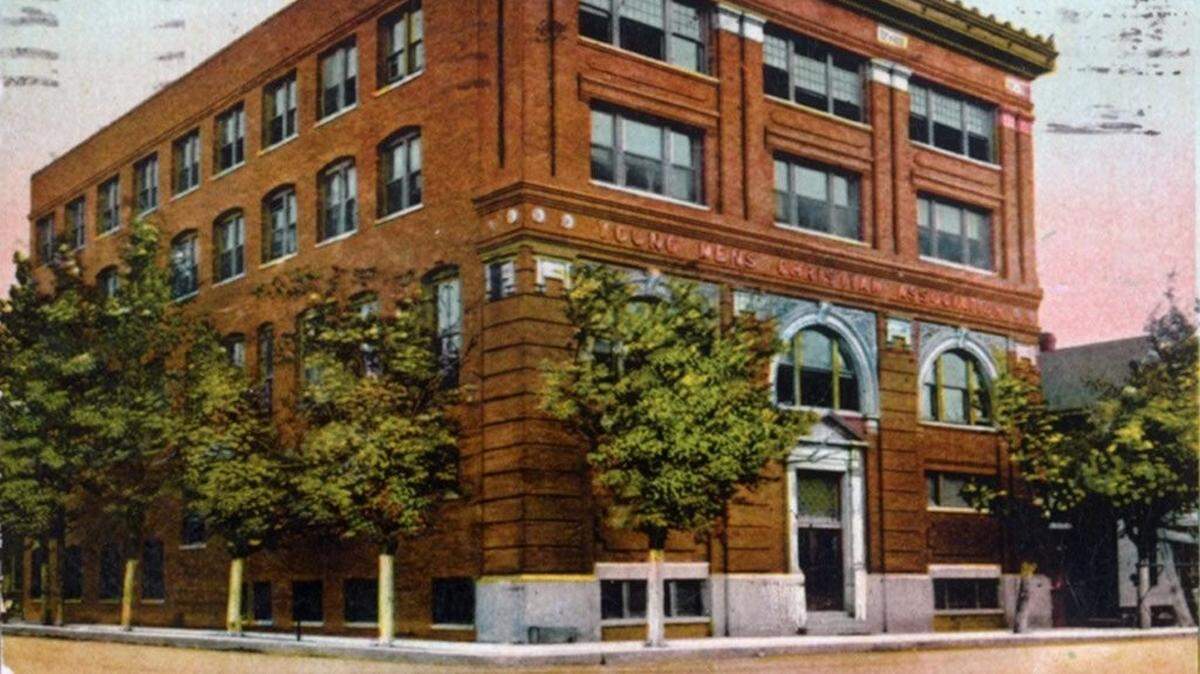
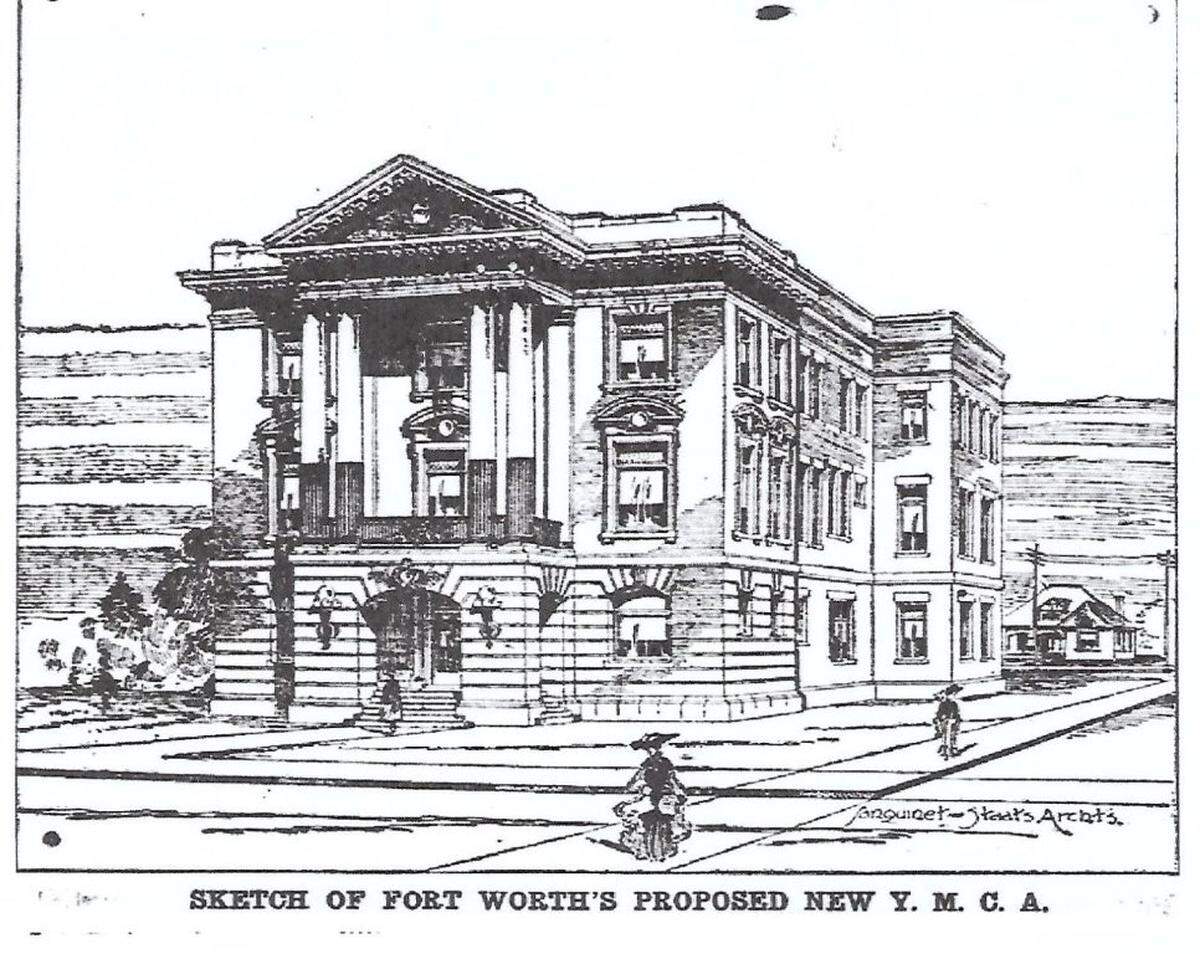
The YMCA finally got its own building on the corner of Monroe and Texas streets in 1906. The four-story edifice was a state-of-the-art facility, containing a gymnasium, locker rooms, and bowling alley. What was most interesting, however, and novel, was the second-floor cafeteria. It was the first of its type in Fort Worth, which led the Record and Register to explain to readers how it worked: “The cooked articles are placed upon the counter and a person takes what he wants to the table, eats it, and then pays for it on the way out.” By the time Picadilly, Colonial, and other cafeterias came along many years later, cafeteria-style eating was old hat to Fort Worthers who went to the “Y.”
In the next few years, the YMCA became a popular venue for enrichment classes, live performances, and basketball games. The classes weren’t limited to Bible study and athletic instruction. In 1920, for instance, Hunter McElroth taught auto mechanics classes.
In 1919, the organization set up a YMCA in a rented space on the south end of town to serve the city’s growing Black community. Its first director was Stephen Fowler, whose own Christian roots traced to Mount Gilead Baptist Church. Under Fowler’s direction, the facility focused on vocational programs and employment opportunities. The group finally got its own building in 1935, thanks to the generosity of William M. “Gooseneck Bill” McDonald.
Growth drives need for new Y
By 1922, the YMCA had outgrown its first purpose-built home, and the organization’s mission had also expanded from instilling Christian values to providing residence quarters for down-and-out men, a sort of rescue mission. The YMCA began a subscription drive to raise the necessary money for a new building, estimated to cost $750,000. That projected sum had to be pared down drastically to fit the available budget. One of the first contributors was the Ku Klux Klan, which promised $1,000. The first installment of that promised donation came with a surprising letter stating, “We are grateful for the privilege of helping in a cause which means so much to the young men of the community.”
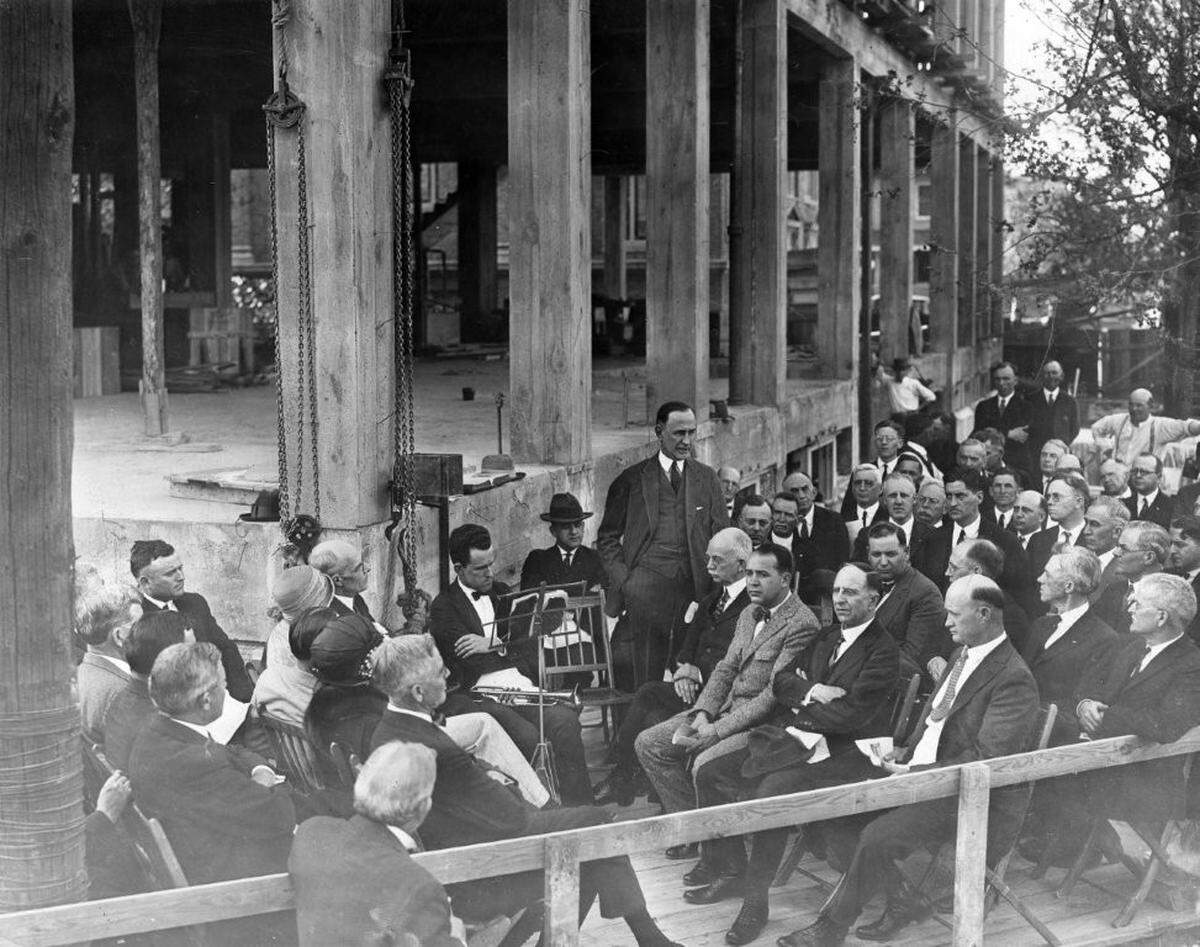
The organization found a site on the corner of Fifth and Lamar, the former homestead of cattle baron and real estate king Winfield Scott. His widow and son donated the land, but the old home that pioneer resident and physician Elias J. Beall built in 1887 also had to be demolished.
Construction got underway in early 1924 and proceeded rapidly. Problems arose, however, with neighbors complaining that construction was noisy and causing traffic accidents plus fund-raising lagged. Star-Telegram Publisher Amon Carter, who spearheaded the building campaign, challenged his fellow citizens: “If the people of Fort Worth can build a $354,00 [county] jail, they can invest $350,000 in the youth of the community.” The early promise that the building would be ready by Christmas 1924 was pushed back repeatedly. A three-day open house was finally held in May 1925.
The Wiley Clarkson-designed building had four stories with a locker area and swimming pool in the basement, gym and meeting rooms on the first floor, and a resident “dormitory” on the top three floors.
In 1972, the “Y” announced it was “focusing on the future,” by which it meant no longer being a “gym and swim” place. The new organization was going to be “a force for social change” and finding “solutions to social problems.” That mission endured for a few years before proving unsustainable.
The YMCA of today is a beloved institution with a largely unknown past. Now it is known even officially as “the Y.” The old 1925 building at Fifth and Lamar is still standing, only with a different entrance and an annex on the north side where there used to be a Christian Science church. Besides the playing courts and track, it is home to the Metropolitan YMCA offices. Numerous neighborhood branches have been built in the suburbs.
It is doubtful if the founder, Englishman George Williams, would recognize it. But the grand old YMCA with its iconic red triangle still marches on. Hopefully, it will still be around in another 54 years to celebrate its 200th anniversary.
Author-historian Richard Selcer is a Fort Worth native and proud graduate of Paschal High and TCU.