
Family remembers Holocaust survivors in 1941 photo of their arrival at Fort Worth station
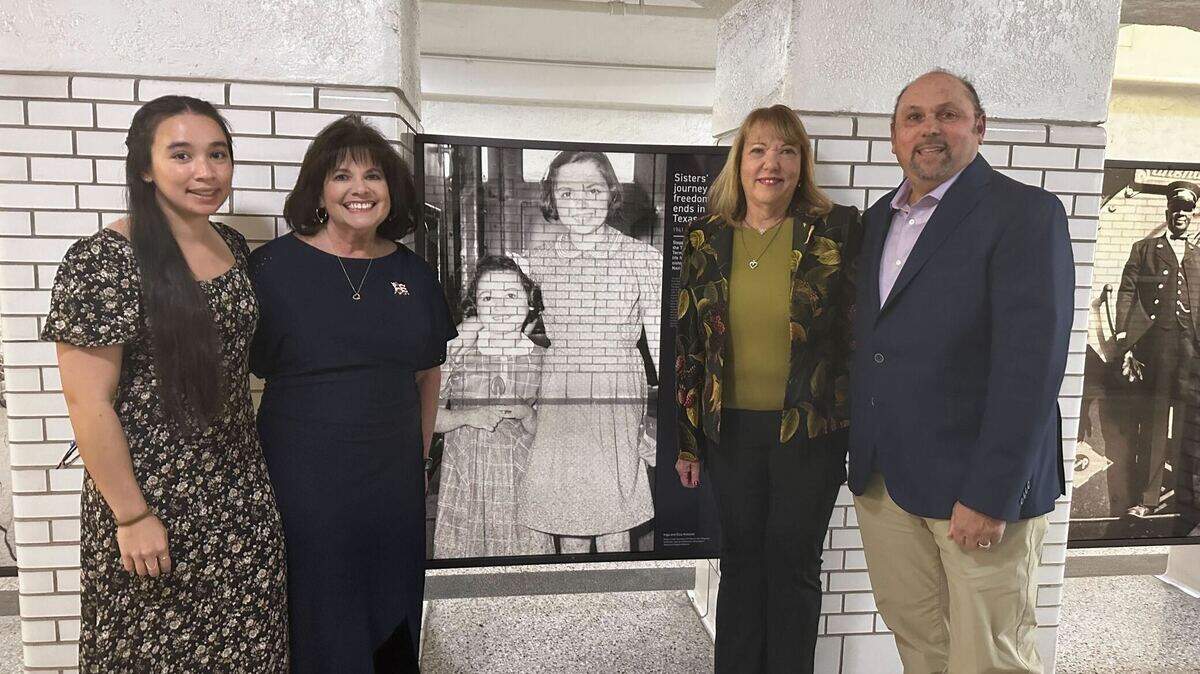
Two generations of family members gathered Monday around a picture of a pair of little girls smiling more than 80 years ago, after they escaped the Holocaust and moved to Fort Worth to pursue the American dream.
The new Texas & Pacific Station Passage, which connects the commuter railway platforms with downtown, formally opened with a ribbon-cutting ceremony on Monday, Dec. 1. The station includes a photo exhibit with 11 larger-than-life photos displaying moments when passengers arrived at different historic times in the city.
“The idea of having historic photos with images of real people kind of brought some life to the tunnel in a way that nothing else really could,” said Melissa Knour, director of planning at Fort Worth Inc.
“Sisters’ journey to freedom ends in Texas,” reads the caption under the portrait of the two sisters at the passenger terminal in 1941, after they escaped Nazi Germany.
Elsa Kokotek, 13, and Inge Kokotek, 9, had departed their hometown of Ludwigshafen, Germany, in 1938 on a Kinder Transport, a train that evacuated Jewish children from Germany and Austria around the beginning of World War II. The photo was taken when they arrived at the T&P Station to meet their aunt and uncle, Ruth and Sol Englender.
The girls’ mother died in 1935. Their father, Samuel Kokotek, was deported to Poland by the Nazis in 1939, and he was never heard from again.
The sisters spent two years in France, and were among 45 refugee children who traveled to Portugal, where they boarded a Mercy Ship to New York. On Sept. 8, 1941, the sisters — who only spoke French and German — arrived in North Texas.
Hollace Ava Weiner, director of the Fort Worth Jewish Archives, discovered the photo of the girls’ arrival in the city two years ago when the T&P photo exhibit was being assembled.
The Kokotek sisters were among about 1,000 unaccompanied Jewish refugee children who sailed to the U.S. while the Nazis were waging war.
In a conversation with the Star-Telegram at Monday’s event, Elsa’s daughter Carol Pearson and Inge’s daughter Stephanie Leung said they had no idea that picture existed until Weiner contacted them.
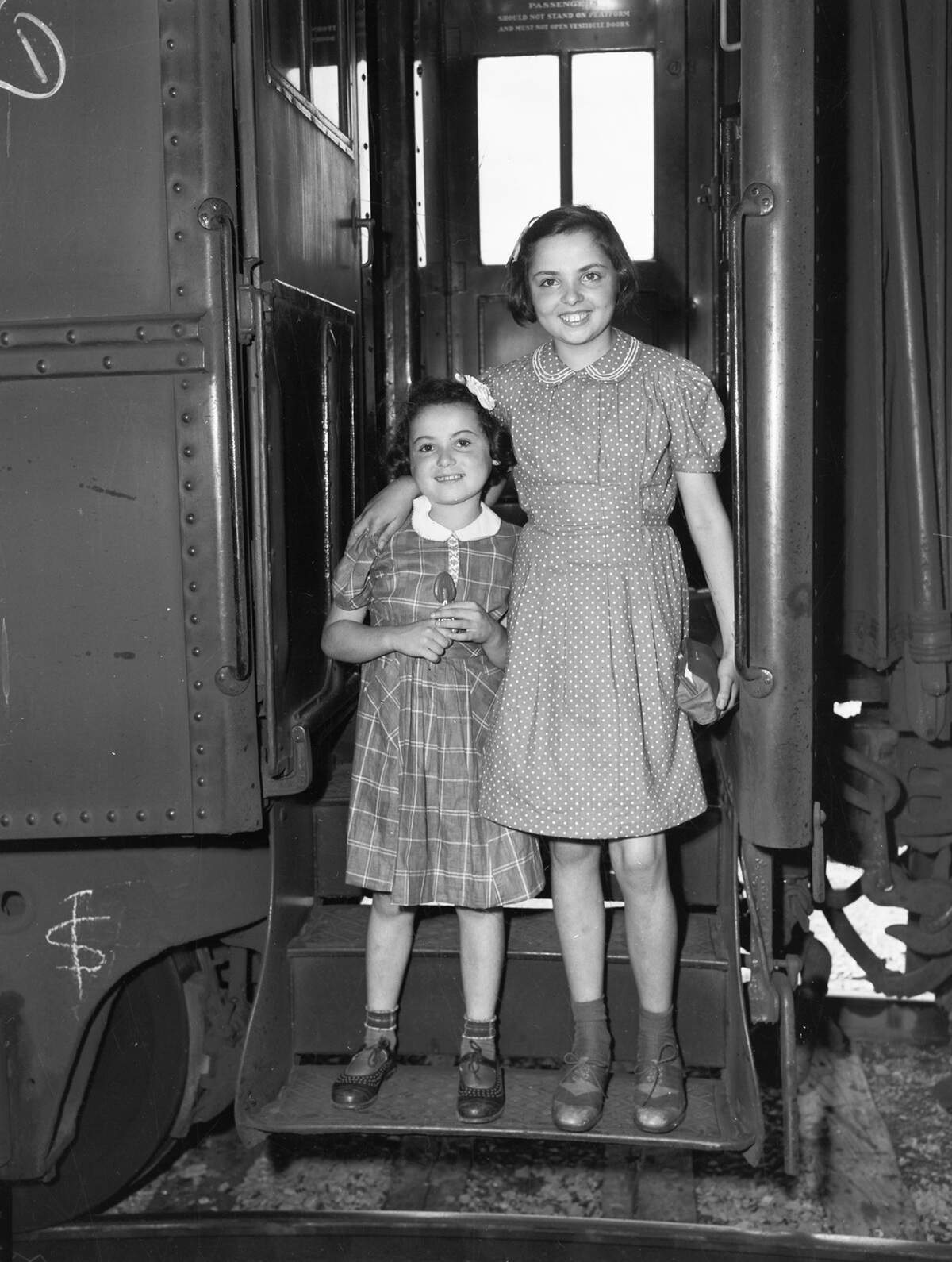
“We only had a couple pictures among us, some black and white, of our moms, and we had never seen the picture before,” Leung said.
“It just blew me away — it’s amazing,” Pearson said. “If you look at that picture, you can see both of us and (Stephanie’s brother) Mark.”
Both Pearson and Leung were initially skeptical about the picture because they had no previous knowledge of its existence.
They were honored that Weiner found the picture and took the time to find their family, Leung said.
“Even more honored to find out that they were doing this restoration of the T&P railroad, and wanted to include our moms into the history,” Leung said.
“You can just see us in that picture, and if they wouldn’t have made it here, then we wouldn’t be here,” Pearson said.
Survivors thrived, raised families in Texas
When they grew up and married, Elsa Abramson and Inge Kessler became successful women, mothers and wives who raised great families, and they did so much, Pearson said.
There were obstacles that they went through at a very young age, especially Inge, to be that young and to be taken away from her family, but Elsa made sure they stayed together, she said.
“She was a wonderful mom and wife,” Pearson said. “She helped my dad and his business and took good care of us.”
“She lived till she was 92 and a half. She had a good life after she got here, and they both persevered, and they made it, and they made something of themselves and their families,” she said.
Pearson said that her mother never talked much about the Holocaust, but at 90, she shared her story with her family in a 20-minute conversation.
“I know my mother never really talked about it, to explain to us what happened,” Pearson said. “I think it was just too sorrowful for her to do that.”
“They’re survivors, and most Holocaust survivors are strong people, strong willed, “ she said.
Leung remembered her mother, Inge, as an amazing wife and mother who not only took care of her family but also the community.
“At the synagogue, if they needed something, she was the first one to volunteer to help,” Leung said.
When she decided to start working again, she only took jobs where she would have the same holidays as her children, so that she wouldn’t have to worry about missing them, Leung said.
“Her laughter was something! They said she had a laugh that you couldn’t duplicate, except for my brother,” she said.
Leung said she never saw her mother crying until one day when she was 18 years old during the 50th anniversary of her grandparents on her father’s side.
“It was the first time where she said, my parents (Elsa’s and her parents) will never see the things that their children have accomplished or will accomplish,” Leung said.
Leung said when she joined the Navy her mother was very supportive.
“She was there for all my life events. I had my daughter in Bahrain, and I was very sick. She flew all the way to Bahrain,” Leung said.
Leung wants her mother and aunt to be remembered as strong women who believed in the United States.
“This is about two children who were not U.S. citizens. They came here to be part of this, to become Americans and to have a home here,” Leung said. “And that’s the American dream.”
Samantha Leung, granddaughter of Inge, said it was nice to witness her mother and uncle getting emotional looking at the picture.
She said her grandmother might have not shared specific details because it was a traumatic time. But now that the family has learned about their journey here, it is nice to know more about where they came from.