
Saloons once outnumbered churches in Fort Worth 178 to 16. Violence often erupted
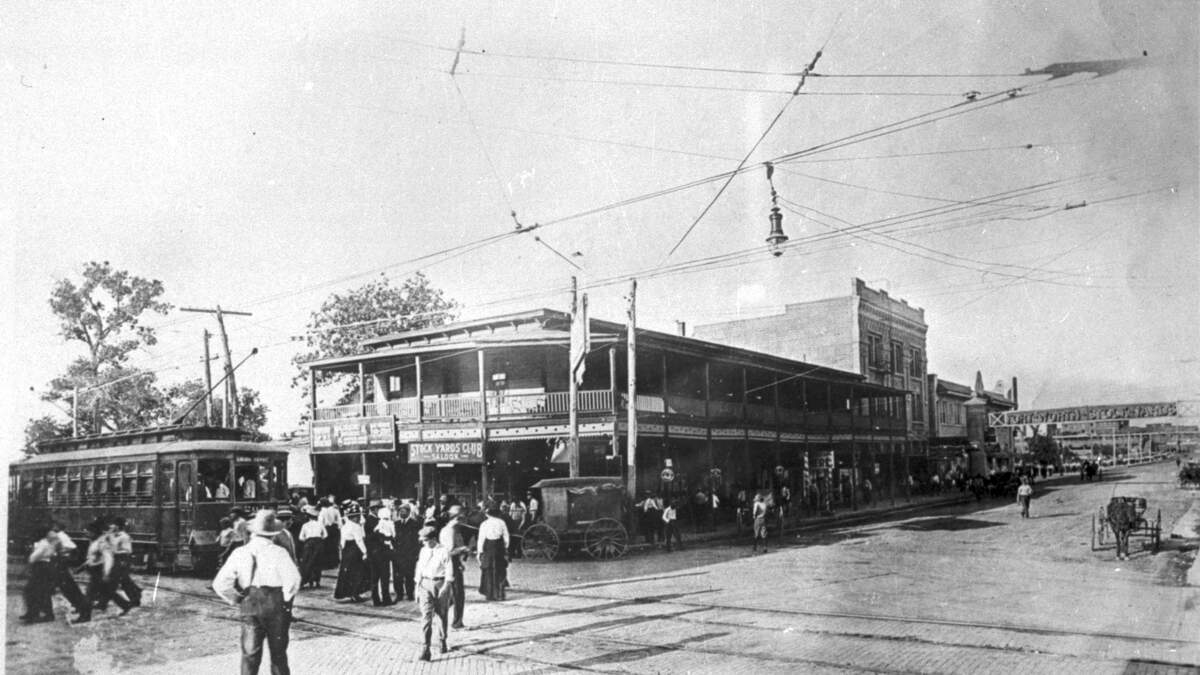
Fort Worth was once a city with a saloon on almost every corner — from high-class, uptown places to the low-dives of Hell’s Half-Acre. They tended to be named either for the proprietor (such as, Sheehan’s Saloon) or by using a well-known name like “the Oriental.” Some of those names showed up all over the West (such as the White Elephant).
The saloon was a mostly male preserve (unlike the modern-day nightclub), a place where a man could escape the cares of everyday life and his responsibilities at home. Women generally weren’t allowed in because they put a damper on the favorite pastimes of drinking and gambling, not to mention swearing and fighting.
Sometimes the manly culture made a man forget more than he should have. In 1883, John Willingham took his daughter with him to his favorite drinking establishment one morning, and when he tottered out the door after a few drinks, he left her behind. After a few hours, the barkeep called the authorities, who spent the rest of the day looking for the father. They placed the girl in the hands of the jailer where the father reclaimed her the next day.
As a near-mythical part of Fort Worth’s past, saloons have long been a topic of interest to our best hometown writers, like Mack Williams, Cissy Stewart Lale, Jerry Flemmons, and Bill Fairley. This column goes down that same rabbit hole, chasing some of the lesser-known places from by-gone days.
Not every place called itself a saloon. Some preferred to be known as bars, sample rooms, beer gardens, or liquor houses. In cattle-driving days, dance houses and pool parlors also offered liquid refreshment, but the fun did not stop with drinking. More respectable places advertised in the newspaper, and the authorities treated them the same as any other legitimate business. Yet regardless of whether they were fancy places or dives they all dealt with public drunkenness, illegal gambling, and violence. Those were the cost of doing business.
Originality was not a requirement in naming your saloon, and copyright law did not apply. Many places incorporated some variation of “Exchange” in their name. Fort Worth had the Cattle Exchange, Cotton Exchange, Mechanics’ Exchange, Merchants’ Exchange, Stock Exchange, Turf Exchange, and Brewery Exchange, though not all at the same time.
All saloons offered basically the same amenities: a wide variety of alcoholic beverages, a club room(s) for gambling, a “wine room” in the back for ladies, a cigar stand up front for gents, and free lunch with the purchase of a beer, typically room-temperature. Advertising “ice-cold beer” was a come on.)
When Khleber Van Zandt wrote about coming to Fort Worth in August 1865 he said the little village of 250 souls did not have a single saloon. It was a strange statement because the Last Chance Saloon opened in 1856, and the Alamo Sample Room started doing business on courthouse square in 1861. Van Zandt may have been trying to put a positive spin on his new hometown.
Van Zandt himself passed on going into the saloon business and instead opened a dry goods store, which did very well. Eight years later, any dearth of “watering holes” had been corrected with an abundance of such establishments. The principal ones in 1873 were the Silver Dollar, the Cotton Boll, the Dixie, and the Headlight Bar.
By 1879, seven barrooms were listed in the city directory, not to say that’s all there were. The listed number had grown to 35 by 1884, not counting the hole-in-the-wall joints. By World War I, saloons outnumbered churches 178 to 16, a clear indication that distilled spirits were doing more business than the Holy Spirit with the menfolk.
Saloons also included some of the nicest buildings, bringing a little class to a dusty cow town with their fancy fixtures and food service. When it opened on Main Street in 1876, Gus Rintleman’s Good Luck Local Option Saloon was the first brick building on the south end of town. And when the Seventeenth District Court went looking for a place to meet in the 1870s, it held its sessions over the Cattle Exchange Saloon. The bar remained open, but gambling was suspended during proceedings.
Railroads spurred a boom in Fort Worth saloons
The saloon business really boomed after the railroad came in 1876, bringing a flood of newcomers to town. By 1878 Fort Worth’s 32 saloons of record were a prime source of business for the town’s three full-time undertakers. Over the years, saloon names changed and so did the owners as they sold out, went bankrupt, or moved uptown to a swankier place. With so much competition, a saloon had to really stand out to survive.
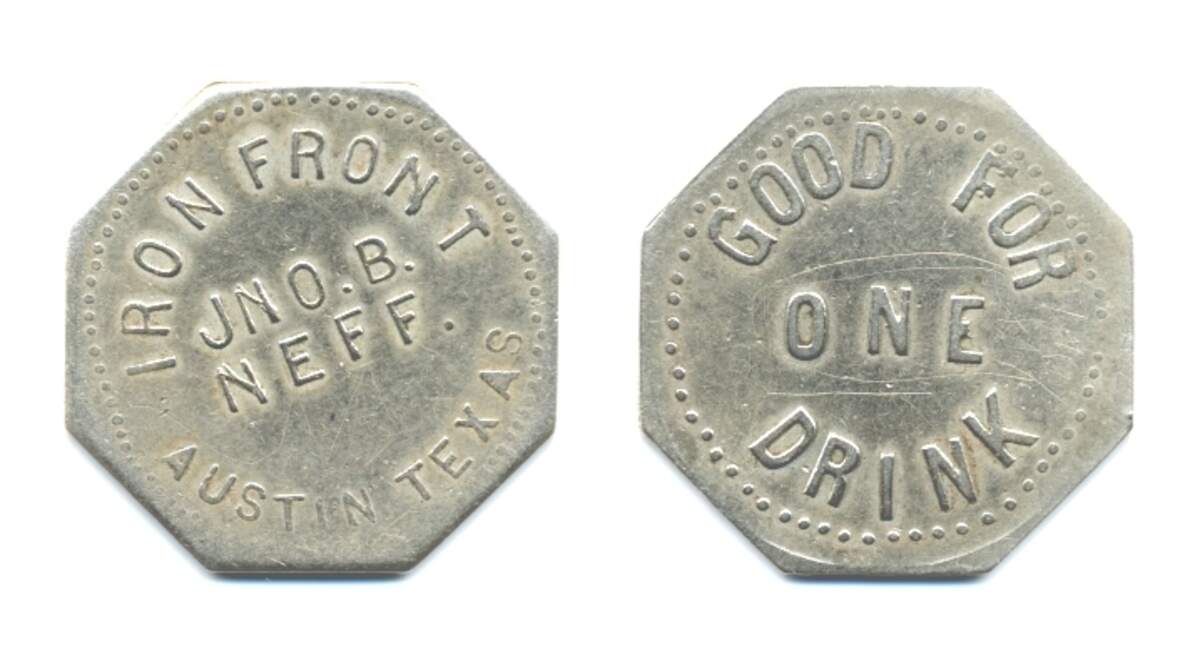
The competition for customers was usually conducted on a strict business basis, like McDonald’s vs. Burger King. Some barkeeps had business cards printed up and passed them out freely. Others took a more costly approach, having metal tokens made up that promised the holder “one free drink.” Today those pot metal tokens are valuable collectors’ items.
Still, sometimes the competition got nasty as owners tried to protect their turf. The Santa Fe Saloon and Cow Boy [sic] Saloon were right across Main Street from each other in Hell’s Half-Acre, and their owners, John Galloway and Jim Rushing respectively, did not believe in the Marquess of Queensberry Rules. Among their dirty tricks was sending bruisers across the street to cause trouble in the other man’s place.
Saloons were violent places under the best of circumstances. Two infamous shootings occurred in front of the White Elephant, another inside the Board of Trade. The latter cost Walker Hargrove his life in 1908. He had walked in and had a drink then began smashing glassware out of pure meanness. Bartender Walter James pulled out a .38 and shot Hargrove four times.
Saloons were part of the colorful history of Cowtown, cleaned up and romanticized by later writers. The nostalgia was so strong, the creators of the 1936 Frontier Centennial built an enormous replica of a honky-tonk that they called Pioneer Palace. It had a 40-foot bar, a dance floor, and “saloon girls,” plus such modern touches as nickel slot machines. It was what visitors expected in a recreation of wild ‘n’ woolly Fort Worth.
Author-historian Richard Selcer is a Fort Worth native and proud graduate of Paschal High and TCU.