
After 4 robberies, this Fort Worth streetcar ‘motorman’ shot a fifth robber dead
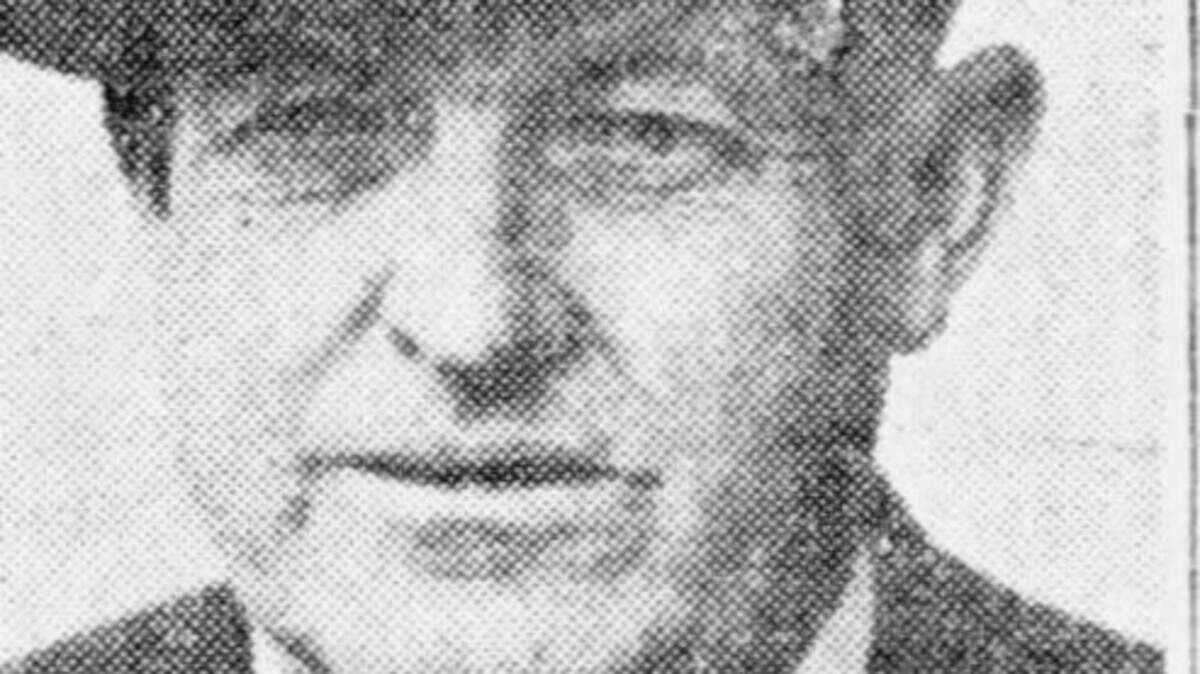
“Motorman” was the official name for streetcar operators in the early 20th century, a distinctly different job than conductor. Motormen drove their routes day and night, year-round for the companies that owned the lines crisscrossing Fort Worth.
Conductors were on the downtown routes to collect fares and help people on and off. But motormen had no such companion on the suburban routes, which could be lonely, and even dangerous, at night.
The city fixed one-way fares at 5 cents, which was good for working-class passengers but kept the streetcar companies operating on a razor-thin profit margin. Having to collect fares also meant the motorman or conductor had to carry money, which made them an easy mark for robbers.
Repeated robberies on lonely routes at night led the streetcar companies to request “special officer” commissions for their motormen, which allowed them to carry a pistol. Whether a man chose to use that pistol or meekly give up the money to a robber was up to him. The bigger problem was when that robber also demanded the motorman’s personal money and valuables.
Carl R. Wynofsky was a veteran motorman for the North Texas Traction Co. (NTTC), on the job since 1908. Born Rudolph Carl Wynofsky in 1874, he arrived in Fort Worth a couple of years later. He may have gotten his job because of his brother, who was a streetcar dispatcher.
His first route was the Arlington Heights line. Later he moved to the South Summit line. On both routes he drove the night shift, which was quiet and usually had few passengers. On the night of Nov. 13, 1923, Wynofsky was held up for the first time by two men who relieved him of $18 in fare money plus $18 of his own. If that wasn’t bad enough, they forced him to get out of the car, gagged him and left him tied to a telephone pole. He had to stand in the rain 30 minutes before he could free himself.
The small amount stolen and lack of any injuries made the robbery less than a priority for police.
On the night of July 1, 1929, he was hit a second time. About 11:30 he was two blocks south of Elizabeth Boulevard when an armed man “in coveralls” stepped aboard the empty car and ordered him to keep driving while the man emptied the cash box. He did not rob Wynofsky but got away with $25 in the company’s money.
Streetcar driver buys gun after two robberies
Wynofsky bought a pistol and with the help of his employer got a city-issued license to carry it. A little after midnight on Jan. 26, 1930, he was victimized again on his South Summit route. The robber boarded his car at Fairmount and Cantey and stuck a gun in Wynofsky’s face. The robber grabbed the money in the change box, about $20, and fled into the darkness. Wynofsky told police he got off a shot at the fleeing robber but didn’t think he hit him.
Less than a month later, lone gunman Lonnie King robbed Wynofsky and another driver, H.L. Lumpkin, on the same night. He got on Wynofsky’s car at Fairmount and Allen and made off with $9. He got $17 from Lumpkin. Two nights later King struck again, trying to hold up C.A. Carnett on his Jennings Avenue route. Carnett was having none of it, however. He drew his own pistol and shot the robber, then drove to the police station and handed the wounded man over to police. King survived and was sent to prison, where Gov. Miriam Ferguson pardoned him in 1933 —but not before he was tried three times. Wynofsky had to testify at all three trials.
By this time Wynofsky was through being the target, but first he had to buy another gun after his first was somehow stolen from his car. He bought a cheap revolver that he carried in a satchel by his seat where he could reach it easily.
It wasn’t long before he found himself targeted for the fifth time. On the night of Dec. 30, 1930, he was stopped on Summit about midnight when two men boarded the empty car. While one of them stood in the doorway, the other, Will Boozer, stepped behind Wynofsky and stuck a gun in his ribs. “Stick ‘em up or I’ll blow a hole through you!” the man threatened.
As the motorman later told police, “I’m tired of holdups.” He raised one hand over his head but with the other pulled out his pistol and shot Boozer. The second robber fled.
Wynofsky walked to a nearby house where he asked the owner to call the police and an ambulance. Boozer died on the way to the hospital. Curiously, the medical report said he had a “fully loaded automatic” in his pocket, which didn’t jibe with Wynofsky’s story that the robber was pointing his pistol at him when he shot him. However, no one asked questions because the police recognized Boozer as a thrice-escaped convict from prisons in Arkansas, Oklahoma, and Texas. Their conclusion: Will Boozer was a desperado who deserved what he got.
The newspaper reports told of the attempted robbery and gave Wynofsky’s home address, also relating that he had been robbed four times previously, losing not just the company’s money but three watches and “a small amount of money” himself.
Wynofsky must have decided he’d had enough of being a motorman. He was next heard of in Axtell, near Waco, in 1936, applying for a license to open the Little Brown Jug bar and package liquor store. Perhaps he figured running a bar couldn’t be any more dangerous than driving a streetcar.
He died peacefully in McLennan County in 1969 at the age of 94, the last of his clan, and is buried there in Riesel Cemetery.
Author-historian Richard Selcer is a Fort Worth native and proud graduate of Paschal High and TCU.
This story was originally published April 25, 2026 at 4:45 AM.