
Facing a murder charge, he walked out of a Fort Worth courtroom and disappeared
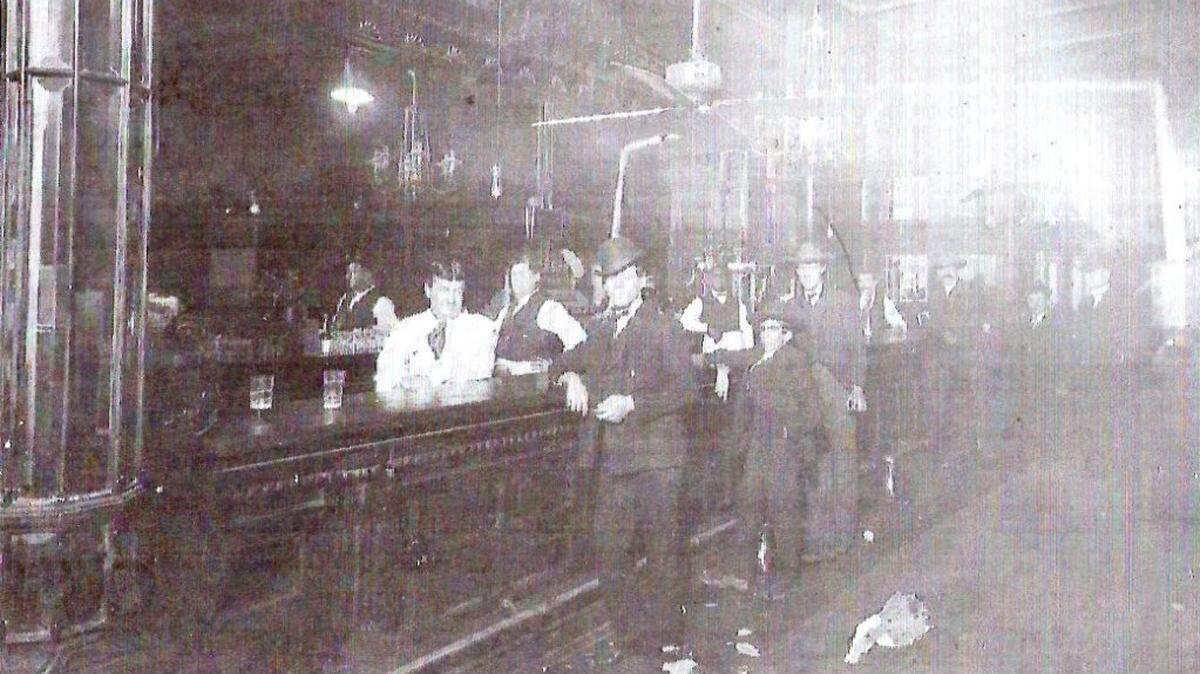
Men like Frank Fossett were once known as “bad actors,” which had nothing to do with a career on the stage. He was born Henry Frank Fossett in Meridian, Texas, in 1863. His father, a Ranger in state service during the Civil War, acquired nearly 2,000 acres after the war, making the family one of the wealthiest and most respected in Bosque county.
The boy they called “Frank” had a wild streak and an aversion to hard work, which kept him in trouble with the law. At 17, he and his brother and two pals were accused of killing a sleeping couple and robbing them of $400. The Fossett boys were acquitted but a month later they shot up Meridian. Because nobody was hurt and they came from a respectable and well-connected family, they skated again.
Fossett continued his wild ways, charged with running an illegal gambling operation and toting an illegal pistol. He paid a fine and served no time. Things only got worse. A few years later he assaulted and shot Charley Alexander, a Black man who had worked for the family for years. He got off this time because he said Alexander had insulted his wife.
Fossett married “Gussie” in 1880. She died in childbirth four years later. In 1886, he married Helen Thomas, nine years his senior and a widow with three children whom he never adopted. He brought the family with him to Fort Worth in the winter of 1893-94.
Rather than seeking gainful employment he styled himself a “sporting man” and became a regular in the gambling establishments, though he wasn’t much of a gambler. He lost heavily at the faro tables, then, after dropping $300 at the Board of Trade Saloon one night, he pulled a pistol and demanded his money back. He was arrested and jailed, but after he returned the money, it was treated as a private affair among the sporting fraternity. No charges were filed. Fossett was a co-owner of the Stag Saloon for a time, but management didn’t appeal to him.
Fight among gamblers leads to murder charge
Fossett earned his place in Fort Worth history on the night of May 29, 1899. He was entering the Palais Royal Saloon when he encountered Doc Carver, another gambler who had once worked for Fossett at the Stag Saloon. They exchanged words, and Carver made some reference to Fossett’s “house” although whether he meant the former saloon or his family is unclear. Either way, Fossett took exception and kicked him in the crotch. They grappled and fell to the sidewalk. The combatants rolled into the saloon with neither getting the upper hand until Fossett managed to pull his pistol and put four shots into the unarmed Carver.
Carver’s last words reportedly were, “You damned cur; you knew I had no gun, and you came to match a fight with me!” Afterward, Fossett calmly sat down in the boot black’s chair to await the arrival of the police. He surrendered his gun and went off to jail.
After a preliminary hearing, Fossett was remanded without bail to await the decision of the grand jury, which came on June 2. He was indicted, but that was no problem. Being “quite wealthy” he hired Judge J.M. Hurt of Dallas to lead his defense team. The trial took place in Seventeenth District Court that same month. The defendant took the stand to plead his case. He justified killing Carver, saying the deceased had threatened his life and spoken “in a defamatory manner” about his wife and stepdaughter. He expressed no remorse.
The jury brought back a verdict of guilty and sentenced him to 20 years in prison. The wheels of justice turned swiftly: only 20 days had passed since the shooting. The sensational case was followed closely in newspapers all over the state.
Defense counsel filed an appeal, which was heard by the Appeals Court five months later. The judges reversed the verdict and sent the case back to Fort Worth for retrial. At this point, Fossett was released on $6,000 bond pending a decision in his second trial. He was back in court before Judge Irby Dunkin on May 16, 1900, for pre-trial motions. Fossett was not in shackles or in the sheriff’s custody because he was still free on bail. With all defense motions denied, trial was set to open on Thursday morning, May 17. Jurors were seated and witnesses waiting to testify when someone noticed the defendant was not present. Fossett and one of his lawyers had strolled out of the courtroom. He was last seen walking alone down Main Street. By the time he was missed in court, he was nowhere to be found.
Sheriff Sterling Clark launched a statewide manhunt, and Gov. Joseph Sayers kicked in a $500 reward. Everyone expressed optimism that the fugitive would soon be back behind bars, leaving the little matter of Fossett’s $6,000 bond to be decided. His sureties were Meridian friends John Rahl and William Holloway, who now argued they were not liable because Fossett was in the hands of the sheriff when he disappeared.
Sheriff Clark responded that the defendant was not in his custody and Judge William D. Harris agreed. The Court of Criminal Appeals subsequently ruled that they were indeed liable for his bond because the trial hadn’t started.
Rumors abounded about where Fossett went into hiding
Frank Fossett was gone but hardly forgotten. The sensational nature of his escape and the substantial reward for his recapture brought in rumors from all over the state. He was reported to be in Mexico, El Paso, Cuba, and even “the Transvaal” (South Africa). None of those leads panned out until 1902 when new evidence placed the fugitive in Nome, Alaska, part of Klondike gold rush. The Alaska sightings were ever substantiated, and there is suspicion that if Fossett were in hiding back in Meridian, it would have been smart to plant a rumor he was in Alaska.
Left behind in Fort Worth were Helen and three stepchildren. She lived quietly here until 1946, supported by her children and taking in sewing. Helen Thomas Fossett is buried in Oakwood Cemetery alongside her son-in-law and two of her children, Ada Martin and Dewitt Thomas Jr.
The Fossett case only grew in the telling in the years that followed. One newspaper account called his escape “without parallel in the criminal history of Texas,” which was untrue since in 1877 desperado Rube Burrow, facing an aggravated assault charge in county court, slipped out of the courtroom, never to be seen in Fort Worth again. In 1907, reporters were still speculating where the famous fugitive had wound up.
Tabloid-style reporting aside, Frank Fossett’s case is indeed historic, saying much about the old sporting fraternity and criminal justice system. Sadly, history has largely forgotten the Fossetts. No photos are known to exist of Frank or Helen or any of her children. No one knows where Frank died and is buried, and the Oakwood graves of Helen, Ada, and Dewitt have no headstones.
Author-historian Richard Selcer is a Fort Worth native and proud graduate of Paschal High and TCU.