
Before movies, a cyclorama immersed people in Fort Worth in a Civil War battle
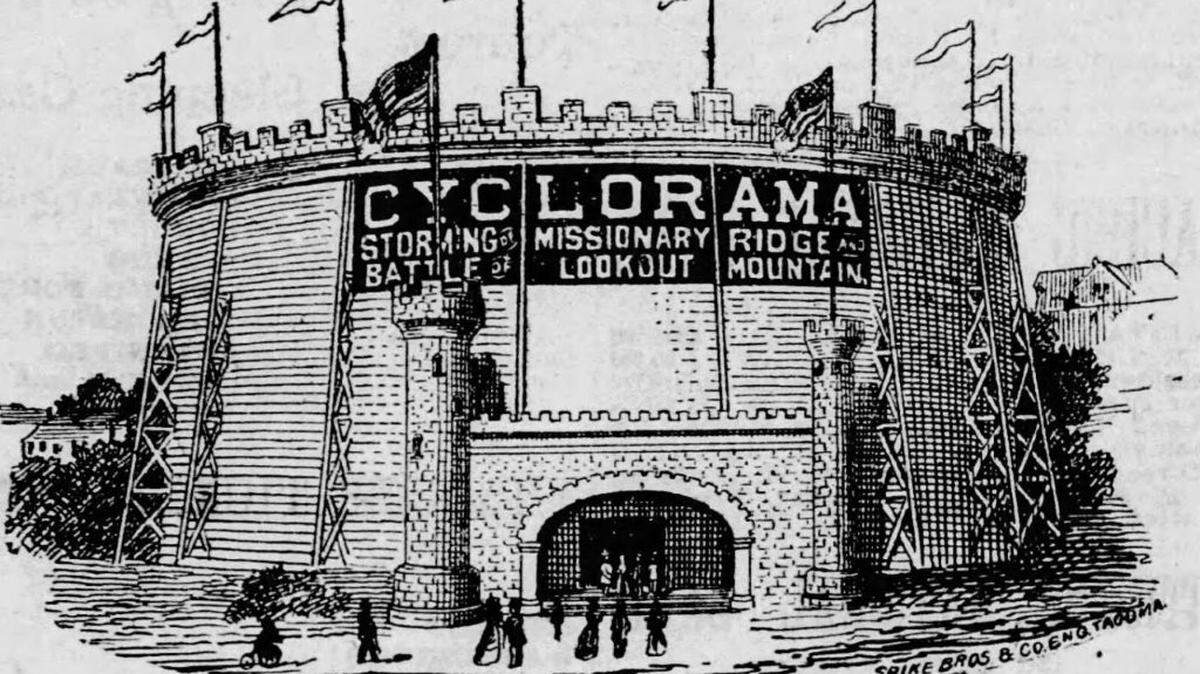
Cycloramas were a form of three-dimensional art hugely popular in the late 19th century. And as a form of entertainment, they filled a niche between live stage shows and movies – yet to be invented. They were sweeping pieces of artwork that combined painted backgrounds with physical objects, creating the appearance of a live scene.
The elaborate setups required a major investment, starting with paintings stretching a hundred yards and more in length. They also had to have a custom-built circular building. As a result, cycloramas were expensive to create and complicated to set up and take down. But they were so popular they went on tour, traveling from city to city to recreate famous moments in American history.
The most popular exhibits depicted major Civil War battles like Gettysburg and Atlanta. Viewers sat inside the painting as it rotated 360 degrees around them while a narrator, usually a Civil War veteran, related the story of the battle. The most extravagant stagings even hired musicians to provide background music as part of the show.
In 1889, John M. Robbins secured the traveling-show rights to a cyclorama depicting the Nov. 25, 1863, Battle of Missionary Ridge and brought it to Fort Worth. Since plenty of veterans of the Civil War were still alive, it was a guaranteed money-maker. A building to hold it was constructed on Jennings Avenue across the street from the recently closed Texas Spring Palace, which had put Fort Worth on the national map. Robbins hoped to cash in on the city’s new status as a tourist destination, and the fact that the cyclorama was just a couple of blocks from the train station didn’t hurt either. The curious-looking building was one of the first things visitors saw when they walked out of the station.
Cyclorama paintings were created by teams of artists, most of them German. The “Battle of Missionary Ridge” was created in Berlin in 1883 and 1884 by a team led by Eugene Brocht, Karl Roechling, and a Prussian army veteran remembered simply as “General Koch.” It was based on sketches of the famous battle by Theodore Davis. In all, 15 men worked to create the massive work of art, which required seven tons of oil-based paint and hundreds of hours in labor. It was first exhibited in Berlin for German Emperor Frederick II who was so impressed, he bestowed gold medals on the three principal artists. Paul Philippoteaux, who was widely regarded as the master of the art form, pronounced it “an artistic wonder” and the “finest such display produced in Europe.”
The canvas was 55 feet high and 450 feet long with every section chock-full of action and drama. The point of view was from the Union side looking on as victorious troops charged up the heights driving Confederate defenders ahead of them. The sweeping canvas showed thousands of men and horses engaged in a death struggle. It was designed to be incorporated into a three-dimensional exhibit where the canvas would blend into a foreground of clay, grass shrubbery, and the detritus of battle – all of it creating a you-were-there sense of reality. For instance, a wagon track through the clay led to a painted wagon on the canvas, all of it so artfully constructed that spectators 50 feet back couldn’t tell where the foreground left off and the painting began.
The entire layout circled the exhibit room to which spectators were admitted, a certain number at a time, or alternatively, could sit in chairs in the center of the room and swivel their heads. Viewing the exhibit was an experience people were willing to pay for – perhaps 10 cents admission for adults.
Cyclorama comes to Fort Worth
After being exhibited in Europe, the cyclorama came to the United States where the owners sent it on tour under contract to a series of “business managers,” one of whom was Fort Worth’s John Robbins. According to him, Fort Worth was the first American city with a population of less than 100,000 to exhibit any cyclorama, a claim that cannot be verified and may be the same kind of boosterism as another Robbins statement: “Old soldiers who took part in the battle pronounce it absolutely correct.”
Robbins was a born salesman and a pioneer merchant who blew into Fort Worth in 1874. He was said to be the first person to buy stock in the Tarrant County Construction Co., which finished building the Texas & Pacific Railroad into Fort Worth two years later. A former sign painter, not only was he a sharp businessman, but he also had a personal interest in art.
Robbins secured the traveling rights to the Missionary Ridge Cyclorama in 1889 and took it around the country, starting in Fort Worth, where it opened in August 1889, a month after the Texas Spring Palace exhibition hall ended its first season. It remained for a month before moving on to Dallas.
When Spring Palace management announced a second season in 1890, Robbins quickly formed an investment company - with himself at the head, naturally - to purchase the cyclorama exhibit from its Kansas City owners for $10,000. Since leaving Dallas, it had been on display in St. Louis and Chicago. The investors saw an opportunity to cash in on the flood of tourists in town for the Spring Palace. The 1889 cyclorama building was still standing.
Robbins, with more than a little P.T. Barnum panache, announced that the show would be even bigger and better than 1889, with electric lighting and a more extensive foreground. He promised it would be “the finest cyclorama effect of any picture in the United States,” parsing his words carefully so no one could take issue his grandiose claim. To help gin up public interest he warned that it would only be in Fort Worth for 32 days before moving on to Chattanooga, Tennessee.
The 1890 cyclorama exhibit opened in April, two months before the Spring Palace kicked off its second season. “Come before the crowd comes,” the Fort Worth Gazette advised, “while you can take your time and enjoy the wonderful painting of the Age.” Robbins arranged a fireworks show in front of the building on Saturday nights to draw people over from the Spring Palace. Admission, at about 15 cents for adults, was separate from admission to the Spring Palace.
Cyclorama and Spring Palace exhibition hall draw tourists
City fathers were convinced of the synergy between the Spring Palace and the cyclorama, erecting a bridge over Jennings Avenue from the western entrance of the Spring Palace to the door of the cyclorama. The bridge itself was described as “an ornate affair,” but more importantly, it beckoned travelers arriving at the T&P station on the east side of the Spring Palace to visit the exhibit. As a side benefit, the bridge saved attendees from having to cross a busy street and gave them a nice, elevated view of the city on the way.
The most important visitor to the cyclorama was railroad tycoon Jay Gould, who came to town on April 11 to see his business holdings. City fathers were eager to impress their VIP guest and his entourage, so the first place they took them was the unfinished Spring Palace building, then it was across the new bridge to see the cyclorama.
In its second season, the cyclorama was a huge success again, reportedly attracting “no less than 20,000” paying customers (equal to the entire population of Fort Worth), and raking in $8,000 in ticket sales. There was talk of giving the artwork a “permanent” home in Fort Worth, but it was already contracted to move on to Chattanooga. Apparently, the Fort Worth stockholders still owned it because Robbins commuted several times from Fort Worth to Chattanooga in the next three months to keep an eye on their investment.
The “Battle of Missionary Ridge” never returned to Fort Worth. The other stockholders sold it to E. W. McConnell, known as the “Cyclorama King,” who hired his own managers to watch over it on tour. Fort Worth’s empty building on Jennings was eventually razed, its odd size and shape making it unsuitable for any other purpose.
By the early 20th century, the romance of cycloramas had faded. Moving pictures were the latest thing in public entertainment. Scores of cycloramas were either destroyed or put in permanent storage. The fate of “The Battle of Missionary Ridge” is a mystery. It probably continued touring until it was faded and ragged from being unrolled and rolled up so many times.
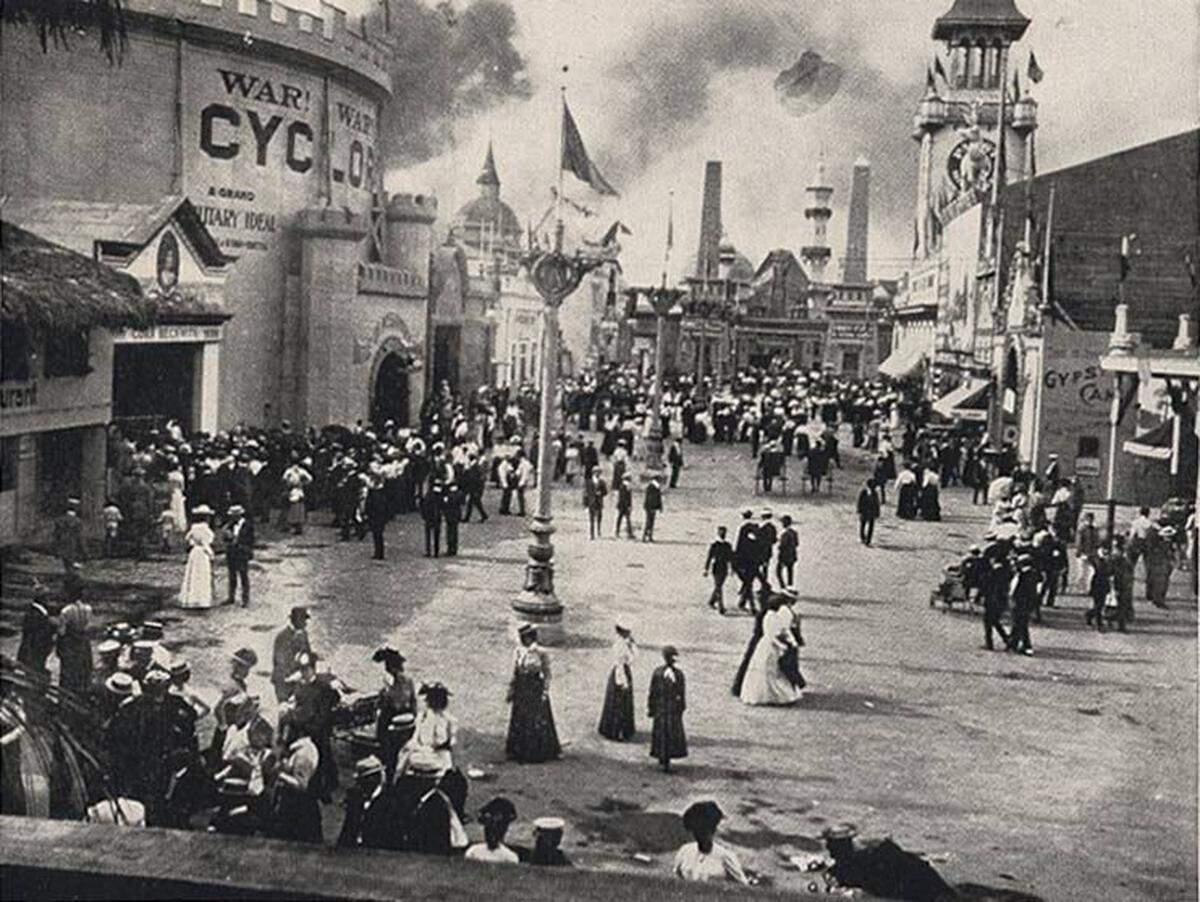
Years later, Fort Worth old-timers still vividly remembered when the “panorama war painting” came to town, though they were not always sure what battle was portrayed. A mistaken Alabama newspaper story in 1952 claimed it was destroyed by a cyclone that hit Nashville, Tennessee., mixing up the Nashville appearance with the heavy damage done to the exhibit building in Buffalo.
Today, only two Civil War cycloramas remain in existence, “The Battle of Atlanta” in Atlanta, created by the same people who created “The Battle of Missionary Ridge,” and “The Battle of Gettysburg” at Gettysburg National Military Park in Gettysburg, Pennsylvania. They survive as relics of a forgotten age in American entertainment.
Author-historian Richard Selcer is a Fort Worth native and proud graduate of Paschal High and TCU.