
Changing the life cycle of a neighborhood: Here’s how Fairmount became what it is today
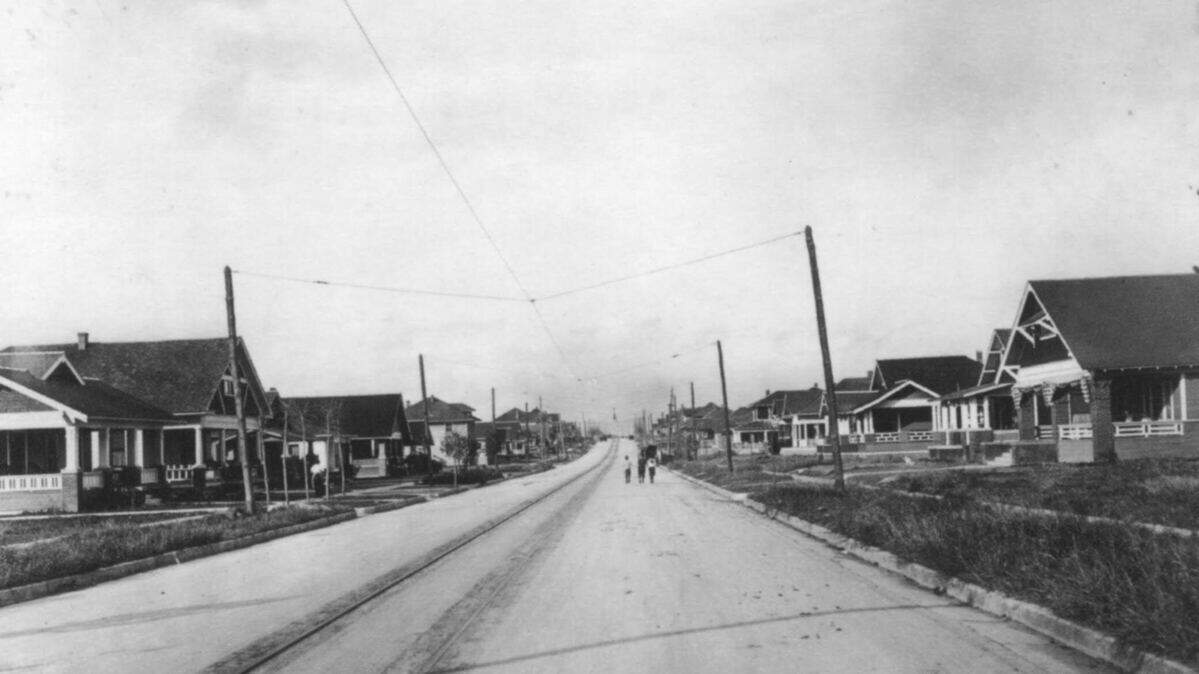
Neighborhoods have life cycles. A group of houses and streets starts off as attractive and desirable. Fifteen or 20 years later, the landscaping has matured, as have the people in the houses. Fast forward another two or three decades, and neighborhoods have often declined as longtime residents die and houses start to develop major maintenance issues.
What happens next? Frequently the houses are viewed as out of date and are slow to sell. Sometimes, they are demolished and replaced – such that it’s essentially a new neighborhood – or simply demolished leaving a trash-filled lot. Fairmount had a different fate, thanks to “urban pioneer” residents who revitalized the neighborhood by popularizing its historic character.
The Fairmount/Southside Historic District contains two larger housing developments (Bellvue Hill platted in 1885 and Fairmount in 1890) plus a handful of smaller ones. It’s those smaller developments that caused the occasional jog in what would otherwise be a straight street. But few houses were built at that time.
New residents – particularly the growth that Fort Worth experienced when the stockyards, packing plants, and related industries came to town in 1902 – and nearby transportation in the form of north-south street car lines were the key to getting houses and lots sold. Steady construction in Fairmount began about 1905 and by 1920, when the neighborhood was largely built out, there were street car lines not only on Magnolia, but running north-south on Fairmount, Henderson, College, and Hemphill. It was a true streetcar suburb, with small scattered nodes of commercial buildings to provide local services.
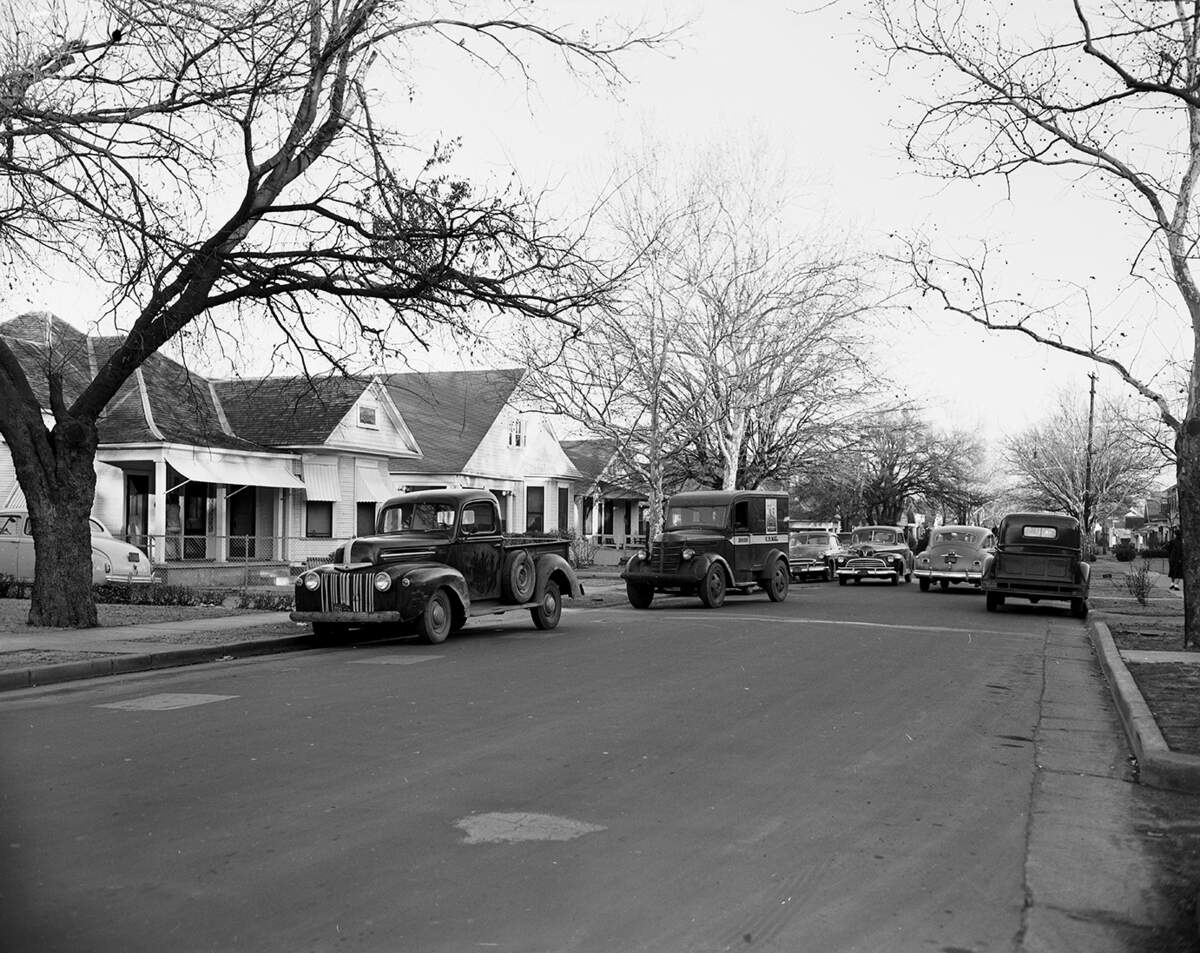
Fairmount was not a fancy neighborhood, but it did provide wood-frame bungalows and two-story American four-square houses for middle-class workers. Among the residents were a number of notable women, including early physician Dr. Daisy Emery Allen, Ninnie Baird, who founded Mrs. Baird’s Bread, the mother-daughter osteopathic physician duo Dr. Helene Kenney and Dr. Catherine Kenney Carlton, and advertising executive Claudia Benge.
Fairmount’s streets are still full of “tightly spaced bungalows with uniform setbacks,” an example of early 20th-century urban density that would make a modern city planner proud. You can tell that Fairmount is an older neighborhood just by looking at the lots, which have their narrow end turned toward the street. Later lots in ranch-style suburbs – when gas was cheap – have the long side of the lot facing the street.
The neighborhood was stable through the end of World War II. At that point, “modern suburbs” became more attractive to young families, and Fairmount’s longtime residents were growing older. Decline accelerated in the 1960s and early ‘70s as the amount of rental properties increased, and a number of houses were subdivided into apartments.
Property values and the physical condition of houses declined, which made them attractive to first-time home buyers who were willing to invest sweat equity to renovate their homes. The late 1970s and 1980s became the era of Fairmount’s “Urban Pioneer.” The Fairmount Neighborhood Association, founded in 1977 to protest a topless bar, evolved into a strong advocate for neighborhood revitalization.
After a 1980s architectural survey recommended that Fairmount be designated as a National Register Historic District, historic preservation became a popular buzzword. Fairmount’s historic architecture would help stabilize the neighborhood and turn it around – along with code enforcement and other basic improvements. Residents looked out for each other. Doors sported “I like my nosey neighbors – they are watching my house” stickers, and a home tour begun in 1982 showcased renovated homes.
Work on the National Register nomination began in earnest, led by neighborhood association president Carolyn Patterson and assisted by Fairmount residents Judi Cole, a city of Fort Worth planning department aide, and city planner Cinda Calderon (Hitchcock). City manager Doug Harman also lent his support.
Fairmount was listed as one of the state’s largest National Register historic districts in 1990, and also became a city of Fort Worth Historic District. Although the National Register listing was primarily an honor, it changed the way the neighborhood was viewed. The Fort Worth Historic and Cultural District provided an important economic revitalization tool in the form of the tax evaluation freeze, which allowed property owners to make appropriate renovations yet keep the property tax evaluation frozen at the pre-renovation level for 10 years.
Slowly, but surely, homes were renovated with pride in their historic appearance. Fairmount stabilized with a new generation of long term residents. Fairmount stopped its decline and, by the early 2000s, was becoming a popular place to live. The neighborhood’s newest residents don’t necessarily know this background story, but it is part of Fairmount’s strength and resilience.
Carol Roark is an archivist, historian, and author with a special interest in architectural and photographic history who has written several books on Fort Worth history.