Men involved in Fort Worth’s violent past try to steer young people away from gangs now
READ MORE
A fight to save our children
The rise of a new generation of gangs, whose turf is social media, is contributing to a surge in teen homicides.
Expand All

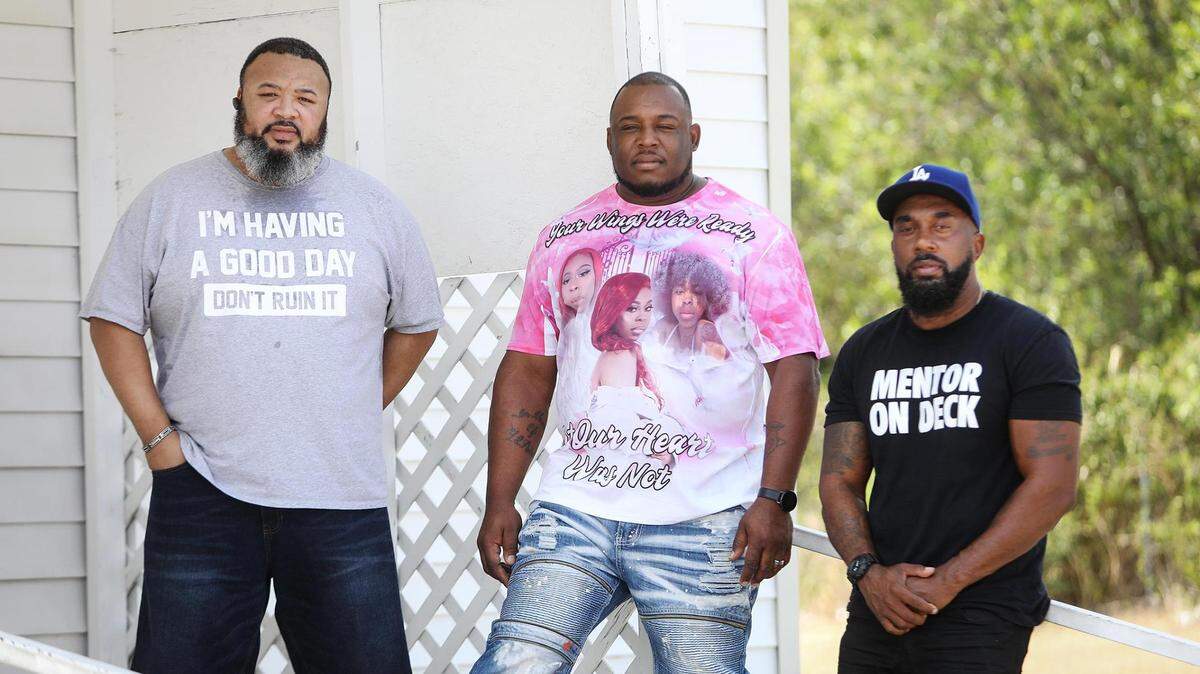
Keith Wooten admits he wasn’t law-abiding when he was younger. Neither were his colleagues.
“I look at most of us, and when we were young, we were the venom in our neighborhoods,” he said.
Wooten is one of a dozen men who make up the VIP FW program, which is specifically designed to stop shootings in Fort Worth’s most vulnerable areas before they happen. The program’s main function is to use men who have been involved in gangs and violence in their past to connect with young men who are involved in them now. Their goal is to show those men another way of life.
The program was launched in 2019 and had some setbacks in 2020 because of the pandemic and social distancing, but in the last year, they’ve talked with more than 739 people in their communities, including 189 who are at high risk to be involved in shootings. They’ve interrupted at least 74 shootings, meaning they were able to work out issues that would have likely exploded into violence.
“Those are 74 young men who are still alive or not in prison,” program leader Rodney McIntosh said. “You create a monster locking somebody in prison. You can shove anyone in a prison, but if you show them another option, you give them life and purpose.”
With a steady rise in violent crime being documented in Fort Worth since 2019, the men have their work cut out for them.
“We’re designed to attack group violence, gang violence, cyclical violence,” McIntosh said. “So some of these shootings we’re seeing, the domestic violence, we aren’t geared around those. But we try to intervene and be a buffer between the rivals in town.”
Twenty years ago, the men would have been rivals themselves, split between the south and east sides of the city. But adulthood, time behind bars and life lessons changed that.
“Now we’re the anti-venom,” Wooten said.
Keeping young men from being killed
Violent crime has increased by 27% in Fort Worth since 2019. In that same time, murder and non-negligent manslaughter cases rose by 69%. The number of boys and girls 12 to 18 who were fatally shot in Tarrant County has increased each year since 2019 — from 19 year to 31 in 2021. So far this year, nearly one in four people fatally shot in Fort Worth has been a teenager.
“When we first started, we had a target audience in their 20s,” McIntosh said. “So much of the stuff we’re seeing now is younger kids, so we’ve had to change the way we’re attacking this work and change our focus to the younger generation.”
There could be a dozen reasons why someone in their teens would feel compelled to possess a gun or be involved in gangs or cliques. The reasons from McIntosh and Wooten’s generations look different than the reasoning now.
“They’re exposed to so much violence now online and in music,” McIntosh said. “They do what they’re saying in their songs and it’s a little different than back in our generation. We knew most of those dudes wasn’t gangsters, they were making music.”
Connecting with a 14-year-old is often harder than connecting with someone who is beyond their teen years. With older men, McIntosh can remind them that they have children and are needed in their family’s lives. That’s not the same conversation you can have with a high school freshman.
Because of that, Felton Jenkins’s mission is to be a dad to the kids he works with.
“I have a 15- and 16-year-old I visit and both of them have no fathers, so I told their mom I’ll be the best role model,” he said. “I make sure they get to school and they’re doing better in school. I let the child speak, I let him tell me what’s on his heart. I can understand some of that better than mom.”
Each man is in the group for different reasons, but for many it’s a calling.
“There are mothers in this city who are grieving and hurting,” McIntosh said. “Our community is grieving and hurting and when people find out there’s an organization that’s trying to reach out to their sons, people are willing to work with us.”
Roger Foggle sees it as a way to fix the community he had a hand in breaking.
“A lot of us have been the reason for some of the crime scenes at some point,” he said. “How can we not be a part of the solution?”