‘We had another shooting today.’ Tarrant County faces new problem with young teen gangs
READ MORE
A fight to save our children
The rise of a new generation of gangs, whose turf is social media, is contributing to a surge in teen homicides.
Expand All

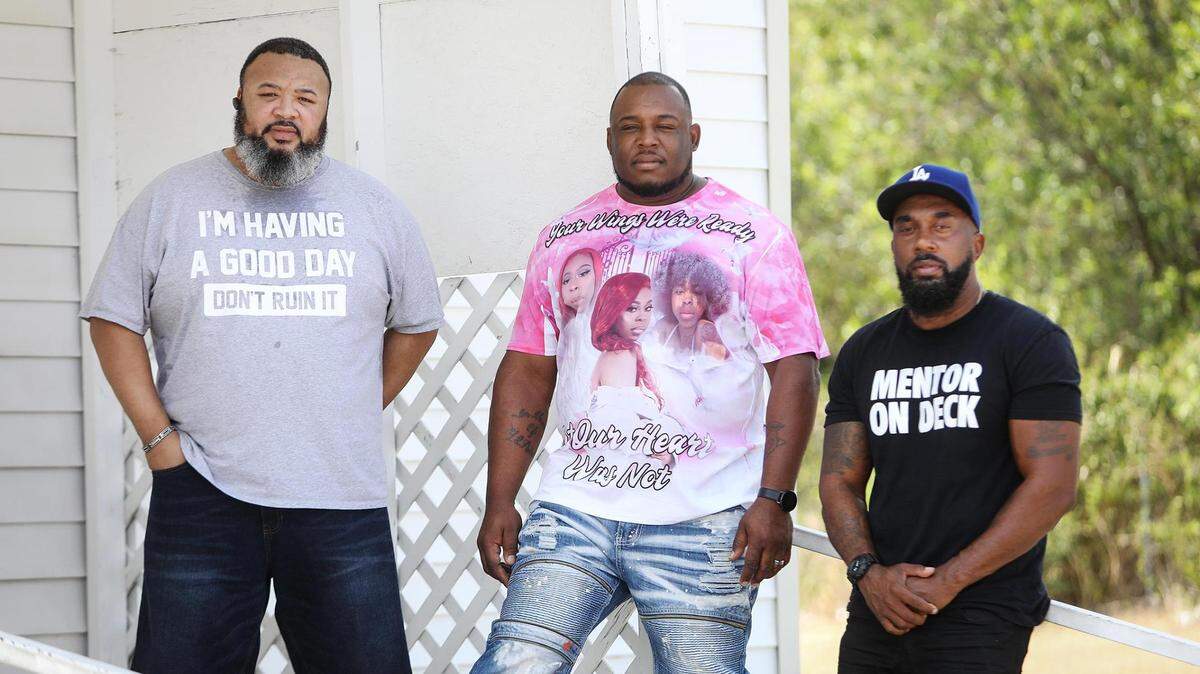
Sitting beside the pulpit where he gives Sunday sermons, Pastor Rodney McIntosh looks at his two visitors and furrows his brow.
“I need this to be off the record,” he says in a serious tone to the Star-Telegram reporter and a photographer.
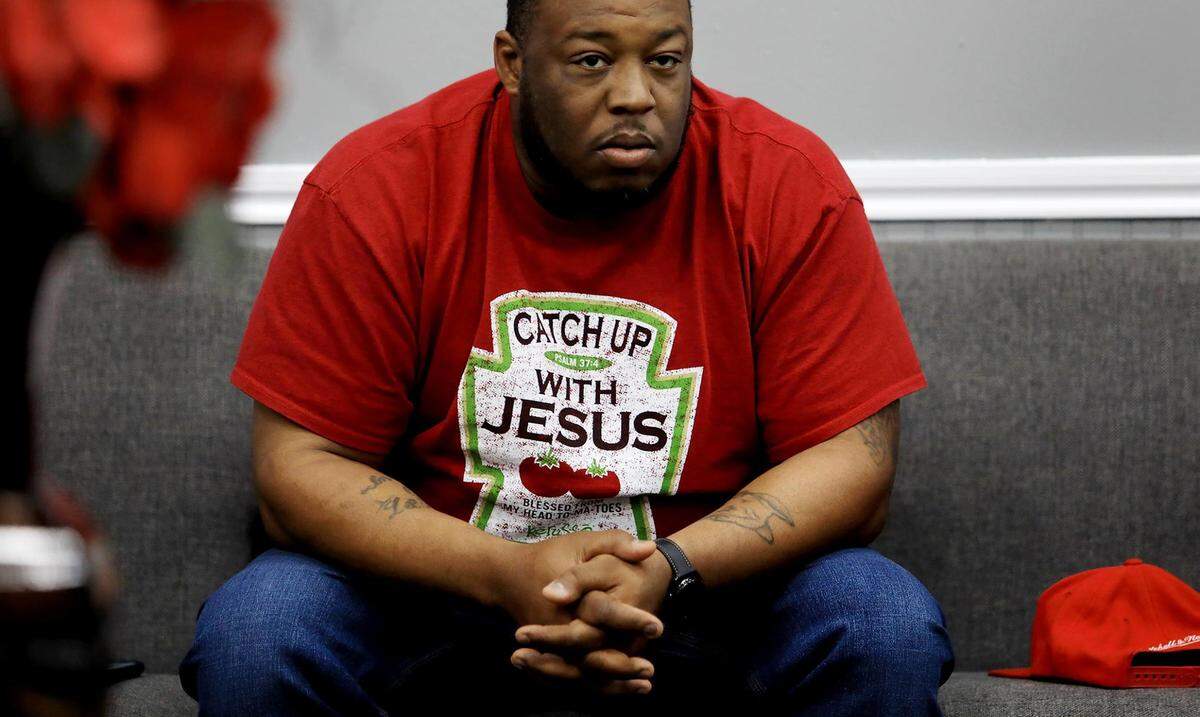
They agree, and McIntosh turns to the 11 men seated in front of him. One man holds his 2-year-old son, who tugs on his beard. Another wears a black and yellow “VIP FW” shirt that makes him look like Batman. Several of them sit in the back of the church and laugh in conversation.
All are men who have been incarcerated or have been involved in gangs and drug dealing when they were young. Now they work for VIP FW, devoting their lives to stopping gun violence in Fort Worth before it happens.
As they chat, McIntosh catches their attention and the mood shifts.
“We had another shooting today,” he says solemnly.
He gives the men some details: Where the shooting occurred, what time, what led to it, if there were any casualties. These are the details he doesn’t want made public.
The men make a plan for how to react the following day. Who will they talk to? What part of town will they visit?
They have this conversation weekly from inside the gray walls of Christ the Risen King Church in the Stop 6 neighborhood of east Fort Worth. Despite their passion for their work, they’re tired of needing to do it.
But it won’t stop anytime soon.
Tarrant County has lost at least 101 young people of middle- or high-school age to gun violence since 2016, with nearly a third of those killings happening just last year, a Fort Worth Star-Telegram analysis finds. The pace of killings has been on the rise since the pandemic began; last year’s 29 homicides of teenagers 12 to 18 years old was the most in at least 10 years.
And the killings have continued in 2022, with at least 12 more teens dead through April.
The Star-Telegram is investigating what’s driving the surge in teen homicides, how our communities are responding to the crisis, and what our law enforcement agencies, elected officials, churches, community groups and parents can do about it. Our reporting so far this spring has not uncovered simple explanations. Each case is different, and the myriad factors that lead up to that moment when someone — often another juvenile — takes a young life are complex.
But taking a closer look at homicides in the past two years, when the pandemic disrupted life in almost every way, reveals some disturbing trends. In interviews with law enforcement, criminal justice officials, defense lawyers, intervention groups and others, several point to the rise of a new, young generation of gangs or gang-like cliques of teenagers. Unlike with earlier generations of gangs, where they operated on the streets or claimed neighborhoods, the turf for these teenagers is social media sites like Instagram, where “rap battles” or other virtual feuds fester or erupt out of sight of the adults in their lives.
Those feuds too often spill into real life. Instead of throwing punches, teens are pulling the trigger. One source interviewed for this story said some of the cases he’s seen involve teens fighting or in a rivalry between the east side of Fort Worth and Arlington.
The people interviewed by the Star-Telegram also point to another critical fact they’ve seen when handling these cases first-hand: Children and teenagers are obtaining firearms far too easily.
“Kids have always made dumb decisions, there’s already a lack of maturity and then you put a gun in the scenario,” said a Tarrant County attorney who represents juveniles in murder cases. His clientele has doubled in the last year, but he couldn’t quite figure out why.
“It ends up being a horrible situation for everybody. Now you have parents burying their children and kids whose lives are destroyed because they’re going to prison. But I don’t understand why we have this uptick now,” he said, speaking on the condition he wouldn’t be identified due to his position.
In March, 53 juveniles in Tarrant County’s detention center were accused of violent crimes including capital murder, murder, aggravated robbery and aggravated assault with a deadly weapon. Twenty-four of those 53 cases were for murder or capital murder.
And not everyone in detention is accused of actually pulling the trigger.
“One just happened to be there,” a source in the court system said. “Didn’t know what was happening, got caught up in the situation, didn’t run. Was a straight-A student, perfect attendance. Just had the wrong friends.”
BEHIND THE STORY
MOREAbout this series
This is the second in an occasional series of stories that will investigate what’s driving Tarrant County’s surge in teen homicides and how our community is responding. The Star-Telegram will explore the consequences, report on potential solutions and seek accountability for the deaths of our children.
What is causing the violence?
The Fort Worth Police Department declined to provide someone for an interview for this story.
A police spokesperson answered a few questions by email. Officer Daniel Segura confirmed the gang unit has seen more crimes being committed by members. Asked why, Segura wrote, “We do not have data to support why this occurring.”
Arlington police also declined an interview request, but the department’s spokesperson sent a lengthy email that detailed what investigators have seen.
“In speaking with our Gang Unit, they indicated it’s not uncommon to learn through the course of an investigation that an incident like a robbery or a deadly conduct (shots fired, no one hit) began over a social media post or some online beef,” spokesperson Tim Ciesco wrote.
Seventeen people ages 14 to 18 have been killed since 2019 in Arlington, a city of about 400,000 people. Violent crime there rose 5.5% from 2020 to 2021, mostly driven by aggravated assaults.
The Arlington Police Department confirmed it has worked with Fort Worth police on “multiple investigations where online feuds between rap groups were creating problems in both the Stop 6 neighborhood and a few locations here in Arlington,” Ciesco wrote.
According to arrest warrants and news releases from across Tarrant County since 2021, 10 juveniles were shot after a fight or disturbance. Seven deaths were tied to robberies, five of which involved a sale of a gun or marijuana.
Three teenagers died after getting hit by stray gunfire during a drive-by shooting — none were the intended targets. Domestic violence was the cause of four deaths, and two of those were murder-suicides. One teen was killed by a Lake Worth police officer after the department said the 18-year-old pulled a gun during a traffic stop.
Police agencies have not released the motives or details of 11 other killings.
“At the rate this is going, we’re going to lose the future of entire communities,” said Melinda Hamilton, a Tarrant County activist whose daughter and grandson were fatally shot in 2018 and 2020.
Hamilton runs a nonprofit called Mothers Of Murdered Angels, which assists and advocates for families that have experienced the loss of a child through gun violence. With her blue “Justice for Derrick” T-shirt memorializing her grandson, her hot-pink acrylic nails and a welcoming personality, Hamilton has the type of shoulder you beg to cry on. Paired with a contagious smile and zest for justice, she’s a perfect person to advocate for these families.
“You never know when it’s going to be you,” she said.
Is there more gang activity?
It’s easy to point to gangs and drugs as the root of the violence. Officials continue to hammer the message that Fort Worth isn’t alone, crime is rising everywhere.
They’re not wrong. But advocates like Hamilton have been frustrated with that messaging.
Fort Worth is our home, she said, these are our communities. We should focus on why it’s happening here. Our leaders should bring communities together to fix the problem.
Hamilton said she’d like to see city leadership with boots on the ground in neighborhoods like Meadowbrook, Stop 6 and Morningside. “With these last shootings, you haven’t seen the mayor come out and say anything,” she said during an interview in March. “You haven’t seen the City Council come out and say anything.”

Later, on April 4, Police Chief Neil Noakes and Mayor Mattie Parker did address overall violent crime in a joint appearance at the Police Department’s headquarters. They reiterated their resolve to find solutions.
“There are people walking the streets of Fort Worth who are violent, who have no business with guns, shooting one another,” Noakes said. “People are dying.”
Violent crime, he said, is often concentrated in relatively few areas and involves a relatively small number of people.
“We will focus our efforts on violence-prone places such as drug houses, illegal game rooms and open-air drug markets,” Noakes said.
His goal is to reduce violent crime by 10% by the end of the year.
Council member Jared Williams, who represents far south and southwest Fort Worth, has pushed the police chief for solutions and has sought ways to help young people resolve conflicts without weapons. He’s been holding listening sessions throughout his district.
Hamilton agrees that communities must work through the problems together. But they can’t do it alone, she said. She regularly reports hot spots in her area to police but says she continues to see young people gathering in those areas, report after report.
“There’s no way you know this is the place where it’s been going on for years, and you get tips about it and you see it, but nothing’s being done about it,” she said.
A source within the Fort Worth Police Department, who wasn’t authorized to speak about the inner workings of the agency, said the chief has shifted around some of the officers who work in specialized units that arrest the most violent offenders.
Some specialized officers were taken off those teams in the fall and placed into patrol duty to temporarily help with duties such as pulling over drivers, community policing and responding to 911 calls, the person said. The officers were also filling in spots where vacancies had occurred.
At least one team became more restricted in the hours they work and the cases they take on, leading to fewer arrests, the source said.
In 2015, Fort Worth police made 19,679 arrests without warrants, which are generally arrests when officers witness a crime or infraction, or an officer has probable cause to believe a person committed a felony (and a warrant is then immediately obtained from court).
The number of warrentless arrests decreased to 18,492 in 2019, according to police records, and fell to 13,613 in 2020.
The figures suggest officers were being more proactive in past years by arresting people accused of crimes before a case was presented to a judge, the police source said.
The source blames those decisions on why more accused violent criminals aren’t behind bars.
Teens are obtaining guns
Since 2019, nearly 3,500 guns have been reported stolen in Fort Worth; 263 have been recovered, according to a public records request with the city. In that same time period, Arlington police said officers investigated 869 cases where a firearm was stolen.
There is no way to know how many of those stolen guns ended up in the hands of teens. But too many of them did.
Segura, the Fort Worth police spokesperson, said teens have gotten guns by stealing them or taking them from their parents or friends’ houses.
“We also recover guns and our investigations reveal that a friend or family member purchased the firearm and then provided it to someone else who used it for an illegal purpose,” he said in an email response to questions.
But why do young people think they need guns?
“They’re exposed to so much violence now online and in music,” said McIntosh, of VIP FW. “They do what they’re saying in their songs and it’s a little different than back in our generation. We knew most of those dudes wasn’t gangsters, they were making music.”
During a recent detention hearing in the 323rd District Court, one teen said he stole the gun from his uncle. His uncle seemed stunned. Judge Alex Kim decided to detain the teen.
Not just police
Reducing crime also takes parents drawing and maintaining boundaries, schools creating structure and cities properly funding programs aimed at reducing crime holistically.
The lack of those factors, especially during 2020, likely contributed to the rise in crime.
“I think shutting down schools during COVID had some unintended consequences,” one source in the court system told the newspaper. “More kids were at home without the structure school brings them when their parents were essential workers.”
Others echoed the sentiment that shutdowns might have aggravated an already tense situation that social media was ripe to host.
“Cabin fever hit and you got all this energy balled up and then we opened everything up and there was this adrenaline rush,” McIntosh said. “Even if kids are getting in trouble in school, it still provides some kind of structure.”
Council member Elizabeth Beck said those factors mixed with the decades-long over-incarceration of Black and Hispanic parents has negative affects on the future of those communities.
“When you have parents who are required to work two and three jobs to make ends meet and they cannot be home with their kids, I think you see the community impacts of that generational trauma and poverty,” she said. “We have disproportionately locked away Black fathers. If you are a Black mother, you make 74 cents to every dollar and if you’re a Latina you make 54 cents. There are certain societal impacts.”
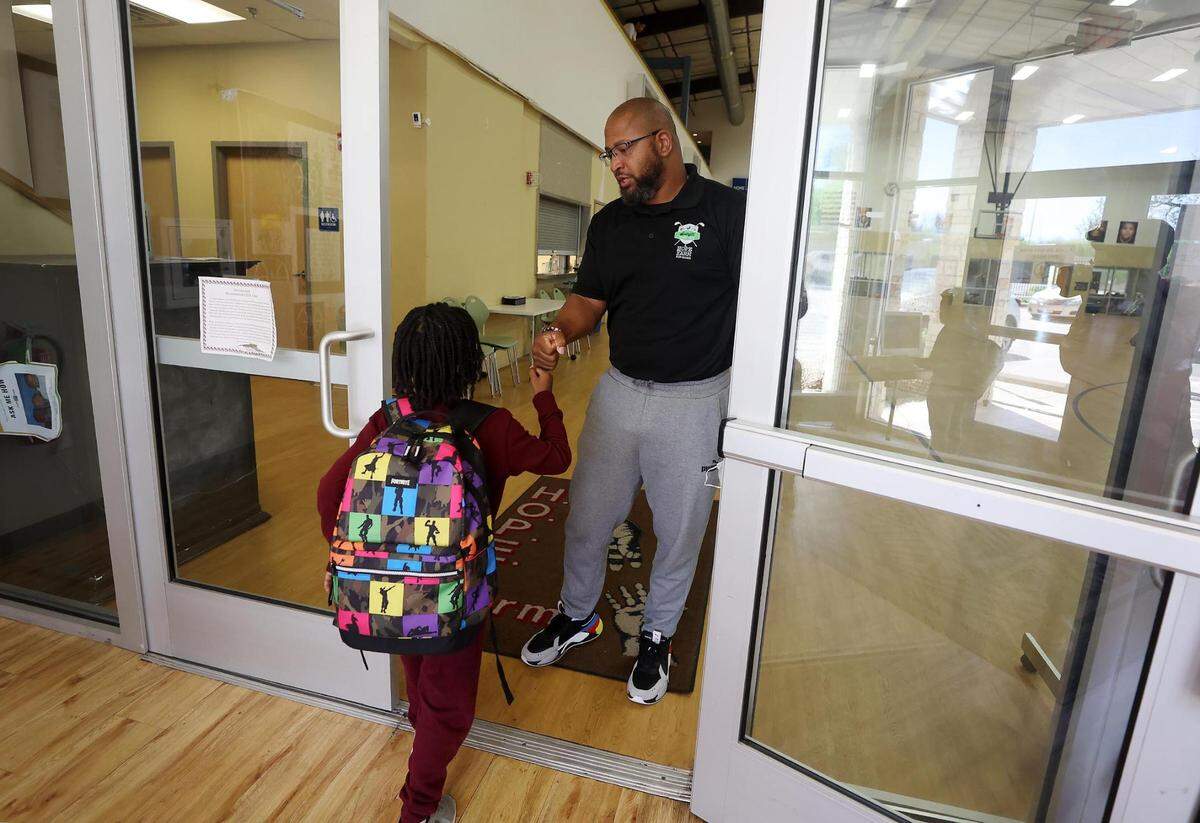
Without that structure school provides or parental oversight seen at its extremes during the pandemic, bored teenagers became more obsessed with social media. They started “rap battles” on Instagram, several sources said.
“That’s one of the things we have to focus on,” McIntosh said. “How do we stop allowing the things that’s happening on social media to trickle down into our communities and onto the streets?”
VIP FW is a part-time solution to a full-time problem, he added. The men who work with the group still keep full-time jobs because the funding can’t support them fully.
“It’s easier for the young men to get guns than it is for us to get funding to help them, and that’s a problem,” McIntosh said.
Even through battling barriers that COVID set up and juggling their personal lives, VIP FW has interrupted 74 potential shootings in the last year, keeping those people alive or out of prison by simply talking them down on their violent plans.
But they can’t be everywhere at once. So on any given day in the 323rd District Court, juvenile Judge Alex Kim will likely give a lecture to a teen who is being held on a gun charge. And he’ll question their parents.
Why didn’t you know your son had a gun?
How did he get the gun?
Have you met your daughter’s friends?
Why isn’t he attending school?
On that same day, a parent will not have the answer to some or all of his questions.
I don’t know where he got the gun.
I haven’t met his friends.
I try to get them to go to school.
In February, Kim admonished a juvenile who is accused of fatally shooting someone in the back during a drug deal. The teen was also accused of being “involved in a gang-related assault” while in detention, Kim said during the virtual hearing.
The teen’s mom silently watched via Zoom as Kim relayed her son’s possible punishment: Up to 40 years in prison if he’s tried as a juvenile or life with the possibility of parole if he’s transferred to adult court.
“When kids have guns, that’s kind of when they stop being kids,” Kim said during a hearing.
This story was originally published May 8, 2022 at 5:00 AM.