Panther Island: Who owns the land that could become Fort Worth’s hottest real estate?
READ MORE
Transformation on the Trinity
The riverfront property is not much to look at today. But if Fort Worth’s vision for Panther Island comes true, that will all change — and dozens of landowners will pocket the profits.
Expand All

Panther Island: Who owns the land that could become Fort Worth’s hottest real estate?
What is Panther Island?
Fort Worth leaders have long said Panther Island will be 800 acres. Here’s a fact check

We asked what you want to see on Fort Worth’s Panther Island. Here’s what you said.
See how Panther Island looks now vs. what’s planned along Fort Worth’s riverfront
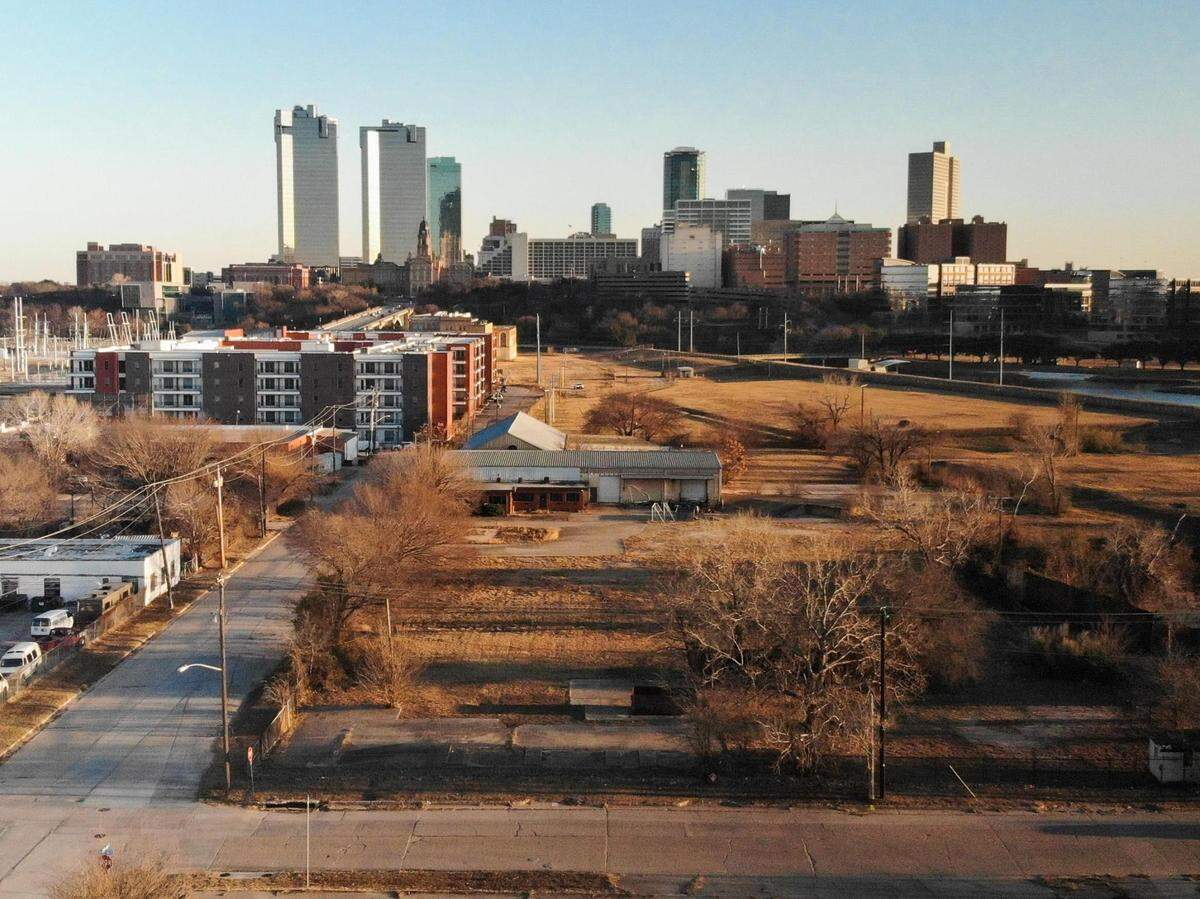
In the shadow of downtown, just across the Trinity River, extends a large expanse marked by barren lots and dilapidated buildings. Drivers on their way to the Stockyards might see the area as more like an industrial ghost town than a potential real-estate gold rush.
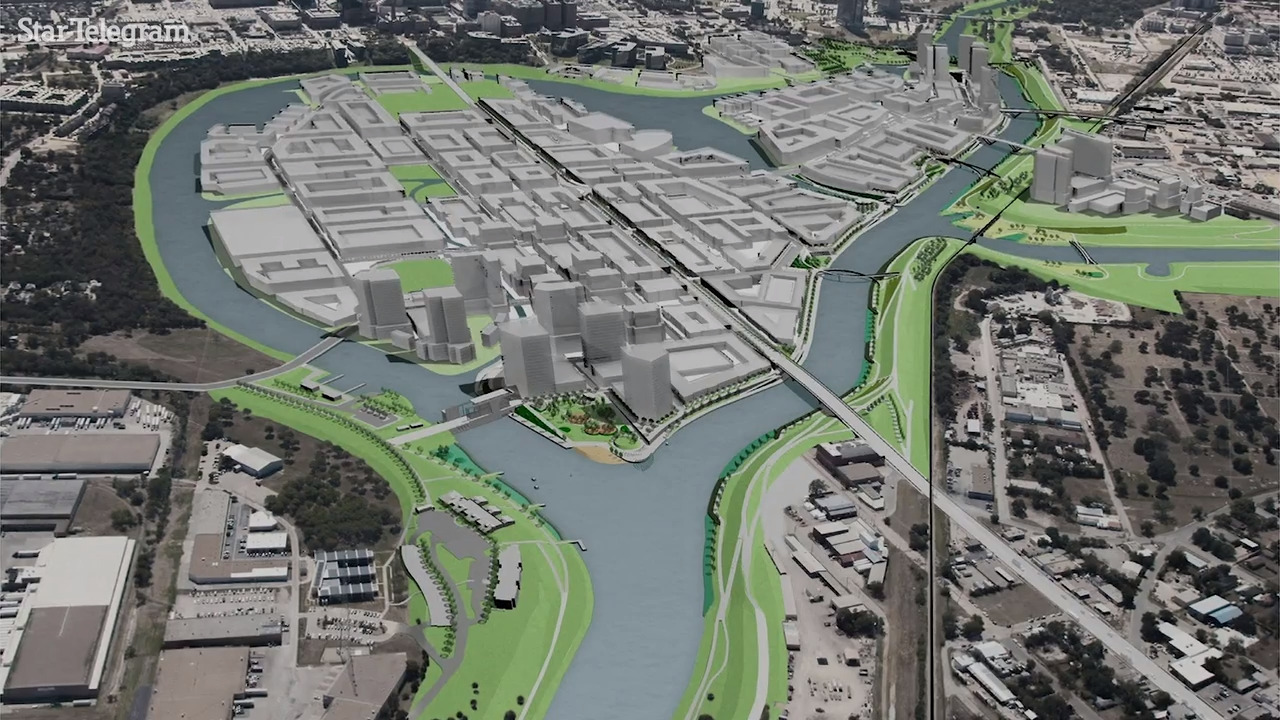
But the dusty, overgrown lots — along with some already developed land with active businesses — could soon become home to a premier riverfront district. Sleek new apartment buildings would be bordered by canals with water taxis to carry shoppers, diners and drinkers from one hot spot to the next.
For decades, the Panther Island redevelopment plan was burdened by an asterisk: Its only chance to become a reality depended on Washington politics and the ability to secure hundreds of millions of dollars in federal funding.
On Jan. 19, that changed with the announcement of $403 million from the U.S. Corps of Engineers tied to the project’s other primary aim, mitigating flood risks by digging a bypass channel for the Trinity River, creating Panther Island.
Since then, the several hundred acres of the future Panther Island have likely increased in value, well beyond what Tarrant County tax records show as a collective $147 million in land and building values in 2021, according to a Star-Telegram analysis of the site.
“Now you can say, ‘OK, we’ve got a project to build, let’s get it built,’” said Woody Frossard, Tarrant Regional Water District’s environmental director. “There’s a lot of new momentum that wasn’t there before.”
And a lot of money to be made.
Who actually controls the development of the district? And who stands to profit the most from what has been billed as Fort Worth’s second downtown, an overall investment expected to top $1 billion?
The Star-Telegram reviewed public land records, business records and zoning documents to shed light on who owns the bulk of the land on Panther Island and how that land could transform once developers step in.
Many unknown factors, from the economy to politics, will determine what Panther Island ultimately looks like in the next few years. And many others, in addition to the landowners reviewed by the Star-Telegram, will likely make a lot of money off the redevelopment.
But as Panther Island moves into a new phase, there already are some stakeholders poised to play a role in the project.
Setting the stage
The Panther Island redevelopment project hinges on a flood control project. When the U.S. Army Corps of Engineers digs a 1.5-mile bypass channel for the Trinity River, it will help mitigate flood risk in the area while also creating new riverfront property.
The channel will connect the ends of a U-shaped bend in the river across from downtown, creating two islands that are collectively known as Panther Island. The overall redevelopment also includes some surrounding land.
For years, local officials have described and marketed Panther Island as being about 800 acres. The Star-Telegram analysis of parcels found that figure to be misleading; the islands themselves will be roughly half that acreage.
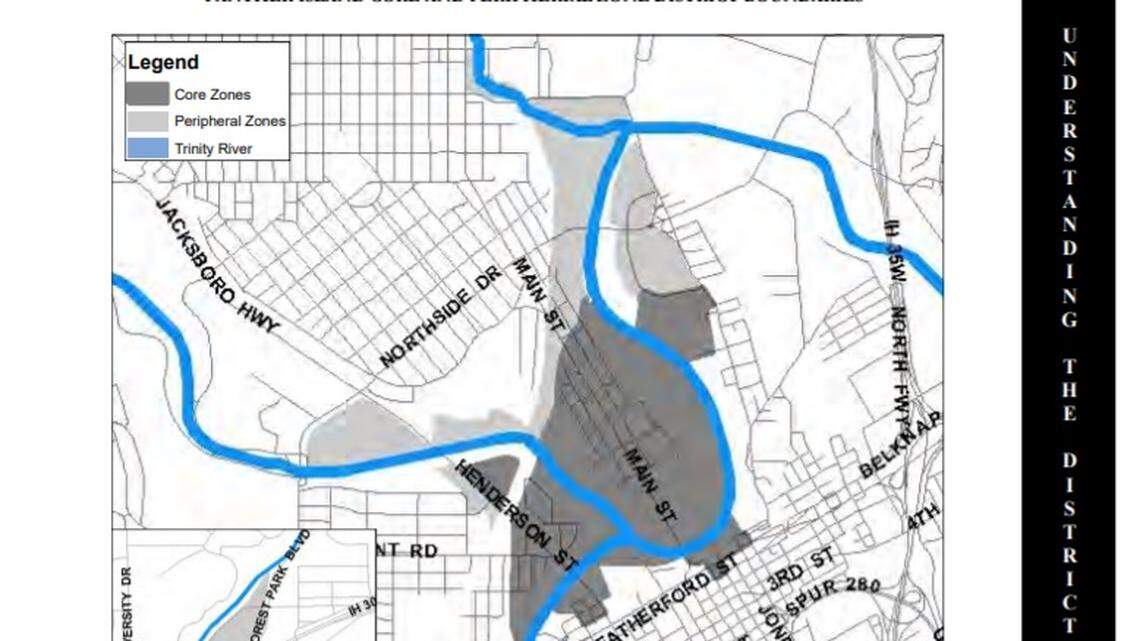
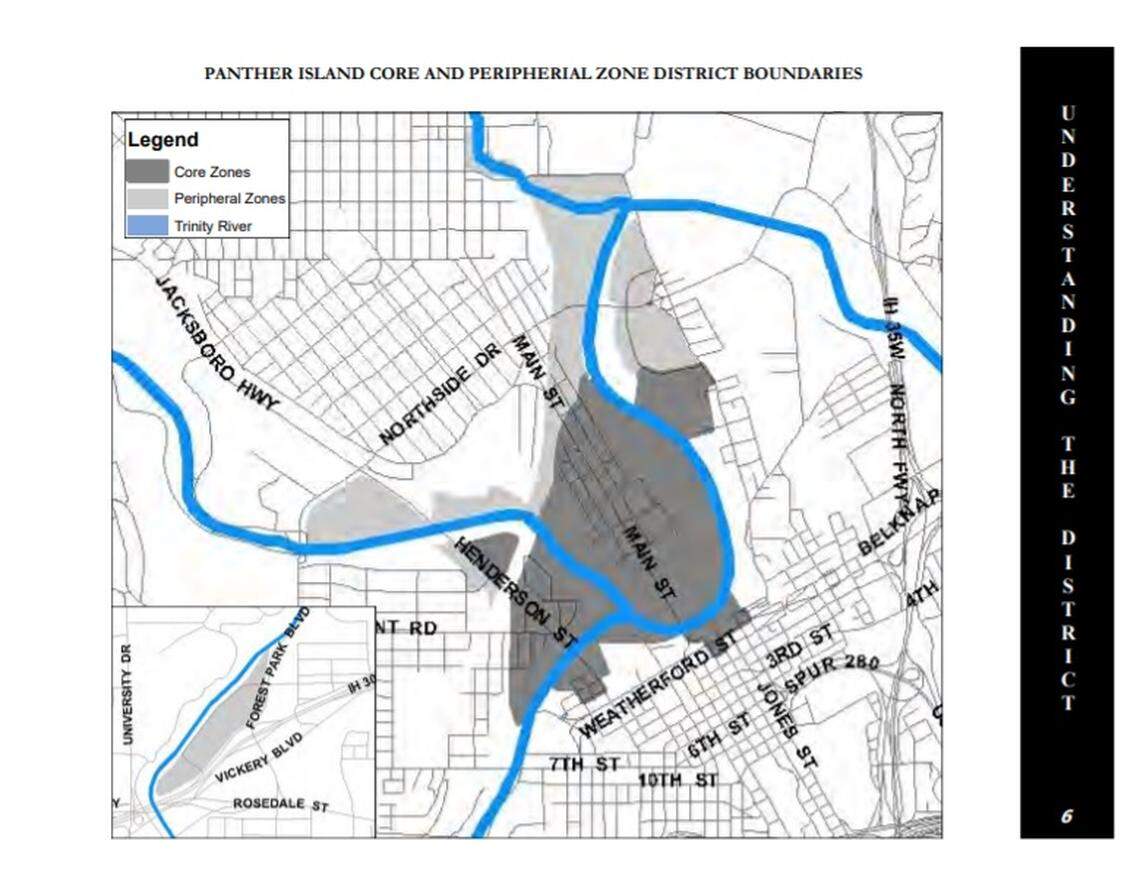
Panther Island spokesperson Matt Oliver said the 800-acre figure includes the core islands, some surrounding land and a “peripheral zone” that will be affected by the project, including land that benefits from flood control.
The Star-Telegram’s analysis focused on most of the land that comprises the actual islands. The newspaper compared several maps of the proposed islands against public land records to identify 338 acres. This land approximates the projected boundaries of the islands that will be created by the bypass channel.
The Tarrant Regional Water District owns about 235 acres in the internal Panther Island zone, by far the most of all the land-holders. The water district’s properties were valued at about $65 million in 2021, according to public records.
The water district, which is coordinating the flood-control portion of the project, has been collecting properties for years. The district could not immediately provide a figure for the total amount spent on acquisitions.
The entirety of the water district-owned land, Frossard said, was acquired for specific purposes: the federal floodway along the river, the bypass channel and internal canals, and access to those parcels during construction.
“I’m not aware of any property we bought for developable purposes. Everything we bought has a public use associated with it,” Frossard said.

Besides the water district, there’s one other public entity with significant ownership on the islands: Tarrant County College, with 21.6 acres valued around $9.4 million. A TCC spokesperson said in an email that the college “has no specific plans at this time” for its Panther Island properties. The spokesperson did not respond to requests for an interview on the topic.
‘Everything is for sale’
The remaining land on the islands, which totals just over 80 acres, is owned by private individuals or entities. Some of the parcels are active businesses, and some have been under the same ownership for years. Others were purchased by developers who want a hand in shaping the new district.
Due to the opaque nature of holding companies, it’s not easy to decipher who stands to gain from Panther Island.
But the Star-Telegram found the largest private landowner to be Panther Acquisition Partners, which holds roughly 26 acres across more than two dozen parcels, valued at a collective $6.77 million, according to county appraisals.
Panther Acquisition Partners is headed by Andrew Schatte, a Houston-based developer. He and Mark Brock, managing partner of South Africa-based Lionhead Capital, are marketing the property through their firm Americus Holdings.
In mid-2021, the developers listed most of their Panther Island parcels for sale. But when the land attracted out-of-state interest, Brock said, the developers decided to reconsider the sale and are now looking for a partner to develop the land.
“Like everything, everything is for sale, but we are reconsidering and looking at finding a development partner,” Brock said.
In 2008, Schatte and business partner Michael Surface were indicted in a federal corruption investigation on the claim that they gave gifts to Houston city employees to secure construction contracts. In 2012, federal prosecutors asked for all charges against Schatte to be dropped, which a judge agreed to do. Schatte’s lawyer at the time said there was “no credible evidence to connect him to any alleged crime” and that the accusations had taken a toll on his reputation.
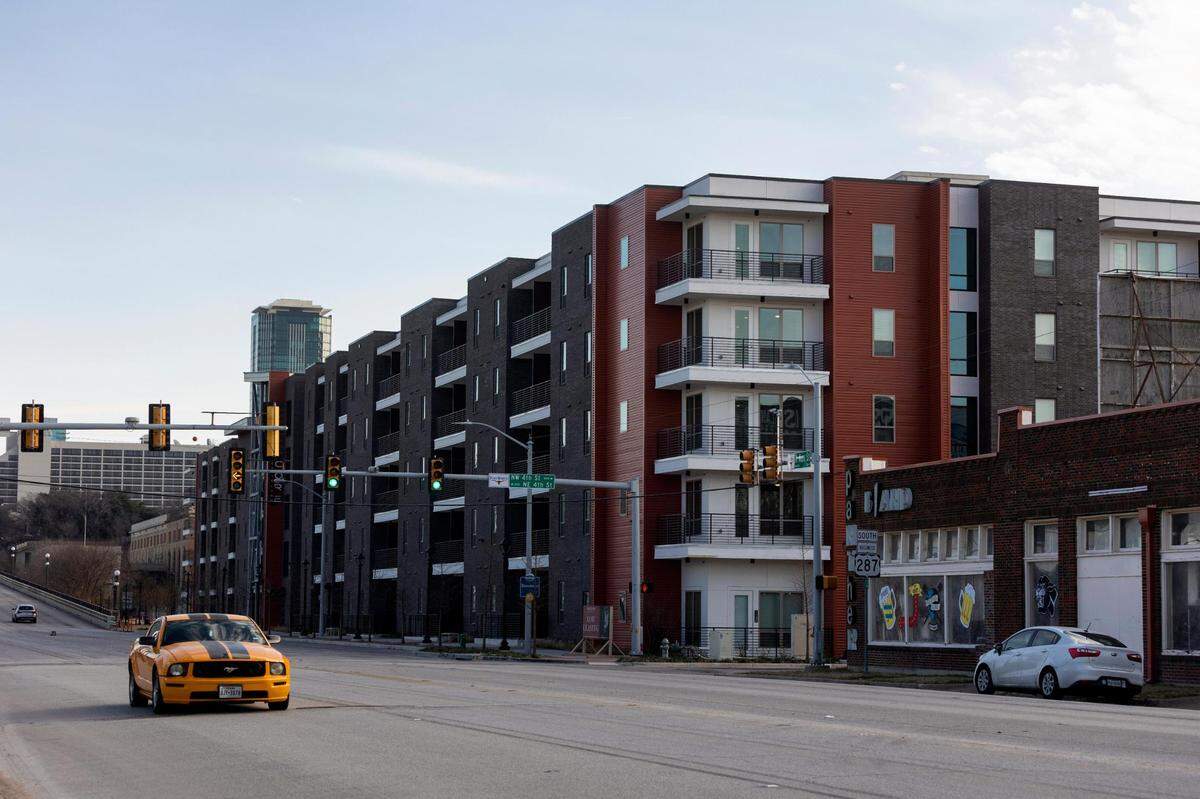
Other owners of valuable property on Panther Island include Encore Olympus Panther Island, which opened an apartment complex on North Main Street. That property is about 3 acres and $35.5 million; its relatively high value comes from already being developed, unlike many other Panther Island parcels.
Avalon Parkway Properties owns a 1.4-acre parcel at 600 N. Henderson St., valued at $1.5 million. On that property, Oklahoma City-based Avalon Correctional Services owns and operates Fort Worth Transitional Center, a reintegration program for incarcerated people. Avalon also owns nine similar facilities across Texas, Wyoming and Oklahoma and was purchased by private prison manager CoreCivic in 2015.
Four landholders — all of which are companies not easily traceable to specific people — are registered at the same address: 301 Commerce St., Suite 3200 in downtown Fort Worth. They are: Stillwater Partners LP, TC Jones Partners LP, Red Baron Real Estate LP and Houston Street Acquisitions LP. The parcels owned by this group total $3.7 million in county-appraised value and amount to nearly 8 acres.
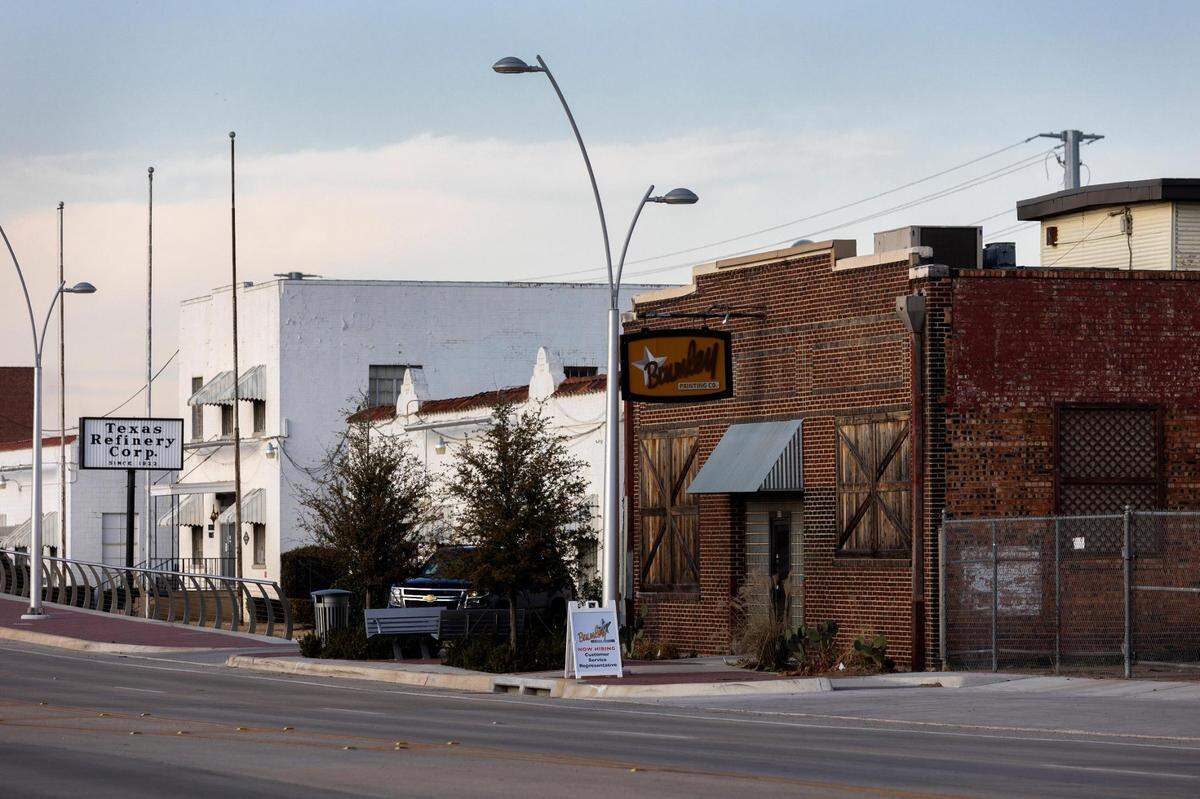
Other private individuals or entities who each own at least $1 million in appraised property on Panther Island include:
Dean Ventures LLC, based in Denver, with 2.9 acres valued around $4.2 million. The headquarters of Southwestern Petroleum Co. is located at Dean Ventures’ property at 534 N. Main St.
Oncor Electric Delivery Co. with 7.4 acres valued around $2.5 million. An Oncor spokesperson said the land is used for utility facilities and rights of way.
Sarosi Family Investments, based in Azle, owns several properties totaling just over an acre. The parcels are on the smaller island and contain multiple active businesses, valued at about $2.3 million.
St. Louis Southwestern RR Co., now part of Union Pacific, with 5 acres valued about $2 million.
O’Neal Oil & Gas Co. with about 1.25 acres valued at more than $1.5 million.
Issam Al Shmaisani, based in Fort Worth, with about 0.7 acres valued just over $1 million.
There are 35 additional individuals or entities with smaller chunks of property totaling 24 acres and valued at a collective $11 million.
Betting on development
The Trinity River bypass channel could be completed within six years, the Star-Telegram reported this month. But development of some sections of the island could begin before that work is finished. One such project is already built — the apartment complex Encore Panther Island, which opened in December.
Now, landowners begin the gamble of optimizing the value of their Panther Island holdings. Is it time to place bets: hold, develop or sell?
In determining when land in and around Panther Island will be most valuable, there are several factors at play.
First up is flooding.
Originally conceived as a flood-mitigation project, the redevelopment promises to reduce flood risk for an estimated 2,400 acres, according to the Panther Island project’s website. That land, regardless of whether it’s included in potential development on Panther Island, could increase in value, said Adam Perdue, an economist with the Texas A&M Real Estate Research Center.
“If it actually lowers the probability that there’s going to be a flood and it makes it that even if there is a flood that it’s less bad, then any land receiving that flood mitigation benefit would be expected to see its value increase,” he said.
Political decisions that make development more likely — such as the Army Corps’ funding announcement — can also drive up prices. That effect would take place almost immediately, Perdue said.
All things being equal, “you would have seen a jump in land values as soon as it became confirmed the feds were going to give the city the money to get this done,” Perdue said. “Basically any time there’s a tactile announcement, if we had our free liquid market, we would expect the land values to respond just about immediately.”
Sarah LanCarte, founder of Fort Worth-based LanCarte Commercial and the real estate representative for Panther Acquisition Partners, confirmed that the federal funding announcement “definitely increased the value” of the group’s properties.
“It just provided more surety that the project has some momentum behind it and is continuing forward,” she said.
She declined to provide specific estimates.
The bypass channel will not only reduce flood risk, but provide more acreage of riverfront property. That waterfront will be extended throughout the islands with internal canals that the water district plans to construct as developers come onto the scene. Frossard at the water district said that while the water district has a master plan for those internal canals — which will also function as storm water drainage — the plans can be tweaked to better align with new developments.
Beyond physical property changes, the most significant jump in land values for mixed-use urban redevelopment occurs when zoning changes, Perdue said. In the case of Panther Island, project-based zoning was created and applied in 2006, according to city staff.
The city plans to revisit the zoning rules; assistant city manager Dana Burghdoff said those changes would be relatively minor. But the zoning offers some clues to what Panther Island may ultimately look like, even as stakeholders are light on specifics.
‘Live, work, play’
Developers interviewed by the Star-Telegram say they plan to work together on their vision for the island.
LanCarte confirmed there’s “coordination with all stakeholders on the island,” and Brock noted that Panther Acquisition Partners plans to partner with the city, the county and the water district.
“Anything we put out will go through those entities,” Brock said.
The project will be multi-use with residential and commercial development.
Brock mentioned the idea of repurposing the abandoned baseball park LaGrave Field, which Panther Acquisition Partners ceded to the water district in a land swap, and developing an entertainment district around the landmark.
Perdue expects developers will closely watch and take cues from early development on the island, such as the Encore apartment building.
“There’s still a little bit of people who are trying to wait and see what would be actually the absolute best development that’s going to make them the most money … there’s a little bit of that kind of game being played and questions being asked by the current landowners and/or the people who own the options for development,” Perdue said.
For the tracts that are developable — those that are not on the river levees and do not require channelization before being developed — LanCarte expects to see movement “hopefully” in 2023.
Of Panther Acquisition Partners’ 26 acres, about 15 acres are now developable, Brock said.
While developers are mum on details, the city of Fort Worth already has a comprehensive vision for the area, laid out in an 86-page document adopted in 2006 and updated in 2016. Those zoning standards offer a glimpse into how a redeveloped Panther Island might look and feel.
The project aims to transform the area into “a vibrant urban waterfront district,” according to the zoning plan, dense with retail and restaurants, and with enough housing to make the area feel like a distinct neighborhood. The zoning rules will push development in the direction that the city envisions, toward “a livable and sustainable district possessing a strong sense of place.”
For instance, building height will be regulated to ensure that the views of downtown aren’t obscured. Sidewalks will be blocked into seating and walking areas, so the district remains pedestrian-friendly. Businesses’ signage will be restricted to prevent “cluttered and unattractive streetscapes.”
What does that add up to?
“It is meant to be the live, work, play area, kind of an extension of downtown,” said Oliver, the Panther Island spokesperson. “So you have no single-family housing, it’s all higher density that’s meant to be that mixed-use, very walkable, very urban area.”
The city’s zoning guidelines also convey what won’t be allowed on Panther Island.
The guidelines specifically prohibit low-density uses such as agriculture. Drive-in theaters are specifically prohibited, which could mark the beginning of the end for the water district-run Coyote Drive-In Theater (Burghdoff, the assistant city manager, said it would likely be years before the drive-in is displaced).

Group homes, halfway houses and shelters are all banned under the current zoning rules. So are gambling facilities and “sexually oriented businesses.”
When asked about the types of facilities and businesses that aren’t permitted, Burghdoff pointed to the age of the regulations.
“I don’t think we’ve updated the land-use table … because of the dormancy” of the project, Burghdoff said.
She added that, in light of the recent federal funding announcement, the city plans to review and potentially modify the zoning rules for the district.
This story was originally published January 30, 2022 at 5:00 AM.