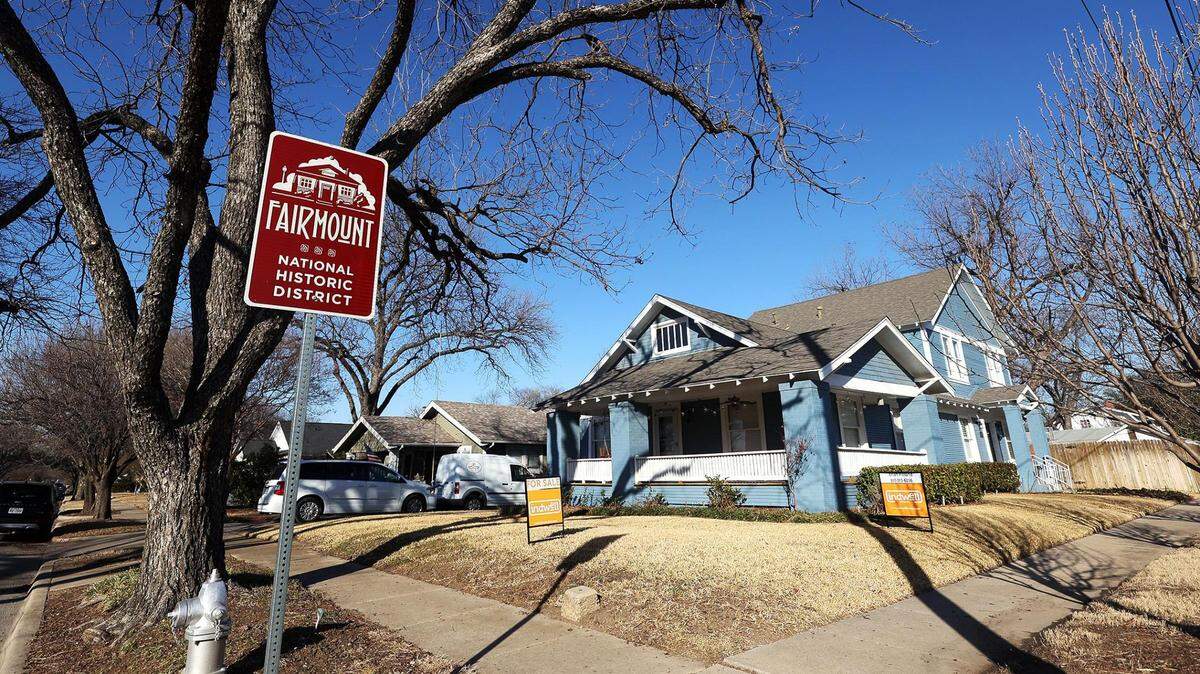
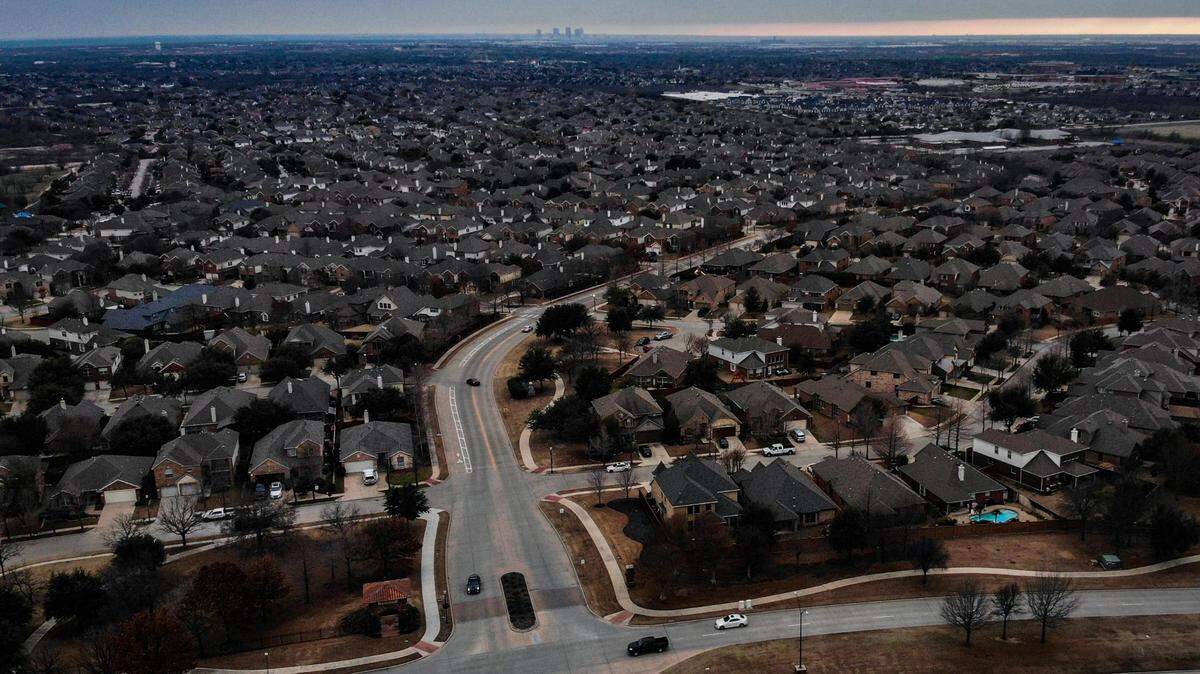
So you think Texas renters are spared the state’s skyrocketing property taxes? Think again
READ MORE
Tarrant County’s skyrocketing property values
Tarrant County’s property appraisals are going up. What to know about your property value and how it affects your tax bill.
Expand All
Carrie Johnson’s teenagers are already conditioned to wait until 8 p.m. to run the dishwasher or touch the thermostat in the home the family rents.
After 8 p.m., electricity is free.
When their rent increases by $250 a month in July, Carrie, her husband and their two children will have to tighten their belts further.
“It will have to come from somewhere,” she said. “I don’t know where yet.”
“Probably just like extra money that we have for the month to be able to do stuff like eat out … maybe we don’t go to Main Event or maybe we don’t go eat hibachi.”
Her landlord confirmed that he raised the family’s rent due to the increased costs of property taxes and insurance.
He’s doing what most Fort Worth-area landlords are doing during this year’s unprecedented housing market activity — passing on the costs to tenants.
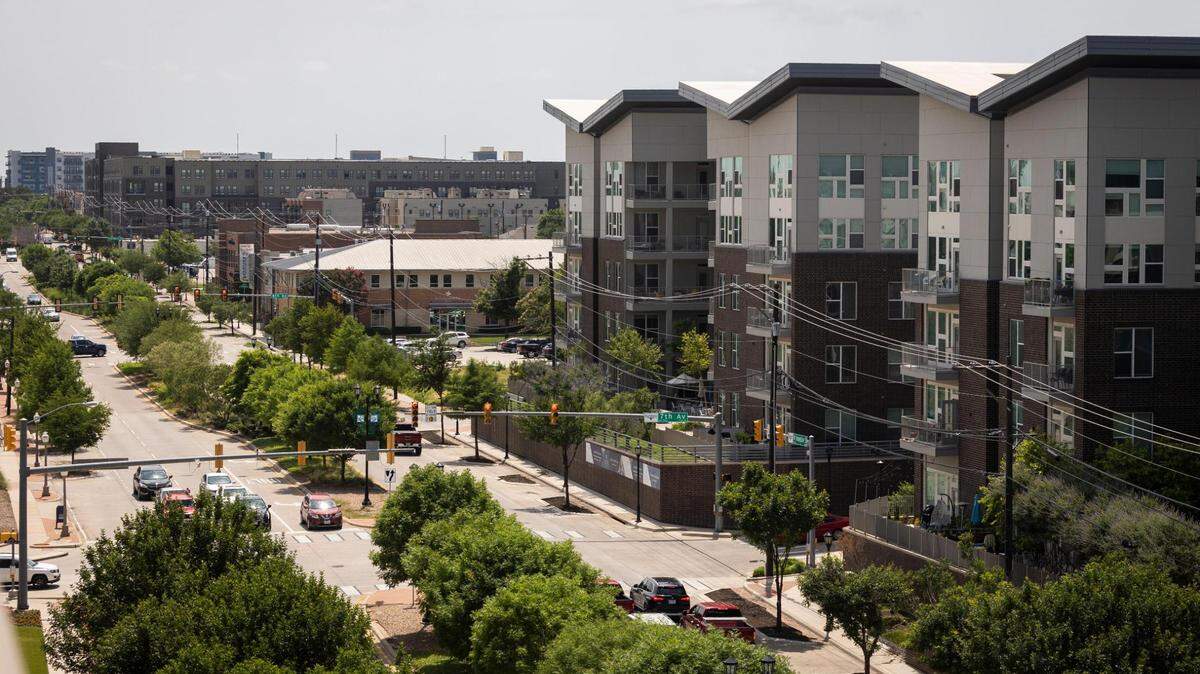
Tarrant County Chief Appraiser Jeff Law estimates apartments rose in value by 30% to 40% in the last appraisal year. That does not include rental homes, but Law said most Tarrant County homes have risen in value by 20%.
The jump can cost renters hundreds of dollars a month.
Commercial property owners, homeowners and landlords could each craft convincing arguments as to why Texas property taxes hit their group the hardest. But those who suffer most don’t own property at all.
They rent.
‘A no-win situation’
It took David Claire almost an entire year to protest his 2021 appraisals. He wrapped up in April, just in time to see his appraisal surge again.
The value of his 16 Tarrant County properties jumped 51%, according to his value notices.
For homeowners in the same situation, a homestead exemption cushions the blow. With a homestead exemption, the increase in taxable value of a property is annually capped at 10%. So, even if the market value of their property jumps more than 30% in a year, they’re paying for that increase incrementally.
The ceiling doesn’t apply to rental properties, so landlords are forced to foot the bill in a single year.
Last year, Claire protested his appraisals with the Appraisal Review Board, contested the results of the hearings and went to binding arbitration. This year, he plans to fight the Tarrant Appraisal District in court if he has to.
“To go to District Court, you got to hire an attorney or you do it pro se,” meaning you represent yourself, he said. “I’m just mean enough to go look it all up and find out how to do it pro se.”
This is the path many large corporations take when fighting their property appraisals.
In fact, they do it so effectively they annually get about $26 billion worth of commercial property removed from the tax rolls each year, the Texas Association of Appraisal Districts estimated.
“Big corporations have lawyers. And the lawyers are going to help them. Whereas small landlords like me don’t usually have a lawyer, and a lawyer’s what, 200, 300 dollars an hour? So you can’t afford to fight it, and you got to fight each one individually. It’s a no-win situation,” Claire said.
The imbalance in leverage isn’t likely to improve.
In 2021, one in two homes sold in Tarrant County was bought by a company or corporation, according to a report from the National Association of Realtors. Its share of institutional buyers ranked third nationwide among counties with a population over 50,000.
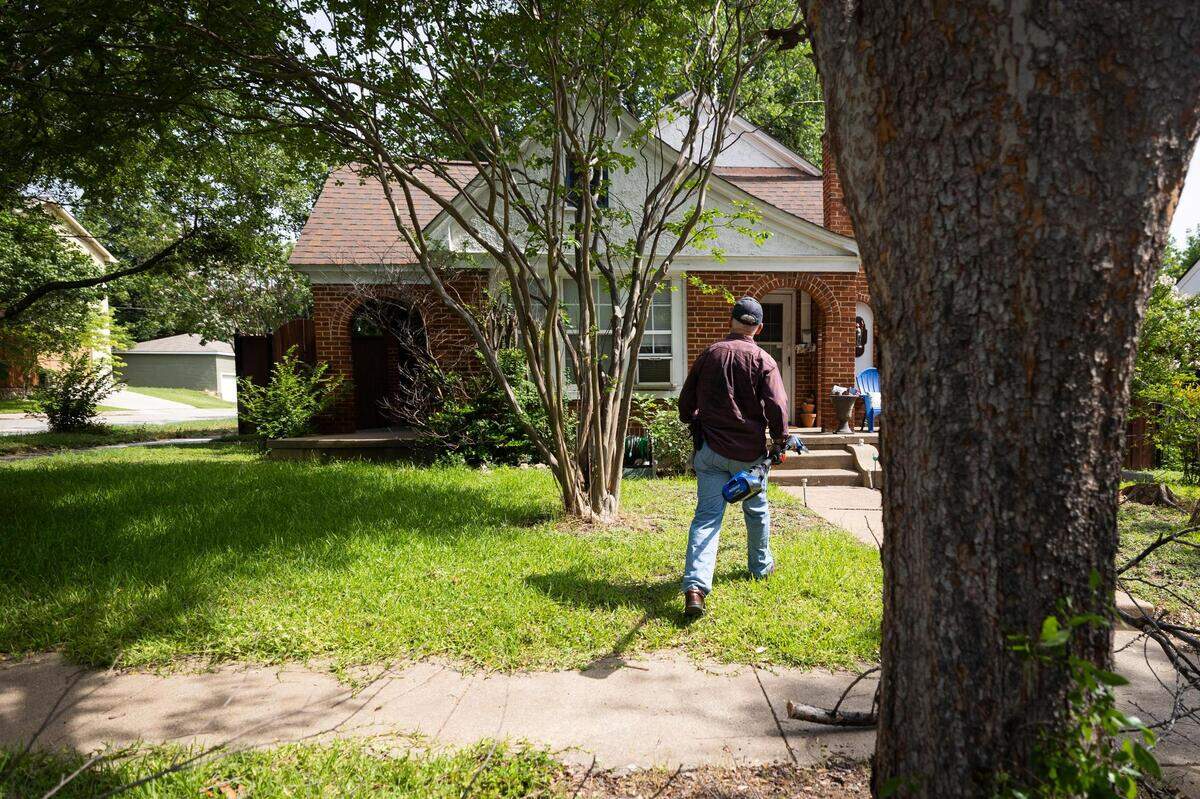
Passing on the cost
If you rent an apartment or a house, some portion of your monthly payments goes toward your landlord’s property taxes.
Between their two rental properties, Lynn Johnson and Nancy Sommerman take in about $60,000 a year in revenue from rent payments. Of that, $7,000 goes to property taxes.
Last year, David Claire, who has 36 tenants, paid about $58,000 in property taxes. That comes out to $1,600 per tenant.
To meet those costs, many landlords do what Carrie Johnson’s landlord did: They raise the rents.
While rent prices don’t yet reflect the effect of this year’s expected property tax hike, lack of supply and pandemic-driven desire for space have already done a number on rents in once-affordable Fort Worth.
According to ApartmentData.com, the average rent in Dallas-Fort Worth reached $1,475 a month in May, a $90 increase since January and a 16% increase in the last 12 months.
“I sent them an apology letter,” Claire said about his tenants whose rent he raised. “I said, ‘I’m very sorry. I have no choice.’ Usually, when somebody rents, I leave it alone. I’m not out to raise the rents.”
Claire and his friend Delio Silvestri, who has owned rental property in Tarrant County since 1955, describe themselves as “benevolent landlords.” They know they could charge their tenants more. But they get meaning out of finding people a place to live and will do what they can to keep good tenants.
“Landlords have no protection,” Claire said. “Therefore, the tenants have no protection. They’re at the whims of the landlord.”

Financial squeeze
Rent is just one of the increasing costs Carrie Johnson has to budget for.
She and her husband own a small trucking company, so they’re also weathering the surging cost of equipment and the exploding price of fuel.
“We’re dying from that,” she said about the gas prices, which reached $4.706 on June 7.
Johnson started asking about the rent rate on a renewed lease in February.
She religiously checks Zillow for both houses to buy and rent and was bracing herself for a rent increase of $300 or $400 a month. When her landlord came back and told her the monthly increase would be $250, she was a little relieved.
“I’m just happy I have a place to live,” she said.
Not everyone will be as lucky.
One Tarrant County landlord told the story of a 70-year-old tenant on Social Security who has lived at his apartment for 20 years.
The landlord is facing a nearly $40,000 increase in property taxes that he says he has no choice but to pass on.
“What is that going to do to him?” he asked.
“Everybody has to have a place to live,” he said. “I don’t know where the heck any of these poor people are going to go when they can’t afford the rents.”
The situation “doesn’t rouse any emotion down there at TAD,” said Claire’s friend Silvestri. “It has to go to Austin.”
No recourse
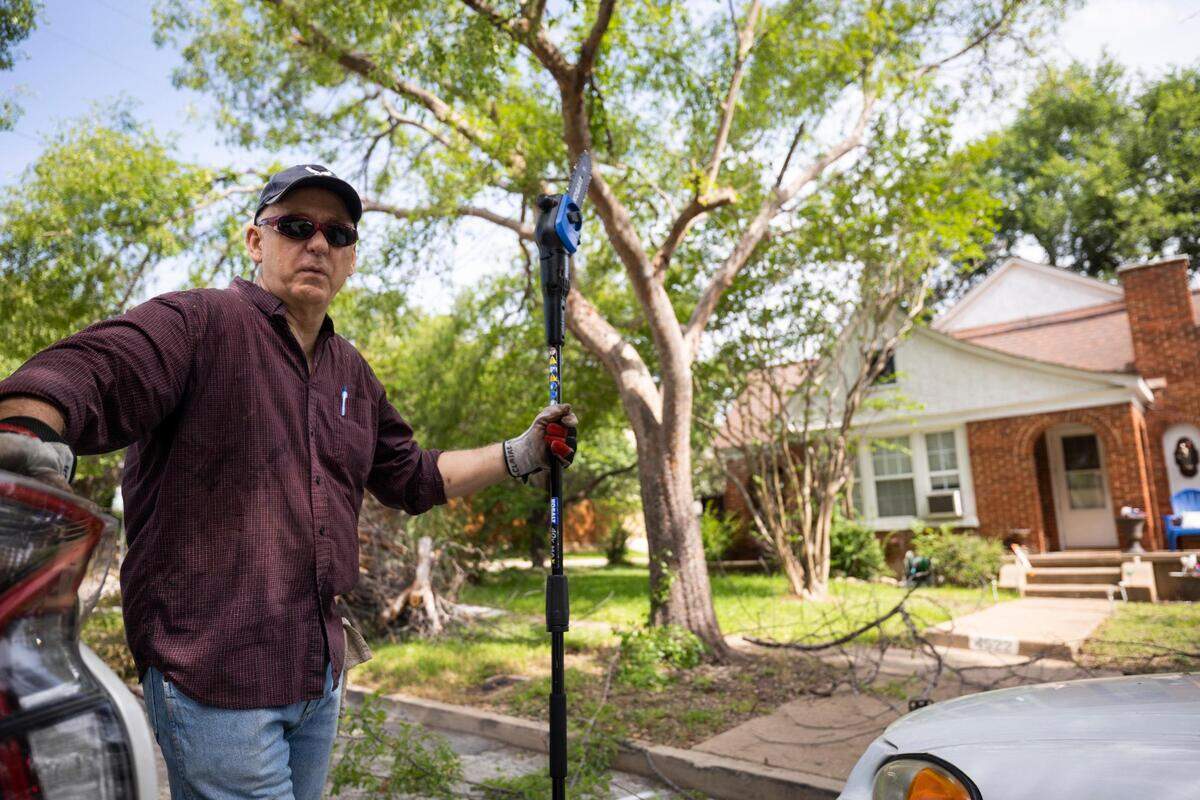
David Claire is preparing to protest his 2022 appraisals, but he wishes systemic change were possible.
If he was in charge, he’d institute a scheme by which increases in property values are capped 4% each year and catch up to market value when they are bought and sold.
There is one such threshold in place, but it applies to the property tax revenue, not appraisal values.
In 2019, Gov. Abbott signed into law Senate Bill 2, which requires many taxing units to hold an election if the tax rate would result in increasing property tax revenue by more than 3.5% over the previous year. The cap was formerly at 8%.
The new threshold does not apply in places where a presidential or governor-declared disaster has occurred, such as, for example, COVID-19, for which Abbott renewed the state’s disaster declaration in May.

To be clear, the tax rates for this year have not been set. That happens after property values are finalized.
Adam Perdue, a research economist at the Texas Real Estate Research Center, predicts the panic is premature.
“Based on everybody that I’m talking to, everybody is going to be surprised, because it’s going to be a lot lower than what they’re expecting,” he said.
Tax bills won’t be mailed out until October.
Meanwhile, Texas tenants have no recourse. And, landlords’ only option isn’t guaranteed.
Claire has had mixed success with the protest process. He used to prepare himself and would spend months getting read for his various hearings. This year, he’s hiring a certified appraiser to value his properties and serve as expert witness at his dozen hearings.
“I just spent $6,000 on appraisals,” he said, “and I may or may not win.”
How much have rental properties risen in value since 2014?
Here are a few examples of apartment complexes, the 2014 market value and the proposed market value for 2022.
The SageStone Village in Fort Worth: from $17.2 million to $60.4 million, 251%
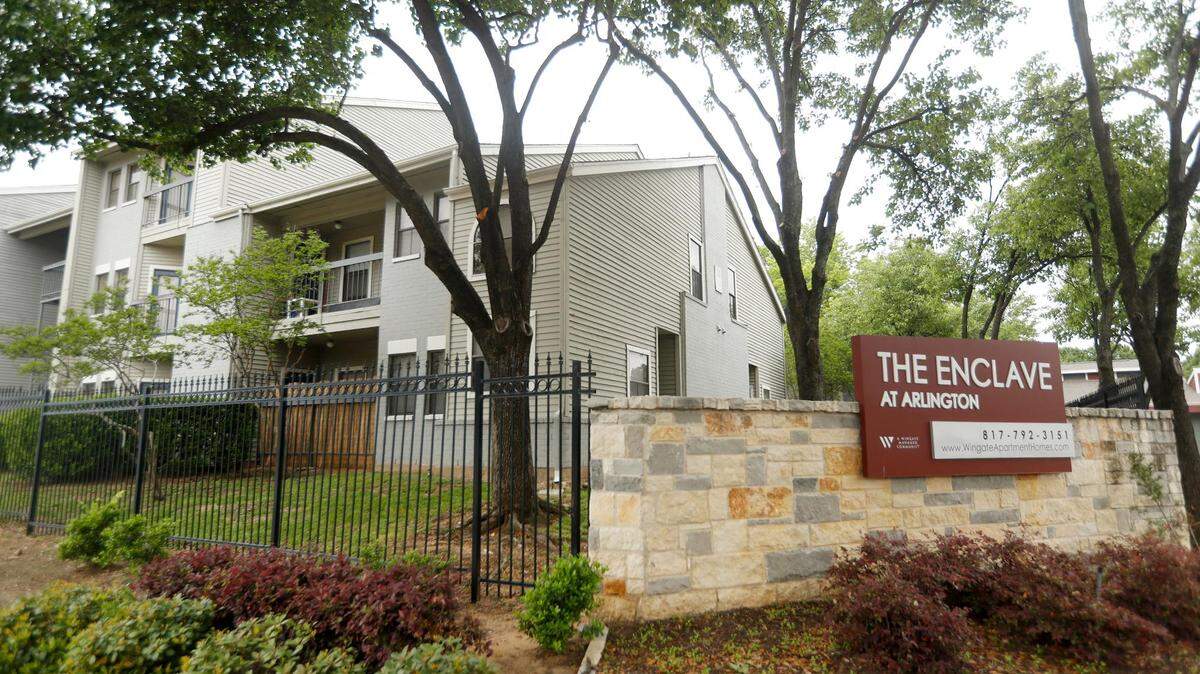
Enclave at Arlington: from $15 million to $35.7 million, 138%
Camden Riverwalk in Grapevine: from $34.2 million to $67.9 million, 98%
Trinity Bluff in Fort Worth: from $19 million to $32.9 million, 73%
Ranch at Fossil Creek in Haltom City: from $21 million to 53 million, 152%
This story was originally published June 12, 2022 at 5:00 AM.