
Tips for creating a natural landscape look in your North Texas garden
You hear people talking about planning their landscapes toward a “more natural look.” Too often, however, it ends up with native plants set into unnatural designs that don’t look right for our part of Texas.
When I think about nature, I’m picturing hillsides and meadows free of straight lines, squares, and cubes. Look at any topographic map or drive through any undeveloped parcel of property. What nature does is to sweep across the land in curves and clusters and groups, not in hedgerows and foundation plantings.
I am not a landscape architect. There are days when I wish that might have been the path I had chosen because those are the people who use plants to create and fulfill dreams. But I don’t regret any of the choices I’ve made. I’m content to have had the ability to work alongside those highly skilled people — to watch and learn from them. I admit it: I’m a garden design thief. I’ve taken notes of things that I’ve liked, and I’ve planned my own gardens accordingly. Our landscape is modest. It reflects our tastes and our needs.
Use a garden hose to outline bed borders
I’ve used a supple garden hose on hot summer days to configure all our beds. I had my wife stand at the end as I flipped the hose into place. As I found a beginning of a look that I liked, I had her move a bit farther down the hose. Together we developed long, graceful curves in our beds. I left the hose in place until each entire bed was designed. Then I used wire flags to mark the bed outline until I could spray to kill all the vegetation inside it.
I was careful to let each bed swell out at the corners and stand out away from the doors. As I came to the walk, I let the hose drape right across the concrete in one continuous curve so our entire front yard would be a continuous bed. It came closer to the house beneath the low windows and widened as far out as 12 or 15 feet at the corners. That has given me room for small accent trees and large shrubs to frame our landscape.
I’ve planted our shrubs in clusters, sweeps, and groups, not in rows that would repeat the lines of our house. I’ve used the same varieties of plants in each cluster or sweep for continuity, and I’ve used seven or eight types in any one part of our landscape. I’ve spaced the plants far enough apart that they wouldn’t crowd one another, but close enough together that they could be seen as a community.
I’ve avoided formal pruning for all 48 years that we’ve been in our house. Some of my dwarf hollies get a shearing in February to maintain a consistent size, then I let them grow out, but I barely touch them again until the next year at the same time.
I use green baked enamel metal edging to outline all my beds, but unlike many people, I drive mine into the ground until only 1 inch is left above the soil. The turf conceals that, and it gives a neat and clean look to the beds, especially when I have groundcovers or bark mulch finishing off the bed surfaces.
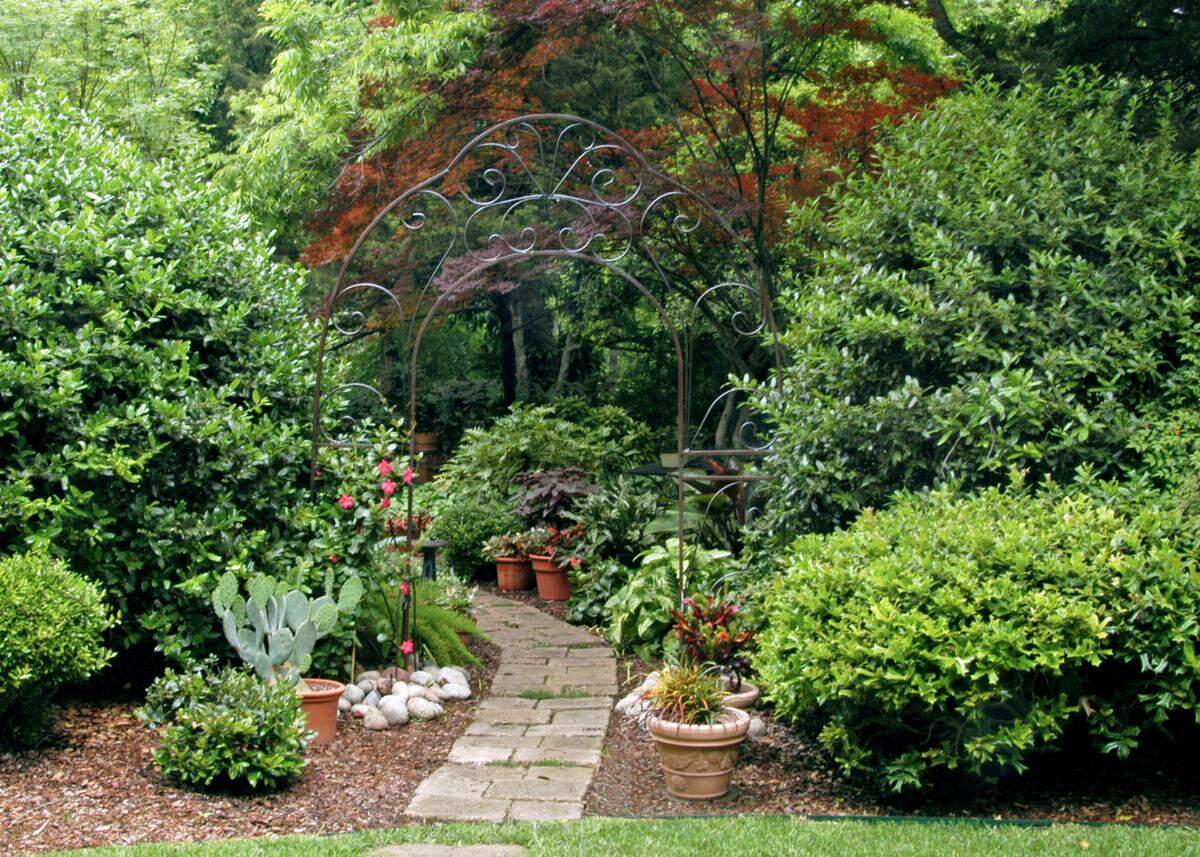
Plan garden paths with a more organic look
Garden paths in our landscape are also in gentle curves. I’ve used several kinds of surfaces for different paths. Some are large flagstones set a few inches apart with low groundcovers between them. Some are simply bark mulch poured out of bags between beds edged with the baked enamel.
Several are walks of concrete steppingstones I’ve made and poured 10 or 12 at a time. I saw concrete at a winery in Napa Valley 40 years ago where rock salt had been pressed into the concrete as it was curing. Once the concrete was dry, the salt was swept up and the pits were exposed for a weathered look. I added leaves pressed in at the same time for a faux fossilized look. We made more than 200 of the stones, and some have been in three different parts of our landscape in their productive lives.
One North Texas city was redoing its sewer system 35 years ago. In the process they were peeling out old brick pavers from the middle of one of the streets. I inquired at city hall and was able to buy them. They make up a walk through our backyard — a walk that has 125 years of North Texas history right before our eyes every day.
Add antiques and artifacts to the landscape
You keep your eyes open for antiques and artifacts. A late friend of mine imported British antiques 25 years ago. He had a couple of 100-year-old chimney pots from the south coast of England. I asked if he could find more, and he had 18 or 20 shipped stateside for me. Everywhere you turn in our gardens you’ll see these magnificent (and heavy) old pieces of ceramic art. I think about what went over their heads in World War II and I’m just amazed that they’re here for us to enjoy.
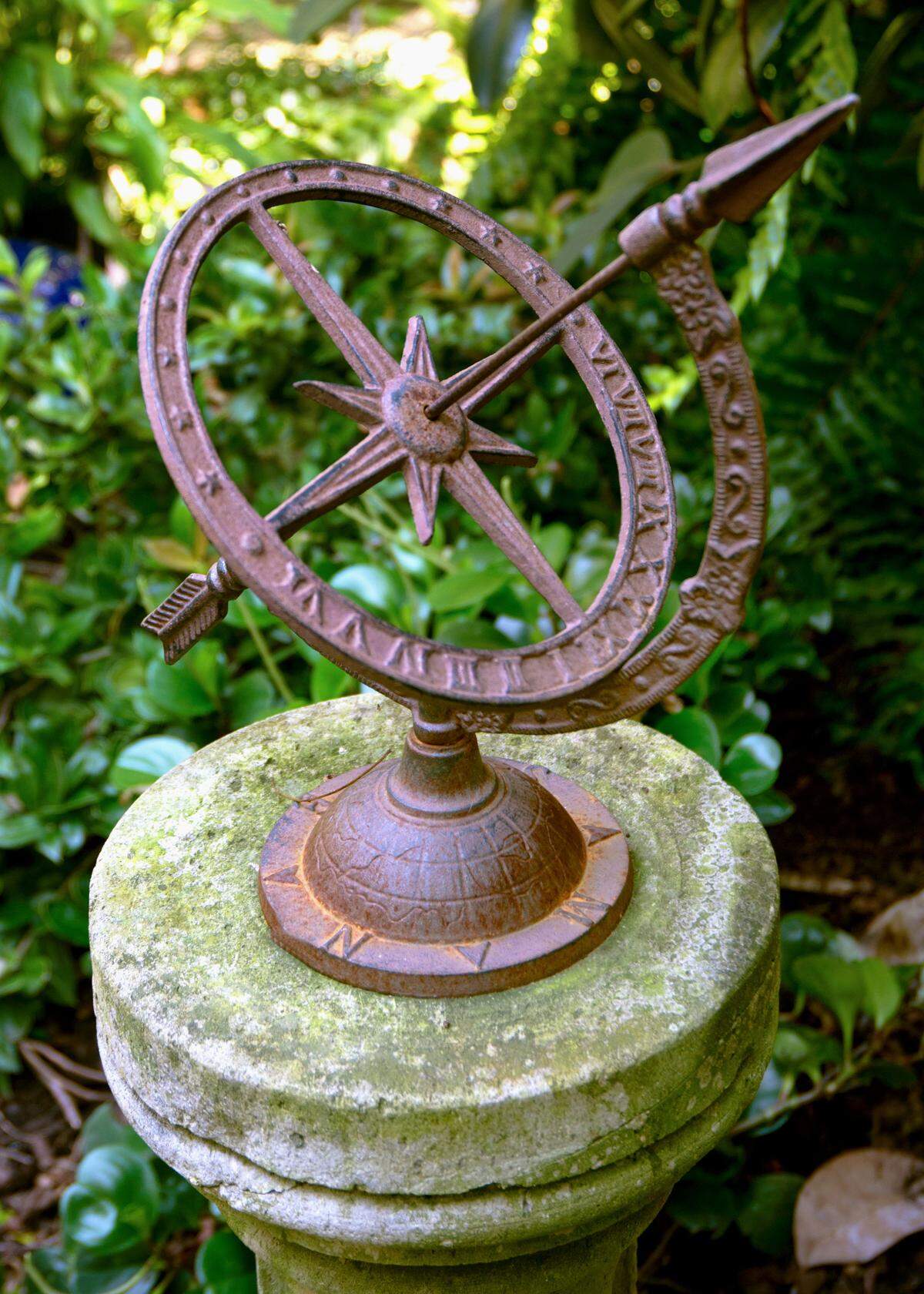
I collect sundials. An odd hobby, you might say, for a guy who lives and gardens in a dense pecan forest out in the country. But I just like their style. They’re lovely pieces of art and they become focal points in their own little garden rooms of our landscape. The ones I have outdoors are modern creations, although I’ve had several of them 40 or more years now, so they’re working their way toward being antiques. They’re randomly scattered — nothing formal, remember?
.jpg "6.30.25 Antique British chimney pots in Sperry landscape (1).jpg")
About 15 years ago I was driving in one of the northern Metroplex suburbs when I passed a shop selling Mexican wrought iron artwork, fencing and arches. I bought the perfect arch for a spot where one part (“room”) of our landscape melded into another, and that arch made the perfect dividing line. Unfortunately, rust at the ground line finally took a toll on it a year ago, so I’m back in the market looking for another arch. It’s out there somewhere calling my name. I can hear it. I just haven’t found it quite yet.
It’s the hunt that makes landscaping fun. Summer is a great time to be doing that searching so you’ll be ready when fall’s cool weather arrives.
This story was originally published July 4, 2025 at 5:50 AM.