‘Jurassic World Rebirth’ director on Texas, Glen Rose dinos and the mutant D-Rex
AI-generated summary reviewed by our newsroom.
- "Jurassic World Rebirth" director Gareth Edwards has strong filmmaking ties to Texas.
- Edwards drew inspiration from Ray Harryhausen films and Spielberg's original film.
- The film introduces mutated dinosaurs and revisits original horror tones.
“Jurassic World Rebirth” director Gareth Edwards is a “Jurassic Park” and dinosaur fan — but he originally wanted to take more of a break from being back in the directors’ chair so soon after the release of his last film, 2023’s “The Creator.”
“I wanted to not like [the script], but I did like it,” the 50-year-old British filmmaker told the Star-Telegram. I felt like, “Oh, this is really kind of a weird love letter to Steven Spielberg. I’m never gonna get this chance again.”
Edwards is well-known in the blockbuster film world. His other past credits include 2014’s “Godzilla” and 2016’s “Rogue One: A Star Wars Story.”
“Jurassic World Rebirth,” the seventh film in the long-running franchise, is out July 2. Scarlett Johansson, Jonathan Bailey and Mahershala Ali star in the creature feature.
In early June, the Star-Telegram spoke with Edwards at a Dallas hotel as he kicked off his global press tour for “Jurassic World Rebirth.” The conversation delved into Edwards’ Texas ties, how he came to direct “Rebirth” and how he created the film’s mutated dinosaurs.
This interview has been edited for clarity and length.
The Texas connection
Star-Telegram: Welcome to Texas. Have you been here before?
Gareth Edwards: Yeah, Texas keeps coming back to my life in a weird way. I always wanted to be a filmmaker. Went to film school because that always feels like the easiest way in, and it’s not, turns out [laughs]. My graduation film, it only ever won one thing, and it was in Texas. It was in Houston. It was called WorldFest. I flew over to get that award, and that was a really strong memory I had.
Then the first TV show I ever got to direct was for Discovery Channel. That was shot in Dallas — it was about a giant tornado. I used to do visual effects, so it was what I’d call “disaster porn,” which they did a lot of back then. Weirdly, we just drove past where I filmed. Hadn’t seen it in 20 years. So that was cool. Then my first movie I ever made [”Monsters”], we shot in south Texas in Galveston. Then the world premiere of that movie was in Austin, Texas [at South by Southwest]. I just keep getting pulled back to Texas for some reason.
S-T: You have anything fun planned while you’re in town?
GE: The last time I came, I have this very good memory, I’d never tried brisket. My agent is from Texas and he’s like, “Oh, you’ve got to have brisket.” He took me to one of these really good restaurants and I loved it, like it was to die for. I mentioned it to the guys I’m with now and they keep wanting to drive by a brisket restaurant and get me some. But I don’t know if we’ve got time.
S-T: Speaking of barbecue, do you know what a dino rib is?
GE: No.
S-T: It’s a smoked beef rib that is just massive. I have a picture here.
GE: The actual bone is as big as that guy’s hand.
S-T: It’s a giant piece of meat. I have a few more Texas things. Glen Rose, which is about 75 miles southwest of Dallas, is the dinosaur capitol of the state. Here’s a picture of Dino World. There’s a few dinosaurs here like the Tyrannosaurus Rex and Spinosaurus, which appear in the movie, right?
GE: You’ve got the whole cast here.
S-T: Down the road there’s a state park called Dinosaur Valley, where more dinosaurs meet you on your way in. You’re not far from dinosaur history here in Texas.
GE: It’s strange the appeal of dinosaurs, how it never gets old. Like every kid’s bedroom has a dinosaur in it. I challenge you to find a kid that doesn’t have a dinosaur in their bedroom somewhere.
Creating the dinosaurs
S-T: Were you a dinosaur kid growing up?
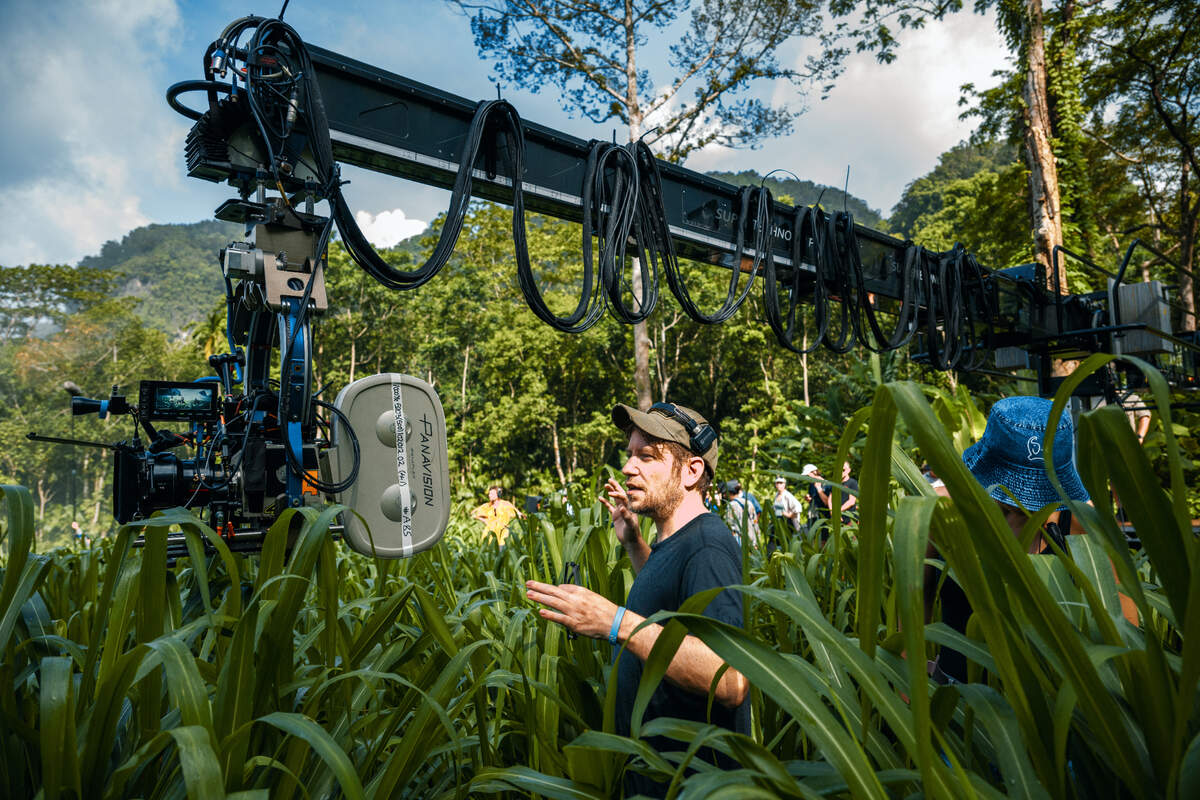
GE: Yeah. When I was a child, “Jurassic Park” hadn’t come out. It came out when I was about 17. I sort of grew up on the Ray Harryhausen movies and all that classical kind of styled T-Rex, before it got more scientifically accurate. In a weird way, when we made this movie, that was one of my goals. The T-Rex in our movie is not the exact same T-Rex as in the previous ones. Sort of an opportunity to dial it a little bit towards those the movies that I grew up loving before [the first] “Jurassic” came out.
I remember being on the Zoom with probably one of the best dinosaur designers in the world and when I mentioned this, he looked at me like I was being sacrilegious. We got there incrementally. By the end of it, it was one of those things where the goal was, you look at it and you think it’s the same, but if you actually did a side by side comparison, you can see all the differences. It was like subconsciously how we remember it, rather than what it literally was.
S-T: The T-Rex does look a little leaner and meaner in the movie.
GE: One of the things we said to the animators was, “Please don’t animate anything unless there’s an existing reference of an animal acting that way.” They built up this massive library of all kinds of videos, like natural history footage, pets on YouTube, alligators, ostriches and all sorts. Every time we reviewed the visual effects shots, there was always like a little picture in picture image in the video footage of one of their pets, or some alligator attacking someone or an eagle killing their prey. It was always trying to reference that, so it wasn’t completely invented. Maybe a bit of that was, hopefully, in there in some way.
S-T: I know “Star Wars” was one of the movies that inspired you to become a filmmaker. Did “Jurassic Park” have a similar impact? Do you remember the first time you watched it?
GE: I remember exactly. I read the book beforehand, because I was really anticipating the [Steven] Spielberg movie. It felt like it was teed up to be a movie I was going to absolutely love. I devoured the book and I never got to the end. The last chapter I hadn’t finished in time when my friend’s mom honked the horn of the car to say that we’re going now to the cinema. I remember we couldn’t all fit in the car, so I was in the, in the UK we call it the boot, but the trunk. I was sort of in the back of this station wagon thing. Yeah, I was very blown away like the rest of the world.
When I went to film school, it was really like a dividing line in cinema where you can sort of say there was all the movies before “Jurassic” and all the ones after it. There was suddenly this gold rush of all the studios trying to make every digital anything they could think of. Whether it be armies or giant waves or whatever. I started to learn computer graphics, because I felt like, if I couldn’t get a job as a director, this felt like a way to pick the lock and break into filmmaking.
I thought it was gonna take six months. I would do animations of dinosaurs in my bedroom and stuff like this. I thought, “Oh, I’m gonna make a movie in in the next six months.” Then cut to 15 years later, I’m still doing computer animation. I just drew a line in the sand, flew to Texas and made my first movie. I think it’s easy to put something off, tell yourself there’s a reason to wait till tomorrow. Then at some point you just gotta go for it.
From ‘Jurassic Park’ to ‘Jurassic World’
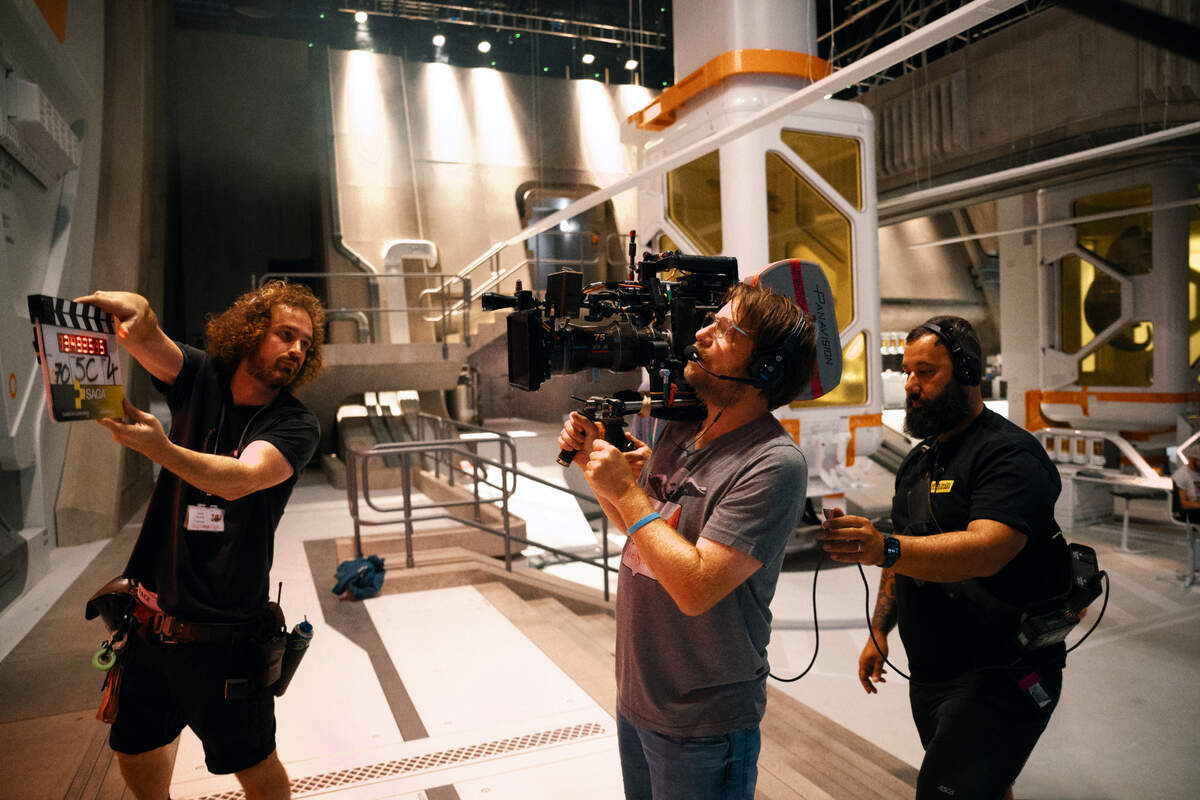
S-T: This movie is coming out just under two years after your last film, “The Creator.” This is a new chapter in the long-running franchise. Obviously you’re a fan of these movies, but why was “Rebirth” the movie to make?
GE: I didn’t want to make it originally. I wanted to go on holiday and have a break and think about what the next film would be. I was on the phone to a friend, actually, who’s my editor of this film, and hadn’t spoke to him because of the pandemic. I was just catching up with him and weirdly, the day before, I had sat and watched “Jurassic Park” because I was starting to write [another project] and start to jot some ideas down.
It made me think, “Oh, there’s this thing. What did they do in ‘Jurassic’?” It wasn’t to do literally with “Jurassic,” but there was a moment in it where I was just curious. I went to watch “Jurassic Park” again just to see this one moment. I ended up watching the whole movie, and then taking notes on it.
I ended up probably spending five hours writing a four-page document on why “Jurassic Park” is so good. Then that was just something I do as a little exercise. You never read that document again, but it helps you, like training your brain to filmmaking vocabulary and stuff. I did that, then my girlfriend goes, “What were you doing in there all day?” I was like, “I was watching ‘Jurassic Park.’” She sort of mocked me, because she knows I’ve watched it million times. Then I was on the phone to my friend the next day, and this story came out saying Universal [is] looking for a director. I was on the phone, my phone buzzed and I saw it was my girlfriend texting me with that story. I without saying anything, I just copied and pasted it to my agent and wrote, “Is this stupid?” I hit send, carried on the conversation, which went on for another 45 minutes.
Then when I finished, I put the phone down and I had four or five missed calls. I suddenly remembered I’d done it. I forgot I even sent it and went, “Oh [expletive]. I sent that ‘Jurassic Park’ story. Oh God.” Then [my agent] said Universal called him and [producer] Frank Marshall said, “Would he be interested in doing Jurassic?” [My agent] is like, “I don’t know. I know he wants to go off and do his own thing.” As he started saying this [to Marshall], my text came through and he just burst out laughing. They sent me the script that weekend. I had to decide fast, because I knew they wanted to figure it out fast.
I wanted to not like it, but I did like it. I felt like, “Oh, this is really kind of a weird love letter to Steven Spielberg. I’m never gonna get this chance again.” For Steven himself, to sort of potentially offer you a film like this, my hero. I looked at it and it was a year of my life, all the planets were aligning, saying, “This could be good. There’s nothing to lose here.” I just thought, “[Expletive] it. I’ll do it.”
Weirdly, actually, I never said I would do it. My agent never answered whether it was stupid or not. You end up just getting sucked into these things and now I’m just surfacing, going, “Oh my God, I guess we did it.”
S-T: “Rebirth” does feel like it hearkens back to the those horror elements of the original movie. Was that a conscious choice?
GE: Yeah. I mean, in the pie chart of “Jurassic Park,” I would say it’s a mix of genres. At least a third of it is horror, maybe 50 percent. There’s adventure in there and fun. I wanted that same ratio. There’s awe and majesty and things like this. We’ve all grown up now. We’re the kids that watched that first movie and now we’re the adults that get to make films. I think what’s scary to us has changed a little bit. You expect people to tell you no when you make a movie like this. I made it a little bit scarier than I thought I’d be allowed to, because I was waiting for someone to tap me on the shoulder and say, “You’re not allowed to do that.” And no one did.
We sort of got away with some things that I wasn’t expecting to. My joke is that “Jurassic Park” is a horror film on the witness protection program disguised as a family adventure [laughs]. It scared the [expletive] out of me when I was 17. It’s like perfect cinema. That scene with the T-Rex attacking the Jeep at night. If there was a World Cup or Super Bowl for best scenes in movies, I think that would make the final. I don’t know what it’d be against, but no one would complain if that made the final.
S-T: You mentioned starting in visual effects. I was curious how that background served you on this movie.
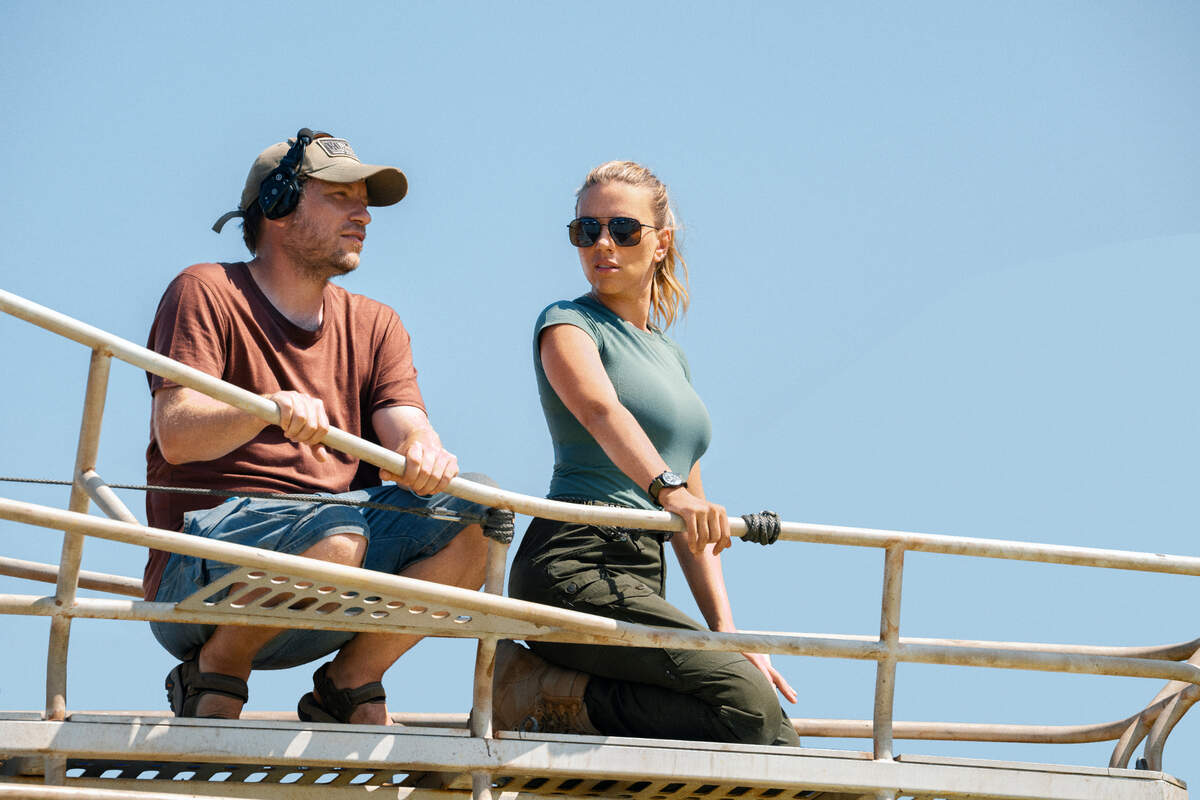
GE: I thought I’d wasted my life doing visual effects, because I just wanted to make films. I just was trying to learn it. It’s like learning the guitar so you could be a songwriter, and instead, everyone keeps hiring you as a session guitarist [laughs]. I thought, “Oh, no, I’ve made a terrible mistake.” As it turns out now, wouldn’t have done anything different if had a time machine, because I think it’s probably the best skill set you could understand as a blockbuster director. I do not view myself as that at all, but I do love these event movies. I did grow up wanting to make those kind of films. It’s like some people come at filmmaking from writing, like they’re a screenwriter, and then they get into directing.
My agent always said there are two types of writer-directors. There are writers who also direct, and there are directors who also write. I’m definitely a director more than I am a writer, like very visually driven. I think knowing Photoshop and silly things like that, it’s easier. When we review the effect shots, it’s sometimes faster to grab the image and mess around with it and send it back, than it is to talk about it. There’s less confusion. Sometimes you don’t know yourself, so you’re just pushing and pulling and playing. I would recommend, if you’re a filmmaker, getting into Photoshop has not hurt me at all. It’s as useful as typing an email, in terms of making a movie like this.
Making the mutated D-Rex
S-T: Part of this movie is the mutated dinosaurs, like the D-Rex, which has been shown in the trailers. When it comes to designing something like that, what’s the process look like? Are you drawing it yourself or giving an artist some notes on where to go?
GE: There’s two types, and I won’t give too much away, you’ll see them in the trailers. When they’re written in a screenplay, the writer will try their damnedest to give you a rough idea. But as a director, you sort of brush over that and you think, “Oh, great, I get a chance to make a giant monster. That’s cool.” The D-Rex, in my mind, I saw it in my peripheral vision. It’s like witnessing a crime when you read the script, and then you have to sit with someone and they do an artist illustration of what the person looked like.
The D-Rex, I saw it quite clearly. It was only when you have to articulate it to someone and they say, “Well, what’s it like?” You start to go, ”God, why am I thinking like this?” Then I realized I’m probably gravitating towards a rancor monster. I’m also gravitating towards obviously H.R. Giger’s alien. Then obviously a T-Rex on top of all that. Those three things combined.
S-T: The title of this movie is “Jurassic World Rebirth.” There’s no colon in there after “World.” Were there any conversations about that, going with “Jurassic World: Rebirth” or was the colon always never in there?
GE: I probably won’t bring up what it was. When I joined the project, it was not called “Jurassic World.” It was called something else and it became a very high level conversation, because the world knows “Jurassic World” so well. Colin Trevorrow did such a good job of launching that around the entire world. Universal were super keen to hold on to that aspect of it, which I don’t disagree with.
Then the debate came, what’s the third word? I’ve never been in such high level Zoom meetings in the middle of filming where, I’m on a Zoom with the head of the studio, the head of marketing, Steven Spielberg, Frank Marshall, everyone’s trying to figure out this title. Eventually got somewhere where everyone felt really good about. That was a journey nearly like designing the creatures. There’s a lot riding on it. Apparently, this is not a small, little indie film.
S-T: Last thing for you: This is a big summer blockbuster. What do you hope audiences take from the movie?
GE: I hope they go through a whole spectrum of emotions and feelings. It’s kind of a full meal. Using that analogy, Steven Spielberg had some really good advice in post-production. He was talking to us about, reducing sequences. Usually that feels the antithesis of what these films try to do — more is better. He was saying, “It’s like a meal. The best version is they leave just slightly hungry, then they’ll get back in the queue and do it all over again.” It’s weird to be a chef and leave your audience just a little on the edge of hungry. But I think it’s great advice. The best films, you can’t forget them straight away. Hopefully they linger around.
We can’t compete with the original “Jurassic Park.” It’s a masterpiece, and it was a moment in cinema that’s unrepeatable in terms of first time you’re ever going to see a living dinosaur. Combined with Steven’s brilliant direction, it’s a once in a lifetime moment. We were certainly trying to have that nostalgia of what I felt as a kid. These sort of films, you don’t know how they’ve done until 20 years from now, when those kids have grown up. They say something super nice about the impact it had on them. I’m really making it for that kid, because we’re all just big kids in Hollywood making these sort of things.
“Jurassic World Rebirth” opens on July 2.
This story was originally published June 30, 2025 at 11:00 AM.