
What Fort Worth-area parents should know about kids and e-bikes
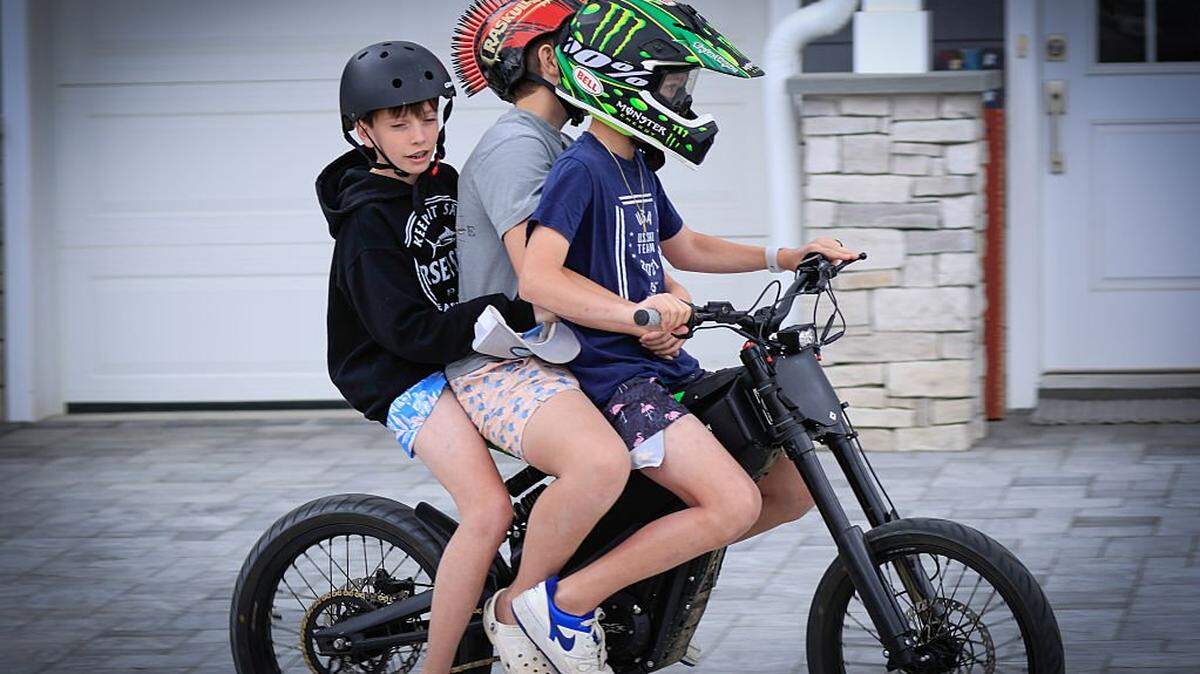
If your tween or teen is asking for an e-bike — or already rides one to school, to a friend’s house or around the neighborhood — you’re not alone, and you’re navigating a moving target. Local laws vary by city. Some bikes that look street-legal aren’t. Helmet rules depend on where you live and how old your child is. And the consequences of getting it wrong are landing kids in the ER and, in Keller, could now land parents in front of a judge.
Here’s a parent-to-parent rundown of what Tarrant County families need to know right now.
The stakes are real, and close to home
In April, an Aledo ISD middle schooler riding an e-bike in the back parking lot at Stuard Elementary School was struck by a vehicle and flown to Cook Children’s Medical Center in Fort Worth for treatment. The student was conscious after the crash, and the district said it is working with law enforcement on the investigation.
In October, a 21-year-old man riding an electric bicycle in Arlington died after colliding with a pickup truck leaving a parking lot on Southwest Green Oaks Boulevard. Police said the driver wasn’t speeding or intoxicated and won’t be charged.
Dr. Terence McCarthy, director of the emergency department at Texas Health Harris Methodist Hospital in Fort Worth, told the Star-Telegram his ER sees about two patients a week with e-bike or e-scooter injuries — and the injuries are getting worse.
“It used to be e-bikes where you’d go 5 miles an hour if you used the motor. Now they can just go so fast, and they can really get away from you if you’re not careful,” McCarthy said. “And really, with any kind of vehicle-related collision, speed correlates with severity of injury. So the faster you go, the worse the injuries are going to be.”
Even a Class 1 e-bike, the lowest-powered category, can hit 20 mph. Class 3 bikes top out near 30 mph. Some electric dirt bikes can exceed 50 mph.
Legal e-bike vs. illegal dirt bike: know the difference
This is the single most important distinction for parents, because a lot of what kids are riding around north Fort Worth, Keller and Colleyville is not actually street-legal.
According to Fort Worth Deputy Police Chief Sean Kenjura, who briefed the city’s Public Safety Committee on June 2:
- E-bikes (with pedals, motor-assisted) are treated like traditional bicycles. They’re allowed on streets, bike paths and sidewalks.
- E-scooters can be ridden on bike paths, sidewalks and streets with a posted speed limit of 35 mph or less.
- Mini bikes, pocket bikes, electric dirt bikes, electric off-road scooters, electric ATVs and electric side-by-sides are prohibited everywhere in Fort Worth except private property.
The rule of thumb Kenjura offered: if the device has a throttle like a motorcycle and no pedals, it’s not allowed on city roads or sidewalks. Texas law classifies electric dirt bikes as “pocket bikes” or “mini-motorbikes,” banned from public roadways, sidewalks, bike lanes and bike paths.
“Some of these vehicles will travel up into the 50-, 60-mph range and higher,” Kenjura said — speeds he warned can exceed what young riders can handle.
Helmet laws — and they vary by city and age
There is no statewide helmet law in Texas, but local governments can set their own. Here’s where things stand for the cities where most Star-Telegram readers’ kids ride:
- Fort Worth: City code requires bicycle riders under 18 to wear a helmet. E-bikes are widely understood to fall under that rule. The code doesn’t explicitly mention scooters, though Council Member Michael Crain has said he wants that changed. A comprehensive update to the city’s safety ordinances is being drafted.
- Keller: Riders under 16 must wear a helmet on an e-bike. The city’s ordinance, approved in December 2025, also bars headphones, earbuds and earplugs while riding; bans carrying more passengers than the bike is designed for; and caps e-bike speeds at 15 mph. Anyone under 15 cannot operate a Class 3 e-bike. The rules currently apply to e-bikes, not e-scooters.
- Colleyville: Riders under 16 cannot wear headphones, earbuds or earplugs. No one under 15 can ride a Class 3 e-bike; no one under 10 can operate a Class 1 or Class 2. Class 3 e-bikes require an ID sticker from Colleyville police. The city caps e-bike and e-scooter speeds at 10 mph on sidewalks and trails, and 20 mph on the Cotton Belt Trail.
- Burleson: E-bikes are permitted in city parks if they have pedals, top assisted speed of 28 mph or less, and a motor under 750 watts. E-scooters are banned in city parks because they’re throttle-powered — even though they’re frequently seen on park trails.
In Keller, parents themselves could be cited
This is the part Keller-area families should pay close attention to. After Keller Public Safety posted dashcam video on May 14 of at least seven pre-teens and teens speeding, popping wheelies and evading officers on Johnson Road, the department said it would stop educating and start enforcing.
From the start of 2026 through April, Keller officers responded to at least 61 calls involving e-bike or motorized-bike disturbances, according to dispatch records the city shared.
“We’ve seen some dangerous situations, though, as well as folks riding bikes that look like e-bikes but aren’t — and aren’t street legal,” Rachel Reynolds, Keller’s communication and public engagement manager, said in a statement. “As a result, the department will be taking a firmer approach going forward, which could include citations for riders and/or their parents, as well as bike seizures.”
Translation for parents: if your kid is riding recklessly, on the wrong type of bike, or without a required helmet, you could end up holding the ticket — and your child could lose the bike.
Keller Police Chief Brad Fortune first presented the ordinance in November 2025; the council approved it in December. The department has been working with the City of Keller and Keller ISD on family education.
What McCarthy tells parents
Asked whether Texas needs tougher e-bike regulation like New Jersey’s — which now requires licenses, registration and insurance after fatal crashes including one that killed a 13-year-old — McCarthy said he thinks common sense matters more than statutes.
“Wearing a helmet. Not riding recklessly. Being aware of your surroundings. Staying out of traffic. Those are the ways to keep it safe and fun on an e-bike,” he said.
A practical checklist before your kid heads out:
- Confirm what you bought. If it has pedals and motor assist, it’s an e-bike. If it has a throttle and no pedals, it’s likely a dirt bike or mini-motorbike — and illegal on public streets and sidewalks.
- Know your city’s helmet age. In Fort Worth, it’s under 18. In Keller and Colleyville, it’s under 16.
- Talk about speed. Class 3 bikes can hit nearly 30 mph. Sidewalks and pedestrian areas aren’t the place.
- Save Detective Gentry’s email if you’re in Keller and you recognize riders from the Johnson Road video: jgentry@cityofkeller.com.
E-bikes aren’t going away, and for a lot of kids who can’t yet drive, they’re genuine independence. The job for parents is making sure the bike under your roof is legal, the helmet is on, and the rules of the road are understood — before a citation, or an ER trip, makes the lesson for you.