TCU football is continuing a nonconference ‘streak’ a lot of fans don’t like | Opinion
SMU’s upset home loss to Baylor last week all but guarantees a streak that TCU started almost 20 years ago will continue.
The last time TCU hosted a ranked nonconference opponent in Fort Worth was Sept. 16, 2006. The late Mike Leach brought his No. 24 Texas Tech Red Raiders to Fort Worth, and left with a 12-3 loss.
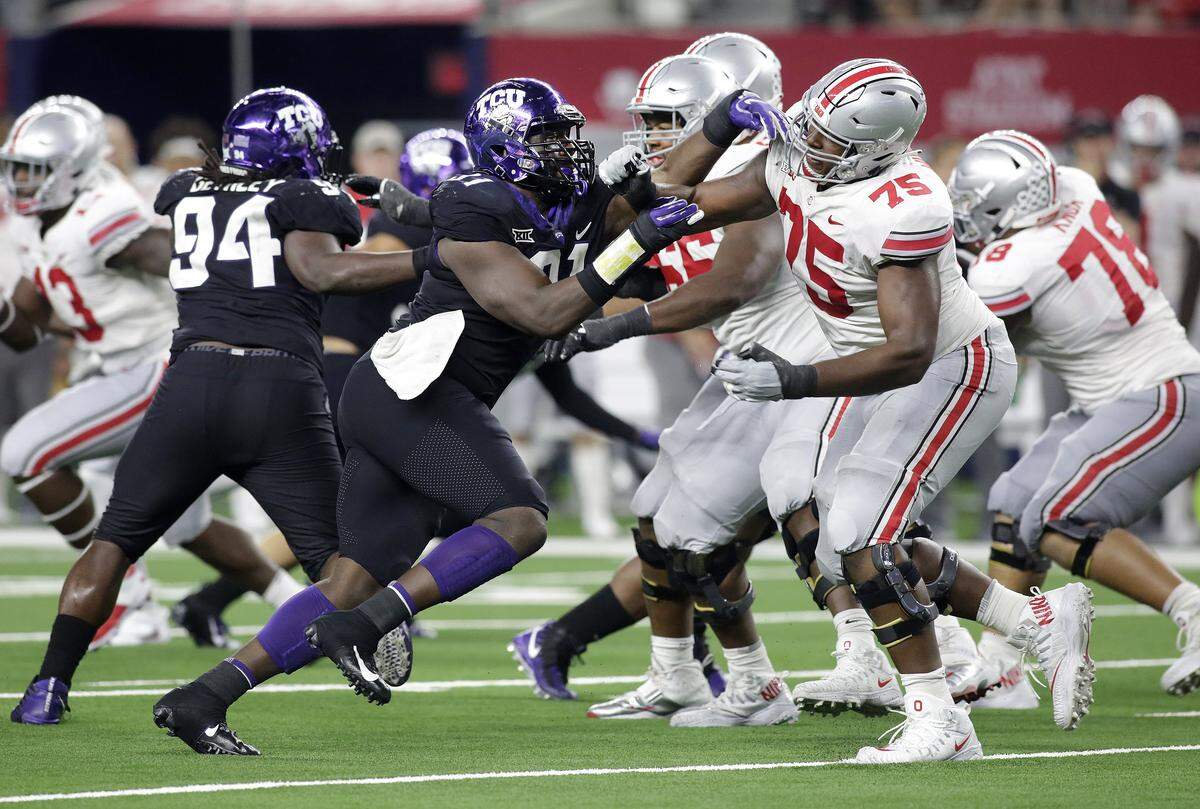
Since then, TCU has played three ranked nonconference opponents. In 2010, it defeated No. 24 Oregon State at AT&T Stadium en route to the Rose Bowl. In 2013, it lost to No. 12 LSU; in 2018, it lost to No. 4 Ohio State. Both also at Jerry World.
When SMU comes to Fort Worth on Sept. 20, it’s doubtful the Mustangs will be back in the Top 25.
This is part of a business model that has worked for TCU’s regular-season record, but increasingly frustrates fans who want to see a decent matchup in September.
Starting with its 2025 home opener against Abilene Christian on Saturday night in Fort Worth, do not expect this model to change.
The future of nonconference scheduling
We are in an era of college football where filling the stadium is actually taking a priority over winning the game, particularly in TheBIGSEC10. Texas played at Ohio State. Michigan played at Oklahoma. Wisconsin at Alabama.
Broadcast rights partners want matchups people will watch. Conferences now all but mandate you have to play “somebody” in nonconference other than tri-directional schools.
Because college football will always be a rigged deck, even this measure favors the Big Ten and the SEC.
Those aforementioned “name” nonconference games feature the Big Ten vs. the SEC, the conferences with the best chance for playoff spots. A loss here or there in those games is not catastrophic, plus it gives those teams the best chance to cram massive stadiums that were built long before the concept that a cellphone could affect attendance.
Stuck in this altered way of scheduling are the ACC and Big 12. Teams in those conferences want to fill stadiums, too, but a nonconference loss can be a bomb to their playoff chances.
TCU’s future outside of the Big 12
TCU’s future nonconference opponents look like they have for the past decade-plus. Arkansas State, Stanford, Sam Houston, Duke, Purdue, Southeastern Louisiana and Texas State are all signed for future dates through 2030.
“It’s [former TCU director of athletics Jeremiah Donati’s] strategy, and I agree with it. You get Duke, Stanford and North Carolina or Purdue and hope they’re in the top 50 when the game is there,” TCU director of athletics Mike Buddie said in a phone interview. “If the College Football Playoff selection comes down to strength of schedule, that game is not going to kill you.
“Everyone plays an FCS opponent, and as I see it, you want a Group of Five, and Power Four opponent that you feel that eight out of every 10 years is winnable, and set your sights on winning the Big 12 title.
“I think we need to get marquee opponents to come to Carter Stadium, but you are better positioned to do that if you get to Big 12 title games.”
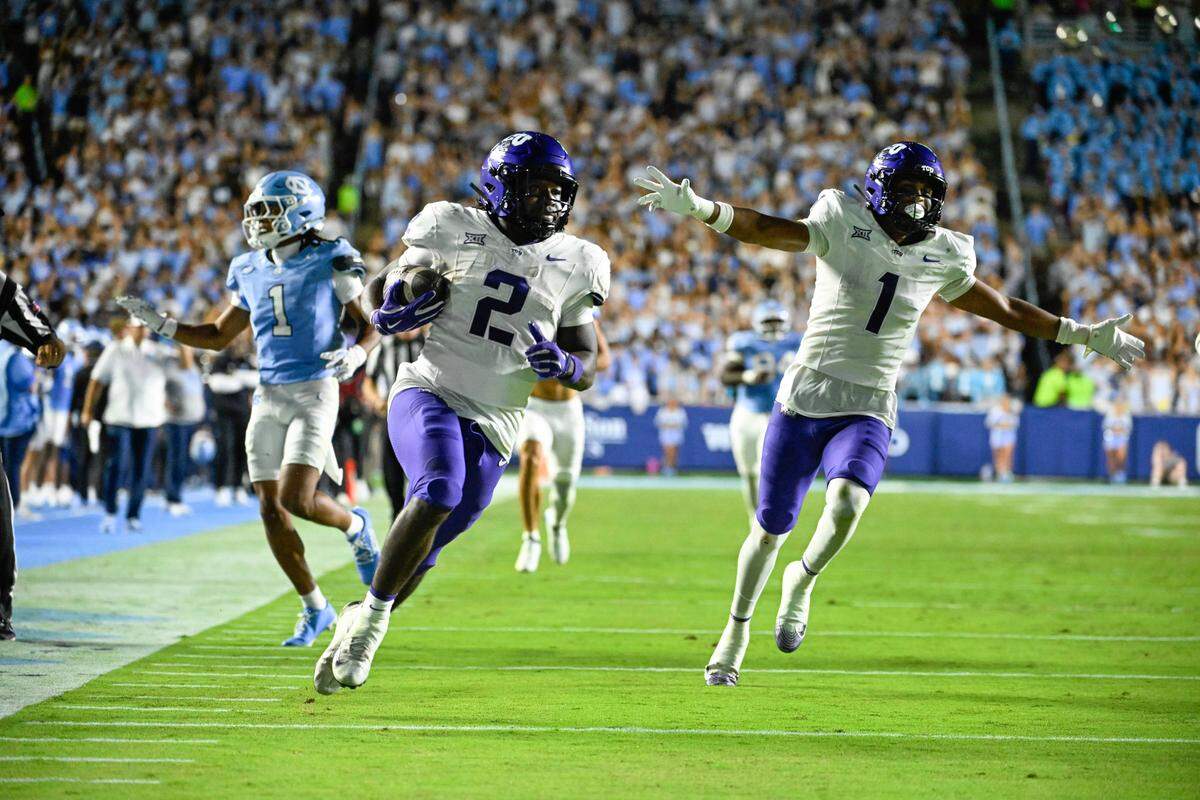
When TCU agreed to move its 2026 home date against North Carolina to Dublin, Ireland, it left a lot of fans irate that a decent non-conference date was moved across the pond, which requires a significant amount of money to watch in person.
TCU moved the game because of the potential exposure on the ESPN telecast; TCU will be one of the few teams to play that day.
TCU made similar decisions regarding its scheduled home-and-home series with LSU in ‘13, and Ohio State in ‘18. The respective programs agreed to reduce it to one neutral-site game.
TCU received a nice check in return, and the coaches didn’t have to play a non-conference game it wanted to avoid.
When TCU announced it would pause its series against SMU, TCU coach Sonny Dykes said the reasoning was a “business plan.”
It’s the same plan embraced by a lot of people in his position, including his predecessor. Gary Patterson should teach a college philosophy course on “The Fake Hard Game.” He learned from the master, former Kansas State head coach Bill Snyder.
TCU didn’t want to play road games against teams outside of the Power Four. At the time of the announcement, SMU was a Group of Five school.
Patterson and Snyder would often say “fans want those games,” but what they really want are nine or 10 wins at the end of the season.
Patterson would find the power conference school at the bottom of the standings, like Virginia. In 2009, he agreed to a $1 million “buy game” at Clemson; at the time Clemson was not Clemson. And he was 100 percent confident he had the better team.
The game wasn’t even televised, and on a rainy day, TCU won 14-10.
When TCU was in the Mountain West, it had a home-and-home series against Baylor. TCU has also scheduled Stanford and Arkansas in non-conference games; neither team was ranked when they played.
Colorado, Deion Sanders drew record crowd
Most recently, it added a home-and-home against Colorado when it was in the Pac-12. That’s the one that turned out to be something it was never intended to be. Through a series of unexpected circumstances, when Colorado came to Fort Worth to start the 2023 season, it was one of the most watched non-conference games that year.
First-year Colorado head coach Deion Sanders brought a level of attention, and talent, that TCU did not expect when it agreed to the series. The afternoon and atmosphere was the best of college football. The game was exciting, and TCU lost by three points.
TCU finished that season one win shy of bowl eligibility, the season after it reached the national title game.
Also of note, the crowd that day was 53,294, a stadium record.. It’s one of the few times this century a non-conference game at Amon G. Carter Stadium was full.
This story was originally published September 13, 2025 at 10:19 PM.