Q&A with IndyCar’s James Hinchcliffe: From close loss at TMS to honoring late father
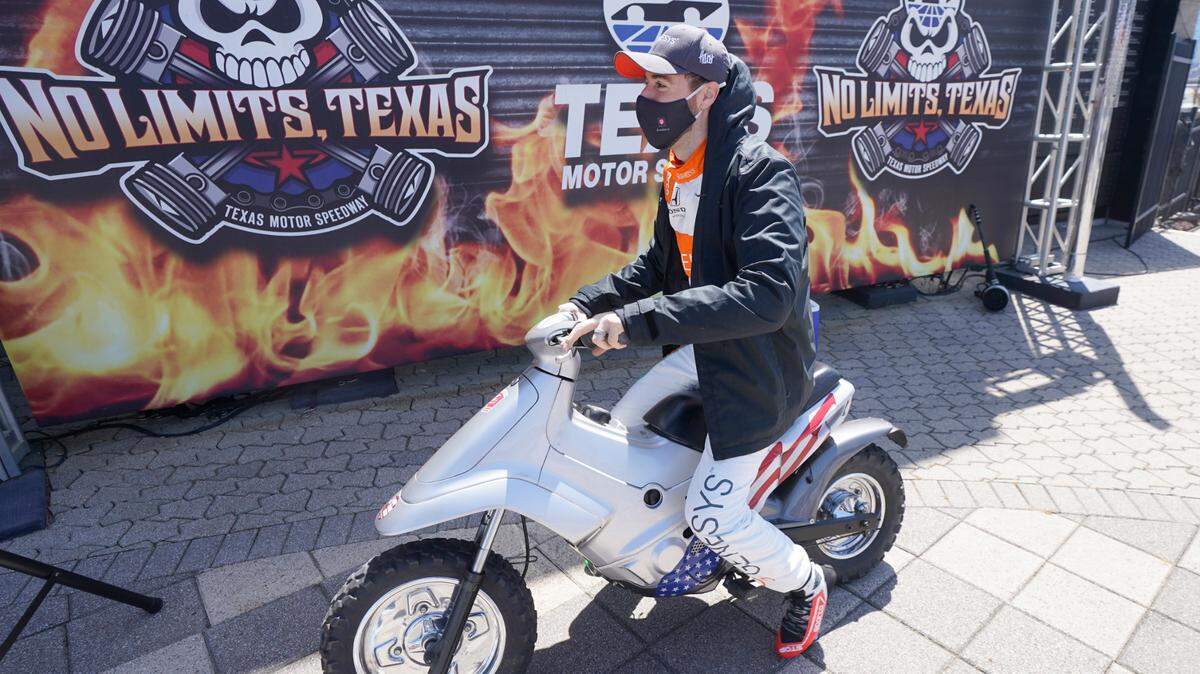
Five years later and James Hinchcliffe still hasn’t lost much sleep over being on the wrong side of the closest race in Texas Motor Speedway history.
The 2016 IndyCar race ranks as one of the most memorable for multiple reasons. This is the race that had a 76-day delay, starting in June and then being in a “rain delay” until August. It was a photo finish at the end with Graham Rahal winning by eight-thousandths (0.008) of a second over Hinchcliffe. Third-place finisher Tony Kanaan was just 0.0823 seconds behind.
“I remember coming back in August to finish what we started,” said Hinchcliffe, who gained fame later that year as a contestant on “Dancing with the Stars.” “It was so bizarre showing up, getting 10 minutes of practice and then going straight to a race. It was one of the weirdest things for us.
“I’ve probably watched that clip 100 times and it still makes the hair on my neck stand up. It was such a fun race with Tony and Graham there. There’s no doubt we were absolutely gutted to lose that one by that margin, but in all the times I’ve watched it, there’s nothing that I could’ve done differently.”
That is the closest Hinchcliffe has come to winning at Texas in 10 IndyCar starts. He’s ready to take another shot at it this weekend with a doubleheader event. The Genesys 300 is set for 6:45 p.m. Saturday followed by the XPEL 375 at 4:15 p.m. Sunday.
Hinchcliffe, who is driving the No. 29 Genesys Honda for Andretti Autosport, touched on a number of topics during an interview with the Star-Telegram this week.
You’re driving a car sponsored by Genesys, the title sponsor of Saturday’s race. Does that add a little extra motivation to win it?
“For sure. It’d be extra cool to be in Victory Lane for a race your title sponsor is the race’s presenting sponsor. We’ve wanted to put on cowboy hats and fire six-shooters for a long time now. With it being the Genesys 300, it would make that feeling a little sweeter.”
A big question coming out of the test at Texas last month was the high-groove between Turns 1 and 2. Is it still too slick to run multiple lanes?
“At the test, it was certainly too slick. Part of the point of the test was to go there and try a couple aerodynamic configurations that the series mandates to see if we can add some downforce and make these things a little easier to run up there. It was definitely tricky at the test, but the hope is that once we’re all out there running together through the 75-minute window of practice that we can lay some rubber up there and slowly make the second lane come in.”
Another question throughout the sport is the lack of ovals on the schedule. Should IndyCar keep coming to ovals such as Texas?
“What makes the IndyCar Series so cool is the diversity in the tracks. The versatility it takes as a driver and a team to be successful in this championship. You have to master a bunch of different crafts. Racing on road courses is different than racing on street courses which is different than racing on short ovals which is different than racing on a super speedway. Being good at all those things is really hard. I think that’s what separates the IndyCar Series. You look at the development of the calendar over the last few seasons, you understand why it’s shifted the way it has.
“I’ve heard quotes and seen articles very recently that IndyCar is constantly assessing venues and the goal is to get the balance a little more even across the different types of tracks and get a couple more ovals on there. It’s great that Texas is still a part of it and has been a part of the championship for such a long time. Hopefully that one stays for much longer. We’d love to see a few more added to the mix too.”
Finally, you recently posted on social media a picture of your helmet with a mustache decal as a way to honor your late father Jeremy who passed away earlier this year. What does that gesture mean to you?
“My dad was the reason I got into racing. He was the guy who got me to fall in love with the sport. We started traveling around the country go-kart racing when I was 9 years old. He was with me every step of the way, all the way up to IndyCar. It’s been so weird not being able to have him at the race track. I figured that was a cool way to have him with me the whole time.
“He was larger than life. He was a big personality and really well known around the paddock. He always had his signature mustache — that made him pretty identifiable. That was the most appropriate thing to throw on there and remember him by.”