
Star-Telegram endorsement: Tarrant’s oddly timed Texas Senate election | Opinion

Everything about the special election for a Tarrant County seat in the Texas Senate is unusual — the timing, the first-time candidates for state office and, increasingly, the potential outcome.
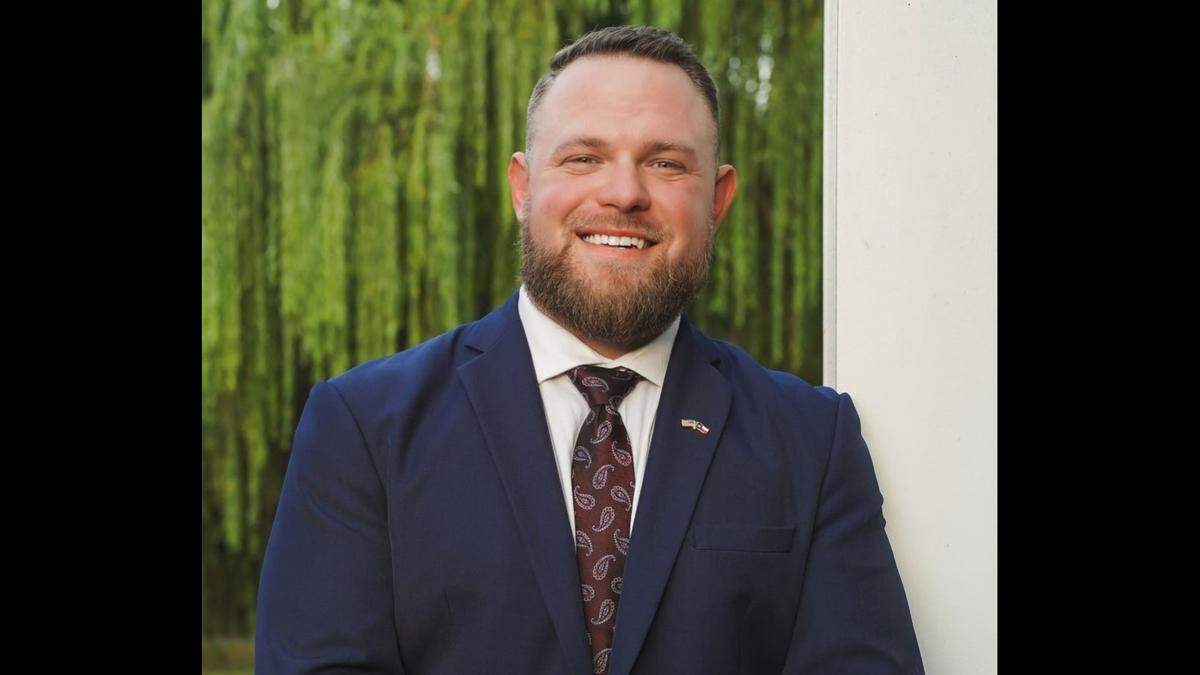
Democrat Taylor Rehmet led the first round of voting despite the fact that District 9, covering much of north and west Tarrant County, is solid Republican turf. That was largely because two Republicans split the vote. But Rehmet came close to winning outright, and he’s got a chance to pull off an upset in the runoff against Republican Leigh Wambsganss.
That would be the best outcome for Fort Worth. It’s not that the winner here, whose term will end in early 2027, will sway important legislation. It’s likely that Rehmet or Wambsganss won’t cast a single vote in the Senate, which doesn’t meet this year, until after one of them is elected to a full term in the fall.
A Rehmet victory, though, would send an important message to the Texas and Tarrant County Republican parties: Enough.
Rehmet, a union leader and aircraft machinist, has focused his campaign on economic and quality-of-life concerns. We don’t agree with him on any number of specific issues. But he’s more in tune with everyday voters’ concerns: the price of groceries, the availability of reasonably priced housing, the quality of public schools and the length of their commutes.
He’s not bucking his party on social and cultural issues. But he seems to recognize that they eat up far too much of our political oxygen as serious economic issues stack up.
And if Rehmet, 33, should pull this off, it will be a clear signal to the GOP that it is in danger of going too far to the right and ignoring the needs of Texans beyond the narrowest Republican base. By nominating Wambsganss, a 58-year-old Southlake resident, the party embraced its conservative id. She’s a long-tenured and successful activist who, until launching this campaign, was an executive at Patriot Mobile, the Christian-themed cellular company, and a leader in its political activities.
Texas Republicans need a jolt, a reminder that they should prioritize the biggest concerns of Texas families: education (not just school vouchers), health care (not just restrictions on abortion and gender care) and housing (not just cutting property taxes).
Wambsganss has shown the potential to be an effective senator. She has important connections, including the ear of Lt. Gov. Dan Patrick, and she seems to understand that representing nearly a million Texans is different from being a partisan agitator.
If she wins — and the math is still in her favor — we hope she’ll remember that she has to be a senator for Fort Worth and other communities in the district, not just northeast Tarrant County, the power center of the local GOP.
Wambsganss and other Republicans have expressed concern that voters are confused by a late January election taking place even as other candidates battle in partisan primaries. Between that and a winter storm’s potential to dampen early voting, this special election bears watching for its political impact, if not as much for what the officeholder will do.
After all, the main task for either will immediately become to win in November; Wambsganss and Rehmet are unopposed in their party primaries and will face off again for a full-year term.
For now, the winner will complete the term of former Sen. Kelly Hancock, the Republican who resigned to become acting comptroller and run for that office.
Voters in the district can cast ballots at any county location. Early voting began Jan. 21 and ends Jan. 27. Election Day is Jan. 31.
BEHIND THE STORY
MOREHey, who is behind these endorsements?
Members of the Editorial Board, which serves as the Fort Worth Star-Telegram’s institutional voice, decide candidates and positions to recommend to voters. The members of the board are: Cynthia M. Allen, columnist; Steve Coffman, editor and president; Bud Kennedy, columnist; and Ryan J. Rusak, opinion editor.
Read more by clicking the arrow in the upper right.
How does the process work?
The Editorial Board interviews candidates, asking about positions on issues, experience and qualifications, and how they would approach holding the office for which they are running. Board members do additional research on candidates’ backgrounds and the issues at hand. After that, members discuss the candidates and generally aim to arrive at a consensus, though not necessarily unanimity. All members contribute observations and ideas, so the resulting editorials represent the board’s view, not a particular writer.
How do partisanship and ideology factor in?
We’re not tied to one party or the other, and our positions on issues range across the ideological spectrum. We tend to prefer candidates who align with our previously stated positions, but qualifications, temperament and experience are important, too.