Texas Senate District 9 runoff voter guide: Taylor Rehmet vs. Leigh Wambsganss
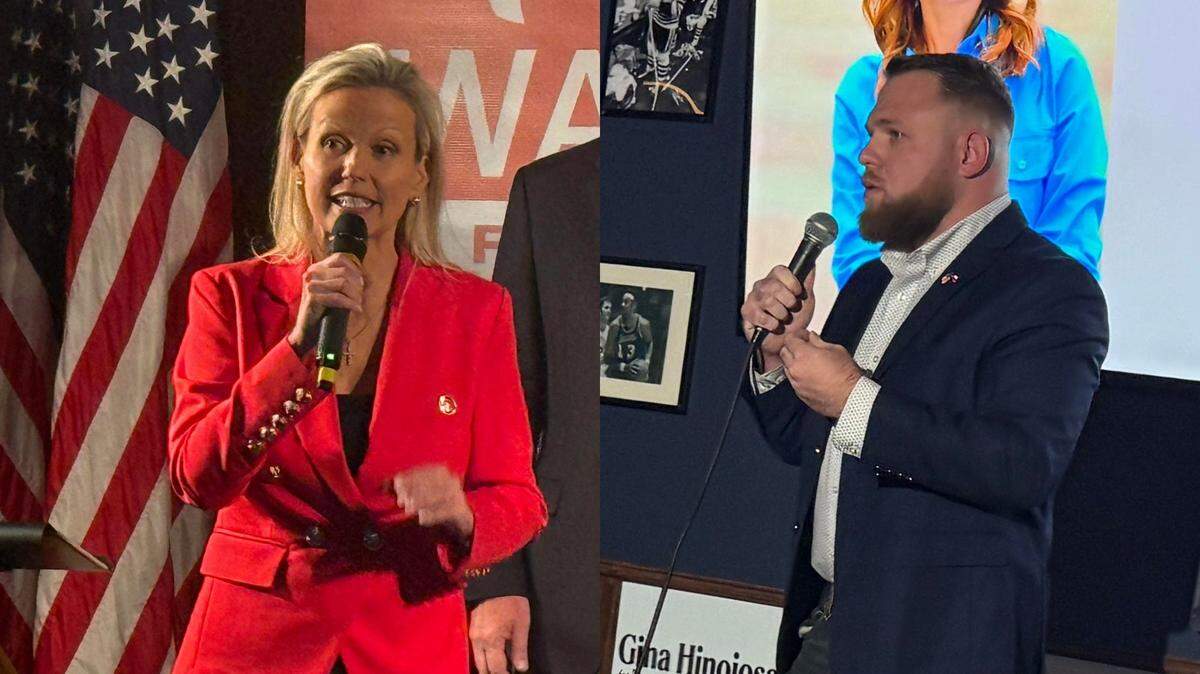
Voting begins Wednesday in a special election runoff for Senate District 9 between Republican Leigh Wambsganss and Democrat Taylor Rehmet.
The candidates are vying to replace Sen. Kelly Hancock, who now serves as acting Texas comptroller. Hancock’s exit from Austin prompted a special election to fill the remainder of his term.
Rehmet and Wambsganss advanced from the first round of voting in November as the top two vote-getters, but neither secured more than 50% of votes, moving the race into a runoff.
Early voting starts Jan. 21 and runs through Jan. 27. Election Day is Jan. 31.
The winner will hold the office until January 2027, when the winner of a November general election takes over. (Both runoff candidates are running in the November 2026 race.)
Senate District 9 covers much of northern and eastern Tarrant County.
Here’s how the candidates responded to the Star-Telegram’s candidate questionnaire. The responses have not been edited.
Taylor Rehmet
Age (As of Jan. 31, 2025): 33
Campaign website: www.taylorfortx.com
Best way for voters to reach you: info@taylorfortx.com
Occupation: Aircraft Mechanic
Education: Garland High School, United States Air Force
Have you run for elected office before?
No
Please list the highlights of your civic involvement/activism.
United States Air Force Veteran
President, IAM Local 776
President, IAM State Chapter
(International Association of Machinists and Aerospace Workers Union)
Vice President, Texas AFL-CIO, IAM
Have you ever been arrested, charged with a crime or otherwise been part of a criminal proceeding? If yes, please explain:
No
Have you been involved in a civil lawsuit or bankruptcy proceeding? If yes, please explain:
I previously owned a small business and was the plaintiff in a civil suit against a former client. The court ruled in my favor, I was awarded judgment and the matter is fully resolved. I have never filed or been involved in any bankruptcy proceedings.
Why are you seeking this office?
I’m running for Texas Senate District 9 because a state as strong as Texas should work for the people who make it strong. Today, too many working families are priced out, ignored, and dismissed while the Legislature bends to wealthy interests and partisan extremes. I believe Texas can be affordable, fair, and rooted in common sense but not without leaders willing to fight for it. As a veteran and union president, I’ve learned that real leadership starts with listening and ends with delivering. When elected, teachers, nurses, first responders, small businesses, and community advocates will have a seat at the table. My job will be to bring their lived experience into the Capitol and make it count on the senate floor.
This race is about public schools, basic freedoms, wages, healthcare, and dignity and whether working people get a fair shot.
If elected, what would your top 3 policy priorities be?
First, we must get serious about affordability. Families are being crushed by rising property taxes, increasing rents, higher home and health insurance rates and grocery cost. Too many folks are being priced out of the communities they call home. I’ll work to rein in costs, strengthen protections for homeowners and tenants, and make sure every Texan can count on stable, affordable housing.
Second, we must fully fund our public schools and make Texas a national leader in teacher pay. Our kids deserve safe classrooms, smaller class sizes, and the best teachers we can give them. That starts with respecting educators and paying them like the professionals they are.
Finally, I will champion the dignity of work. As a union president, I’ve fought to raise wages, improve safety on the job, and protect working families. And I’ll do the same in Austin. We need policies that ensure every Texan can earn a living wage, support their family, and retire with security.
What are the biggest challenges facing Senate District 9? How would you address them?
North Tarrant families are feeling squeezed from every direction from rising property taxes, skyrocketing housing costs, predatory toll road pricing and a legislature more focused on culture wars than solving real problems. We’ve even seen reckless attempts to split Keller ISD for political gain, threatening to further destabilize our public schools. I’ll focus on bringing costs down and putting working-people first. That means delivering sweeping property tax relief, reining in toll road abuse, and fully funding public schools so every child has a fair shot at success. And I’ll put an end to corporate welfare by making sure companies that get tax breaks actually create good-paying, livable-wage jobs with transparency and accountability every step of the way.
How will you measure your success as a state legislator?
If the rich and powerful are frustrated and working families are thriving, I’ll know I’ve done my job.
Why should voters choose you over your opponent?
I’m the only candidate who can say my entire career has been about fighting for working people, not pandering to political extremes. Whether it was during my time in the Air Force working on B-52 bombers making sure my line crews and pilots had what they needed to complete the mission, or as a union president sitting at the bargaining table and going toe-to-toe to win fair pay and protect workers’ rights, I’ve always show up for regular folks just trying to make ends meet. I’ll work to bring down the cost of living, crack down on corporate welfare, expand access to health care, make sure veterans are afforded the dignity they deserve while protecting our everyday freedoms from government overreach. This race is about who will put people over politics and special interest.
Who are your top three campaign contributors? Please explain how much and in what ways they’ve contributed to your campaign and any affiliations you have with each person and/or group.
Our campaign has been powered overwhelmingly by working people and grassroots supporters. I’m proud to have strong backing from my union brothers and sisters, as well as community leaders like Tomas Torres and Daniel Coucanougher, who believe deeply in building a Texas that works for working families. What you won’t find in this campaign is corporate PAC money, special-interest checks, or influence-buying investments. We made the choice from day one to reject corporate interest money because the people who keep this state running deserve a senator who is accountable to them not to corporations or political gatekeepers.
What role do interest groups play in your campaign, and what role would they play in your work as a state senator?
My campaign isn’t run by interest groups, and it isn’t for sale, but my door is open.
As a state senator, my office will welcome anyone working in good faith to make Texas a better place for all people. I believe in listening, learning, and engaging with advocates, workers, experts, and community organizations who bring honest questions, real data, and fact-based solutions to the table. Good policy is informed by transparency, evidence, and science, not ideology or pressure. What I will not allow is big business or special interests to buy influence or write policy behind closed doors. Meetings don’t come with promises and donations don’t buy access. My responsibility is to weigh every idea against a simple standard, does this help everyday Texans? Collaboration can make government stronger. Being bought makes it weaker. I’ll always choose open discussion, public accountability, and the people I represent over power or profit.
The winner of the special election will finish out the remainder of former Sen. Kelly Hancock’s term, and may or may not be reelected for a new term that starts in January 2027. If elected, how would you make the most of the next year in office, especially since the Texas Legislature is not in session?
While the Legislature may not be in session, the work of an elected official should never stop. I’ll spend that time in the district, not in Austin, listening, holding town halls, visiting worksites, small businesses, schools, and hospitals and meeting directly with the people who live the successes and consequences of state policy every day. Good legislation starts with listening. I’ll use my year to build bipartisan relationships, study the issues that matter most to working families, and draft serious, ready-to-file legislation so that when the gavel drops in 2027, we’re prepared to move immediately. I’ll also make my office a resource year-round helping constituents navigate state agencies and cutting through red tape that too often leaves people stuck. Government shouldn’t go quiet just because the Capitol does.
What’s an issue you’d like to see state lawmakers study in the interim, ahead of the 2027 legislative session? Why?
I would prioritize an interim study on the rapid expansion of data centers in Texas.
These facilities are being built quickly, often with little public input, and we haven’t fully examined the strain they place on local resources. Especially water, energy, and infrastructure. Communities deserve clear answers before growth outpaces planning.
I’m not anti-technology or anti-progress. Texas should lead the future. But progress has to come with accountability. We need to know who benefits, what jobs are created, and whether local communities are seeing long-term economic returns or just higher utility bills and stressed systems.
An interim study would give lawmakers the data to set smart guardrails ensuring data centers pay their fair share, protect local resources and farmers while meaningfully investing in the communities they operate in. Growth should lift Texans up not leave them footing the bill for someone else’s profits.
As a state senator, how would you interact and work with members of the opposite party? Are there specific policy ideas where you see opportunities for bipartisanship?
I’ll work with anyone who’s serious about improving Texans’ lives. Bipartisanship isn’t about watering down values, it’s about solving real problems. During the 89th, lawmakers should have focused on basic, bipartisan solutions. During the regular session, I testified in support of HB1078 by Rep. Turner, a simple, low-cost bill to help veterans get access to their benefits. Another bill, HB 1042 by Rep. Bhojani, would have made it easier for homeless Texans to get an ID, the first step toward work, housing, and stability. Both died in committee. Instead, the Republican-led legislature chose culture wars and political theater. During the special sessions, the priority should have been delivering relief to Kerr County and the Hill Country after devastating floods not rigging maps or scoring partisan points. I’ll always extend a hand across the aisle but I won’t abandon common sense, honesty and working people. Texans need lawmakers who show up, roll up their sleeves and do the work.
What education policies, if any, should the Texas Legislature pass when they meet in 2027 and why?
The first event of 2026 my campaign hosted was a roundtable with educators from across SD9. Teachers, counselors, and school staff didn’t talk in talking points. They talked about overcrowded classrooms, shrinking resources and the reality of being asked to do more with less. That conversation should guide education policy in 2027. The Legislature must increase per-student funding to keep up with inflation, reduce class sizes, and provide the services students need. We must also raise teacher and staff pay as a permanent investment, not a one-time bonus. If we want strong schools, we have to support the people inside them. I strongly oppose school voucher schemes that drain resources from neighborhood public schools with no accountability. We should expand career and technical education, strengthen special education, and ensure students graduate with pathways to opportunity.
What, if anything, should the Texas Legislature do to address costs of living when they meet in 2027?
The Texas Legislature must treat the cost of living as the urgent issue it is. That starts with lowering everyday costs Texans can’t avoid like housing, utilities, health care, auto and home insurance and property taxes. We need real property tax relief that doesn’t just shift the burden onto renters and local governments, stronger oversight of utility providers to prevent price gouging and investments that stabilize, not spike, energy and water costs. We should also raise wages by strengthening workforce training, protecting workers’ rights, and ensuring Texans can earn a living wage without working multiple jobs just to get by. Expanding access to affordable health care would immediately lower costs for families and small businesses. Too often, lawmakers talk about the cost of living while siding with the corporations driving it up. In 2027, we should be focused on one simple question: is this making life more affordable for working Texans? If the answer is no, it’s not good policy
Is eliminating school property taxes for homeowners achievable and something you’d support? Why or why not, and what plan do you propose to achieve their elimination or as an alternative?
Eliminating school property taxes for homeowners is achievable if the state is willing to do its job and stop subsidizing the wrong priorities. Texas has pushed too much of its responsibility for funding public education onto homeowners. Relief requires the state fully funding the maintenance and operations of public schools. That starts by ending private school voucher schemes and reinvesting those dollars into neighborhood public schools. We also need to be honest about revenue. Texas hands out billions in tax abatements and incentives to mega-corporations that often fail to deliver lasting benefits to local communities. Tightening accountability, closing loopholes, and ending wasteful corporate handouts would generate revenue without raising taxes on working families. I support reducing, and ultimately eliminating, school property taxes for homeowners, but not at the expense of public schools. Tax relief means fixing the system, not shifting the burden onto everyday Texans.
Leigh Wambsganss
Age (As of Jan. 31, 2025): 58
Campaign website: www.leighfortexas.com
Best way for voters to reach you: info@leighfortexas.com
Occupation: Executive and Business Owner
Education: B.A. Communications – University of Central Oklahoma M.A. Organizational Management – Dallas Baptist University
Have you run for elected office before?
I was an elected Tarrant County GOP Precinct Chair for approximately 20 years.
Please list the highlights of your civic involvement/activism.
I served for 20 years as a GOP Precinct Chair, state delegate, and co-founded the Republican Women of North Texas. I worked with legislators on Texas power grid reform, defended Second Amendment rights, and fought for women by advancing the Texas Women’s Privacy Act. Because I believe pro-life advocates need to be the hands and feet of Jesus to those in crisis pregnancies, I served as a volunteer for and on the board of Mercy House Ministries, a nonprofit maternity home that provides hope and help to single pregnant women. I currently have the privilege of serving on the CRC board, providing aid to thousands of Tarrant County families. I have dedicated my career to fighting for families, conservative issues, and Texas values.
Have you ever been arrested, charged with a crime or otherwise been part of a criminal proceeding? If yes, please explain:
No
Have you been involved in a civil lawsuit or bankruptcy proceeding? If yes, please explain:
Yes. I believe the truth matters, even when it’s uncomfortable. After I brought to light accurate information about a candidate’s criminal record, I was frivolously sued in an attempt at intimidation. However, the court dismissed the case and confirmed the facts, and the plaintiff was ordered to pay my legal fees. Experiences like this reinforce why honesty and accountability are so important in public service, and they’re values I’ll carry with me to the Texas Senate.
Why are you seeking this office?
SD 9 needs a fighter, someone who will represent their interests and values, not someone who is going to grow government and tax people out of their homes. This District is a strongly conservative one. They deserve a Senator who shares their conservative values. There is a real difference between me and my opponent. I worked three jobs to put myself through college, started with nothing, and built success through grit and hard work. Coming from nothing and becoming a successful business owner, I know low taxes, smart deregulation, and strong job creation are key to keeping North Texas affordable and prosperous. I have dedicated my adult life to championing conservative policy and legislation; leading grassroots movements, advancing pro-life and Second Amendment causes, protecting parental rights, lowering taxes, increasing school safety and advocating for domestic energy. Common sense solutions do exist, but it requires an experienced legislator who has been in the trenches.
If elected, what would your top 3 policy priorities be?
Texans need meaningful property tax relief, and they need it quickly. Far too many hard-working Texans are being priced out of their homes. Nobody should have to decide between paying their taxes and putting food on their family’s table. We must increase the homestead exemption significantly, and Texas legislators cannot make real headway on this issue if they are unwilling to cut unnecessary spending and government waste that prolongs our reliance on property taxes. I believe that every child has a right to a good education, and every teacher deserves a fair wage. These kids are our future. We must fully fund education and empower parents to do what they believe is right for their kids. I support bail reform so repeat violent offenders are not allowed back into our communities to victimize innocent citizens. As the daughter of a former police officer, we must support our law enforcement and firefighters so that they have the tools they need to protect Texas families.
What are the biggest challenges facing Senate District 9? How would you address them?
There are all or part of 23 cities and 13 school districts in SD9 and it doesn’t matter what city I am in, property taxes are always a top concern. When I started fighting for lower property taxes in the late 90’s, our Homestead Exemption was only $15,000. We have made progress since then, but more must be done. This district is growing rapidly, and we must ensure that our infrastructure can handle the influx of people moving to the district. This includes water, energy, and transportation. The traffic issue in this district is out of control. I look forward to working with TXDOT and our counties to make sure that we are making strong progress toward alleviating this issue and valuing the time of our constituents and businesses. Education is a statewide issue and we can do better. Every student has a right to a good education, every teacher deserves a fair wage, and every parent has a right to make educational choices for their children.
How will you measure your success as a state legislator?
Success will be measured by delivering tangible results to the people of this district. That means meaningful property tax relief, fully funded schools, and safe, prosperous communities.
Why should voters choose you over your opponent?
I am the only candidate in this race with over 30 years of hands-on experience in policy and legislative work. While my opponent does not understand how a private sector business operates, I have been a successful small business owner for 20 years. My opponent is supportive of California-style regulations that would close small businesses and cost tens of thousands of Texas jobs. I want to get government out of the way so Texas businesses and families can succeed. We must get past the political sound bites and give real property tax relief to Texas families. Meanwhile, my opponent’s platform would raise taxes and create socialist government controlled private property. I have been a Second Amendment advocate for decades, and my opponent’s positions would take guns away from law-abiding Texans. I am a battle-tested conservative who has gotten results for years. I believe the voters will see that my experience, qualifications, and credentials make me the best suited to serve SD9.
Who are your top three campaign contributors? Please explain how much and in what ways they’ve contributed to your campaign and any affiliations you have with each person and/or group.
Texans United for a Conservative Majority: $402,829.50 ($150,000 this election)
Texans for Lawsuit Reform: $363,250.00 ($250,000 this election)
Bryan Bradford $50K & Randall Cate $50K)
Texas Senate Leadership Fund: $363,250.00
I have over 500 contributions from voters all over Texas. These organizations have put their confidence in me to represent the values of the people of this state. Who I am and what I stand for has never been a secret, and these groups, and many others, are supporting me because they know I am a fighter and will fight for the values of the people of this district. I have received endorsements and campaign contributions from several organizations who have evaluated my positions and those of my opponent and determined that I am the best candidate for the position. Their endorsement does not mean that I endorse them. I pledge that my door will be open to listen and learn from everyone who desires to engage positively and to work on policy that will benefit Texans.
What role do interest groups play in your campaign, and what role would they play in your work as a state senator?
I have received endorsements and campaign contributions from a number of organizations who have evaluated my positions and those of my opponent and determined that I am the best candidate for the position. Their endorsement does not necessarily mean that I endorse them. To everyone, I pledge that my door will be open to listen and learn from everyone who desires to engage positively and to work on policy that will benefit Texans.
The winner of the special election will finish out the remainder of former Sen. Kelly Hancock’s term, and may or may not be reelected for a new term that starts in January 2027. If elected, how would you make the most of the next year in office, especially since the Texas Legislature is not in session?
This gives me time to truly begin work in Austin, fully engage in the Texas Senate’s interim committee process, and be better prepared for the start of the 90th Session in January 2027. The early start will enable me to open an office, hire staff, and listen to constituents and stakeholders to have proposed legislation ready to file before the end of the year.
What’s an issue you’d like to see state lawmakers study in the interim, ahead of the 2027 legislative session? Why?
Texas must continue taking steps to ensure our transportation infrastructure, energy, and water resources are robust enough to serve all Texans to accommodate growth. Additionally, Texas must never be subject to the chaos of an open border again, and we should be able to secure our border even when the federal government fails to do so.
As a state senator, how would you interact and work with members of the opposite party? Are there specific policy ideas where you see opportunities for bipartisanship?
I am happy to work with anyone who is reasonable and has the best interest of Texans in mind. I believe there is bipartisan work to be done to give the young adults of Texas early education, access, and exposure to the trades. The Texas Senate has a record of cooperation and professionalism among all members.
What education policies, if any, should the Texas Legislature pass when they meet in 2027 and why?
Texas has made great strides in education policy in the previous sessions; however, we must prioritize learning, not indoctrination, DEI, or divisive ideologies. Our schools need to be fully funded, and teachers need to be paid fairly and equipped with all the tools they need to educate and inspire the future leaders of this state.
What, if anything, should the Texas Legislature do to address costs of living when they meet in 2027?
The legislature must continue down the path of decreasing property taxes and increasing the homestead exemption. Texas must take a hard look at its spending, as well as removing unnecessary regulations and barriers to new market entrants that drive the cost of goods and services up for everyone.
Is eliminating school property taxes for homeowners achievable and something you’d support? Why or why not, and what plan do you propose to achieve their elimination or as an alternative?
Yes, I believe the elimination of school property taxes can be achieved through decreasing unnecessary government spending, raising the Homestead Exemption, compression, and responsible, prudent, planning.