
Ken Paxton drags TCU over Turning Point USA event. He forgot one crucial thing | Opinion
.JPG "Texas Attorney General Ken Paxton speaks against Republicans supporting Rep. Dustin Burrows in the Texas House speaker’s race at the headquarters for Texas Scorecard, a conservative think tank, in Leander, Tuesday, Jan. 7, 2025.")
AI-generated summary reviewed by our newsroom.
- Attorney General Ken Paxton targets private TCU over a Turning Point USA event.
- Paxton’s intervention is a hypocritical use of government pressure by the new populist GOP.
- Private universities retain scheduling control; state schools face stricter scrutiny.
We’re starting to wonder if Ken Paxton is pining for his college days at Baylor.
After all, the attorney general seems unusually engaged in just about every on-campus controversy and debate — or at least the ones where he finds political advantage.
This time, it’s TCU in the spotlight. Chloe Cole, who advocates against gender transition for minors, alleged that the university canceled a scheduled event planned by the university chapter of Turning Point USA, the organization founded by slain conservative activist Charlie Kirk. School officials say the event was never scheduled to begin with because it did not have a secure space available on relatively short notice. Paxton, a master of speaking boldly when he knows little, declared he would get to the bottom of this “free speech” issue.
We can’t believe we have to say this to a self-described conservative Republican, but: TCU is a private institution. It can welcome or reject any campus visitor or event, for any reason. It’s a different standard than the state-supported universities that have previously drawn fire.
Once upon a time, Republicans cherished that difference. Many stood up for the rights of private businesses or entities against what they saw as intrusive government.
These days, Ken Paxton is that intrusive government.
Republican populism flexes government power
As the GOP has moved inexorably in a populist direction, elected officials have increasingly sought to use the government power that they once feared to get the policy outcomes they desire — or simply to intimidate private institutions.
Paxton has taken this to a new level. Over three terms, he has morphed the job of attorney general into enforcer of whatever his political side wants at the moment. Republicans have developed grievances in recent years with technology companies, Big Pharma and, most recently, universities, including the University of North Texas. To be clear, many of these complaints have merit, and there’s a role for government to counter expansive corporate power.
The hypocrisy is inescapable, though: The party that ascended to majorities in no small part by bashing “frivolous lawsuits” decided by “activist judges” is more than happy to turn to the courts or hang the looming threat of litigation over schools and companies if they don’t get the outcome they desire.
It’s mobster government. Nice university you’ve got there; it would be a shame if anything happened to it.
Colleges, even private ones like TCU, must embrace free speech
TCU, like all colleges, should embrace and promote freedom of speech. Institutions of higher education must be vigorous promoters of a free-expression culture, and not just in narrow, legalistic ways. They should be devoted to the idea that unpopular ideas are often those that need the most vigorous defense. They should reject the heckler’s veto and counter the idea that speech, however noxious or even hateful, is equivalent to violence.
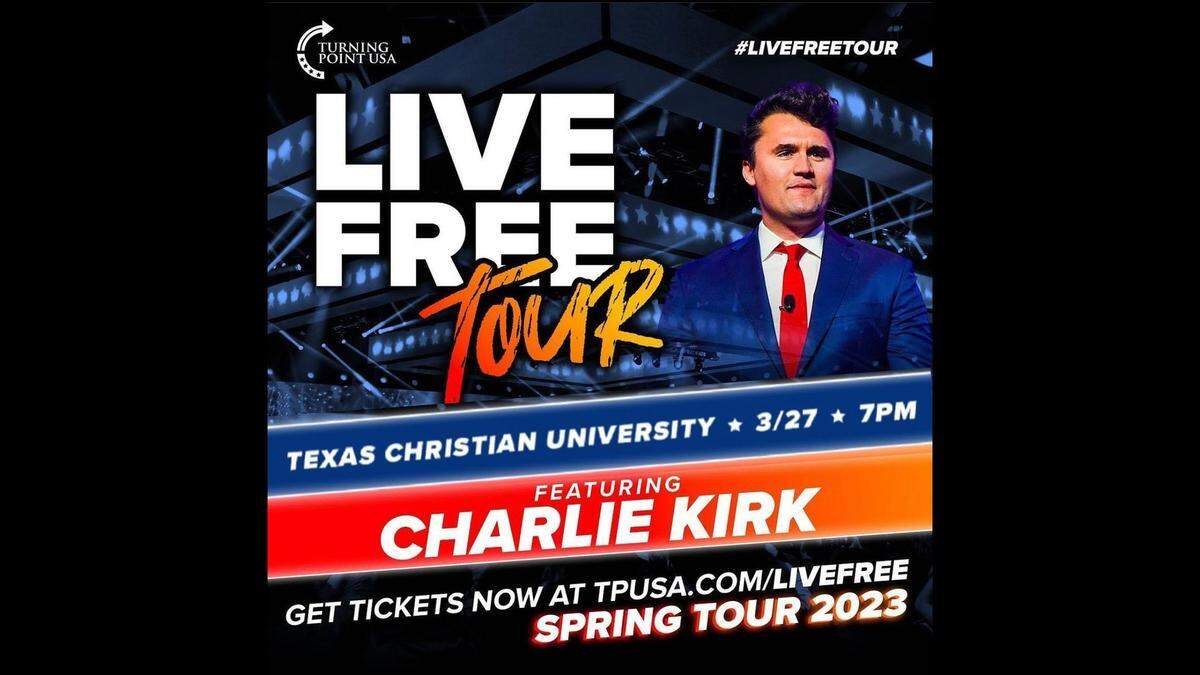
But in this case, there’s no evidence of anything other than a logistical issue. Kirk himself held an event on campus in 2023, and the Turning Point chapter had a memorial service for him after his assassination last month.
Perhaps university officials could have worked a little harder to find a space and fulfill the roles we describe above. But what happened is not a suppression of anyone’s rights, and it’s well within the university’s prerogative to control the scheduling of its facilities.
State universities have an obligation to be even more open, and elected officials should hold their feet to the fire. But private institutions — think hard, General Paxton, surely you still understand the difference — are more immune from government scrutiny.
But again, activists at all levels seem to be forgetting this distinction. Tarrant County Republican Party Chairman Bo French has been on a separate crusade against TCU, dropping “investigations” of the university’s diversity practices, its professors’ comments and whatever else he can find in an attempt to keep the outrage fire stoked.
French gets more attention for his ignominious comments about minorities, gay people and immigrants. Tarrant Republican leaders should ask tough questions about who’s doing the actual work of the party — raising money, winning campaigns and assisting with the conduct of elections — while French sticks his nose in so many other people’s business.
French and other critics of TCU like to drop the cliche that the university should remember what the “C” in “TCU” stands for. (Newsflash: If you’re the 18,000th person to post that thought on X, it’s not all that clever.) We’re not aware of a time when Jesus addressed the procedure of booking lecture halls. TCU’s history is largely secular, while still dedicated to Christian values. It’s not Baylor, no matter how much Paxton might want it to be.
The attorney general seems to be everywhere all the time. That’s one way to bolster his U.S. Senate campaign or distract from his personal and professional controversies.
It’s just a shame that so many institutions, especially private ones, must suffer in service to Paxton’s ambition.
BEHIND THE STORY
MOREHey, who writes these editorials?
Editorials are the positions of the Editorial Board, which serves as the Fort Worth Star-Telegram’s institutional voice. The members of the board are: Cynthia M. Allen, columnist; Steve Coffman, editor and president; Bradford William Davis, columnist and editorial writer; Bud Kennedy, columnist; and Ryan J. Rusak, opinion editor. Most editorials are written by Rusak or Davis. Editorials are unsigned because they represent the board’s consensus positions, not necessarily the views of individual writers.
Read more by clicking the arrow in the upper right.
How are topics and positions chosen?
The Editorial Board meets regularly to discuss issues in the news and what points should be made in editorials. We strive to build a consensus to produce the strongest editorials possible, but when we differ, we put matters to a vote.
The board aims to be consistent with stances it has taken in the past but usually engages in a fresh discussion based on new developments and different perspectives.
We focus on local and state news, though we will also weigh in on national issues with an eye toward their impact on Texas or the Dallas-Fort Worth area.
How are these different from news articles or signed columns?
News reporters strive to keep their opinions out of what they write. They have no input on the Editorial Board’s stances. The board consults their reporting and expertise but does its own research for editorials.
Signed columns by writers such as Allen, Kennedy and Rusak contain the writer’s personal opinions.
How can I respond to an editorial, suggest a topic or ask a question?
We invite readers to write letters to be considered for publication. The preferred method is an email to letters@star-telegram.com. To suggest a topic or ask a question, please email Rusak directly at rrusak@star-telegram.com.