
Texas colleges don’t need Abbott and Paxton’s meddling on free speech | Opinion
AI-generated summary reviewed by our newsroom.
- Texas officials like Ken Paxton and Greg Abbott overstep roles in campus disputes.
- University leaders face political pressure over speech policy amid cultural tensions.
- Efforts to censor gender discussions risk violating constitutional free speech rights.
College campuses are often ground zero in our battles over free speech rights and harassment, particularly on our most fraught cultural issues. And they frequently draw the attention of political leaders.
With tension rising after the assassination of Charlie Kirk, state officials are paying even closer attention. They have legitimate roles in the governance of taxpayer-funded institutions, of course. But Attorney General Ken Paxton’s job description does not include “dean of students.” Gov. Greg Abbott oversees state government broadly, but he is not a university president.
And we can think of few worse choices for making or enforcing campus speech policy than President Donald Trump.
Conservative ire over colleges dates back decades. Most recently it’s been aimed at political correctness, diversity initiatives and gender-identity issues.
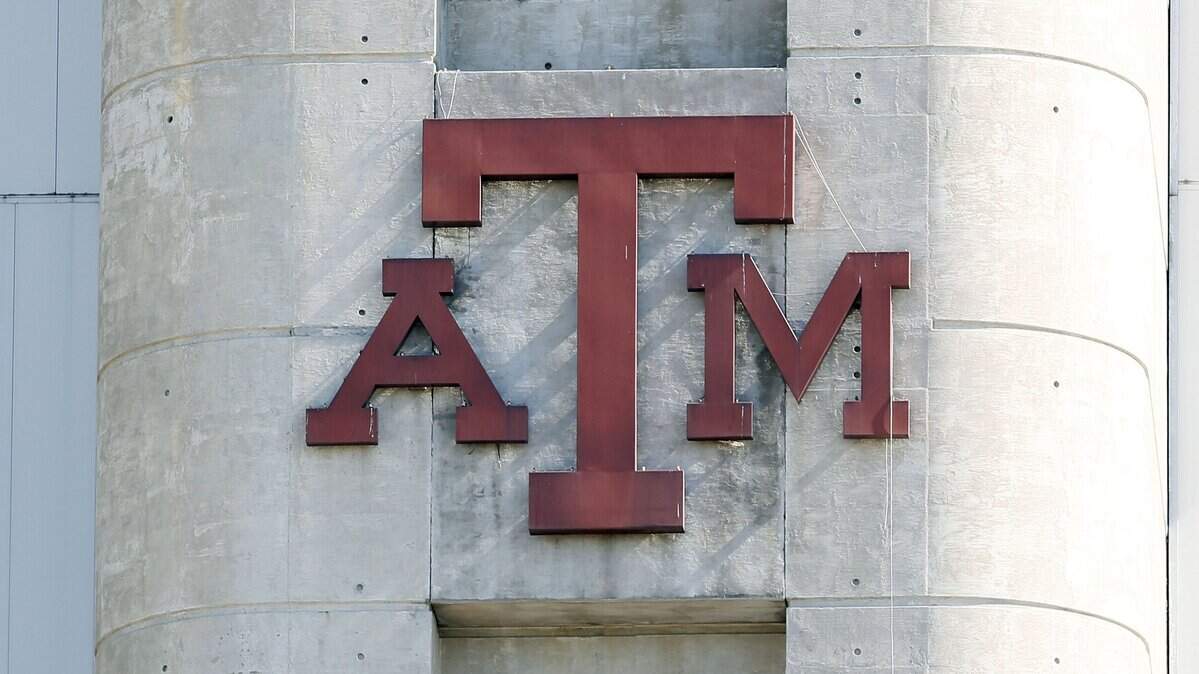
At Texas A&M University in College Station, video surfaced of a student complaining about a literature instructor’s discussion of gender issues in a class. She invoked Trump’s executive order setting federal policy as recognizing only two genders, contending that made the presentation illegal. We’ll get to that stunning leap of logic and evidence of poor civic education in a moment.
When Texas A&M leaders didn’t handle the situation to the liking of state Republican elected officials, the outcome was predictable and swift — A&M President Mark A. Welsh III had to resign.
At the University of North Texas in Denton, a heated discussion of Kirk’s killing arose among students before a class started. Wanting to get on to the work of the day, a professor asked a student who objected to what she saw as a celebration of the murder to leave. Paxton, alleging that only the conservative student was reprimanded, demanded university officials investigate further and provide him details.
If only people fighting tough battles over child support and open records — two actual functions of Paxton’s office — could so quickly get his attention.
And at Angelo State University, officials quietly barred discussion of gender identity from classes. Instructors were told to address a student only by their birth gender and name. Displays indicating a “safe space” for trans people were forbidden.
The flimsy legal reasoning is that Trump’s executive orders on the matter could cost the university federal funding; also cited were a new state law and an order from Abbott. Colleges have had to jump through hoops to comply with these decrees, and the Texas Tech System’s chancellor issued similar rules late Friday. That’s a troubling sign that most of the state’s public universities might follow.
It’s understandable that when state leaders or the president sneeze, university officials catch a cold. And they should comply with federal law and follow the will of the Legislature and elected state executives.
But when those officials, all of whom have better things to do, start examining individual cases of discipline and persecuting leaders who didn’t handle them quite like the politicians might have, higher education is bound to suffer.
Many Republicans who got elected talking about restraining government are eagerly flexing its muscle. Since the Kirk murder, many have taken an odd dual position on speech: Conservatives need to be protected to express opinions, and those who speak ill of Kirk may need to be driven off campus.
On gender issues, trying to prevent adults from even discussing a topic is a gross constitutional violation. There’s a difference between the steps taken to limit young children’s access to information about gender transition and trying to turn a campus into a pretend-land where trans people don’t exist.
As for Trump’s orders, the president’s powers to define some terms and limit certain considerations applies to federal agencies, not every public institution in America. If Republicans indulge an expansion of that, they will regret giving the presidency so much power — perhaps as soon as three and a half years from now.
And any college student who tries to dictate the content of a class by invoking a royal decree should immediately be enrolled in a remedial government course.
Where campuses went wrong in recent years was limiting speech, refusing to protect legitimate viewpoint expression and embracing “cancel culture.” The reaction is an overreach. The goal should be one all sides can embrace: Create an atmosphere that encourages debate and expression without threatening the rights of others.
Good parents who want to avoid raising “snowflakes” should recognize that the last thing they need is Ken Paxton as a surrogate helicopter parent.
Editor’s note: Updated Friday to reflect action in the Texas Tech University System.
BEHIND THE STORY
MOREHey, who writes these editorials?
Editorials are the positions of the Editorial Board, which serves as the Fort Worth Star-Telegram’s institutional voice. The members of the board are: Cynthia M. Allen, columnist; Steve Coffman, editor and president; Bradford William Davis, columnist and editorial writer; Bud Kennedy, columnist; and Ryan J. Rusak, opinion editor. Most editorials are written by Rusak or Davis. Editorials are unsigned because they represent the board’s consensus positions, not necessarily the views of individual writers.
Read more by clicking the arrow in the upper right.
How are topics and positions chosen?
The Editorial Board meets regularly to discuss issues in the news and what points should be made in editorials. We strive to build a consensus to produce the strongest editorials possible, but when we differ, we put matters to a vote.
The board aims to be consistent with stances it has taken in the past but usually engages in a fresh discussion based on new developments and different perspectives.
We focus on local and state news, though we will also weigh in on national issues with an eye toward their impact on Texas or the Dallas-Fort Worth area.
How are these different from news articles or signed columns?
News reporters strive to keep their opinions out of what they write. They have no input on the Editorial Board’s stances. The board consults their reporting and expertise but does its own research for editorials.
Signed columns by writers such as Allen, Kennedy and Rusak contain the writer’s personal opinions.
How can I respond to an editorial, suggest a topic or ask a question?
We invite readers to write letters to be considered for publication. The preferred method is an email to letters@star-telegram.com. To suggest a topic or ask a question, please email Rusak directly at rrusak@star-telegram.com.
This story was originally published September 26, 2025 at 4:28 AM.