
Getting Ken Paxton’s sermons out of Texas schools would answer our prayers | Opinion
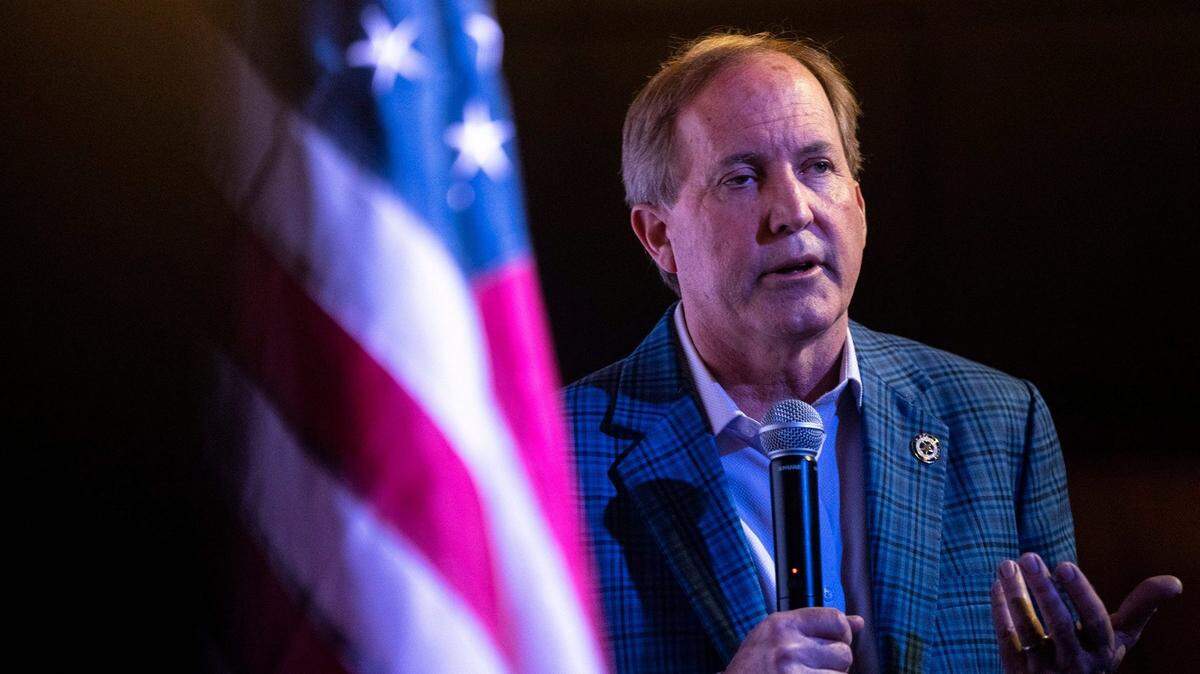
Public school students of all faiths have always been permitted to pray on their campuses. Surely, even those with no faith have found a brief dose of religion upon staring at a STAAR question that might as well be written in Aramaic.
The Republican-controlled Texas Legislature’s decision to add an optional “period of prayer and reading of the Bible or other religious texts” to the school day was wholly unnecessary. Senate Bill 11 conflates protection of religious expression, already muscularly defended by the First Amendment, and promotion of specific religious practice, undermining the First Amendment’s safeguarding of you and your child’s right to define spiritual life on your own terms.
Unless your faith in lawmakers is especially blind, you should not be surprised that this new precedent is further blurring the useful boundaries of church and state. The law, as written, invites the attorney general to “provide advice on best methods for a district or school to comply.”
Attorney General Ken Paxton, last seen losing his marriage because of what his soon-to-be ex, McKinney Republican Sen. Angela Paxton, pointedly referred to as “recent discoveries” in violation of “Biblical grounds,” has exploited this language to reestablish himself as a person of the Book.
In a news release, Paxton explicitly recommended that public school students recite the Lord’s Prayer, a distinct Christian incantation found in the Gospels, during their scheduled prayer time.
In the memo, which was produced on your taxpayer-funded letterhead by people paid with your dollars, Paxton even quoted the famous scripture from the King James Version.
The separation of church and state exists specifically so the attorney general or any other elected or appointed official cannot “encourage” a specific holy book and all the baggage that comes with a particular theological lens to students who may not adhere to those beliefs. The precedents that Paxton is eroding are for everyone’s benefit: Jewish and Muslim kids whose Abrahamic faith bears some similarities to Christianity but a wholly different understanding of Christ, Hindu and Sikh students whose framework for communicating with the divine has no resemblance to Christian belief, and agnostics and atheists who just want to doodle in their notebooks during homeroom without being evangelized.
Even Christians differ on the exact wording of the Lord’s Prayer. The Bible translation Paxton cited instructs people to forgive their “debtors.” Other denominations refer to forgiving “those who trespass against us.” Some versions Solomonically split the baby with “sins.” Is Paxton our state seminarian? God help us all.
But that’s the beauty of separating church and state. Instead of privileging specific beliefs through recommended prayer and posting the Ten Commandments on every wall — another misguided new law enacted this year — the classroom can remain a free and respectful space for all kids.
We can’t say whether Texas lawmakers who wrote and supported this law did so carelessly or nefariously. (In the Capitol, we all know, they might have done both.) But let’s kindly assume they wanted Paxton or his successors to offer legal guidance and not a Bible study. Leave it to Paxton, with his hubris and shameful appeal to religion to cloak his misdeeds, to think that he has doctrinal answers for Texas’ schoolchildren.
As it stands, most students won’t know they were proselytized, as fourth-graders in this state are typically unaware of their attorney general and his ramblings. Unfortunately, we also know that many Texas children are not blessed with such blissful ignorance, especially those raised in families that don’t share Paxton’s preferred faith.
North Texas kids who attend the East Plano Islamic Center have watched their attorney general baselessly charge their house of worship of conspiring, through their plans for a Muslim-friendly community in Collin County, to force their neighbors into following a regressive religious law, smearing their development as a “Sharia City.” Texas Republicans, including Paxton, Gov. Greg Abbott and Sen. John Cornyn, have stoked religious bigotry and abused their respective platforms to launch state and federal probes, which we strongly condemned. (The U.S. Department of Justice dropped its investigation in June, but the Islamic center remains under state review.) These young Texans have no choice but to be painfully mindful of who supposedly represents them in government.
Paxton’s clumsy subversion of the First Amendment, his political machinations and every half-inch of encroachment that Republican lawmakers have granted to one faith over others conflates the purpose of public schools with the aims of their church.
BEHIND THE STORY
MOREHey, who writes these editorials?
Editorials are the positions of the Editorial Board, which serves as the Fort Worth Star-Telegram’s institutional voice. The members of the board are: Cynthia M. Allen, columnist; Steve Coffman, editor and president; Bradford William Davis, columnist and editorial writer; Bud Kennedy, columnist; and Ryan J. Rusak, opinion editor. Most editorials are written by Rusak or Davis. Editorials are unsigned because they represent the board’s consensus positions, not necessarily the views of individual writers.
Read more by clicking the arrow in the upper right.
How are topics and positions chosen?
The Editorial Board meets regularly to discuss issues in the news and what points should be made in editorials. We strive to build a consensus to produce the strongest editorials possible, but when we differ, we put matters to a vote.
The board aims to be consistent with stances it has taken in the past but usually engages in a fresh discussion based on new developments and different perspectives.
We focus on local and state news, though we will also weigh in on national issues with an eye toward their impact on Texas or the Dallas-Fort Worth area.
How are these different from news articles or signed columns?
News reporters strive to keep their opinions out of what they write. They have no input on the Editorial Board’s stances. The board consults their reporting and expertise but does its own research for editorials.
Signed columns by writers such as Allen, Kennedy and Rusak contain the writer’s personal opinions.
How can I respond to an editorial, suggest a topic or ask a question?
We invite readers to write letters to be considered for publication. The preferred method is an email to letters@star-telegram.com. To suggest a topic or ask a question, please email Rusak directly at rrusak@star-telegram.com.
This story was originally published September 8, 2025 at 11:50 AM.