
Scrutiny of Texas Muslims’ planned town over sharia concerns is political bullying | Opinion
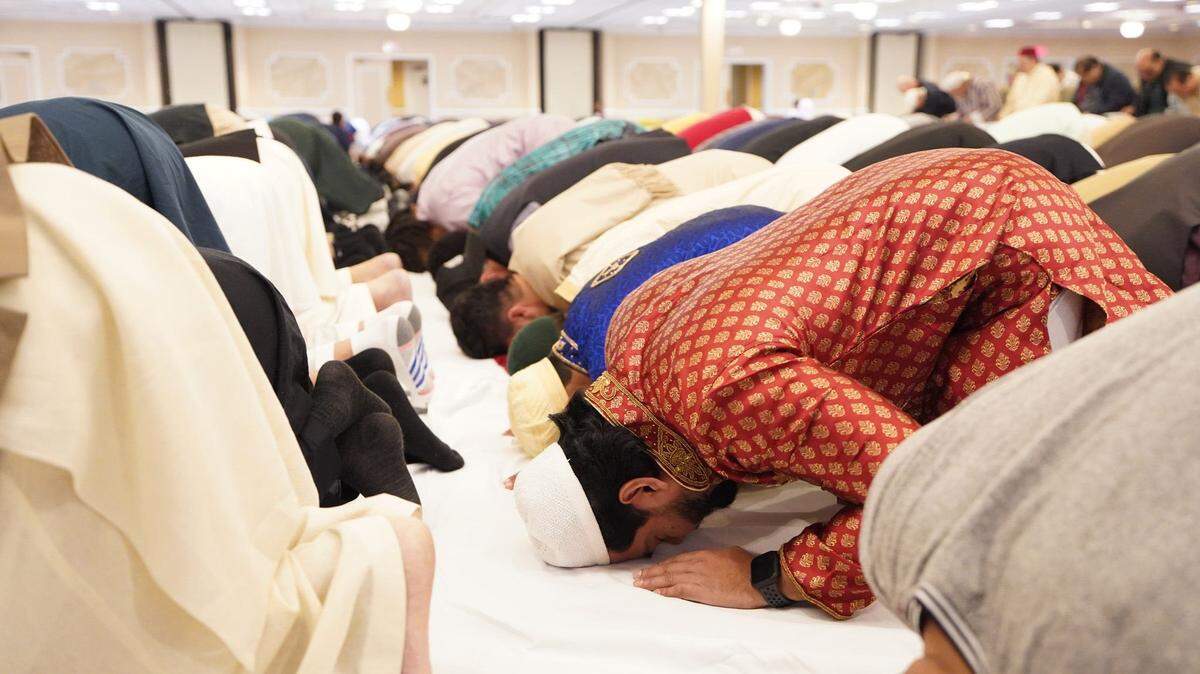
Texas has the fifth-largest Muslim population in the U.S. Some see that as a neutral description of our state’s evolving demographics. Others see a pleasant development, a sign that Texas remains a desirable destination for people regardless of religion or culture.
So why are some of our leaders treating a peaceful constituency as a threat?
The East Plano Islamic Center, a congregation with thousands of attendees representative of and embracing the state’s change, wants to serve this growing demographic with a 400-acre planned housing community in nearby Josephine with day care, a private faith-based school, and, fatefully, a mosque. They call the project EPIC Josephine City.
Styling themselves as advocates for religious freedom, state and federal elected officials warn that the existence of a Muslim-led and friendly community could inherently violate the religious freedoms of Jewish and Christian Texans, calling for investigations that straddle the line between racial and religious fearmongering and picking bureaucratic nits apparently hallucinated about the project’s legality.
Gov. Greg Abbott, last seen soothing the delusions of an X (formerly Twitter) user who wrote that “Islam does not assimilate” bragged that Texas successfully “halted any construction of EPIC city.”
If the project fails, he should take the biggest victory lap for kicking up the most invisible dirt around the mosque and its developers. He has accused the group of being a front for “foreign adversaries,” claiming that it lacks the licensing to operate funeral homes and is misleading its investors. Abbot has instructed several state agencies to pursue possible criminal investigations into the development.
The governor’s regulatory blitz has even included asking the Texas Commission on Environmental Quality to double-check that regulations were being faithfully followed. In this one case, Abbott is suddenly a clean-earth warrior?
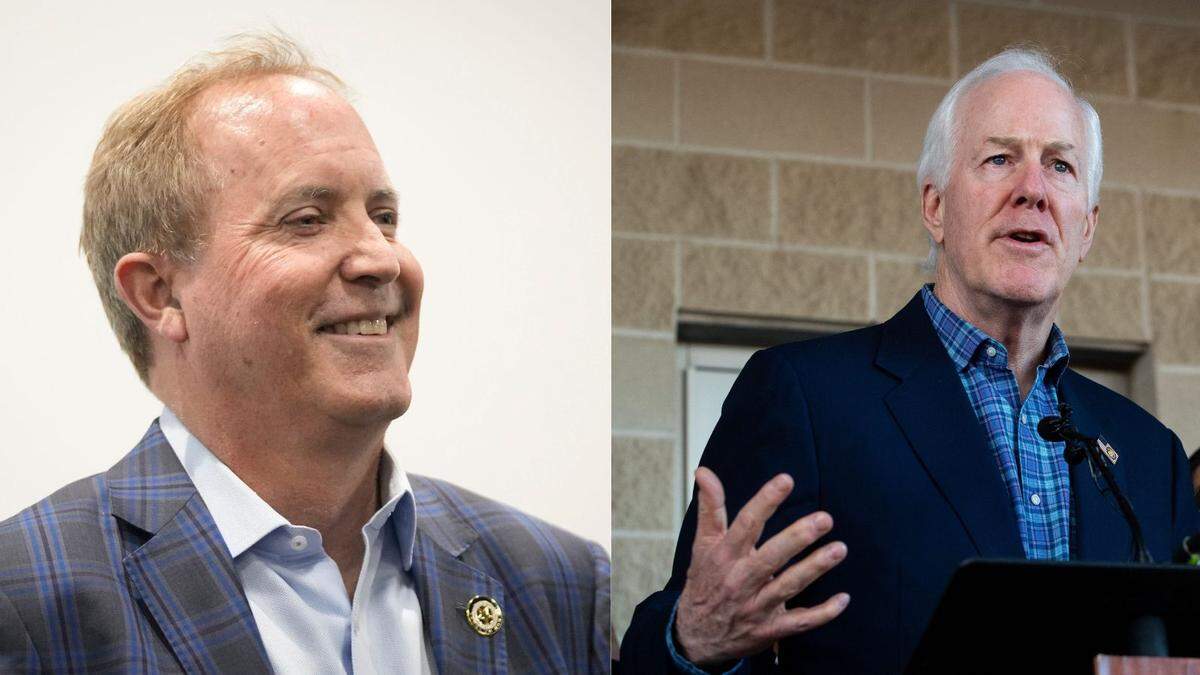
Sen. John Cornyn, now tacking hard right in anticipation of a tough 2026 primary challenge from Attorney General Ken Paxton, followed Abbott’s charge all the way to Washington, successfully convincing the Department of Justice to launch a federal probe. Like Abbott, a lot of barking. And, with U.S. Attorney General Pam Bondi involved, possibly some bite. But still: no evidence. Paxton, of course, isn’t missing the fun either, demanding records to investigate a supposed criminal violation that he can’t describe but knows must be there, somewhere.
The most egregious claim is also their most insidious, labeling EPIC’s development a “sharia city” where residents will be required to follow Islamic law. The accusation is all too familiar. Texas Republicans ironically and hypocritically created their own party purity test in 2019, when party precinct chairs tried sacking Shahid Shafi from his Tarrant County GOP vice chair role, claming a commitment to sharia over Texas law.
But, just like Shafi, nowhere has EPIC City asserted that attending the new mosque was a residential requirement. You can pray five times a day, or one, or zero. The community won’t trample on those grilling pork ribs. And contra the most patriarchal expressions of Islamic extremism, little girls will also be able to get an education.
Words mean things, including sharia. And how they are heard and understood depends on the context in which they are spoken, the person who says them, and the custom it comes from. The Arabic word sharia refers to the set of rules derived from the Islamic Quran that govern a Muslim’s life. (When Abbott refers to sharia “law,” he’s perpetuating an erroneous redundancy like saying “chai tea.”) While Muslims, Jews and Christians have both similar and meaningfully distinct precepts for how to live their lives in ways consistent with their faith, sharia is one tradition’s way of describing a concept the three Abrahamic religions share.
William White of the Council on American-Islamic Relations told the Star-Telegram that “every time Muslims pray five times a day, fast in Ramadan, donate to charity, or abstain from consuming alcohol and pork, they are following Sharia.” Just as devout Christians can point to rules they believe the Bible tells them to follow, as do observant Jews with their Torah, Muslims are trying to live the good life, too.
Abbott, Paxton and Cornyn strip the word from both its formal meaning and place it into a new context, one where a majority of Americans are unfamiliar with this rich background behind the religion or the language used to record its holy book. They depend upon your relationship to the Muslim faith being primarily or solely connected to the traumatic aftermath of the Sept. 11 attacks and thinking the Arabic words describing Islamic beliefs can only be seen to their relationship to extremism.
They don’t want Texans of other faiths to see the Muslim communities sprouting throughout the country as ones powered by immigrants drawn to America for our secularism and religious freedom. Instead, the goal is to portray them as conspiring to set up a draconian theocratic New Taliban.
Offering the slightest good faith the people behind EPIC City might just want to live near their house of worship or send their children to a private school that aligns with their scholastic priorities — we recall a big education voucher bill our governor told us was essential toward this end — collapses the suggestion that these are terrorists in waiting. It would remind us that these people are Texans, a part of our increasingly diverse state where many millions of us yearn to prove that people of diverse social, ethnic and religious backgrounds can and do exist peacefully.
Unbecoming as it is, politicians may pander to the worst fears of their constituents, if they aren’t outright fostering their paranoia. What they cannot do is abuse the levers of government to interfere with legal development, property rights and religious freedom. The developers of EPIC City should have to follow every law and regulation to create their community. They should not have to prove their loyalty and intent under the hammer of every politician trying to win re-election next year.
BEHIND THE STORY
MOREHey, who writes these editorials?
Editorials are the positions of the Editorial Board, which serves as the Fort Worth Star-Telegram’s institutional voice. The members of the board are: Cynthia M. Allen, columnist; Steve Coffman, editor and president; Bradford William Davis, columnist and editorial writer; Bud Kennedy, columnist; and Ryan J. Rusak, opinion editor. Most editorials are written by Rusak or Davis. Editorials are unsigned because they represent the board’s consensus positions, not necessarily the views of individual writers.
Read more by clicking the arrow in the upper right.
How are topics and positions chosen?
The Editorial Board meets regularly to discuss issues in the news and what points should be made in editorials. We strive to build a consensus to produce the strongest editorials possible, but when we differ, we put matters to a vote.
The board aims to be consistent with stances it has taken in the past but usually engages in a fresh discussion based on new developments and different perspectives.
We focus on local and state news, though we will also weigh in on national issues with an eye toward their impact on Texas or the Dallas-Fort Worth area.
How are these different from news articles or signed columns?
News reporters strive to keep their opinions out of what they write. They have no input on the Editorial Board’s stances. The board consults their reporting and expertise but does its own research for editorials.
Signed columns by writers such as Allen, Kennedy and Rusak contain the writer’s personal opinions.
How can I respond to an editorial, suggest a topic or ask a question?
We invite readers to write letters to be considered for publication. The preferred method is an email to letters@star-telegram.com. To suggest a topic or ask a question, please email Rusak directly at rrusak@star-telegram.com.