
As reefer madness hits Texas Senate, Gov. Abbott must restore sanity | Opinion
AI-generated summary reviewed by our newsroom.
- The Texas Senate revived a hemp ban similar to what Gov. Greg Abbott vetoed.
- The hemp industry warns a full THC ban would damage businesses and deprive patients.
- Texas can regulate the hemp business as it does other potentially dangerous products.
Madness, as the old saying famously tells us, is doing the same thing again and again and expecting different results.
So, it fits perfectly with the Texas Senate’s approach to regulating hemp-based products. Call it reefer madness. (Sorry.)
Senators passed a measure Wednesday to ban hemp products that contain THC, the psychoactive ingredient in cannabis. It’s essentially the same bill that Gov. Greg Abbott vetoed in June, citing concerns about the sweeping nature of the prohibition. Hemp industry advocates contend that the ban would close thousands of businesses, crush farmers and deprive military veterans and others with chronic conditions of easily obtained relief.
The question now is what the House and Gov. Greg Abbott will do. They should hold out for stricter regulation that comes up short of a total ban, similar to what the House initially approved this year before Lt. Gov. Dan Patrick twisted enough arms to get the full ban he craves. Objections that the state can’t afford testing or reliably ensure that products contain a permissible amount of THC fly in the face of any number of reliable consumer-protection regulations currently in effect.
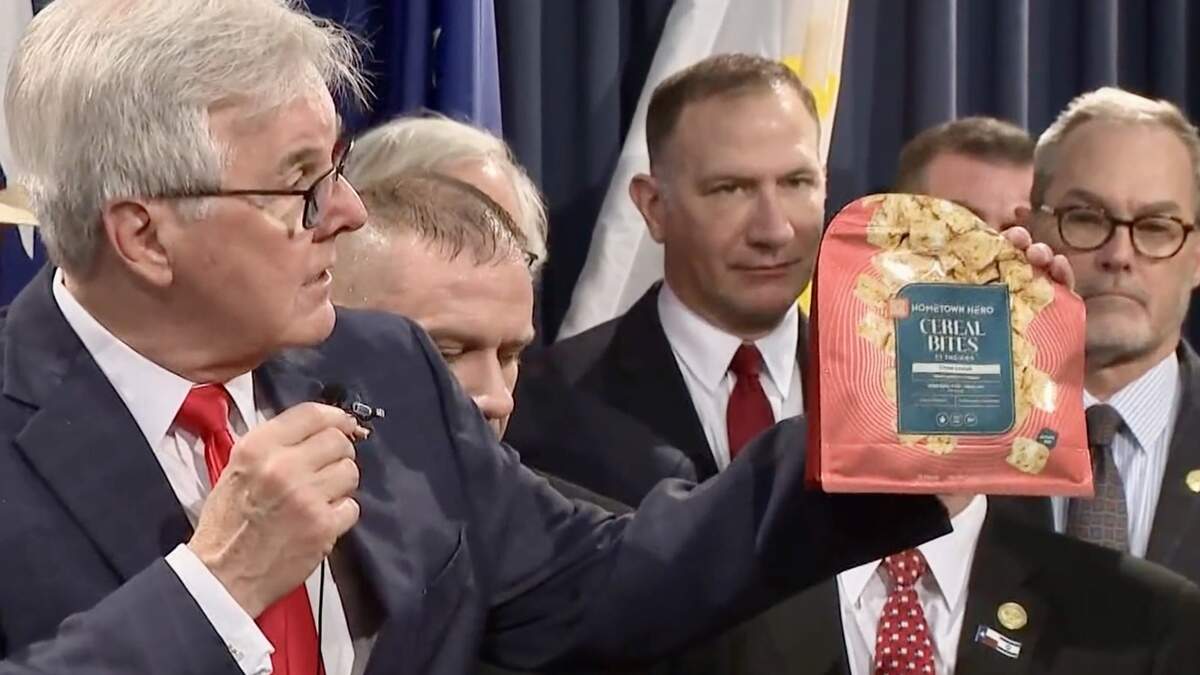
Abbott laid out extensive objections when he vetoed the original bill. He has since muddied the waters, such as when he told the Community Impact news site that “The way that we protect the lives of children is to completely ban any type of THC product, any type of hemp and any type of marijuana from [children] being able to use it.”
His office later clarified to the Star-Telegram that Abbott meant a ban on hemp products exceeding the intoxication level of THC, 0.3 milligrams per serving. That tracks with one of Abbott’s complaints about the initial bill, which is that hemp products might have trace amounts of the chemical.
To which the Senate said: Feh.
Abbott appears to be moving closer to a total ban, while trying to balance flaws in arguments on either side. Patrick and the “ban it all” crowd have said that regulation would be difficult and expensive, given the need for lab testing to determine a product’s THC level. There’s some validity to that, but to enforce a ban on THC, those capacities will be necessary anyway.
The governor suggested that a licensing regime for hemp farmers and retailers and others in the business to generate the revenue needed to enforce THC limits.
The hemp industry and its backers contend that many concerns can be met through banning the sale of all cannabis products to children, requiring child-resistant packaging and restricting where stores can operate.
That’s the most sensible path. As we’ve noted, Texas allows the sale of plenty of products that are legal but potentially dangerous. No regulatory regime can stop all bad actors, but enforcement itself is a deterrent to many potential offenders.
Patrick’s scary rhetoric about hemp products seem to come out of another time. He’s portrayed hemp-shop owners as merchants of death deliberately targeting children and warned of a spike in psychotic conditions traced to cannabis consumption.
His objections can be nonsensical: He recently asserted that stores are selling products that are currently illegal. If so, why isn’t state law being enforced?
In another area, gun regulation, conservatives such as Patrick often argue that before we try new laws that will increase the burden for law-abiding citizens, we should exhaust the capacity of what’s already on the books. Would that such logic could prevail here.
There is value in stemming the slide, if there is one, to full-blown legalization of recreational cannabis use. Policymakers can’t see a way, apparently, to prevent that while still permitting adults to more easily obtain mild, carefully regulated THC products for conditions such as chronic pain or post-traumatic stress. So, Abbott’s path probably makes the most sense for a realistic solution that keeps the Texas hemp industry from completely wilting.
Will Patrick budge? We’d like to think that he wouldn’t be willing to sink other important legislation in this special session, such as addressing the deficiencies made painfully clear by the July 4 Guadalupe River flood.
But when Patrick is sure he’s right, you can almost always count on madness taking hold.