
Don’t give Dan Patrick his THC ban. Here’s a better way for Texas on cannabis | Opinion
Sometimes, the Texas Legislature creates a mess that only it can fix. And unfortunately, the clean-up is often a mess of its own.
So it is with a bill that would ban products that contain THC, the psychoactive ingredient in cannabis. It’s an attempt to right a loophole in the 2019 state law that allowed a Texas hemp industry to develop. But the medicine is simply too strong. Gov. Greg Abbott should veto the bill and give the Legislature the chance to try again with precise, thoughtful regulation.
How did we get here, with lawmakers wanting to dismantle something they essentially created a few years ago?
In 2019, Texas needed a law to comply with new federal statutes on hemp, the non-intoxicating version of the cannabis plant. Legislators charged ahead, missing the distinctions among the chemicals that can provide a high. They also failed to ask enough questions about testing, including whether police labs had the capacity to determine the level of THC in a product and thus the difference between hemp (legal) and marijuana (still illegal).
Still, a business opportunity was born, and Texas, as our leaders like to say, is open for business. Responsible retail shops boomed, but so did unscrupulous producers who offered wares that enticed children and didn’t distinguish between a professional who would demand ID or a convenience store where somnolent clerks wouldn’t even notice who was buying gummies and the like.
Enter Lt. Gov. Dan Patrick. Before some lawmakers could even settle in their offices, he declared that a complete ban on products containing THC was the only option. He suggested that he would not negotiate and that if he didn’t get his way, he would melt down the whole legislative session.
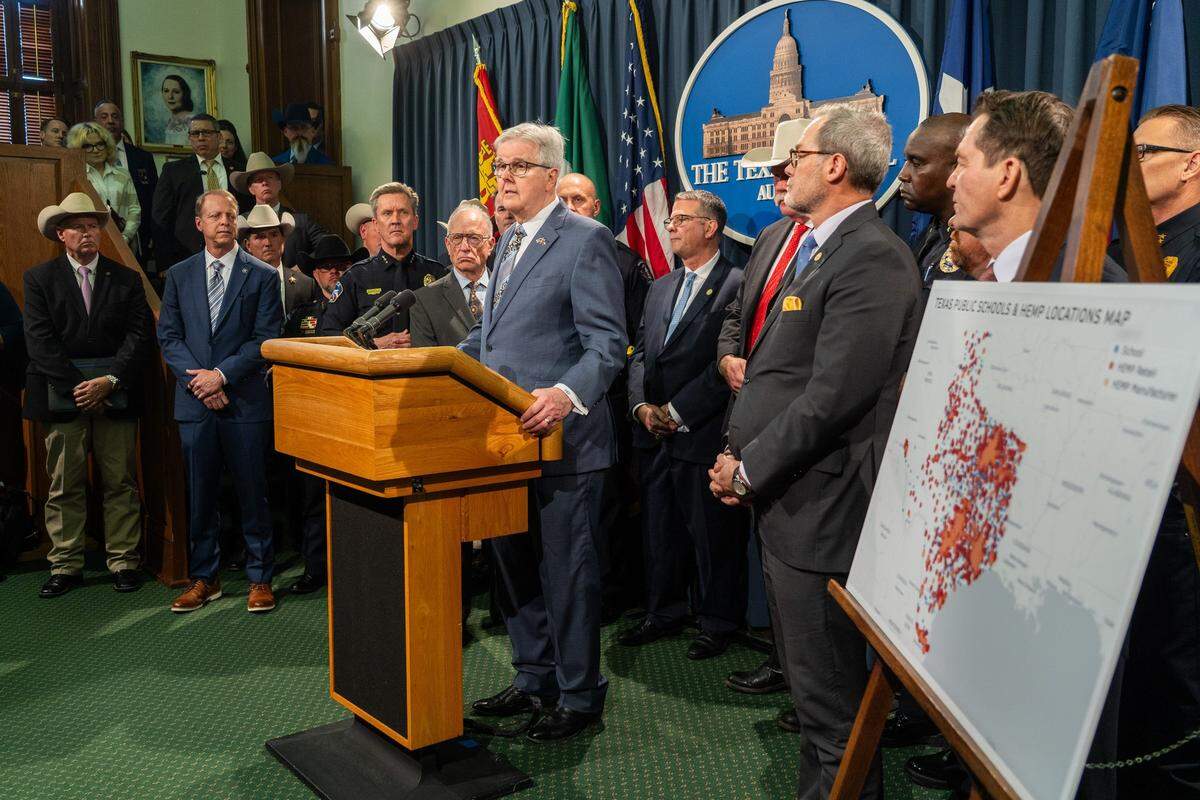
He never said exactly how, but Patrick, who controls all the levers in the Texas Senate, could have held back one of Abbott’s priorities, such as school vouchers, or even prevent passage of the state budget, which would leave no option but a special session.
Patrick was never willing to entertain the obvious solution: more precise regulation with more robust enforcement.
Texas could allow for the sale of low-level THC products without embracing a full-blown marijuana culture. The experience of legalization in other states has been fraught with problems. There’s increasing concern that today’s much stronger, much more available marijuana is incapacitating too many people — as well as creating alarm about possible unknown long-term health consequences.
Licensed dealers can sell well-tested products in packaging that’s unappealing to children. The state could bar corner gas stations or other generalized stores and businesses within walking distance of schools from dealing in THC products. It could create an agency to regulate them, funded through a tax on the products, or create such a function within an existing state entity.
In other words, it could treat the substance similar to the way it treats alcohol. We all know that even with a regime of rules and enforcement, teenagers sometimes drink. A few, tragically, even die as a result. Few people would say that’s sufficient reason to ban beer and wine. Heck, they are venerated Texas industries.
Patrick gave away the game when, late in the session, he declared that cannabis producers and retailers “want to kill your kids, and they don’t give a damn.” It’s the kind of pompous, self-righteous rhetoric that Patrick frequently uses to substitute for actual debate. And if someone else made similar remarks about, say, the gun industry, Patrick would be the first to get in front of a Fox News camera and decry it.
The lieutenant governor declared it “stupid” to even raise the comparison to alcohol — though, to be fair, few are more familiar with stupid rhetoric than Patrick.
Patrick did eventually agree to expanding the availability of medical marijuana under the state’s Compassionate Use Program. If Abbott signs that bill — and he should — conditions such as traumatic brain injuries and chronic pain would be among those added to the list that qualifies a Texan to purchase THC products. The state would add more dispensaries, too.
In other words, through specific, careful regulation, Texas is steadily finding ways to get needed relief to those who can find it nowhere else.
Someone alert Patrick: It can be done!
BEHIND THE STORY
MOREHey, who writes these editorials?
Editorials are the positions of the Editorial Board, which serves as the Fort Worth Star-Telegram’s institutional voice. The members of the board are: Cynthia M. Allen, columnist; Steve Coffman, editor and president; Bradford William Davis, columnist and editorial writer; Bud Kennedy, columnist; and Ryan J. Rusak, opinion editor. Most editorials are written by Rusak or Davis. Editorials are unsigned because they represent the board’s consensus positions, not necessarily the views of individual writers.
Read more by clicking the arrow in the upper right.
How are topics and positions chosen?
The Editorial Board meets regularly to discuss issues in the news and what points should be made in editorials. We strive to build a consensus to produce the strongest editorials possible, but when we differ, we put matters to a vote.
The board aims to be consistent with stances it has taken in the past but usually engages in a fresh discussion based on new developments and different perspectives.
We focus on local and state news, though we will also weigh in on national issues with an eye toward their impact on Texas or the Dallas-Fort Worth area.
How are these different from news articles or signed columns?
News reporters strive to keep their opinions out of what they write. They have no input on the Editorial Board’s stances. The board consults their reporting and expertise but does its own research for editorials.
Signed columns by writers such as Allen, Kennedy and Rusak contain the writer’s personal opinions.
How can I respond to an editorial, suggest a topic or ask a question?
We invite readers to write letters to be considered for publication. The preferred method is an email to letters@star-telegram.com. To suggest a topic or ask a question, please email Rusak directly at rrusak@star-telegram.com.
This story was originally published June 7, 2025 at 5:26 AM.