
Redistricting scheme could backfire on GOP. And it’s bad for Fort Worth | Opinion
AI-generated summary reviewed by our newsroom.
- Texas Republicans' effort at mid-decade redistricting could backfire with GOP losses.
- New maps may remove minority representatives and weaken Fort Worth’s clout in Washington.
- Frequent redistricting invites lawsuits, voter disruption and an arms race among states.
It appears no one can talk Texas Republican leaders out of a misguided, harmful plan to redraw congressional districts in the middle of the decade — not even wary Republicans themselves.
Other priorities in lawmakers’ special session, including flood relief and better disaster planning, are endangered by the politically charged redistricting. It sets a terrible precedent and could set off an unending war of map-altering in the states. And it could even backfire on Republicans at the polls.
But President Donald Trump has spoken. He expects Texas to send five more Republicans to the U.S. House, so GOP leaders will dutifully use their muscle to draw new maps.
Fort Worth and Tarrant County have a large stake in the outcome, and leaders here should fight the efforts to eliminate Democratic-leaning districts in Dallas-Fort Worth. The county and the city benefit from at least a little bipartisanship in its representation.
But before diving into those priorities, we can’t stress enough how bad an idea this is.
Texas redistricting will push minority lawmakers out of Congress
This might sound corny in this age of cutthroat politics, but norms in governing still matter. Redistricting is always politically traumatic; that’s part of the reason it should be attempted only once every 10 years. Anything more frequent is disruptive to voters and risks what little bipartisan cooperation remains in government.
In this case, there’s no way around an ugly fact: Squeezing out a few more Republican seats will probably mean drawing Black and Hispanic representatives, including Fort Worth Democratic Rep. Marc Veasey, out of Congress. That’s a bad look for a majority-minority state.
That’s in part because of the “one weird trick” that’s seemingly been cooked up to justify redrawing the congressional map. The Justice Department told the state recently that four current districts might violate the Constitution because they were drawn strictly with race in mind.
Republicans have insisted during several rounds of redistricting — including the creation of the map now under question, in 2021 — that they considered only politics, which the Supreme Court has said can be permissible.
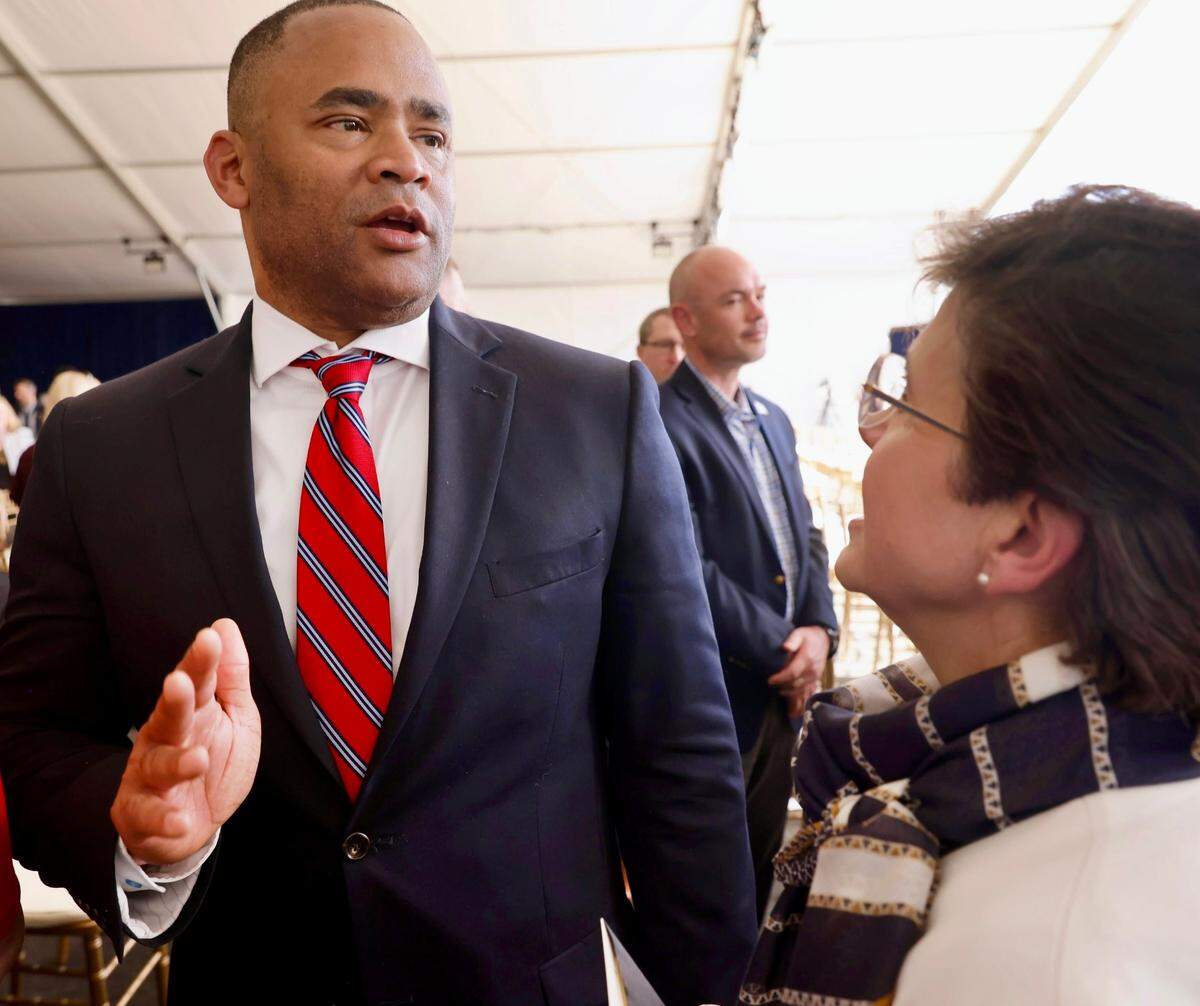
“Coalition districts” are those that combine two minority groups to let those voters determine who’s elected, assuming they align at the ballot box. Veasey’s district is one — its voters are predominantly Hispanic, but they combined with Black voters, who turn out at the polls at a higher rate, to control the election. Veasey, who is Black, won the district handily after a contested Democratic primary and has since cruised to reelection.
A federal appeals court has said that such districts are unconstitutional, leading to the Justice Department’s warning to Texas. Here’s the problem: State officials vowed, under oath, that they did not consider racial coalitions in 2021. Gov. Greg Abbott’s call for the special session stipulated that redistricting was meant to address “constitutional concerns raised by the U.S. Department of Justice.”
So, state officials plan to fix the thing they swore they didn’t do in the first place, and it will just happen to cushion the U.S. House majority that Trump and the GOP fear they’ll lose in next year’s midterm elections. Talk about lipstick on a pig.
Fine legal points aside, North Texas needs a district where Hispanic voters can elect the candidate of their choice. Given recent voting trends, there’s a decent chance that could produce a Republican.
Republicans may regret effort to redraw Texas maps
If Texas proceeds, it will again escalate the national political arms race. California and other blue states will look for ways to eliminate GOP seats, and we won’t be far off from having new maps drawn as often as every two years. That’s a recipe for even more political polarization, isolation and instability.
Wise Republicans also fear that the whole scheme could backfire. Texas is reliably red, but not overwhelmingly so. If GOP voters are spread thinner to cover more districts, the right political circumstances could give Democrats a chance to win areas where they currently cannot compete, especially if historical trends in midterm elections continue or the economy sours.
When Tarrant County commissioners took the unprecedented step of redrawing their precincts with an eye toward expanding the GOP majority on the court, they did so with outdated population information. There’s a simple reason to do redistricting once a decade, beyond simply avoiding political firestorms: The U.S. Census produces the most reliable data about population. Five years in, the Legislature will use data that doesn’t account for the state’s growth and migration patterns. And Texas will face the same type of costly lawsuits now consuming county taxpayers’ dollars.
Dallas-Fort Worth has three Democrats in Congress now. Republicans will almost certainly leave Dallas Democrat Jasmine Crockett’s district bright blue. That leaves Veasey and Rep. Julie Johnson in Dallas County in the crosshairs.
Veasey is steadily climbing in seniority and clout. He’s delivered for the area, particularly the city of Fort Worth, when Democrats hold Congress or the White House. They will eventually do so again, and when that happens, Fort Worth needs a Democrat who can carry its priorities.
That’s not to say Republicans cannot reliably work for the majority-Democratic city. Rep. Craig Goldman is off to a good start taking the place of longtime Rep. Kay Granger, and Rep. Michael Burgess once worked hard on behalf of east Fort Worth, before his district was drawn even further into Denton County.
But Washington is the ultimate partisan game board. It simply helps to have top players on both sides of the aisle. If only Republicans in Austin would actually recognize what Fort Worth needs — or at least wait until the appropriate time to change it.
BEHIND THE STORY
MOREHey, who writes these editorials?
Editorials are the positions of the Editorial Board, which serves as the Fort Worth Star-Telegram’s institutional voice. The members of the board are: Cynthia M. Allen, columnist; Steve Coffman, editor and president; Bradford William Davis, columnist and editorial writer; Bud Kennedy, columnist; and Ryan J. Rusak, opinion editor. Most editorials are written by Rusak or Davis. Editorials are unsigned because they represent the board’s consensus positions, not necessarily the views of individual writers.
Read more by clicking the arrow in the upper right.
How are topics and positions chosen?
The Editorial Board meets regularly to discuss issues in the news and what points should be made in editorials. We strive to build a consensus to produce the strongest editorials possible, but when we differ, we put matters to a vote.
The board aims to be consistent with stances it has taken in the past but usually engages in a fresh discussion based on new developments and different perspectives.
We focus on local and state news, though we will also weigh in on national issues with an eye toward their impact on Texas or the Dallas-Fort Worth area.
How are these different from news articles or signed columns?
News reporters strive to keep their opinions out of what they write. They have no input on the Editorial Board’s stances. The board consults their reporting and expertise but does its own research for editorials.
Signed columns by writers such as Allen, Kennedy and Rusak contain the writer’s personal opinions.
How can I respond to an editorial, suggest a topic or ask a question?
We invite readers to write letters to be considered for publication. The preferred method is an email to letters@star-telegram.com. To suggest a topic or ask a question, please email Rusak directly at rrusak@star-telegram.com.