Redistricting, floods and marijuana: What to watch as TX lawmakers meet in Austin
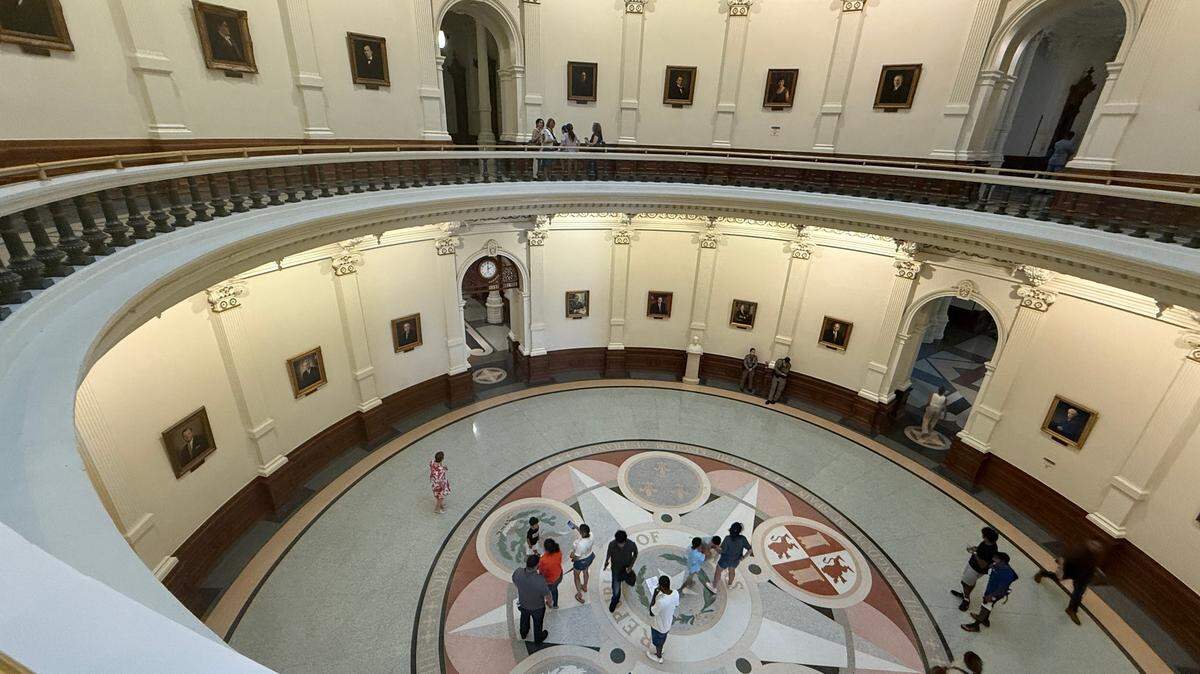
Lawmakers are back in Austin for a monthlong special legislative session, focused on redistricting, flood mitigation and response, and laws around consumable hemp products.
The issues are just some of the topics before lawmakers after they adjourned in June. Texas Gov. Greg Abbott said there was unfinished business and announced he was calling lawmakers into overtime starting June 21 to address 18 agenda items. Others include replacing the STAAR test, property tax cuts, abortion restrictions and “protecting women’s privacy in sex-segregated spaces.”
As lawmakers gavel back in, here’s what’s on the agenda and what to watch for.
A redistricting battle
Abbott has tasked lawmakers with redrawing congressional districts mid-decade. The move follows a U.S. Department of Justice letter to state leaders that said three Houston districts and a Fort Worth area district are “unconstitutional ‘coalition districts’” because they’re racially drawn.
The Fort Worth area district, U.S. House District 33, is represented by Rep. Marc Veasey of Fort Worth. It spans parts of Tarrant and Dallas counties, including portions of Arlington, Fort Worth, Farmers Branch, Grand Prairie and Irving.
Trump reportedly wants Republicans to pick up five House seats in Texas.
“There could be some other states we’re going to get another three, or four or five in addition. Texas would be the biggest one.” Trump told reporters on July 15. “Just a simple redrawing we pick up five seats.”
Twelve of Texas’ 38 congressional districts are represented by Democrats.
In his special session proclamation, Abbott calls for legislation that provides a revised congressional redistricting plan in light of constitutional concerns raised by the Justice Department.
How the maps could be drawn and whether it affects House District 33 and other North Texas congressional districts will become clearer as the session progresses. Hearings on redistricting are expected as soon as this week, with Democrats already weighing their options to block or stall new maps.
Central Texas flood response
The special session follows the deadly early July flooding in Kerr County and central Texas. Abbott has set response measures on the agenda for lawmakers.
His proclamation says lawmakers should pass:
▪ “Legislation to improve early warning systems and other preparedness infrastructure in flood-prone areas throughout Texas.”
▪ “Legislation to strengthen emergency communications and other response infrastructure in flood-prone areas throughout Texas.”
▪ “Legislation to provide relief funding for response to and recovery from the storms which began in early July 2025, including local match funding for jurisdictions eligible for FEMA public assistance.”
▪ “Legislation to evaluate and streamline rules and regulations to speed preparedness for and recovery from natural disasters.”
▪ A House committee formed to work on flood response is scheduled to meet on July 23. Senate committee hearings hadn’t been scheduled as of 2 p.m. Monday.
Marijuana, hemp access in Texas
Abbott vetoed a priority bill of Lt. Gov. Dan Patrick that would have banned consumable THC products, like the delta-8 and delta-9 vapes and edibles that can currently be purchased in the state. The move came after members of the hemp business community urged Abbott to block the legislation, calling for regulations over a ban.
“Texans on each side of the Senate Bill 3 debate raise serious concerns,” Abbott said in a statement accompanying his veto. “But one thing is clear — to ensure the highest level of safety for minors, as well as for adults, who obtain a product more dangerous than what the expected, Texas must strongly regulation hemp, and it must to so immediately.”
Patrick has favored taking any product that contains a cannabinoid other than CBD or CBG off the shelves. The bill Abbott vetoed did include exceptions for medical marijuana.
Abbott, in his special session proclamation, said lawmakers should pass:
▪ “Legislation making it a crime to provide hemp-derived products to children under 21 years of age.”
▪ “Legislation to comprehensively regulate hemp-derived products, including limiting potency, restricting synthetically modified compounds, and establishing enforcement mechanisms, all without banning a lawful agricultural commodity.”
Political fights as Texas lawmakers meet
Political fights are already boiling as the special legislative session begins.
A handful of Texas Democrats in the House and advocacy group leaders held a press conferences on Monday, where they criticized several items on Abbott’s special session agenda.
Forty-eight Texas House Democrats sent a letter to House Speaker Dustin Burrows on Monday asking that flood relief legislation be handled before other issues. The lawmakers said they “refuse to engage in any other legislative work until after adequate flood relief and disaster mitigation legislation are passed and signed by the governor.”
Rep. Ramon Romero Jr. of Fort Worth wanted to see a special session solely focused on responding to the Central Texas floods. This session should be focused on nothing but those whose lives were lost and affected by the disaster, he said.
“This should be just about them, and Gov. Abbott unfortunately doesn’t have the, he doesn’t have the honor to do that, to protect and honor them,” Romero said. “I wish he did.”
Democrats, who hold 62 of 150 House seats, are discussing ways to block or stall redistricting efforts. One option to block redistricting legislation could be a quorum break in which Democrats leave the Capitol, resulting in too many absences for a floor vote. Two-thirds of lawmakers — 100 members — must be present to form a quorum and conduct business.
Democrats broke quorum in the 2021 legislative session, with many members traveling to Washington in an attempt to stop a Republican-backed voting bill, but a version of the legislation ultimately passed.
Rep. Gene Wu of Houston, who chairs the House Democratic Caucus, said Democrats are watching to see whether flood-related legislation is considered first.
“Democrats are talking, we are are discussing and we are watching,” Wu said. “We are watching what the leadership of this state does. We are watching to see if they are going to listen to the people when they demand action or will they serve themselves. Democrats are going to keep all options open. We will take whatever measures are necessary to protect our communities and to protect the state.”
Democrats in the Texas Senate are scheduled to hold a news conference later Monday.
Rep. Nicole Collier, a Fort Worth Democrat, said she supports breaking quorum. It may not ultimately stop the maps — Republicans have the votes needed to adopt them — but it could be way to create a delay, she said in an interview.
“We need to do whatever we can to delay the maps and raise the alarm to other states that are Democratically led, that they also need to do the same things that the Republicans are doing: Take the seats,” Collier said in an interview. “I mean, apparently they feel like this is a legitimate... move, so I don’t think that Democrats should just stand on the side and let them do that. We’ve got to do whatever we can. That includes speaking against them, filing amendments if necessary, but ultimately, I feel like the quorum break is the best way to delay.”
Romero said “everything’s on the table” when asked about steps Democrats should take, but didn’t outright endorse a quorum break.
Democrats will put up a fight, but ultimately voters need to head to the polls, he said.
“Personally I think that we need to face the reality that the only people that can save us right now are the American people,” Romero said. “Texans need to pay attention to what’s going on. They need to pay closer attention. A lot of folks don’t really understand what redistricting means, and they don’t know that they’re actually losing their voice every time this happens.”
On the hemp front, Lt. Gov. Dan Patrick has signaled he remains committed to a ban, despite the governor’s veto.
“Regulating THC for 21+ in TX is a backdoor way to legalize recreational marijuana,” he said in a Monday social media post. “Law enforcement is against regulation & supports a full ban. Texas has a robust program for those in need of medical THC for cancer, PTSD, & other issues.”
A time crunch
Compared to regular legislative sessions, which lasts 140 days, special sessions can be a whirlwind. (That is, unless bills are stalled or blocked by, say, a quorum break, and work is brought to a standstill.)
The special session is confined to items on Abbott’s agenda and lasts up to 30 days. That’s a month for committee hearings, floor debates, and all of the work that comes with getting a bill to the governor’s desk.
If the clock runs out and Abbott thinks there’s still work to be done, he could call lawmakers back for subsequent sessions. Some may recall 2023, when lawmakers met four times after convening the regular legislative session, breaking for the year in early December.
Staff Writer Rachel Royster contributed to this report.
This story was originally published July 21, 2025 at 4:47 PM.