
A year later, we still don’t know full story of Uvalde. Where’s accountability for DPS? | Opinion
One year after the Uvalde school shooting, what we haven’t learned is as important as what we have learned — as is the fact that few leaders have been held fully accountable for the failures of that day.
What happened on May 24, 2022, was heinous. A troubled 18-year-old who had dropped out of school and shot the grandmother he lived with, walked into Robb Elementary in the southwest Texas town, barricaded himself into adjoining fourth-grade classrooms and fired over 140 rounds, killing 21 people.
What didn’t happen on May 24 made it all that much worse.
We learned that children and others had called police immediately, and they were at the scene, remarkably, within minutes. But even as more officers arrived — the local police, the Department of Public Safety, even Border Patrol agents — no one confronted the shooter for around 77 minutes.
In the months that initially followed, the House committee report and the information that has leaked out paints a scene worse than we thought: The unlocked outside door of the school. The poor communication among officers that allowed them to believe there were no victims at first. The fumbling around for a key to open the door the shooter had supposedly barricaded himself behind. This catastrophic failure of law enforcement that cost over an hour of time which might have saved lives.
While the Legislature did pass another school safety bill, language that would have required every school in Texas to have an armed school resource officer was removed. Uvalde parents testified a few weeks ago before a House committee, prompting a long-sought vote on raising the age limit to purchase a rifle to 21. But that bill went no further.
In Washington, Sen. John Cornyn spearheaded modest federal legislation on guns that expands some background checks and provides incentives for states to enact “red flag” laws.
And a year later, just five officers have been fired or resigned. A year later, state authorities have yet to answer questions or take accountability — DPS chief Steve McCraw remains in his job.
POLICE RESPONSE QUESTIONS LINGER
Why didn’t anyone really take charge that day? Chief Pete Arredondo, who was head of the school district’s police department, was supposedly in charge, but you can see from body camera video that no one takes the helm. This too, had to cost time and lives.
Reports later surfaced that officers failed to confront the gunman immediately because they were afraid that he was carrying an AR-15, yet many carried one of similar power. Why haven’t we reconciled this fear with better training and a ban on those under 21 buying such powerful weaponry?
How did a tormented teenager with few friends and little family support, no job or income, acquire the credit to purchase two guns and hundreds of rounds of ammo? Why didn’t anyone notice he was building up a stockpile?
Why weren’t the doors outside of the school and inside of the school locked?
According to the Texas House committee report, the shooter exhibited dozens of warning signs. Why didn’t someone intervene? Could local police have had cause to act?
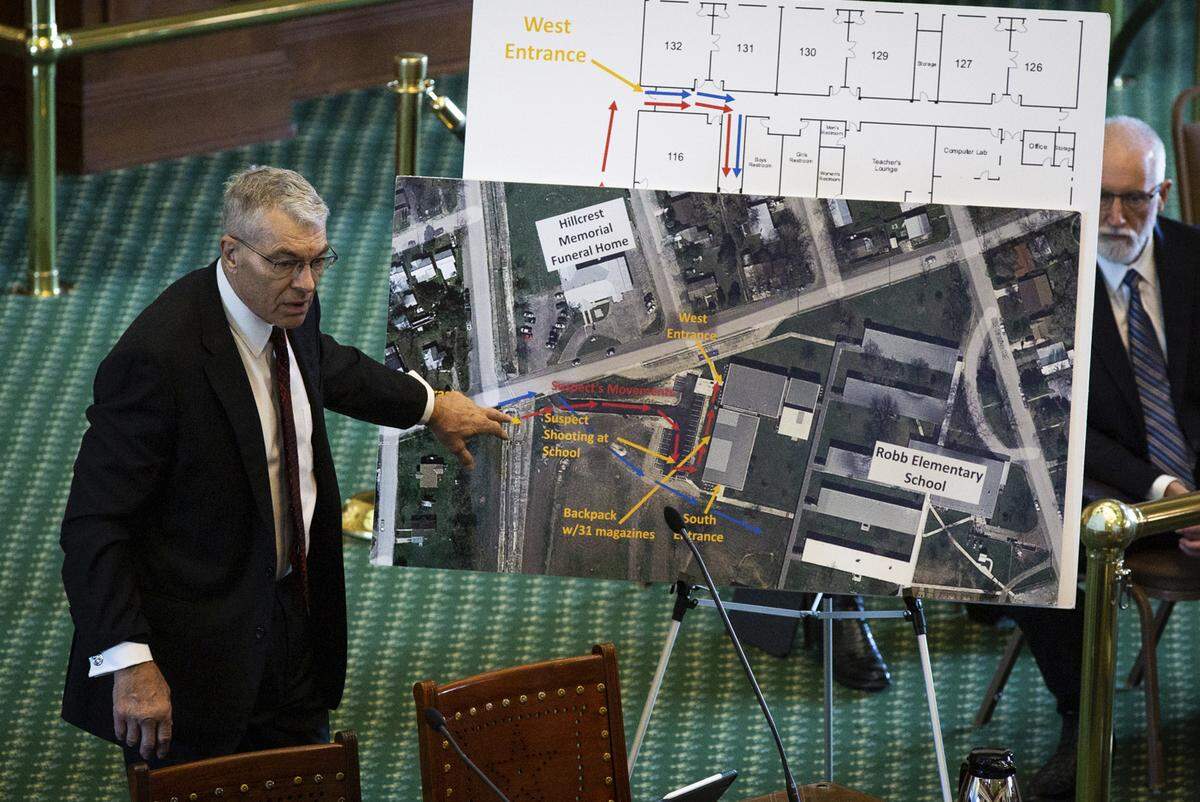
Why hasn’t McCraw demanded the blanket release of all body camera footage, documents, and other available information from that day? Doing so would provide much-needed information to fill the loopholes. McCraw is keeping the information sealed pending a criminal investigation, but to what end? The criminal most responsible is dead.
And why is someone whose department has been given so much responsibility and so many resources in recent years, only to see so many of its officers fail when children’s lives were on the line, still employed?
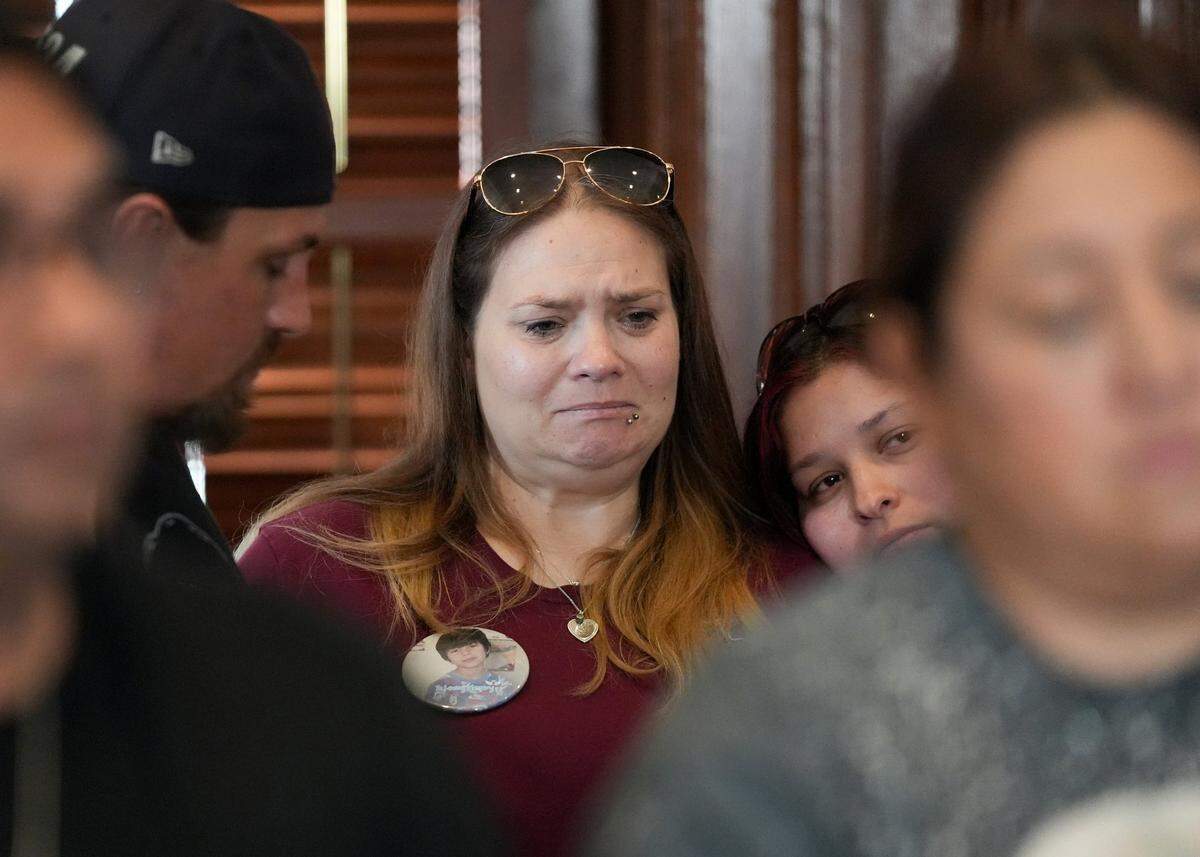
We can’t imagine the ongoing pain and agony for the grieving victims’ families. To mourn with lingering questions about what actually happened during those 77 minutes makes it even worse.
‘GOOD GUY WITH A GUN’
For Texas leaders, this shooting burst the defense that gun-owners often use to support carrying firearms at will: In Uvalde, 376 law enforcement officers from 23 agencies responded to Robb Elementary, and not one confronted the gunman until over an hour had passed. The mantra that “a good guy with a gun stops a bad guy with a gun” will forever carry a devastating caveat: “except for Uvalde.”
We know that because, unfortunately, this year, there was another mass shooting days ago at a shopping center in Allen and a school shooting at a Christian school in Nashville, Tennessee, in March. Though nine people died in Allen an off-duty law enforcement officer stopped the neo-Nazi sympathizing killer before further lives were lost.
In the March shooting in Nashville, law enforcement immediately arrived and confronted the shooter in the act. The school implemented a lockdown protocol that included escorting almost every student out safely. Six people died, but it could have been much worse.
The Legislature is close to passing another school safety bill that will require schools to ramp up active shooter training and submit to regular reviews of school safety protocols. Gov. Greg Abbott is about to sign a bill that will require school districts to provide silent panic alert buttons in each classroom.
But the Uvalde families’ specific requests, including raising the age for rifle purchases, were denied. Victims do not get to make law, but this request is sensible, consistent with other firearms laws and directly responsive to the crime.
There is no law that can demand men and women be brave in the face of fear, violence and possible death. But failures of command can be addressed. So can the refusal to air the complete story.
It’s already shameful that it’s taken this long to address. The least state leaders can do is demand more and better.
BEHIND THE STORY
MOREHey, who writes these editorials?
Editorials are the positions of the Editorial Board, which serves as the Fort Worth Star-Telegram’s institutional voice. The members of the board are: Cynthia M. Allen, columnist; Steve Coffman, editor and president; Bud Kennedy, columnist; Ryan J. Rusak, opinion editor; and Nicole Russell, editorial writer and columnist. Most editorials are written by Rusak or Russell. Editorials are unsigned because they represent the board’s consensus positions, not the views of individual writers.
Read more by clicking the arrow in the upper right.
How are topics and positions chosen?
The Editorial Board meets regularly to discuss issues in the news and what points should be made in editorials. We strive to build a consensus to produce the strongest editorials possible, but when we differ, we put matters to a vote.
The board aims to be consistent with stances it has taken in the past but usually engages in a fresh discussion based on new developments and different perspectives.
We focus on local and state news, though we will also weigh in on national issues with an eye toward their impact on Texas or the Dallas-Fort Worth area.
How are these different from news articles or signed columns?
News reporters strive to keep their opinions out of what they write. They have no input on the Editorial Board’s stances. The board consults their reporting and expertise but does its own research for editorials.
Signed columns by writers such as Allen, Kennedy and Rusak contain the writer’s personal opinions.
How can I respond to an editorial, suggest a topic or ask a question?
We invite readers to write letters to be considered for publication. The preferred method is an email to letters@star-telegram.com. To suggest a topic or ask a question, please email Rusak directly at rrusak@star-telegram.com.